






Gas vs PSD

Cargo Master


Joined: Jan 2005
Posts: 2,413
Likes: 11
I'm not letting you off that easy. Tell me whatcha think is interesting about that. I'll bug the heck outta ya until you do.

Lead Driver
Joined: Jan 2006
Posts: 6,267
Likes: 5
All things being relative, maybe the reason so many people are scared of the 6.0 liter is that compared to the 7.3 it is kinda bitchy.
The 7.3 kinda went forever so long as the filters got changed once in a while, and the oil was changed. Some of us followed the maintenance schedule, others not so much, but either way, once the 6.0 came out, it sure as hell gave owners a rude awakening of what it was ready to put up with.
The 7.3 was reliable and also in its day was a very sweet engine.... HEUI when GM had a mechanical 6.5 and dodge had the same old rattling 5.9.
The 6.0 was a very steep change from the 7.3, not only for mechanics, but owners as well. The 7.3 you could do "whatever" with it, the 6.0- all of a sudden idling isnt good, fuel has to be really clean, oil changes and service that gets forgotten leads too serious problems faster than anyone would anticipate.
I think ford should have done a few things to help these new engines adjust to the customer.
1. Air intake exhaust heat exchanger - for fast warm ups and idling without wet-stacking.
2. Better fuel filtration...less changes and filter particles better. Better moisture detection.
3. EGR gas supply from AFTER DPF. Without particulates in the EGR, 90% of problems could have been avoided.
4. 9th injector for regen cycle.
The 7.3 kinda went forever so long as the filters got changed once in a while, and the oil was changed. Some of us followed the maintenance schedule, others not so much, but either way, once the 6.0 came out, it sure as hell gave owners a rude awakening of what it was ready to put up with.
The 7.3 was reliable and also in its day was a very sweet engine.... HEUI when GM had a mechanical 6.5 and dodge had the same old rattling 5.9.
The 6.0 was a very steep change from the 7.3, not only for mechanics, but owners as well. The 7.3 you could do "whatever" with it, the 6.0- all of a sudden idling isnt good, fuel has to be really clean, oil changes and service that gets forgotten leads too serious problems faster than anyone would anticipate.
I think ford should have done a few things to help these new engines adjust to the customer.
1. Air intake exhaust heat exchanger - for fast warm ups and idling without wet-stacking.
2. Better fuel filtration...less changes and filter particles better. Better moisture detection.
3. EGR gas supply from AFTER DPF. Without particulates in the EGR, 90% of problems could have been avoided.
4. 9th injector for regen cycle.

Lead Driver


Joined: May 2011
Posts: 5,800
Likes: 455
All things being relative, maybe the reason so many people are scared of the 6.0 liter is that compared to the 7.3 it is kinda bitchy.
The 7.3 kinda went forever so long as the filters got changed once in a while, and the oil was changed. Some of us followed the maintenance schedule, others not so much, but either way, once the 6.0 came out, it sure as hell gave owners a rude awakening of what it was ready to put up with.
The 7.3 was reliable and also in its day was a very sweet engine.... HEUI when GM had a mechanical 6.5 and dodge had the same old rattling 5.9.
The 6.0 was a very steep change from the 7.3, not only for mechanics, but owners as well. The 7.3 you could do "whatever" with it, the 6.0- all of a sudden idling isnt good, fuel has to be really clean, oil changes and service that gets forgotten leads too serious problems faster than anyone would anticipate.
I think ford should have done a few things to help these new engines adjust to the customer.
1. Air intake exhaust heat exchanger - for fast warm ups and idling without wet-stacking.
2. Better fuel filtration...less changes and filter particles better. Better moisture detection.
3. EGR gas supply from AFTER DPF. Without particulates in the EGR, 90% of problems could have been avoided.
4. 9th injector for regen cycle.
The 7.3 kinda went forever so long as the filters got changed once in a while, and the oil was changed. Some of us followed the maintenance schedule, others not so much, but either way, once the 6.0 came out, it sure as hell gave owners a rude awakening of what it was ready to put up with.
The 7.3 was reliable and also in its day was a very sweet engine.... HEUI when GM had a mechanical 6.5 and dodge had the same old rattling 5.9.
The 6.0 was a very steep change from the 7.3, not only for mechanics, but owners as well. The 7.3 you could do "whatever" with it, the 6.0- all of a sudden idling isnt good, fuel has to be really clean, oil changes and service that gets forgotten leads too serious problems faster than anyone would anticipate.
I think ford should have done a few things to help these new engines adjust to the customer.
1. Air intake exhaust heat exchanger - for fast warm ups and idling without wet-stacking.
2. Better fuel filtration...less changes and filter particles better. Better moisture detection.
3. EGR gas supply from AFTER DPF. Without particulates in the EGR, 90% of problems could have been avoided.
4. 9th injector for regen cycle.
those "same ole" rattling 5.9's are still legendary in power production, reliability, and longevity! (VE rotary pump pre-93, p-pump post-93)
all that aside, i love the 7.3's and would own one in a jiffy. i love everything about the OBS fords of that era. . .(except glow plugs). very reliable money maker to this day.
about #3 on your list, i dont think there were any 6.0's that came with DPF's. . ."not coming with an egr" is a much better option.
about #4, i hate everything about regen cycles

Lead Driver
Joined: Jan 2006
Posts: 6,267
Likes: 5
those "same ole" rattling 5.9's are still legendary in power production, reliability, and longevity! (VE rotary pump pre-93, p-pump post-93)
5.9's are overrated in my opinion. They do have the cool factor that they sound like a tractor, and they do leave room under the hood better than a PSD V8.... Both the 5.9 cummins and 7.3 have b50 lifespan ratings of 350,000 miles. Everyone gets stoked up that cummins rods are bigger, well first off they have less pistons, so they should be. 2nd, I've seen more windowed cummins blocks than PSD blocks, but to each their own. Plus, they came in a dodge, and even a dodge owner will usually make a joke about the quality of the doge trucks.
all that aside, i love the 7.3's and would own one in a jiffy. i love everything about the OBS fords of that era. . .(except glow plugs). very reliable money maker to this day.
I had a 2002 which I loved, and an IDI wich I also loved. The 6.4 i have now is by far the best, but if i could have any truck brand new it would be a brand new idi. It just ran smooth and reliable. All i ever needed.
about #3 on your list, i dont think there were any 6.0's that came with DPF's. . ."not coming with an egr" is a much better option.
I was thinking "6.0 +" diesels but only referred to 6.0.
about #4, i hate everything about regen cycles
5.9's are overrated in my opinion. They do have the cool factor that they sound like a tractor, and they do leave room under the hood better than a PSD V8.... Both the 5.9 cummins and 7.3 have b50 lifespan ratings of 350,000 miles. Everyone gets stoked up that cummins rods are bigger, well first off they have less pistons, so they should be. 2nd, I've seen more windowed cummins blocks than PSD blocks, but to each their own. Plus, they came in a dodge, and even a dodge owner will usually make a joke about the quality of the doge trucks.
all that aside, i love the 7.3's and would own one in a jiffy. i love everything about the OBS fords of that era. . .(except glow plugs). very reliable money maker to this day.
I had a 2002 which I loved, and an IDI wich I also loved. The 6.4 i have now is by far the best, but if i could have any truck brand new it would be a brand new idi. It just ran smooth and reliable. All i ever needed.
about #3 on your list, i dont think there were any 6.0's that came with DPF's. . ."not coming with an egr" is a much better option.
I was thinking "6.0 +" diesels but only referred to 6.0.
about #4, i hate everything about regen cycles
Talk back in quoted window

FTE Leadership Emeritus
Joined: Jul 2002
Posts: 42,561
Likes: 423
From: Long Island USA

I just find that interesting.
I sorta understand, I have a tranny temp gauge because I have a 4R100 and if you cook them, they are wiped.

Lead Driver
Joined: Jan 2006
Posts: 6,267
Likes: 5
So, while that diesel can provide more torque than a gasser, there comes a time when you have to back off because of EGTs. And $500-$1000 worth of gauges is an OK thing.
I just find that interesting.
I sorta understand, I have a tranny temp gauge because I have a 4R100 and if you cook them, they are wiped.
I just find that interesting.
I sorta understand, I have a tranny temp gauge because I have a 4R100 and if you cook them, they are wiped.
Granted, on ANY truck it is nice to have extra gauges to keep an eye on everything.
On a tuned truck, gauges would be essential, as it will be easier to exceed safe levels, but the truck is also making way more power than stock.
When I say more power, I don't mean like a tuned v10 with 30 hp gains, most diesel programmers can add 100- 300 HP and scary amounts of torque.

Postmaster
Joined: Apr 2006
Posts: 3,524
Likes: 2
From: CA Bay Area
That is why I keep my PS stock. Last Sunday had it for 20 minutes with gas pedal on the floor and 1st gear. The temperature lieometer never moved from the center of the scale.
Don't know about V10 but I never drove gas engine who would allow you to do that without boiling over.
Don't know about V10 but I never drove gas engine who would allow you to do that without boiling over.
FTE Stories
Ford Trucks for Ford Truck Enthusiasts

Top 6 Best Deals Available on New Fords & Lincolns Right Now
Brett Foote
This Hennessey Takes the Expedition Tremor's Off-Roading Capability to the Next Level
Verdad Gallardo
Top 10 Fords at 2026 Carlisle Ford Nationals
Joe Kucinski
3 Best / 3 Worst Parts of Modern Ford Ownership
Brett Foote
10 Amazing Upgrades That Solve Common Ford Truck Owner Headaches
Pouria Savadkouei
Every 2026 Ford Engine Explained
Brett Foote
10 Ugly Ford Trucks That We Still Kinda Love
Joe Kucinski
10 Things Every Truck Owner NEEDS (2026 Edition)
Michael S. Palmer
Rezvani's Latest Post-Apocalyptic Monster Is a Ford F-150 Raptor Underneath
Verdad Gallardo
Cargo Master
Joined: Jan 2005
Posts: 2,413
Likes: 11
So, while that diesel can provide more torque than a gasser, there comes a time when you have to back off because of EGTs. And $500-$1000 worth of gauges is an OK thing.
I just find that interesting.
I sorta understand, I have a tranny temp gauge because I have a 4R100 and if you cook them, they are wiped.
I just find that interesting.
I sorta understand, I have a tranny temp gauge because I have a 4R100 and if you cook them, they are wiped.
Parkland I don't really agree with you. The reason why is even though the compondents can standup to 1100-1200 degs its in the caution stage. Alloys weaken when gotten hot and cooled over and over. I would hope that the materials the turbo is built out of can with stand this abuse but its the oil I'm worried about and the "all of a sudden" condiction. So yea I'll back off right before 1200 degs. Plus I tow heavy. My net is what my gcwr is. There is always variables that you have to account for. Its not just tuned trucks that break 1200 degs. You might not "have" to back off but I bet its wise.
Cargo Master
Joined: Jan 2005
Posts: 2,413
Likes: 11
That is why I keep my PS stock. Last Sunday had it for 20 minutes with gas pedal on the floor and 1st gear. The temperature lieometer never moved from the center of the scale.
Don't know about V10 but I never drove gas engine who would allow you to do that without boiling over.
Don't know about V10 but I never drove gas engine who would allow you to do that without boiling over.
On the gasser defence I think you'll burn up the tranny before the engine.

FTE Leadership Emeritus


Joined: May 2004
Posts: 18,787
Likes: 30
From: Melbourne, Aus
You have to remove the DPF, but the 6.4 will gain 310hp to the rear wheels with an extreme tune from Spartan.
Cargo Master
Joined: Jan 2005
Posts: 2,413
Likes: 11
When you say 100% stock what does that mean. I know it should be self explainator but...... A tune isn't what I call stock.
So do you call modded egr deleted aftermarket oil coolers and head studs not being stock or will these modds fit your bill? I would think that there's some sct tunes that putting 300 to the ground. When your seeing tunes listed as 150-200 hp over stock. And the stock engine has 300+ at the flywheel. Come on bill.
So do you call modded egr deleted aftermarket oil coolers and head studs not being stock or will these modds fit your bill? I would think that there's some sct tunes that putting 300 to the ground. When your seeing tunes listed as 150-200 hp over stock. And the stock engine has 300+ at the flywheel. Come on bill.
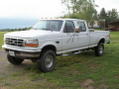
 Pretty standard with no DPF and a good tune.
