



Gas vs PSD

Lead Driver


Joined: Jul 2007
Posts: 7,868
Likes: 9
From: Rhode Island
Probably because nobody else really makes a modern tall-height van anymore? The old ones had Grumman bodies, I don't think Grumman is even still in the van business. I'm sure the fuel economy benefits was also a factor, but the fact that Mercedes is just about the only one with this style of van (at least in America) has a lot more to do with it.

Elder User
Joined: May 2010
Posts: 650
Likes: 0
From: WV
I would also like to ask why you lock your hubs in the winter? Do you have a manual xfer? what are the benefits of locking them if you have ESOF? I'm asking as mine goes into 4WD when I flip the switch. Does it actually "lock" the front end when you lock the hubs making it a front-wheel-drive with the rear wheels acting as normal? The book is pretty ambiguous.
However, keeping the hubs locked means when ever I accelerate, I have more rotational mass to accelerate, because the front tires are connected to the front axles (but not the transfer case, so no power is going to the front tires until I turn on the 4x4).
I keep them locked in the winter because the plow trucks here are a joke and you never know which roads are clean and which are not. In addition, there are quite a few stop signs at the top or in the middle of a hills around here. And getting out at every one of those got old really fast.
Elder User
Joined: May 2010
Posts: 650
Likes: 0
From: WV
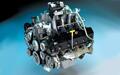
There's no reason a large displacement V8 wouldn't do as well or better than the current gen V10 does. It's not a great engine simply because it has 10 cylinders!
It's a great engine because it's large enough(6.8L) to have a high peak torque and HP rating and is built upon proven architecture that allows it to have a nice, flat torque curve and is known to last over 300,000 miles. This can be done with a V8.
It's a great engine because it's large enough(6.8L) to have a high peak torque and HP rating and is built upon proven architecture that allows it to have a nice, flat torque curve and is known to last over 300,000 miles. This can be done with a V8.
In addition, it makes a smaller combustion chamber, which is easier to control for a gas engine.
There is a reason we don't see 8.0L single cylinder engines lol
But the most obvious reason is that it has the same architecture as the 5.4 and was easy to build.
Elder User
Joined: May 2010
Posts: 650
Likes: 0
From: WV
Because they get better mpg. And I doubt anyone here would argue that when you are driving the truck as many miles as they do per day, diesel will clearly win the economic battle because of better mpg.
Elder User
Joined: May 2010
Posts: 650
Likes: 0
From: WV
ehhhh....I don't know how much longer the v-10 will be in the line up. Now I know this is a rumor and all but there are rumors of a bigger v-8 to replace the v-10. I think it's stupid to get rid of the v-10 cause the other so call big 2 don't offer a v-10 in the cab and chasis or at least I don't think they don't offer one.
Most people who tow on a regular basis will buy the diesel anyway, the gas engine is for people who might put stuff in the bed, occasionally tow, and/or not drive many miles. In that respect, the new 6.2L V8 is just as good as the old V10, specially with the addition of an extra gear in the tranny.
Super Moderator


Joined: Aug 2003
Posts: 25,479
Likes: 742
From: Isanti, MN

Actually there is a reason a V10 is better than a V8. The more cylinders you have, the more aggressive cam you can put in the engine with it sounding like it is going to stall. More cylinder help smooth the idle out. So a 6.8L V10 can have a far more aggressive cam than a 6.8L V8.
In addition, it makes a smaller combustion chamber, which is easier to control for a gas engine.
There is a reason we don't see 8.0L single cylinder engines lol
But the most obvious reason is that it has the same architecture as the 5.4 and was easy to build.
In addition, it makes a smaller combustion chamber, which is easier to control for a gas engine.
There is a reason we don't see 8.0L single cylinder engines lol
But the most obvious reason is that it has the same architecture as the 5.4 and was easy to build.
But unless I'm badly mistaken, neither the 2v or 3V engines have this aggressive cam you refer to. Isn't an "aggressive" cam one which provides more power in the upper RPM ranges which causes low RPM performance to be abysmal?
I always figured one benefit of having more cylinders per unit of displacement would allow the engine to rev higher due to the lighter mass of the individual rotating components. Again, not directly applicable to the V10s, as they aren't high-revving motors.
Posting Guru
Joined: Aug 2009
Posts: 1,058
Likes: 0
From: emporium
well a v8 is the least efficiant engine built. its fights gravity. now a inline 6 is a more econimical engine. to bad they dont make them anymore in light cars and trucks. so i wouldnt imagine a v10 is better. it would be worse. you may make more power because you have two extra cylinders but that doesnt make it better.
Last edited by mountaineer27; Jul 7, 2010 at 08:26 AM. Reason: i had inline 8 instead of 6 lol
Lead Driver
Joined: Jul 2007
Posts: 7,868
Likes: 9
From: Rhode Island
A V8 fights gravity? Huh?
Inline 8's suffer from lots of torsional stresses on the crankshaft and take up a lot of space.
Inline 8's suffer from lots of torsional stresses on the crankshaft and take up a lot of space.
FTE Stories
Ford Trucks for Ford Truck Enthusiasts

Top 6 Best Deals Available on New Fords & Lincolns Right Now
Brett Foote
This Hennessey Takes the Expedition Tremor's Off-Roading Capability to the Next Level
Verdad Gallardo
Top 10 Fords at 2026 Carlisle Ford Nationals
Joe Kucinski
3 Best / 3 Worst Parts of Modern Ford Ownership
Brett Foote
10 Amazing Upgrades That Solve Common Ford Truck Owner Headaches
Pouria Savadkouei
Every 2026 Ford Engine Explained
Brett Foote
10 Ugly Ford Trucks That We Still Kinda Love
Joe Kucinski
10 Things Every Truck Owner NEEDS (2026 Edition)
Michael S. Palmer
Rezvani's Latest Post-Apocalyptic Monster Is a Ford F-150 Raptor Underneath
Verdad Gallardo
Posting Guru
Joined: Aug 2009
Posts: 1,058
Likes: 0
From: emporium
the front and rear trio of cylinders are mirror images. creates a perfect balance.
a inline creates less torsion stress than a v8. thats why there perfered in large trucks. cant fight you on the room issue though
in the words of wiki "Because it is a fully balanced configuration, the straight-six can be scaled up to very large sizes for heavy truck, industrial and marine use, such as the 16 L (980 cu in) Volvo diesel engine and the 15 L Cummins ISX used in heavy vehicles.[4] The largest are used to power ships, and use fuel oil."
a inline creates less torsion stress than a v8. thats why there perfered in large trucks. cant fight you on the room issue though
in the words of wiki "Because it is a fully balanced configuration, the straight-six can be scaled up to very large sizes for heavy truck, industrial and marine use, such as the 16 L (980 cu in) Volvo diesel engine and the 15 L Cummins ISX used in heavy vehicles.[4] The largest are used to power ships, and use fuel oil."
Thread Starter
|
Modular motor junkie
Joined: May 2009
Posts: 6,190
Likes: 8
From: Texas


the front and rear trio of cylinders are mirror images. creates a perfect balance.
a inline creates less torsion stress than a v8. thats why there perfered in large trucks. cant fight you on the room issue though
in the words of wiki "Because it is a fully balanced configuration, the straight-six can be scaled up to very large sizes for heavy truck, industrial and marine use, such as the 16 L (980 cu in) Volvo diesel engine and the 15 L Cummins ISX used in heavy vehicles.[4] The largest are used to power ships, and use fuel oil."
a inline creates less torsion stress than a v8. thats why there perfered in large trucks. cant fight you on the room issue though
in the words of wiki "Because it is a fully balanced configuration, the straight-six can be scaled up to very large sizes for heavy truck, industrial and marine use, such as the 16 L (980 cu in) Volvo diesel engine and the 15 L Cummins ISX used in heavy vehicles.[4] The largest are used to power ships, and use fuel oil."
Elder User
Joined: Jan 2009
Posts: 696
Likes: 1
From: Melissa TX
 Ok your truck can tow anything I can, but who will get the better mpg, and who can get up to hwy speed faster, and get to the desanation faster. Oh that would be me cause everyone knows a diesel is better in all those factors.

Posting Guru
Joined: Aug 2008
Posts: 2,313
Likes: 0
From: Sunny, Snowy, CO
Ughhh...I hate traffic.
Posting Guru
Joined: Aug 2008
Posts: 2,313
Likes: 0
From: Sunny, Snowy, CO
Yes, I do have a manual transfer case. Basically if I don't lock my hubs, the transfer case will send power to the front axles, which won't be connected to the tires. All F150's come with electronic hubs, but I don't think the super duty's do. I am not sure if the upper end ones have electric hubs or not... I know XL and XLT's don't.
However, keeping the hubs locked means when ever I accelerate, I have more rotational mass to accelerate, because the front tires are connected to the front axles (but not the transfer case, so no power is going to the front tires until I turn on the 4x4).
I keep them locked in the winter because the plow trucks here are a joke and you never know which roads are clean and which are not. In addition, there are quite a few stop signs at the top or in the middle of a hills around here. And getting out at every one of those got old really fast.
However, keeping the hubs locked means when ever I accelerate, I have more rotational mass to accelerate, because the front tires are connected to the front axles (but not the transfer case, so no power is going to the front tires until I turn on the 4x4).
I keep them locked in the winter because the plow trucks here are a joke and you never know which roads are clean and which are not. In addition, there are quite a few stop signs at the top or in the middle of a hills around here. And getting out at every one of those got old really fast.
Just to keep it on topic...Diesel Wins...
Elder User
Joined: May 2010
Posts: 650
Likes: 0
From: WV
makes sense..mine does lock in when I flip the dash switch if the hubs are in "auto". My hub positions are "auto" and "lock" not "free" and "lock". I don;t see a big point in running them in lock, and that's what I'm trying to figure out since the book says to leave them in "auto" for "most purposes".
Just to keep it on topic...Diesel Wins...
Just to keep it on topic...Diesel Wins...
The difference comes in if you are already stuck before you put into 4x4. If your stuck and try to put it in 4x4 with the auto hubs, they may not lock in since the front tires are not rotating. You can get out and lock the hubs manually and be in 4x4 without having to rotate the front tires.
Elder User
Joined: May 2010
Posts: 650
Likes: 0
From: WV
Getting there faster is merely a question of who wants to break the law more... Unless of course your talking a really long distance, then the gasser will loose because it will be in the gas station all the time.