



 Thankfully I didn't get written proof, just verbal.
Gas vs PSD

FTE Leadership Emeritus


Joined: Jul 2002
Posts: 42,562
Likes: 424
From: Long Island USA

You are so far off, it's not even funny 
The tach signal is usually taken from either the points, or the output from the electronic ignition to the coil. Some had a direct-driven mechanical tach, using what could be called a speedometer cable, driving a gauge that is basically the mechanical equivalent of a speedometer.
I've never EVER heard of a car/truck/road-vehicle using the alternator as a tach signal. MOTORCYCLES on the other hand, DO sometimes (often?) use the output from the stator (charging circuit).
On the 7.3, the PCM will drive the tach, using the crank or cam sensor to determine engine RPM, just like gassers.
The tach signal is usually taken from either the points, or the output from the electronic ignition to the coil. Some had a direct-driven mechanical tach, using what could be called a speedometer cable, driving a gauge that is basically the mechanical equivalent of a speedometer.
I've never EVER heard of a car/truck/road-vehicle using the alternator as a tach signal. MOTORCYCLES on the other hand, DO sometimes (often?) use the output from the stator (charging circuit).
On the 7.3, the PCM will drive the tach, using the crank or cam sensor to determine engine RPM, just like gassers.

Lead Driver


Joined: Jul 2007
Posts: 7,868
Likes: 9
From: Rhode Island
You are so far off, it's not even funny
The tach signal is usually taken from either the points, or the output from the electronic ignition to the coil. Some had a direct-driven mechanical tach, using what could be called a speedometer cable, driving a gauge that is basically the mechanical equivalent of a speedometer.
I've never EVER heard of a car/truck/road-vehicle using the alternator as a tach signal. MOTORCYCLES on the other hand, DO sometimes (often?) use the output from the stator (charging circuit).
On the 7.3, the PCM will drive the tach, using the crank or cam sensor to determine engine RPM, just like gassers.
The tach signal is usually taken from either the points, or the output from the electronic ignition to the coil. Some had a direct-driven mechanical tach, using what could be called a speedometer cable, driving a gauge that is basically the mechanical equivalent of a speedometer.
I've never EVER heard of a car/truck/road-vehicle using the alternator as a tach signal. MOTORCYCLES on the other hand, DO sometimes (often?) use the output from the stator (charging circuit).
On the 7.3, the PCM will drive the tach, using the crank or cam sensor to determine engine RPM, just like gassers.
Thread Starter
|
Modular motor junkie
Joined: May 2009
Posts: 6,190
Likes: 8
From: Texas


Elder User
Joined: May 2010
Posts: 650
Likes: 0
From: WV
You are so far off, it's not even funny
The tach signal is usually taken from either the points, or the output from the electronic ignition to the coil. Some had a direct-driven mechanical tach, using what could be called a speedometer cable, driving a gauge that is basically the mechanical equivalent of a speedometer.
I've never EVER heard of a car/truck/road-vehicle using the alternator as a tach signal. MOTORCYCLES on the other hand, DO sometimes (often?) use the output from the stator (charging circuit).
On the 7.3, the PCM will drive the tach, using the crank or cam sensor to determine engine RPM, just like gassers.
The tach signal is usually taken from either the points, or the output from the electronic ignition to the coil. Some had a direct-driven mechanical tach, using what could be called a speedometer cable, driving a gauge that is basically the mechanical equivalent of a speedometer.
I've never EVER heard of a car/truck/road-vehicle using the alternator as a tach signal. MOTORCYCLES on the other hand, DO sometimes (often?) use the output from the stator (charging circuit).
On the 7.3, the PCM will drive the tach, using the crank or cam sensor to determine engine RPM, just like gassers.
Yes, I know some had direct driven mechanical, but I think most of those are pretty rare. I knew some one that ripped one off his '72 Roller on some road debris, but other than that I haven't seen many of those. Not that I'm a mechanic or anything...
On the point issue though... As was already pointed out to me, PSD's don't have those, nor ignition coils. Most cars that have ignition coils though, will probably just use the computer directly. If they are old enough to have points, they may use that. I know when I replaced gauges in my '73 Camaro, you just connected the tach to cigarette lighter where it read the AC frequency on the current through the car. I thought that was kind of hoaky and upgraded to one that measured from the points.
Here is an example of a cheap tach:
Sunpro ACP7901 - Sunpro Sun Super Tach II Tachometers - Overview - SummitRacing.com
install pdf, has you connecting to the battery to measure the AC current from the "charging circuit".
http://static.summitracing.com/globa...%20english.pdf
You could try to measure each time the points connected and the plugs fired causing a drop in voltage, but I figured that would be hard considering some cars used capacitors to help charge the condenser (I think Chryslers used to do this), and that give a very weird signal.
Thought I read the AC signal they measured was the result of the alternator, but perhaps it the points firing that caused the AC signal. In either case, it is an indirect measurement that can be alternated by many things.
In any case, the 7.3 was the only engine I wasn't sure if the tach was from the from the computer or not. Since it is, all PSD and V10's take from the computer. So the discusion is off topic.

Elder User
Joined: May 2010
Posts: 650
Likes: 0
From: WV

Honestly, I haven't check the one my F250. I know my F150's were pretty close, maybe 1 mph off at 70, closer than my Honda's and my current Saab's though. Maybe foreign cars use the wrong conversion factors to screw with us Americans.

Postmaster
Joined: Apr 2008
Posts: 4,724
Likes: 4
From: Rogersville, TN
Both times I got pulled over (91 Mustang and 99 Oldsmobile) I was doing exactly what the cop said I was doing too. Cops on I-81 between Bristol and Abingdon went through a phase about 10 years ago where they would give you a ticket if you just thought about going too fast. Both of my tickets were 70 in a 65 and one of my friends got one going 66 in a 65.
Elder User
Joined: May 2010
Posts: 650
Likes: 0
From: WV
Both times I got pulled over (91 Mustang and 99 Oldsmobile) I was doing exactly what the cop said I was doing too. Cops on I-81 between Bristol and Abingdon went through a phase about 10 years ago where they would give you a ticket if you just thought about going too fast. Both of my tickets were 70 in a 65 and one of my friends got one going 66 in a 65.

Postmaster
Joined: Apr 2006
Posts: 3,524
Likes: 2
From: CA Bay Area
I busy in the morning and there are 5 pages to catch up 
To clarify my previous statement, I rounded the rpm to 3000 at 75 mph, when it is about 2900. My rear is 4.3 from what I remember and I have 6-speeds.
Still pretty annoying when you are burning fuel unnecessary turning high rpm driving with small or no load.
I posted the picture before, but even with this load I was driving on 6th gear even on slight inclines.

To clarify my previous statement, I rounded the rpm to 3000 at 75 mph, when it is about 2900. My rear is 4.3 from what I remember and I have 6-speeds.
Still pretty annoying when you are burning fuel unnecessary turning high rpm driving with small or no load.
I posted the picture before, but even with this load I was driving on 6th gear even on slight inclines.
FTE Stories
Ford Trucks for Ford Truck Enthusiasts

Top 6 Best Deals Available on New Fords & Lincolns Right Now
Brett Foote
This Hennessey Takes the Expedition Tremor's Off-Roading Capability to the Next Level
Verdad Gallardo
Top 10 Fords at 2026 Carlisle Ford Nationals
Joe Kucinski
3 Best / 3 Worst Parts of Modern Ford Ownership
Brett Foote
10 Amazing Upgrades That Solve Common Ford Truck Owner Headaches
Pouria Savadkouei
Every 2026 Ford Engine Explained
Brett Foote
10 Ugly Ford Trucks That We Still Kinda Love
Joe Kucinski
10 Things Every Truck Owner NEEDS (2026 Edition)
Michael S. Palmer
Rezvani's Latest Post-Apocalyptic Monster Is a Ford F-150 Raptor Underneath
Verdad Gallardo
Postmaster
Joined: Apr 2008
Posts: 4,724
Likes: 4
From: Rogersville, TN
Many different things can affect/interfere with a radar gun. Chances are the error was on the guns side and not your speedo.
FTE Leadership Emeritus
Joined: Jul 2002
Posts: 42,562
Likes: 424
From: Long Island USA
Here is an example of a cheap tach:
Sunpro ACP7901 - Sunpro Sun Super Tach II Tachometers - Overview - SummitRacing.com
install pdf, has you connecting to the battery to measure the AC current from the "charging circuit".
http://static.summitracing.com/globa...%20english.pdf
You could try to measure each time the points connected and the plugs fired causing a drop in voltage, but I figured that would be hard considering some cars used capacitors to help charge the condenser (I think Chryslers used to do this), and that give a very weird signal.
Sunpro ACP7901 - Sunpro Sun Super Tach II Tachometers - Overview - SummitRacing.com
install pdf, has you connecting to the battery to measure the AC current from the "charging circuit".
http://static.summitracing.com/globa...%20english.pdf
You could try to measure each time the points connected and the plugs fired causing a drop in voltage, but I figured that would be hard considering some cars used capacitors to help charge the condenser (I think Chryslers used to do this), and that give a very weird signal.
Capacitor to help charge the condensor?
Sheesh. I dunno where people get this stuff

Elder User
Joined: May 2010
Posts: 650
Likes: 0
From: WV
Stupid green wire 
Maybe my old car had the "green" wire integrated into the gauge cluster or something...
I need to learn to spell... nothing more lol. they used a capacitor to help build the charge the condenser (aka coil). The capacitor allowed for the ignition system to "charge" all the time instead of only between contacts from the points. They did it because they ran a little higher voltage than most other cars. I'm not sure if they did it in all their cars, but they did it in the 440 6-pack. besides, Dodge always does weird things, specially with their electrical stuff
Maybe my old car had the "green" wire integrated into the gauge cluster or something...
they used a capacitor to help build the charge the condenser (aka coil). The capacitor allowed for the ignition system to "charge" all the time instead of only between contacts from the points. They did it because they ran a little higher voltage than most other cars. I'm not sure if they did it in all their cars, but they did it in the 440 6-pack. besides, Dodge always does weird things, specially with their electrical stuff
Elder User
Joined: May 2010
Posts: 650
Likes: 0
From: WV
that is true. But for the Saab, someone over at Saabcentral had their speedo verified on a dyno, and it was off. Anyway, I used to have the papers from that lawsuit (actually class action) with Honda, not sure if I moved them yet though since I got rid of that car about 5 years ago.
Posting Guru
Joined: Aug 2009
Posts: 1,058
Likes: 0
From: emporium
I busy in the morning and there are 5 pages to catch up
To clarify my previous statement, I rounded the rpm to 3000 at 75 mph, when it is about 2900. My rear is 4.3 from what I remember and I have 6-speeds.
Still pretty annoying when you are burning fuel unnecessary turning high rpm driving with small or no load.
I posted the picture before, but even with this load I was driving on 6th gear even on slight inclines.
To clarify my previous statement, I rounded the rpm to 3000 at 75 mph, when it is about 2900. My rear is 4.3 from what I remember and I have 6-speeds.
Still pretty annoying when you are burning fuel unnecessary turning high rpm driving with small or no load.
I posted the picture before, but even with this load I was driving on 6th gear even on slight inclines.
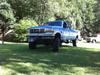
it looks like your rear springs are a rubber band ready to snap
FTE Leadership Emeritus
Joined: Jul 2002
Posts: 42,562
Likes: 424
From: Long Island USA
OK, way off topic.