



Gas vs PSD
Lead Driver


Joined: Dec 2006
Posts: 7,093
Likes: 147
From: San Diego, CA


Posting Guru
Joined: Aug 2007
Posts: 1,317
Likes: 0
From: Auburn, Wa

I know, However I have this Great quote to put in my Sig!!!!

Fleet Mechanic
Joined: Sep 2007
Posts: 1,256
Likes: 6
From: Garden Valley, Idaho

I don't need NOS to whip diesels, they are easy. Diesels are all about noise, smoke and stink. If you like working and fixing on your diesel in all your spare time, go for it, but for me my V-10 is just gas and go with no stink, no smoke and I can hear my radio with the window open.

Postmaster
Joined: Apr 2008
Posts: 4,724
Likes: 4
From: Rogersville, TN
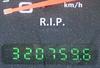
I am at 215k on my 7.3 and I have spent a total of 75 cents and 20 minutes working on it. I have spent most of my free time rebuilding 3 gas engines that couldn't make it to 150k miles, and getting ready to start on my 4th.
I can listen to my radio with the window open too. My diesel is actually more quiet at 2k rpm than my 5.4 is at 4k rpm when pulling the same load up a hill. Stock diesels with stock exhaust really aren't that loud. If you are comparing your quiet v10 to a diesel with aftermarket exhaust, then that isn't a legitimate comparison. There are some pretty noisey 5.4's and 6.8's around here....

FTE Leadership Emeritus
Joined: Jul 2002
Posts: 42,561
Likes: 423
From: Long Island USA
One thing for the people arguing over dynos. I'll try to explain it in very simple terms.
They are talking about CHASSIS dynos. Not something where you put an engine on a stand, and measure actual flywheel TORQUE.
Chassis dynos operate on a simple principle. Strap the vehicle down so it's driven wheels will spin a drum. That drum has a fixed weight (for the sake of argument). If you measure how quickly the vehicle can accelerate that drum, you can calculate HORSEPOWER.
Using the engine RPM at any given time (and whatever gearing is between the engine and the wheels), and the rate of increase of acceleration, you can compute engine torque.
If HP=(Torque*RPM)/5252, then Torque=(HP*5252)/RPM, that's simple middle-school algebra.
For those that are still following:
Now, never mind the simple fact that in the above equation, HORSEPOWER is actually a value that involves a constant engine speed. Meanwhile, the chassis dyno is computing horsepower by how fast a mass is accelerated. Which means, you could simply use an aluminum driveshaft, or lighter flywheel, or different transmission, and the chassis dyno would show an increase in horsepower/torque. HOWEVER - it's not real in terms of FLYWHEEL horsepower. Nor is it "real" in terms of the vehicle's actual performance. There are various ways to APPROXIMATE the weight of the vehicle, drag, friction, etc, but the chassis dyno will never EVER 100% simulate real-world conditions.
They are talking about CHASSIS dynos. Not something where you put an engine on a stand, and measure actual flywheel TORQUE.
Chassis dynos operate on a simple principle. Strap the vehicle down so it's driven wheels will spin a drum. That drum has a fixed weight (for the sake of argument). If you measure how quickly the vehicle can accelerate that drum, you can calculate HORSEPOWER.
Using the engine RPM at any given time (and whatever gearing is between the engine and the wheels), and the rate of increase of acceleration, you can compute engine torque.
If HP=(Torque*RPM)/5252, then Torque=(HP*5252)/RPM, that's simple middle-school algebra.
For those that are still following:
Now, never mind the simple fact that in the above equation, HORSEPOWER is actually a value that involves a constant engine speed. Meanwhile, the chassis dyno is computing horsepower by how fast a mass is accelerated. Which means, you could simply use an aluminum driveshaft, or lighter flywheel, or different transmission, and the chassis dyno would show an increase in horsepower/torque. HOWEVER - it's not real in terms of FLYWHEEL horsepower. Nor is it "real" in terms of the vehicle's actual performance. There are various ways to APPROXIMATE the weight of the vehicle, drag, friction, etc, but the chassis dyno will never EVER 100% simulate real-world conditions.
FTE Leadership Emeritus
Joined: Jul 2002
Posts: 42,561
Likes: 423
From: Long Island USA
One thing for the people arguing over dynos. I'll try to explain it in very simple terms.
They are talking about CHASSIS dynos. Not something where you put an engine on a stand, and measure actual flywheel TORQUE.
Chassis dynos operate on a simple principle. Strap the vehicle down so it's driven wheels will spin a drum. That drum has a fixed weight (for the sake of argument). If you measure how quickly the vehicle can accelerate that drum, you can calculate HORSEPOWER.
Using the engine RPM at any given time (and whatever gearing is between the engine and the wheels), and the rate of increase of acceleration, you can compute engine torque.
If HP=(Torque*RPM)/5252, then Torque=(HP*5252)/RPM, that's simple middle-school algebra.
For those that are still following:
Now, never mind the simple fact that in the above equation, HORSEPOWER is actually a value that involves a constant engine speed. Meanwhile, the chassis dyno is computing horsepower by how fast a mass is accelerated. Which means, you could simply use an aluminum driveshaft, or lighter flywheel, or different transmission, and the chassis dyno would show an increase in horsepower/torque. HOWEVER - it's not real in terms of FLYWHEEL horsepower. Nor is it "real" in terms of the vehicle's actual performance. There are various ways to APPROXIMATE the weight of the vehicle, drag, friction, etc, but the chassis dyno will never EVER 100% simulate real-world conditions.
They are talking about CHASSIS dynos. Not something where you put an engine on a stand, and measure actual flywheel TORQUE.
Chassis dynos operate on a simple principle. Strap the vehicle down so it's driven wheels will spin a drum. That drum has a fixed weight (for the sake of argument). If you measure how quickly the vehicle can accelerate that drum, you can calculate HORSEPOWER.
Using the engine RPM at any given time (and whatever gearing is between the engine and the wheels), and the rate of increase of acceleration, you can compute engine torque.
If HP=(Torque*RPM)/5252, then Torque=(HP*5252)/RPM, that's simple middle-school algebra.
For those that are still following:
Now, never mind the simple fact that in the above equation, HORSEPOWER is actually a value that involves a constant engine speed. Meanwhile, the chassis dyno is computing horsepower by how fast a mass is accelerated. Which means, you could simply use an aluminum driveshaft, or lighter flywheel, or different transmission, and the chassis dyno would show an increase in horsepower/torque. HOWEVER - it's not real in terms of FLYWHEEL horsepower. Nor is it "real" in terms of the vehicle's actual performance. There are various ways to APPROXIMATE the weight of the vehicle, drag, friction, etc, but the chassis dyno will never EVER 100% simulate real-world conditions.
Fleet Mechanic
Joined: Sep 2007
Posts: 1,256
Likes: 6
From: Garden Valley, Idaho
Well, I am glad to hear that your 7.3 is trouble free, and I am sure that most of the 7.3's are also trouble free. I have had a 1997 and a 2002 PSD and they both were fairly trouble free. I also had a 6.9 idi and it too was trouble free, but a dog for power. All you need to do to see what "trouble free" engines are out there is to look up thier individual TSB list and see which engine is the most trouble free. You'll find that the V-10 is way ahead of all the others in truck engines in haveing the least number of TSB's for the past 10 years. Except for the initial spark plug problem in the first 2 years of production, there have been very few TSB's for the V-10 engine. If you have nothing to do for a few hours, just start reading the TSB's for the 6 leaker, then go to the 6.4, and lastly the 7.3. You'll be amazed.

Postmaster
Joined: Oct 2006
Posts: 4,171
Likes: 12
From: SE Texas
My work truck '01 F150) has 230K miles on it and has never had a wrench on it,other than plug changes.
My old '98 F150 that dad owns has only has the trans and the rear axle worked on-the engine has never had a mechanical failure.
The '01 Navigator has 172K miles on it,and has never had a wrench on it.
'97 Tbird-over 200K miles and it was pulled to simply replace with a built up engine for the track. ALL engine internal dimensions on the components were still within OEM new assembly specs when mic'd.
The '96 Powerstroke 7.3L here at work that we got rid of was on it's 2nd 7.3L-it ate a couple of pistons at 180K miles on the original engine,and was running on it's 5th CPS. That truck was replaced with an '06 6.8L. It's got right around 50K on it now,and has never been touched,although it will get a set of spark plugs in the next month or so.
That old 7.3L's primary use was to pull a 35' gooseneck float with a Kubota KX61 excavator. That excavator has been upgraded to a KX121 and the new truck pulls it better than the 7.3L ever dreamed of doing. The old excavator was 6500lbs and the new one is 9800lbs. Trailer weighs around 4500lbs.
JL
FTE Stories
Ford Trucks for Ford Truck Enthusiasts

Top 6 Best Deals Available on New Fords & Lincolns Right Now
Brett Foote
This Hennessey Takes the Expedition Tremor's Off-Roading Capability to the Next Level
Verdad Gallardo
Top 10 Fords at 2026 Carlisle Ford Nationals
Joe Kucinski
3 Best / 3 Worst Parts of Modern Ford Ownership
Brett Foote
10 Amazing Upgrades That Solve Common Ford Truck Owner Headaches
Pouria Savadkouei
Every 2026 Ford Engine Explained
Brett Foote
10 Ugly Ford Trucks That We Still Kinda Love
Joe Kucinski
10 Things Every Truck Owner NEEDS (2026 Edition)
Michael S. Palmer
Rezvani's Latest Post-Apocalyptic Monster Is a Ford F-150 Raptor Underneath
Verdad Gallardo
FTE Leadership Emeritus
Joined: Jul 2002
Posts: 42,561
Likes: 423
From: Long Island USA


Thread Starter
|
Modular motor junkie
Joined: May 2009
Posts: 6,190
Likes: 8
From: Texas
All my gassers are fine, but I am about to pull my 7.3 IDI this weekend to rebuild it.

Elder User
Joined: Jul 2006
Posts: 577
Likes: 0
From: Stevens County, WA
I can play this game too...
My work truck '01 F150) has 230K miles on it and has never had a wrench on it,other than plug changes.
My old '98 F150 that dad owns has only has the trans and the rear axle worked on-the engine has never had a mechanical failure.
The '01 Navigator has 172K miles on it,and has never had a wrench on it.
'97 Tbird-over 200K miles and it was pulled to simply replace with a built up engine for the track. ALL engine internal dimensions on the components were still within OEM new assembly specs when mic'd.
The '96 Powerstroke 7.3L here at work that we got rid of was on it's 2nd 7.3L-it ate a couple of pistons at 180K miles on the original engine,and was running on it's 5th CPS. That truck was replaced with an '06 6.8L. It's got right around 50K on it now,and has never been touched,although it will get a set of spark plugs in the next month or so.
That old 7.3L's primary use was to pull a 35' gooseneck float with a Kubota KX61 excavator. That excavator has been upgraded to a KX121 and the new truck pulls it better than the 7.3L ever dreamed of doing. The old excavator was 6500lbs and the new one is 9800lbs. Trailer weighs around 4500lbs.
JL
My work truck '01 F150) has 230K miles on it and has never had a wrench on it,other than plug changes.
My old '98 F150 that dad owns has only has the trans and the rear axle worked on-the engine has never had a mechanical failure.
The '01 Navigator has 172K miles on it,and has never had a wrench on it.
'97 Tbird-over 200K miles and it was pulled to simply replace with a built up engine for the track. ALL engine internal dimensions on the components were still within OEM new assembly specs when mic'd.
The '96 Powerstroke 7.3L here at work that we got rid of was on it's 2nd 7.3L-it ate a couple of pistons at 180K miles on the original engine,and was running on it's 5th CPS. That truck was replaced with an '06 6.8L. It's got right around 50K on it now,and has never been touched,although it will get a set of spark plugs in the next month or so.
That old 7.3L's primary use was to pull a 35' gooseneck float with a Kubota KX61 excavator. That excavator has been upgraded to a KX121 and the new truck pulls it better than the 7.3L ever dreamed of doing. The old excavator was 6500lbs and the new one is 9800lbs. Trailer weighs around 4500lbs.
JL
Postmaster
Joined: Oct 2006
Posts: 4,171
Likes: 12
From: SE Texas
Just curious, but did any of the above mentioned gassers regularly pull a 15,000 lb trailer? Obviously not because the rear end would melt. It's like comparing apples to oranges when you compare light duty motors to load pulling diesels. I fully expect my 5.7 Hemi to last over 200,000 miles too, but it's not pulling anything heavy.
The '01 F150 work truck has a GVWR of 6050 and it rolls down the road with me in it right at 6000lbs. It's got a ladder rack,toolboxes,and the back seat has been removed with a set of custom boxes built for materials and tools inside the supercab. I've personally driven this truck for 200K+ miles,and it's been worked like a truck should be. It's also had trailers behind it that far exceed the rated towing capacity,and the little 4.6L under the hood just sang along all day long towing it without a hint of a problem.
JL
Postmaster
Joined: Apr 2008
Posts: 4,724
Likes: 4
From: Rogersville, TN
True, but I know the situation behind that one too. It was not well maintained and probably never saw any coolant additive in its life.
Elder User
Joined: Jul 2006
Posts: 577
Likes: 0
From: Stevens County, WA
No,15K lbs exceeds the rated capacity of both of those F150's.
The '01 F150 work truck has a GVWR of 6050 and it rolls down the road with me in it right at 6000lbs. It's got a ladder rack,toolboxes,and the back seat has been removed with a set of custom boxes built for materials and tools inside the supercab. I've personally driven this truck for 200K+ miles,and it's been worked like a truck should be. It's also had trailers behind it that far exceed the rated towing capacity,and the little 4.6L under the hood just sang along all day long towing it without a hint of a problem.
JL
The '01 F150 work truck has a GVWR of 6050 and it rolls down the road with me in it right at 6000lbs. It's got a ladder rack,toolboxes,and the back seat has been removed with a set of custom boxes built for materials and tools inside the supercab. I've personally driven this truck for 200K+ miles,and it's been worked like a truck should be. It's also had trailers behind it that far exceed the rated towing capacity,and the little 4.6L under the hood just sang along all day long towing it without a hint of a problem.
JL
Postmaster
Joined: Apr 2008
Posts: 4,724
Likes: 4
From: Rogersville, TN
I can play this game too...
My work truck '01 F150) has 230K miles on it and has never had a wrench on it,other than plug changes.
The '96 Powerstroke 7.3L here at work that we got rid of was on it's 2nd 7.3L-it ate a couple of pistons at 180K miles on the original engine,and was running on it's 5th CPS.
That old 7.3L's primary use was to pull a 35' gooseneck float with a Kubota KX61 excavator. That excavator has been upgraded to a KX121 and the new truck pulls it better than the 7.3L ever dreamed of doing. The old excavator was 6500lbs and the new one is 9800lbs. Trailer weighs around 4500lbs.
JL
My work truck '01 F150) has 230K miles on it and has never had a wrench on it,other than plug changes.
The '96 Powerstroke 7.3L here at work that we got rid of was on it's 2nd 7.3L-it ate a couple of pistons at 180K miles on the original engine,and was running on it's 5th CPS.
That old 7.3L's primary use was to pull a 35' gooseneck float with a Kubota KX61 excavator. That excavator has been upgraded to a KX121 and the new truck pulls it better than the 7.3L ever dreamed of doing. The old excavator was 6500lbs and the new one is 9800lbs. Trailer weighs around 4500lbs.
JL
There is a reason why I don't have a 6.0 or 6.4. I would take a v10 over those any day of the week. For me, the 7.3 is the best mix of power, mpg's and reliability.