



Gas vs PSD

Postmaster
Joined: Apr 2008
Posts: 4,724
Likes: 4
From: Rogersville, TN
There's simply no such thing as cheap diesel parts and that applies triple to new diesels. Ask the guy on another thread that was quoted $24,000 to fix his one year old PSD how infallible ANY engine is. But even if the worst happened to my V10 I could replace the engine myself, in my garage, probably for $5,000 or less. Can't say that for any diesel owner unless he has a lift to get the cab off and a big bank account to foot the bill.
Also, diesel vehicles do make huge power, but mostly they make torque. They make it due to one thing and one thing only, they are turbocharged. End of story. Period.
Also, diesel vehicles do make huge power, but mostly they make torque. They make it due to one thing and one thing only, they are turbocharged. End of story. Period.
With the exception of the 6.4 and the cab removal, rebuilding a diesel is no different than rebuilding a gasser. I can rebuild mine in my garage too. They are actually easier to rebuild because there are less parts to remove to get it out of the truck. I just rebuilt an 8.3 cummins for about the same as I've rebuilt any gasser.
Having a turbo does help the diesel a lot. I won't deny that. But that is the good thing about a diesel. You can run 30-45 psi on them all day and not affect reliability in the least bit(no spark/detonation, stronger block and internals, etc). A PSD weighs over twice what a v10 or 5.4 weighs for a reason. The modulars are pretty bulletproof, but put 30 PSI with no intercooler (or even with one) and hold it wide open up a 10-15 mile climb and you MIGHT make it half way up before you leave a few rods on the side of the road. I tried it with a 351 and didn't make it an 1/8th of a mile before I split the block in half lol.
Edit-just to make sure you know, I'm not calling BS on you. I saw the post too, so I know you're telling the truth about that. Just saying I have never seen any engine cost that much to rebuild(in stock form), whether it be diesel or gas. Especially one that 90% of the parts could have been re-used.

Posting Guru

Joined: Oct 2009
Posts: 2,066
Likes: 4
From: Rogue River, Oregon
I think we're seeing eye-to-eye, kinda. Yes, the $24K was waaaaaay too high, but they weren't rebuilding (as I understand it), they were just replacing it, lock, stock and barrel. Again, completely out of line price, but if that's what they charge, that's what they charge.
The turbo doesn't help, it absolutely makes diesels what they are. Ask anyone who has ever driven a non-turbo's diesel how it was. They are the slowest, most worthless engine on the planet. I freind of my Dad's had one back in the late '80's and we were coming back from a trip to the dunes, traveling together. My Dad had a Dodge van with a 318 and his 22ft camp trailer, My Dad's buddy had a late model (at the time) truck (for the life of me I cannot remember the brand, but I think it was a Ford) and I had my '83 S-10 Blazer with the mighty (not) 2.8 V6 and my quads and camping stuff on the trailer. The unblown diesel was by far the slowest up the hills. My next experience with unblown diesels was borrowing my father in laws, early '80's GMC with the 350 diesel, you know the one with the car block. Total turd. I would venture to say the thing had less than 100 rear wheel horsepower. How they ever sold the second one is beyond me.
As for how stout mod motors are, I remember an article in Hot Rod a while back that had a Cougar with a blown 4.6 that ran in the 6 second zone at over 200 mph, using stock block, crank and rods. Now I'm not gonna lie and say it was streetable or that it ran those numbers very long with that combo, but it did it without breakage at the time the article was written.
Edit: Wait justa second!!! Did you say, "...there are less parts to remove..." for the diesel? I gotta toss out the BS flag on that play! If I had a modern diesel (as in less than 5 years old) I'd weld the hood shut so I didn't have to look at all that crap!!! It is an absolute nightmare under the hood! By comparison, my V10 looks naked. Now I know not all diesels are new, and my Dad's '01 Dodge Cummins was fairly simple and quite reliable, but his '07 6.7 Cummins is scary to see! I shudder to think of how many weeks it would take to get it out and it's MUCH better looking than either the Ford or Duramax motors.
The turbo doesn't help, it absolutely makes diesels what they are. Ask anyone who has ever driven a non-turbo's diesel how it was. They are the slowest, most worthless engine on the planet. I freind of my Dad's had one back in the late '80's and we were coming back from a trip to the dunes, traveling together. My Dad had a Dodge van with a 318 and his 22ft camp trailer, My Dad's buddy had a late model (at the time) truck (for the life of me I cannot remember the brand, but I think it was a Ford) and I had my '83 S-10 Blazer with the mighty (not) 2.8 V6 and my quads and camping stuff on the trailer. The unblown diesel was by far the slowest up the hills. My next experience with unblown diesels was borrowing my father in laws, early '80's GMC with the 350 diesel, you know the one with the car block. Total turd. I would venture to say the thing had less than 100 rear wheel horsepower. How they ever sold the second one is beyond me.
As for how stout mod motors are, I remember an article in Hot Rod a while back that had a Cougar with a blown 4.6 that ran in the 6 second zone at over 200 mph, using stock block, crank and rods. Now I'm not gonna lie and say it was streetable or that it ran those numbers very long with that combo, but it did it without breakage at the time the article was written.
Edit: Wait justa second!!! Did you say, "...there are less parts to remove..." for the diesel? I gotta toss out the BS flag on that play! If I had a modern diesel (as in less than 5 years old) I'd weld the hood shut so I didn't have to look at all that crap!!! It is an absolute nightmare under the hood! By comparison, my V10 looks naked. Now I know not all diesels are new, and my Dad's '01 Dodge Cummins was fairly simple and quite reliable, but his '07 6.7 Cummins is scary to see! I shudder to think of how many weeks it would take to get it out and it's MUCH better looking than either the Ford or Duramax motors.
Thread Starter
|
Modular motor junkie
Joined: May 2009
Posts: 6,190
Likes: 8
From: Texas
The non turbo diesels are slow, the first time I drive mine I ran it foot to the floor for the whole intrance ramp just to hit 65. My V10 is faster towing than my 7.3 IDI is empty.
170 HP at the fly wheel.
The IDI has 41 pounds for every HP.
The V10 has 41 for every HP, while it is towing over 5,000 pounds.
You add how much more TQ the V10 has and it just gets worse.
170 HP at the fly wheel.
The IDI has 41 pounds for every HP.
The V10 has 41 for every HP, while it is towing over 5,000 pounds.
You add how much more TQ the V10 has and it just gets worse.
Post Fiend
Joined: Nov 2008
Posts: 23,849
Likes: 20
From: McKenzie River
A friend had a non turbo, diesel Mercedes............It was SO slow, it barely hit 40 mph on a freeway on ramp with your foot in the floor. Merging into traffic was taking your life in your hands.

Postmaster
Joined: Apr 2006
Posts: 3,524
Likes: 2
From: CA Bay Area
Edit: Wait justa second!!! Did you say, "...there are less parts to remove..." for the diesel? I gotta toss out the BS flag on that play! If I had a modern diesel (as in less than 5 years old) I'd weld the hood shut so I didn't have to look at all that crap!!! It is an absolute nightmare under the hood! By comparison, my V10 looks naked. Now I know not all diesels are new, and my Dad's '01 Dodge Cummins was fairly simple and quite reliable, but his '07 6.7 Cummins is scary to see! I shudder to think of how many weeks it would take to get it out and it's MUCH better looking than either the Ford or Duramax motors.
We can keep on tossing the flag back and forth.
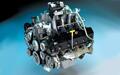
This is top view of cdi engine. It can't get much simpler than that. One rail, very small injectors and some light wiring.
That gets lot of foam on top to dampen the noise, so you can whisper to your wife while cruising at 80 mph.

Thread Starter
|
Modular motor junkie
Joined: May 2009
Posts: 6,190
Likes: 8
From: Texas
So whats the deal with CDI eninges?
What makes them diffrent and why do we not have them here?
What makes them diffrent and why do we not have them here?
FTE Stories
Ford Trucks for Ford Truck Enthusiasts

Top 6 Best Deals Available on New Fords & Lincolns Right Now
Brett Foote
This Hennessey Takes the Expedition Tremor's Off-Roading Capability to the Next Level
Verdad Gallardo
Top 10 Fords at 2026 Carlisle Ford Nationals
Joe Kucinski
3 Best / 3 Worst Parts of Modern Ford Ownership
Brett Foote
10 Amazing Upgrades That Solve Common Ford Truck Owner Headaches
Pouria Savadkouei
Every 2026 Ford Engine Explained
Brett Foote
10 Ugly Ford Trucks That We Still Kinda Love
Joe Kucinski
10 Things Every Truck Owner NEEDS (2026 Edition)
Michael S. Palmer
Rezvani's Latest Post-Apocalyptic Monster Is a Ford F-150 Raptor Underneath
Verdad Gallardo
Postmaster
Joined: Apr 2006
Posts: 3,524
Likes: 2
From: CA Bay Area
My is that the oil companies "sponsor" politicians to not allow 60-70 mpg cars or 25-35 mpg trucks on our roads.
The technology is a bit too complicated to explain in single post, but it allows for full engine control by computer as well as cutting the fuel off for engine braking.
Not only very good fuel efficiency but very low emissions.
Common Germans take on the last is, that in most states their diesel will exhaust cleaner air, than they intake.

CDI engines are used in Sprinter vans. Did you notice their resale value?

Lead Driver

Joined: Jul 2007
Posts: 7,868
Likes: 9
From: Rhode Island
CDI is Common Rail Direct Injection. All current diesel trucks sold in the US are "CDI". The Power Stroke when common rail (in the traditional modern sense) in 2007 with the 6.4. The Duramax has been common rail since its inception in 2001, and the Cummins went common rail in 2003.
Here's an interesting tidbit, the 7.3 Power Stroke is *technically* a fully electronically controlled common rail engine. Although it has two "common rails", one to feed the injectors oil, and another to supply the fuel the injectors. The 7.3 Power Stroke was released in 1994.5, making it one of the first fully electronically injected diesels - in the world. It was a very advanced engine at the time. Most others, including VW, Mercedes, etc.. were using mechanical injection supplemented by electronics well into the late 90s and early 2000s
You can "hear" the 7.3s electronics at work if you want. When coasting with the torque converter locked up or in gear (if you have a manual), everything will suddenly get very quiet until the engine gets back near its idle RPM and the computer starts firing the injectors again.
But like I said, CDI engines are nothing new, and we've had them here in America for quite a long time - and we've had fully electronically controlled engines even longer still.
Here's an interesting tidbit, the 7.3 Power Stroke is *technically* a fully electronically controlled common rail engine. Although it has two "common rails", one to feed the injectors oil, and another to supply the fuel the injectors. The 7.3 Power Stroke was released in 1994.5, making it one of the first fully electronically injected diesels - in the world. It was a very advanced engine at the time. Most others, including VW, Mercedes, etc.. were using mechanical injection supplemented by electronics well into the late 90s and early 2000s
You can "hear" the 7.3s electronics at work if you want. When coasting with the torque converter locked up or in gear (if you have a manual), everything will suddenly get very quiet until the engine gets back near its idle RPM and the computer starts firing the injectors again.
But like I said, CDI engines are nothing new, and we've had them here in America for quite a long time - and we've had fully electronically controlled engines even longer still.
Postmaster
Joined: Apr 2006
Posts: 3,524
Likes: 2
From: CA Bay Area
You are right that PS might be one of the first electronically INJECTED engine, but as far as I learned about this engine it si not measuring the engine combustion. No MAF and some members insisted that the only thing controlling the injections is the foot of the drivers. The signal is electronically transferred but still controlled by the foot. In another words what highly repped members say -the electronic injection shoots in dark air.
Maybe they are wrong, but I consider PS badly outdated technology and don't want to spend the time to learn the details.
I never noticed PS quieting down coasting downhill. It is always very noisy, but will pay attention tomorrow while driving if I can notice any difference.
Maybe they are wrong, but I consider PS badly outdated technology and don't want to spend the time to learn the details.
I never noticed PS quieting down coasting downhill. It is always very noisy, but will pay attention tomorrow while driving if I can notice any difference.
Super Moderator


Joined: Aug 2003
Posts: 25,479
Likes: 742
From: Isanti, MN

We can keep on tossing the flag back and forth.
This is top view of cdi engine. It can't get much simpler than that. One rail, very small injectors and some light wiring.
That gets lot of foam on top to dampen the noise, so you can whisper to your wife while cruising at 80 mph.
This is top view of cdi engine. It can't get much simpler than that. One rail, very small injectors and some light wiring.
That gets lot of foam on top to dampen the noise, so you can whisper to your wife while cruising at 80 mph.

Other than being under the valve cover WHERE'S THE DIFFERENCE?
Oh yeah...the 6.4L IS a common-rail direct-injected engine!