When you click on links to various merchants on this site and make a purchase, this can result in this site earning a commission. Affiliate programs and affiliations include, but are not limited to, the eBay Partner Network.
Is it possible that there's some problem with the turbo?
Here's the scenario:
What if the exhaust wheel has some problem. My EBP is bouncing because the the exhaust wheel isn't spinning right. Sometimes the wheel doesn't want to turn. The exhaust pressure builds, then the wheel turns, pressure drops, the wheel sticks, pressure rises, etc.
This would explain the bouncy EBP (assuming my scenario is even possible) and the low max boost.
I don't see how it would explain a lack of black smoke when the hammer goes down or the high EGTs though.
If you're riding at 57 PSI during WOT, that's a very reasonable number.
Great job at testing for air in fuel! You may want to keep your "test equipment" and repeat the process at 1/2 - 1/4 tank.
Don't focus too hard on the bouncy EBP just yet. Yes, this symptom showed up on a lot of trucks with air woes... but I still want to verify its "gone-ness" with several happy trucks.
This thread has had a lot of spin and I'm starting to lose track of where we've been. For a recap (if I remember correctly)... the fueling (ICP/IPR) is good, fuel pressure good, EGTs high, and air not so good.
If you're riding at 57 PSI during WOT, that's a very reasonable number.
That's good news.
Originally Posted by Tugly
Great job at testing for air in fuel! You may want to keep your "test equipment" and repeat the process at 1/2 - 1/4 tank.
Will do.
Originally Posted by Tugly
Don't focus too hard on the bouncy EBP just yet. Yes, this symptom showed up on a lot of trucks with air woes... but I still want to verify its "gone-ness" with several happy trucks.
Fair enough.
Originally Posted by Tugly
This thread has had a lot of spin and I'm starting to lose track of where we've been. For a recap (if I remember correctly)... the fueling (ICP/IPR) is good, fuel pressure good, EGTs high, and air not so good.
Reducing RPM to 2250 or less seems to get EGTs in line
Bouncy EBP (Red Herring?)
Changed to bellowed up pipes - no change
Plug red cap - more boost but still not whats expected
Cannot seem to generate black smoke under any conditions
No excessive oil consumption
White smoke on very cold start ups - was excessive ONCE last winter
No found turbo related leaks with boost detector and looking for oil
Turbo wheel had no play (but now questioning if I was thorough with that)
ODB info seems to be good (IPR? Above)
EGT issues on 6-7% grade - had to back off to ~35 MPH to manage egts with 8K lb. trailer.
Black fuel filter - outer only, inner seems good
With the black fuel filter, I took a fuel sample from the engine filter drain and let it sit to separate. Maybe most of that fuel is post filter. Should I siphon some out of the tank to see if oil separates out? I can send fuel out for analysis, but I think it was something like $150 to get it done....
Thank you for the better recap. I remember now that I was thinking that IPR was a little high for idle, but within the book spec. Couple that with the black fuel filter and I declare bad injector O-rings, plain and simple. I would start there before going any further - then re-evaluate after the air is purged from the oil rails.
I think we also established that if there's a leak that it will be very small - since I don't appear to be loosing an excessive amount of oil.
I'd like to make up a test rig with a gauge (I can use the fuel pressure gauge) and a shutoff valve. Should the rail hold pressure? So I can pressurize to 100 PSI and then let it sit for 10 minutes. If it's still at 100 PSI then that side is good...
These are the two fittings?
Does anyone know the fitting size and type?
I assume they unscrew at the head - the nut in the second photo?
[EDIT] OK, based on the photos on the RiffRaff site, the HPOP lines are quick connects. Are these quick connects some standard item I can get at a local hydraulic shop?
Also, should I invest in the quick connect tool?
Learning more. The fittings are Eaton STC fittings. A tool can be used or a 7/16 bicycle wrench can be ground to a bevel. I'm not sure of the size of the fitting so I'm not quite ready to go to my local hydraulic shop yet.....
OK, I'm going to try to hunt down some fittings so I can do the Cody test....
I'm still confused though. If there's an o-ring leak on the HP oil side, would I be able to get over 2800 PSI ICP? It seems that a power robbing leak would also keep the max ICP down wouldn't it?
A very bad internal oil leak will prevent the ICP from reaching top pressure, but a slight leak will just make the IPR climb higher than normal. I had the latter with a loose injector, but a leaky O-ring will do the same thing (and put oil in fuel).
This is from the above thead, I was asking some generic questions that would help both the OP and me, but my follow ups were getting too specific so I'm asking here:
Here's a quick summary of issues:
Here my summary:
Low boost at WOT under load
High EGTs at high load/RPM
Reducing RPM to 2250 or less seems to get EGTs in line
Bouncy EBP (Red Herring?)
Changed to bellowed up pipes - no change
Plug red cap - more boost but still not whats expected
Cannot seem to generate black smoke under any conditions
No excessive oil consumption
White smoke on very cold start ups - was excessive ONCE last winter
No found turbo related leaks with boost detector and looking for oil
Turbo wheel had no play (but now questioning if I was thorough with that)
ODB info seems to be good (IPR? Above)
EGT issues on 6-7% grade - had to back off to ~35 MPH to manage egts with 8K lb. trailer.
Black fuel filter - outer only, inner seems good
Originally Posted by Tugly
I was thinking that IPR was a little high for idle, but within the book spec. Couple that with the black fuel filter and I declare bad injector O-rings, plain and simple. I would start there before going any further - then re-evaluate after the air is purged from the oil rails.
I'm trying to find a fitting for the head so I can do a Cody test that includes a bleed down component. I still want to feel like I have a grasp on what could be going on though, so these other questions....
Context from the other thread:
Originally Posted by tjmike
For bad o-rings, the HP oil leaks into the fuel. I assume this might create poor combustion - leading to a lack of power, similar to low fuel pressure or low HPOP. If the leak is small enough, then maybe no smoke?
If there were smoke, I assume it would be blue?
From what I can tell, the fuel path is:
Code:
PUMP
   |
   |
  \/
Regulator
  |
  |----->Tank Return
  |---> Drain Valve???
 \/
PreFilter
  |
  | ---> Driver Side Test Port
 \/
Filter
  |
  |---> Passenger Side Test Port
  |
  |
 \/
Heads
If this is correct, then oil would need to get through both the main filter and the prefilter if it came from the heads. So, both the inside and the outside of the main filter would have oil on them if this were the case.
I would also thing that fuel drained from the filter would contain enough oil that it would separate out if left in a jar.
Does any of this seem right?
Originally Posted by jhl3
Yes your fuel path is basically correct.
If I understand your train of thought, then consider this:
The HPOP creates high pressure. Volume is low. You would be amazed by how little oil is used in each injection cycle. So, for you to experience the hypothetical that you are proposing, there would need to be a major problem with at least one injector on the oil side of the equation. You would have some major misfires and shaking.
When is the last time you changed your fuel filter. It should be black if the o-rings are gone. The oil from bad o-rings does does not stay in the fuel bowl long term because it gets sent back to the heads as soon as pressure from the HPOP decreases to the point that the o-rings can begin to function semi-normally again.
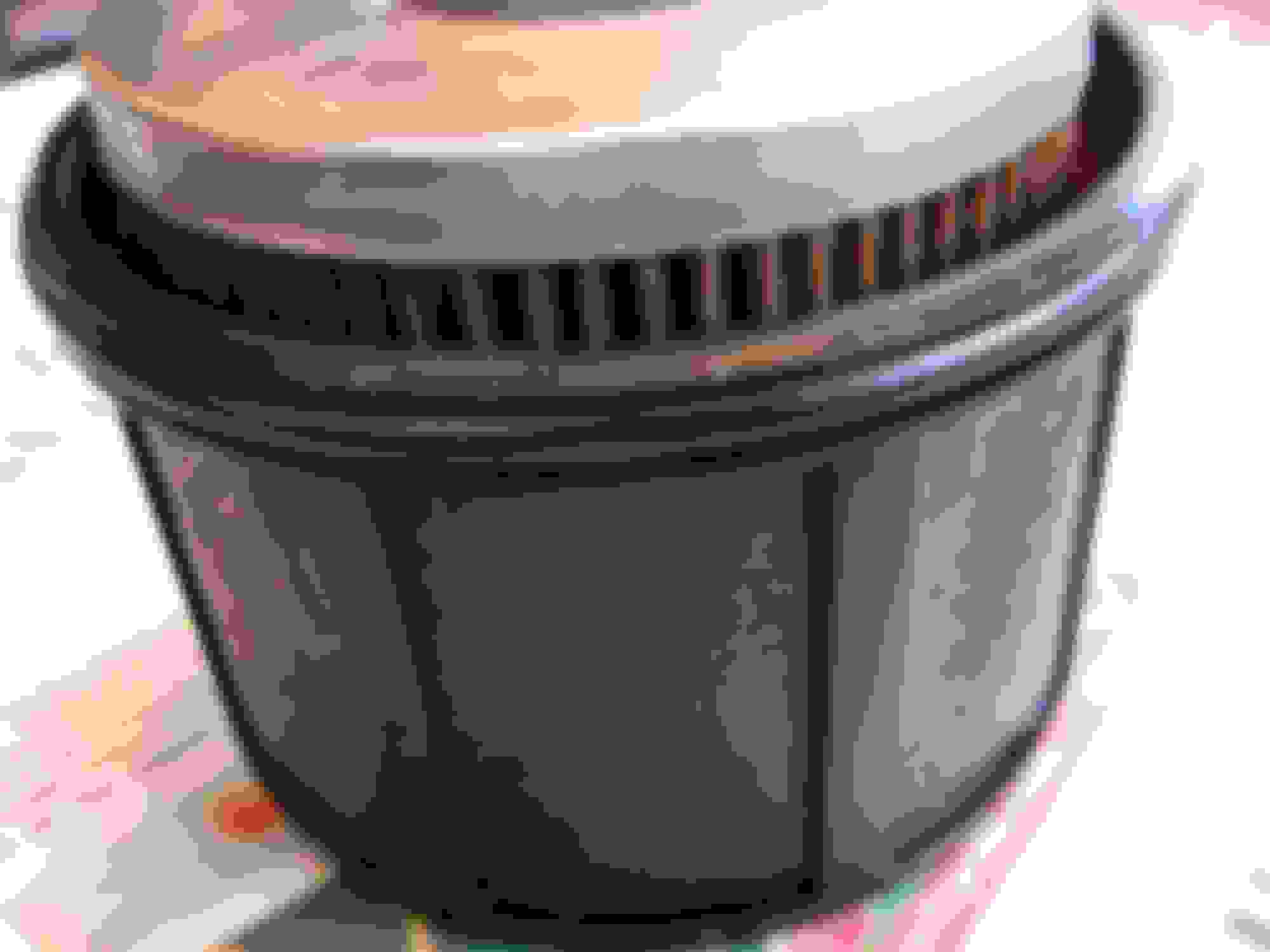
Here's a very black outer filter - 6,500 miles.
However, the outer and inner pleats of the filter are pretty clean:
I don't understand how, if the oil is coming from the head and going through the pleated filter and then through the outer filter why both sides of the pleated filter are not black as well?
in order for the fuel to get from the head to the outer filter, it must go through the pleated filter, right?
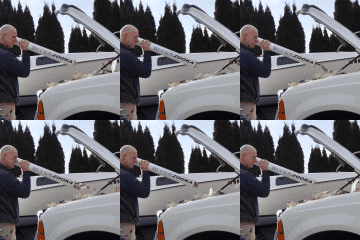
And to add to the data. Here's a WOT run ~20-55MPH in regular speed and slow motion in an effort to find some black smoke:
No, the oil is being filtered as it flows back to the fuel bowl with the fuel from the head...it ,the fuel, already made the trip once...it is coming back down what should be a one way path so to speak due to a pressure differiential of thousands of psi's. That is why the filter is black on one side only.
When are you going to replace the o-rings. When you do, bc that is at least part of the issue
..Go OEM....
The filter looks exactly as it should for when the o-rings are bad. It is trapping the impurities properly on the proper side.
No, the oil is being filtered as it flows back to the fuel bowl with the fuel from the head...it already made the trip once...it is coming back down what should be a one way path so to speak due to a pressure differiential of thousands of psi's. That is why the filter os black on one side only.
OHHHH maybe I have the filter process backwards. I thought that the fuel from the tank went through the outer (white) filter, then through the pleated filter then to the head.
If if the fuel goes through the pleated filter FIRST and then through the outer filter then I understand. On the way back from the head, it hits the white filter first and gets filtered out there?
Originally Posted by jhl3
When are you going to replace the o-rings. When you do, bc that is at least part of the issue
..Go OEM....
Yes Alliant == oem correct?
May do glow plugs and compression test too.
Oil from one leaking o-ring will contaminate ALL the injectors so all the cylls can suffer a power loss, not just the leaky hole.
OK, I'm going to try to hunt down some fittings so I can do the Cody test....
I'm still confused though. If there's an o-ring leak on the HP oil side, would I be able to get over 2800 PSI ICP? It seems that a power robbing leak would also keep the max ICP down wouldn't it?
YES. I've seen a spike of up to 4000 psi with bad o-rings. The IPRDC will max out and stay there but the HPOP will not be able to keep up....and it will bleed off until the hpop can keep up: usually in the 2000-2200 range. Rich calls it a "Stinky Spike"...though for a possibly different reason.
Rezvani's Latest Post-Apocalyptic Monster Is a Ford F-150 Raptor Underneath
Slideshow: Called the Fortress, the 850-horsepower pickup combines Raptor underpinnings with military-inspired features, survival equipment, and a starting price of $285,000.