When you click on links to various merchants on this site and make a purchase, this can result in this site earning a commission. Affiliate programs and affiliations include, but are not limited to, the eBay Partner Network.
I have Injector O-Rings and Glow Plugs. While I have it apart I want to to do a compression test too.
I need to make a glow plug insertion tool and a glow plug adapter tool.
I have a good 40 amp battery charger (for the compression test).
I know I need to turn the engine over with the keys out of the ignition for the compression test. I don't have a relay on the fender (2002 Excursion).
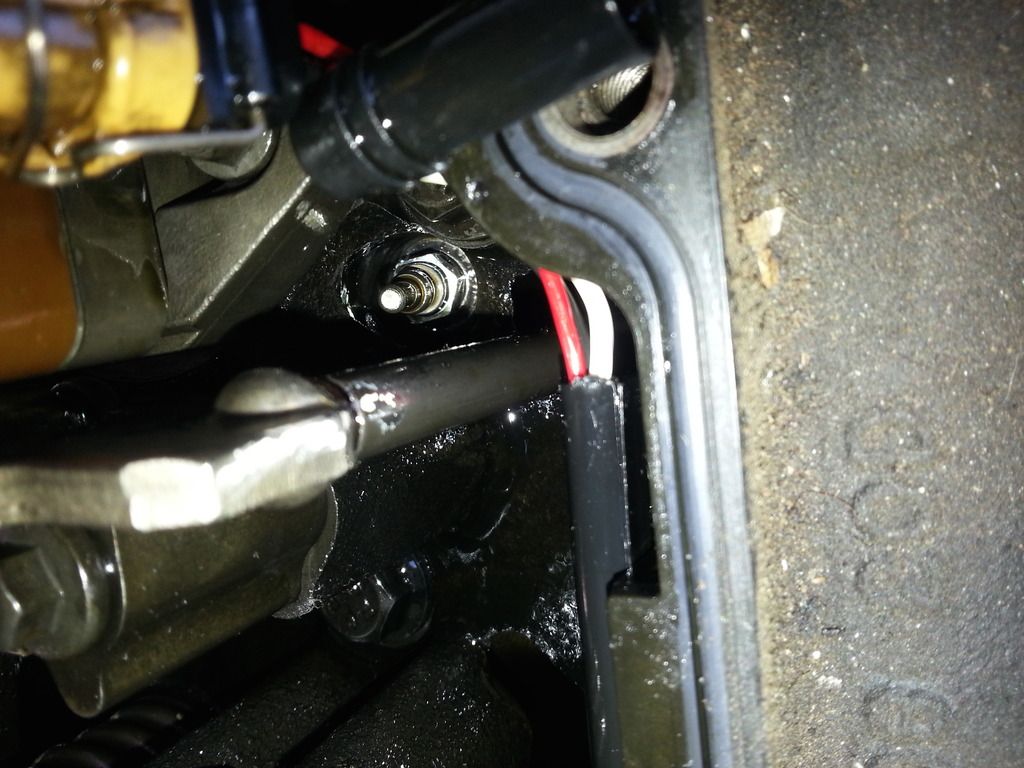
I think this yellow wire goes to a relay on the starter:
Can anyone confirm/deny?
I see a yellow wire in the harness with the big red battery wire. Then this wire seems to go down in that general direction. I can't see the spot where the wires are joined though.
I know I need to turn the engine over with the keys out of the ignition for the compression test. I don't have a relay on the fender (2002 Excursion).
Why not just disconnect the main wiring harness connector (big square monster on the driver's side above the valve cover)?
That way it'll crank but not fire. That's how we did a 7.3L compression test Monday eve. Except for confirming a bad cylinder (ouch!), the test itself went well.
Why not just disconnect the main wiring harness connector (big square monster on the driver's side above the valve cover)?
That way it'll crank but not fire. That's how we did a 7.3L compression test Monday eve. Except for confirming a bad cylinder (ouch!), the test itself went well.
Sure, if that works. When i was reading up I got a loud and clear message - no key in the ignition....
It seems like most people jumper the relay on the passenger side fender well.
Hmmmm, I thought of one more reason for the jumper approach. If there's just one person doing the job you kind of need to watch the gauge while the engine is turning over.....
I guess I could rig up a gopro camera or cell phone to record the gauge and turn the engine over from the cab.
I looked at the HF compression tester. The description says it has a thumb pressure release. Does that mean it will stay at the max pressure until you press the button, or is that just to release the pressure before removing?
Intake and exhaust valves open and close during intake, compression, fire, and exhaust strokes. That we all know
It is during the compression stroke you want to listen closely. I've found it helpful to be just off to the side of the engine to hear better and not be "blinded" by the starter and such.
During this stroke, if you hear blowby, a puff of air, etc, it could indicate a leaking valve (not closed all the way, not enough, carbon, damage, etc).
Really, you're listening for anything that sounds unusual to investigate further
GPs are up higher on the engine and *shouldn't* get oil in them. When you first open up the valve cover, there may be oil laying in there. It's not hard to avoid, and it's always a good idea to think about oil in the cylinders
Removing GPs...
If you have a GP removed and are not testing that cylinder, the noise of air coming out of that cylinder will likely obscure any other sounds and blow it towards you.
For easier cranking? Not sure why You're only cranking a few seconds on each cylinder, so not really a concern, IMHO. But I'd listen to other opinions, always willing to learn
Blowing out the area with air...
Might want to do that before removing the valve covers, too. Make sure there isn't anything loose or laying on the engine that might get into the works when removed.
I like to inspect the rocker arms and any exposed parts for signs of wear, wiggle a little to make sure they are "happy" staying centered on top of the springs, etc.
And specific to these 7.3s, each time I've been present while one was opened, we've found *something* under the cover. Piece of plastic zip tie, piece of UVCH plug, etc. A flashlight and headlamp are helpful. Take a few moments to look things over.
A note: There are quite a few on here who have a LOT more experience with compression tests and specifically with the 7.3s. My experience was mostly diesel heavy equipment over the years and I've not been the primary on the 7.3s, but been involved with several, including this week.
It's mostly the same, but surely others will have 7.3 specific tips, differences, and gotchas.
Take a few minutes to shine a light into your turbo wheel, snap a few detailed pics if you can. Look for damage, wear, oil, etc. Only takes a few moments and it's cheap, LOL.
Matter of fact, take a lot of pics for reference before and during various stages of takedown. I reference my pics all the time. My recent IPR "adventure" was just this week. Read about them, never had to work on one before. Pics helped me look at condition while I was back home looking for one instock before going back to install it along the road
Take your time, keep it CLEAN, stay out of the way of moving parts, and you'll be fine.
I looked at the HF compression tester. The description says it has a thumb pressure release. Does that mean it will stay at the max pressure until you press the button, or is that just to release the pressure before removing?
Yes I believe it will stay at max.
Originally Posted by ExPACamper
It is during the compression stroke you want to listen closely. I've found it helpful to be just off to the side of the engine to hear better and not be "blinded" by the starter and such.
During this stroke, if you hear blowby, a puff of air, etc, it could indicate a leaking valve (not closed all the way, not enough, carbon, damage, etc).
Really, you're listening for anything that sounds unusual to investigate further
I still don't have the complete picture. So I have ALL the GPs in the truck except for the one with the compression adapter. I do the compression test. Then, with everything still hooked up I do the listen exercise?
OR
Now I remove the GP adapter, so 7 of 8 glow plugs are in and one cylinder has nothing in the glow plug hole and listen for any hole that sounds different than the others?
Originally Posted by ExPACamper
For easier cranking? Not sure why You're only cranking a few seconds on each cylinder, so not really a concern, IMHO. But I'd listen to other opinions, always willing to learn
That's a jist of what I recall from reading/viewing a bunch of stuff. Of course I saw some things (no torque wrench, blowing oil all over the engine when doing injectors, etc.) that are not good practices - so I could have gotten that wrong.
Originally Posted by ExPACamper
Blowing out the area with air...
Might want to do that before removing the valve covers, too. Make sure there isn't anything loose or laying on the engine that might get into the works when removed.
Good tip, I also did a couple of passes with simple green and a hose to try to ensure things are as clean as possible.
Originally Posted by ExPACamper
I like to inspect the rocker arms and any exposed parts for signs of wear, wiggle a little to make sure they are "happy" staying centered on top of the springs, etc.
I'll try that. I would think the ones under tension would always feel solid and you an only wiggle the ones that are not under tension (closed?). If that's right do you go as far as to turn the engine over by hand to make sure you ck each one?
Originally Posted by ExPACamper
And specific to these 7.3s, each time I've been present while one was opened, we've found *something* under the cover. Piece of plastic zip tie, piece of UVCH plug, etc. A flashlight and headlamp are helpful. Take a few moments to look things over.
Wonderful. I'll make sure I have plenty of light to inspect and take the time to do it.
Originally Posted by ExPACamper
Hope this helps!
Lots of help. Thanks for taking the time to share.
You don't want any open holes while testing/listening. If there is air rushing out, puffs of air that you can feel, see, hear, whatever then that is not good.
If you have any of the GP holes open, of course air will come out of that hole while cranking, most likely drowning out anything else you might hear.
Have you replaced your GPs yet? OEM is the way to go. Reports of swelling and broken tips preventing removal or falling into the cylinder with non-OEM.
I bought mine at Advanced Auto for about $80 for a set. Can do a little better, but they had them the next am and I wasn't going to wait for shipping for a dollar or two each
Reason I ask- now would be a good time to remove the old one in a given cylinder, do your compression test, then install a new one in that cylinder and move to the next one. Might be less of a chance of a problem with an old or damaged GP.
Also be sure to look at each GP as you remove it. Make sure there isn't excessive carbon on it and no missing pieces. Go ahead and compare it to a new one, or remove two at once (one gets a new one until you test that cylinder, the other gets tested).
Next item....
Have you done a cylinder contribution test with AE yet? A buzz test?
We buzzed all 8 cylinders, sounded fine. Then did a CCT, #8 failed with a code. We then did a compression test of #8 (0 psi ) and #7 (around 300 or so psi) to confirm what AE told us and the isolate injector problem from a cylinder problem.
We also performed a Cody test, but didn't hear any gurgling and it held pressure (injectors and orings aren't terrible and bypassing oil)
In our tested engine, there is a noticeable vibration, too. We pretty much "knew" the problem, but were working on a troubleshooting procedure to save diagnosis time, too.
Have you replaced your GPs yet? OEM is the way to go. Reports of swelling and broken tips preventing removal or falling into the cylinder with non-OEM.
No, going to do Compression test, GP , O-Rings as one job. I have OEM glow plugs.
Originally Posted by ExPACamper
Reason I ask- now would be a good time to remove the old one in a given cylinder, do your compression test, then install a new one in that cylinder and move to the next one. Might be less of a chance of a problem with an old or damaged GP.
You mean less of a problem taking and old one out and then putting it back? Good point. I might have stuck with the old ones until I did the injector o-rings - since they have to come out again for that.....
Originally Posted by ExPACamper
Also be sure to look at each GP as you remove it. Make sure there isn't excessive carbon on it and no missing pieces. Go ahead and compare it to a new one
Sounds like a good plan. I'll be posting photos of anything strange.
Next item....
Originally Posted by ExPACamper
Have you done a cylinder contribution test with AE yet? A buzz test?
CCT passed once and failed once on #8 from what I recall. It may have failed on 2 cylls. I don't know why I didn't post the results in this thread.
I also did PERDEL at the same time:
PERDEL:
Originally Posted by ExPACamper
We buzzed all 8 cylinders, sounded fine. Then did a CCT, #8 failed with a code. We then did a compression test of #8 (0 psi ) and #7 (around 300 or so psi) to confirm what AE told us and the isolate injector problem from a cylinder problem.
OUCH.
Originally Posted by ExPACamper
We also performed a Cody test, but didn't hear any gurgling and it held pressure (injectors and orings aren't terrible and bypassing oil)
I was going to skip a Cody test because my black fuel filter in combination with low max boost and egt issues seem to be screaming to people here "Injector O-Rings".
Since I'm going to do the o-rings even if the test passes, is there any value to trying it beforehand?
I would save the Cody test until after the O-rings are replaced - since you're doing them anyway and the rails will be full of air. It's a good way to confirm the fix.
One caveat - I've never tried a Cody test with fresh O-rings on dry sticks. I don't know if the lack of a warmup, retorque, and a full oil rail will taint the results in that situation.
I would save the Cody test until after the O-rings are replaced - since you're doing them anyway and the rails will be full of air. It's a good way to confirm the fix.
Rich- Since he is testing compression, would leaking orings show up in the compression test, or would the leak be so minimal compared to the cylinder itself that it wouldn't affect it much?
I was thinking hearing gurgling to blame the injectors that could explain a lower compression result would be a "go" to do the orings, whereas a low compression and no gurgle might indicate a bigger problem that might need investigated before going any further- ie injector orings.
Make sense, or am I off base? Or maybe not that big of a deal in his case
Rich- Since he is testing compression, would leaking orings show up in the compression test, or would the leak be so minimal compared to the cylinder itself that it wouldn't affect it much?
I think the compression test would only show a bad copper gasket - or - maybe a bad injector if it leaks up through the closed off injector somehow?
Originally Posted by ExPACamper
I was thinking hearing gurgling to blame the injectors that could explain a lower compression result would be a "go" to do the orings, whereas a low compression and no gurgle might indicate a bigger problem that might need investigated before going any further- ie injector orings.
If I get a low compression reading anywhere, I'll probably be back here for some advice.
I'm thinking that a Cody test could pass for marginal o-rings - 100 PSI might hold up fine, but ~3,000 PSI could leak - make sense?
Here is how I did my compression test, and was done a couple months ago before I pulled the motor. Note-do the compression test on a worm engine.
I started with cylinder number 1, then moved to cylinder 3, 5, 7 and so on. Helps not to loose track of which one you already did. Shouldn't though as I hope you are writing these numbers down.
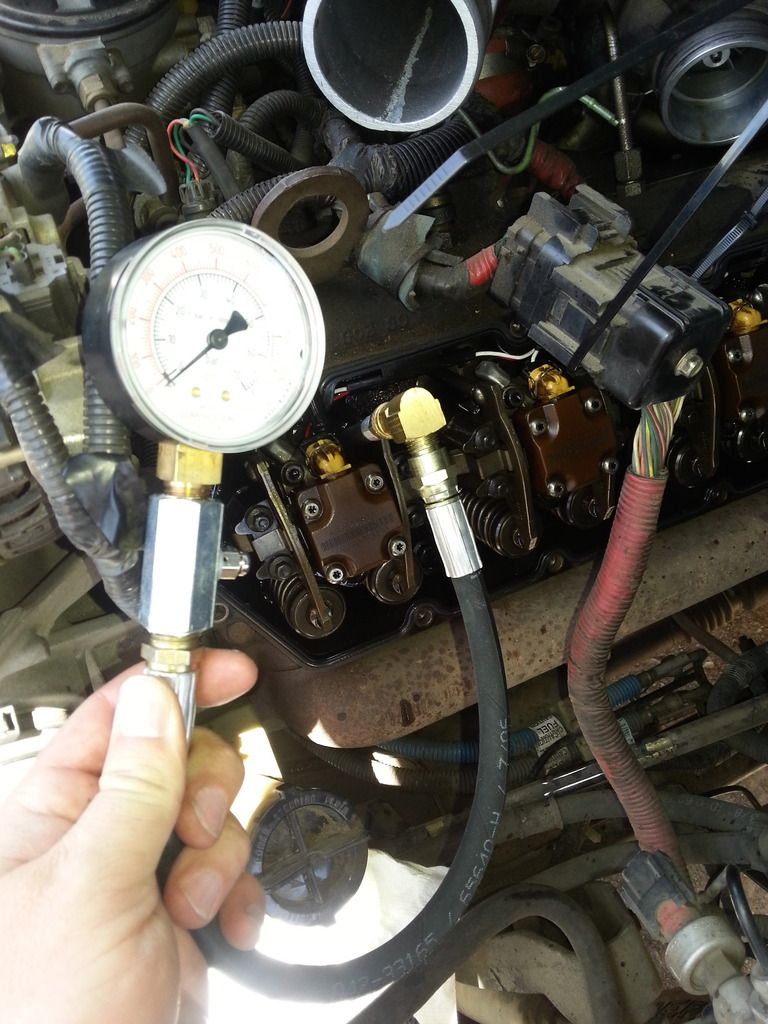
I started with cylinder one on a worm engine. Remove glow plug (I used a long set on needle nose pliers), clean glow plug hole with rag (if using air place rag over air nozzle and spray with air The rag will help from oil spray). Install compression tester hand tight only. Do not wrench it on there.
In your case, you can do what ExPaCamper said and disconnect the 42 pin connector. I hung mine up with a zip tie attached to the cowl and or pull number 30 fuse to disable the engine harness.
With compression test gauge hooked up and out of the way of moving parts, crank motor over 8-10 times to get a solid reading.
Remove compression test gauge. Install new glow plug and move onto next cylinder.
I also tried to do an engine running test, but my compression test was not having it. If you decide to do this you need the 42 pin connected and all glow plugs in except for the one your testing as you will have the gauge in that hole.
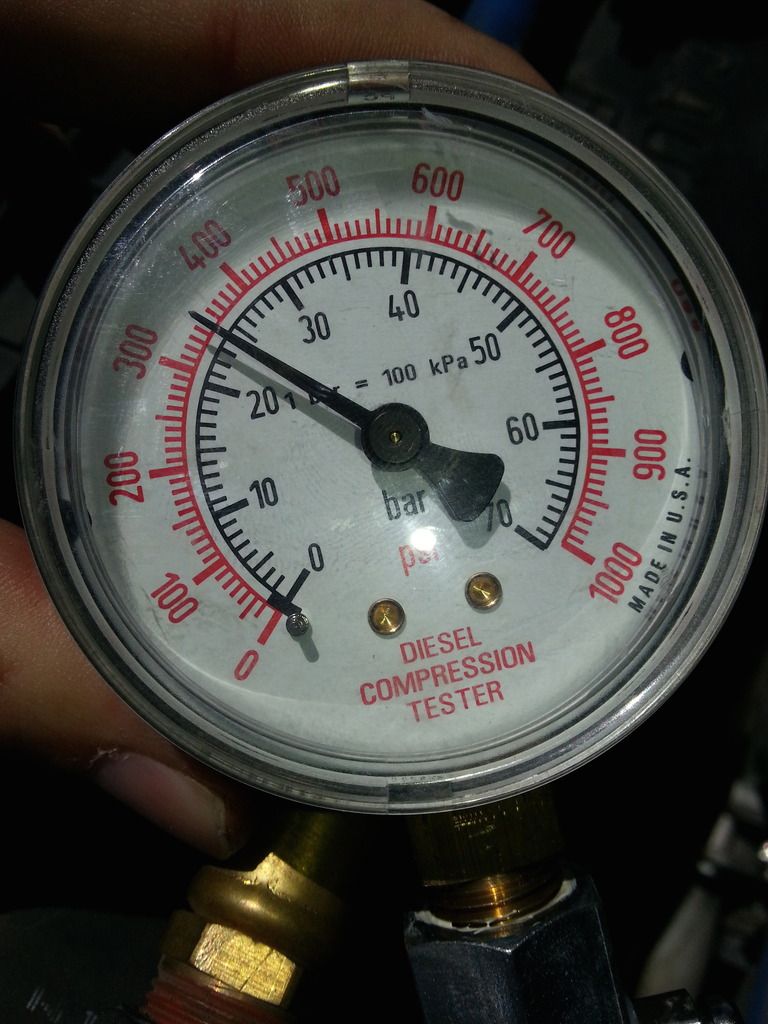
Here is the kit I used. Compression test from Star tools. Nothing fancy but worked.








 You're only cranking a few seconds on each cylinder, so not really a concern, IMHO. But I'd listen to other opinions, always willing to learn