





FTN's T4/SXE Build/Conversion Thread

Lead Driver


Joined: Jul 2017
Posts: 6,862
Likes: 2,335
From: WV

So are you having flow issues with the 363/68/.83?
Cargo Master


Joined: May 2018
Posts: 2,442
Likes: 993
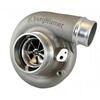
No issues out of the 636/68/.83, I was just generally speaking about VGT/VNT turbos. The variable geometry housing allows a smaller turbine wheel to have the benefits of a larger one at upper RPM. Whereas a larger turbine can spool faster at lower RPMs.
Take a 2 VGT housings, for example a 63/74mm and a 63/68mm. The VGT has a listed range of .50ar-1.1ar.
So a moderate motor say 300-350hp running a 363/74. What is the benefit of the equivalent of a 1.1ar housing in the upper RPMs? I dont really see the need to open up the turbine flow THAT much on the top end to keep EGT/pressures in check. On the lower RPM with a 63/74 VGT you are just trying to get it (for discussion sake) to spool like a 63/68. Sure seems like a trade off between using the entire spectrum of the VGT vs. just using it to spool a larger turbine faster. (at a moderate HP level)
Take the same motor but now a 363/68. It is more likely to use the full range of the VGT. It becomes more realistic to use the full 1.1ar of the housing because naturally the 68mm will produce more pressure. Now instead of trying to spool a bigger turbo faster, you are spooling a smaller turbo faster but not limiting the top end flow.
Take a 2 VGT housings, for example a 63/74mm and a 63/68mm. The VGT has a listed range of .50ar-1.1ar.
So a moderate motor say 300-350hp running a 363/74. What is the benefit of the equivalent of a 1.1ar housing in the upper RPMs? I dont really see the need to open up the turbine flow THAT much on the top end to keep EGT/pressures in check. On the lower RPM with a 63/74 VGT you are just trying to get it (for discussion sake) to spool like a 63/68. Sure seems like a trade off between using the entire spectrum of the VGT vs. just using it to spool a larger turbine faster. (at a moderate HP level)
Take the same motor but now a 363/68. It is more likely to use the full range of the VGT. It becomes more realistic to use the full 1.1ar of the housing because naturally the 68mm will produce more pressure. Now instead of trying to spool a bigger turbo faster, you are spooling a smaller turbo faster but not limiting the top end flow.
Lead Driver
Joined: Jul 2017
Posts: 6,862
Likes: 2,335
From: WV
I don’t understand the desire to add complexity to a turbo that’s already working well. I agree it would open up the restriction on the upper end flow. But if there are no issues then why bother? I have watched the EBP ratios along with other data and don’t feel my current setup with stock injectors and the .91 housing is restricting performance in the upper rpm/load ranges. It seems to be flowing fine as is. I could always go for a little more bottom end though, which is where your .83 comes in. If I ever see enough data on EBP ratios with that housing then I may make 1 last turbo change. 
Now, throw in large injectors with frequent full throttle runs and I can see where the VGT comes into play.
I do think it’s worth noting that FTN went up in turbo size to correct the broken shaft, along with adding the blow off valve. So which aspect fixed the issue? How would the smaller turbo react with the VGT? Would it be less likely to break shafts since it’s lighter? ——Questions I’ll never learn the answers to first hand.
Now, throw in large injectors with frequent full throttle runs and I can see where the VGT comes into play.
I do think it’s worth noting that FTN went up in turbo size to correct the broken shaft, along with adding the blow off valve. So which aspect fixed the issue? How would the smaller turbo react with the VGT? Would it be less likely to break shafts since it’s lighter? ——Questions I’ll never learn the answers to first hand.

Thread Starter
|
FTE Chapter Leader

Joined: Jan 2005
Posts: 13,131
Likes: 4,732
From: Henderson, NV


There are people that do this?!
Cargo Master
Joined: May 2018
Posts: 2,442
Likes: 993
I don’t understand the desire to add complexity to a turbo that’s already working well. I agree it would open up the restriction on the upper end flow. But if there are no issues then why bother? I have watched the EBP ratios along with other data and don’t feel my current setup with stock injectors and the .91 housing is restricting performance in the upper rpm/load ranges. It seems to be flowing fine as is. I could always go for a little more bottom end though, which is where your .83 comes in. If I ever see enough data on EBP ratios with that housing then I may make 1 last turbo change.
Now, throw in large injectors with frequent full throttle runs and I can see where the VGT comes into play.
I do think it’s worth noting that FTN went up in turbo size to correct the broken shaft, along with adding the blow off valve. So which aspect fixed the issue? How would the smaller turbo react with the VGT? Would it be less likely to break shafts since it’s lighter? ——Questions I’ll never learn the answers to first hand.
Now, throw in large injectors with frequent full throttle runs and I can see where the VGT comes into play.
I do think it’s worth noting that FTN went up in turbo size to correct the broken shaft, along with adding the blow off valve. So which aspect fixed the issue? How would the smaller turbo react with the VGT? Would it be less likely to break shafts since it’s lighter? ——Questions I’ll never learn the answers to first hand.
Personally I think if will be fine in a lower power application (300-350hp).
Email I got today.
Yes, we just completed them for the 68mm turbine wheel. We have them in stock.
Diesel Power Source, PMA
www.Sales@DieselPowerSource.com
Phone (801) 930-8404
Diesel Power Source, PMA
www.Sales@DieselPowerSource.com
Phone (801) 930-8404
Cargo Master
Joined: May 2018
Posts: 2,442
Likes: 993
Picking their brain now, the website has a Mechanical version and a 3-Stage Mechanical version. @FordTruckNoob Do you happen to know the difference? If purchased I am leaning pretty heavy toward the mechanical version.
Thread Starter
|
FTE Chapter Leader
Joined: Jan 2005
Posts: 13,131
Likes: 4,732
From: Henderson, NV
Picking their brain now, the website has a Mechanical version and a 3-Stage Mechanical version. @FordTruckNoob Do you happen to know the difference? If purchased I am leaning pretty heavy toward the mechanical version.
Cargo Master
Joined: May 2018
Posts: 2,442
Likes: 993
Ultimately the goal is to make it spool like a 2015+ 6.7 without throwing a bunch of fuel at it on the bottom end.
FTE Stories
Ford Trucks for Ford Truck Enthusiasts

Top 6 Best Deals Available on New Fords & Lincolns Right Now
Brett Foote
This Hennessey Takes the Expedition Tremor's Off-Roading Capability to the Next Level
Verdad Gallardo
Top 10 Fords at 2026 Carlisle Ford Nationals
Joe Kucinski
3 Best / 3 Worst Parts of Modern Ford Ownership
Brett Foote
10 Amazing Upgrades That Solve Common Ford Truck Owner Headaches
Pouria Savadkouei
Every 2026 Ford Engine Explained
Brett Foote
10 Ugly Ford Trucks That We Still Kinda Love
Joe Kucinski
10 Things Every Truck Owner NEEDS (2026 Edition)
Michael S. Palmer
Rezvani's Latest Post-Apocalyptic Monster Is a Ford F-150 Raptor Underneath
Verdad Gallardo
Cargo Master
Joined: May 2018
Posts: 2,442
Likes: 993
Reply from DPS.
The 3-Stage actuator was specifically engineered for our turbonator, whereas the standard actuator is a single stage existing wastegate actuator. Both work well, but the 3-stage actuator follows a similar curvature to the turbo performance curve and performs way better everywhere. I have ran both and the 3-stage is so much better.
Diesel Power Source, PMA
www.Sales@DieselPowerSource.com
Phone (801) 930-8404
Diesel Power Source, PMA
www.Sales@DieselPowerSource.com
Phone (801) 930-8404
Thread Starter
|
FTE Chapter Leader
Joined: Jan 2005
Posts: 13,131
Likes: 4,732
From: Henderson, NV
Found a FB video on the 3-stage.
“https://m.facebook.com/dieselpowersource/videos/the-all-new-3-stage-mechanical-actuator-is-now-available-with-all-vgt-turbonator/2575580185908910/?locale=ms_MY&_rdr”
Wow that really cleared things up. 😑
“https://m.facebook.com/dieselpowersource/videos/the-all-new-3-stage-mechanical-actuator-is-now-available-with-all-vgt-turbonator/2575580185908910/?locale=ms_MY&_rdr”
Wow that really cleared things up. 😑
Thread Starter
|
FTE Chapter Leader
Joined: Jan 2005
Posts: 13,131
Likes: 4,732
From: Henderson, NV

Cargo Master
Joined: Jan 2009
Posts: 2,800
Likes: 31
From: OKC, OK
I have not towed more than 2k with it yet so I cannot speak to that. I have not heard any complaints yet either.

FTE Leadership Emeritus


Joined: May 2014
Posts: 27,355
Likes: 5,951
From: Lake Hartwell, GA
EDIT: Gotta love that reverse gearing in the 10R140 too when backing up a heavy load.
Originally Posted by Y2KW57
To offer a comparison...
4R100 Reverse -2.18
5R110 Reverse -2.88
6R140 Reverse -3.12
10R140 Reverse -4.695 (forthcoming 2020 Super Duty 10 speed transmission)
4R100 Reverse -2.18
5R110 Reverse -2.88
6R140 Reverse -3.12
10R140 Reverse -4.695 (forthcoming 2020 Super Duty 10 speed transmission)

Its Comin Right for us!
Joined: Feb 2005
Posts: 12,208
Likes: 2,663
From: GA
I never found myself wanting more gears with the 6.7/6r140, especially tuned https://rumble.com/v1bfdpf-2017-6.7-tuned-ford.html
Recently towed about 7k with the 2019 5.0 10 speed. It did really well and is a good fit for a NA gas engine, Unloaded the 10 speed is annoying compared to the 5.0/6 speed https://rumble.com/v1bffkd-2017-f150-5.0-6-speed.html
Recently towed about 7k with the 2019 5.0 10 speed. It did really well and is a good fit for a NA gas engine, Unloaded the 10 speed is annoying compared to the 5.0/6 speed https://rumble.com/v1bffkd-2017-f150-5.0-6-speed.html
 The 68mm Turbonator only comes in a T3 housing, they just updated their website today.