When you click on links to various merchants on this site and make a purchase, this can result in this site earning a commission. Affiliate programs and affiliations include, but are not limited to, the eBay Partner Network.
1.5 turns out is always the basic bench setting just to get it in the ballpark, so engine will start when carb is installed, etc. It's a start point not the end point. Each engine and carburetor combination is slightly different and the idle mixture screws are used to trim out the final mixture. Can use your vacuum gauge for setting the mixture. 1/2 turn out may well be optimal. A slightly rich mixture is preferred but probably not 1.5 turns out. Plugs will load up and idle quality suffers, and since much driving is done just off idle, it can contribute to hesitation and bogs. Just about a 1/4 turn out or so from the lean drop is where you want to be, but use your ears. Goose the throttle to clear out the carb in between adjustments. Both screws should be adjusted the same amount.
For power valve selection your vacuum gauge is also useful. What's important with the power valve is that it isn't open just cruising down the highway steady under light load. Measure manifold vacuum at say 60 mph in high gear and level ground, light grade, hills and such and get an idea of what kind of manifold vacuum is pulled. If you want to dial it in close some say to select a power valve about 2" below the steady level ground vacuum. The shop manual though will list what is the correct # for your engine/carb. This changes with altitude, if you live in Denver the valve drops by one number compared to flatlanders and drops another number above 10,000 feet. The stock number should work well.
I did play around with the idle mixture screws some more with the vacuum gauge hooked up and after going out as much as 1.5 turns I'm certain the engine sounds best at .5 turn out and the vacuum reading is also at 20" so I will keep it .5 turn out for now. I went ahead and ordered a 9.5 power valve to try, if it doesn't make an improvement I'm only out $10. I will be back in a few days with a update, Thanks.
I got the 9.5 power valve installed with new gaskets and o rings. I have a question, seems as though every time I take my carb off the engine I have to readjust the float bowl, Is this normal? I hope to test drive the truck this weekend to see if the hesitation is completely gone or not.
I took my truck out for a test drive with the new 9.5 power valve installed and it still has a hesitation. The hesitation is there but not too bad at all, just makes me mad that I had my truck finely tuned prior to installing the headers and now I can't get it back to that level of tuning. I messed with the timing again after the test drive just to see what would happen. My truck was at a steady 20 inch vacuum at 12 BTDC but when I advanced the timing to 16,17 BTDC my vacuum raised to 21,22 inch. Is 16,17 BTDC too much advanced timing? I backed it back to 15 BTDC and got a steady 20.5 inch vacuum but when I took it for another drive I really didn't notice a difference in the engine.
I took my truck out for a test drive with the new 9.5 power valve installed and it still has a hesitation. The hesitation is there but not too bad at all, just makes me mad that I had my truck finely tuned prior to installing the headers and now I can't get it back to that level of tuning. I messed with the timing again after the test drive just to see what would happen. My truck was at a steady 20 inch vacuum at 12 BTDC but when I advanced the timing to 16,17 BTDC my vacuum raised to 21,22 inch. Is 16,17 BTDC too much advanced timing? I backed it back to 15 BTDC and got a steady 20.5 inch vacuum but when I took it for another drive I really didn't notice a difference in the engine.
What do your spark plugs look like right now?
Because, the last pic we saw, they looked completely pure carbon black. WAY WAY too rich. No offense, but that ain't "finely tuned" Gus!! It's really tough to use spark plug color as a way to judge carburetion because of modern gasoline. It takes a long time for them to show any color. One thing I discovered using an AFR meter, is a metric crapload of fuel can be wasted out the tailpipe and it won't seem to run too badly.
The initial or base distributor timing isn't super critical, if you go too far it's going to start kicking back on the starter making hot starts difficult.
What you are concerned with is the timing advance curve. So you'll see something like 14° initial + 20° internal to the distributor. That makes 34° BTDC when wound out, when you floor it. This would be without vacuum advance. Lighter springs means the 20° will come in earlier in the RPM band. 2500-3000 for lighter weight cars is common. Heavier vehicles may not like this, or high compression etc.
It's good that the engine draws high manifold vacuum, you should be able to get it running really well. If you want to run 16° or 17° initial, and there's no starter kickback, go ahead if you want, the problem you'll run into is too much timing in the high end. You'll have to get in the distributor and limit how much advance the mechanical brings in. 34° to 36° is right in there for optimum on modern V8, some a little more, some a little less. That's the number you're concerned about.
Spool it up and twist the distributor till you get 34° BTDC with vacuum advance disconnected and plugged. Take it for a test drive. Don't worry about the initial too much. Does it ping or knock on hard acceleration? No? Advance 2° and try again. The optimum point is just short of engine knock. That's your base timing, set the distributor wherever it needs to be to get the curve in spec. Can run 2° initial and 34° in the distributor, or 20° initial and 16° in the distributor, or any combination, but the total mechanical advance + initial can't exceed the limit. Y the same token, if the initial + mechanical only tops out at say 20° BTDC, you're leaving 15° of mechanical advance on the table. It won't run well and may overheat, need a fuel tanker escort etc. When you get the mechanical advance where you want it, don't touch it again. Re-connect vaccuum advance. Adjust the canister for maximum advance, it will rattle and ping badly on part throttle. Back it off until it runs quiet and smooth.
When you get the ignition squared away, then you need to final tune the carburetor. You'll probably need to jet way down for a start, assuming the float bowl fuel level is correct. And fuel pump is in spec, etc.
As mentioned earlier fuel bowl level shouldn't really change just reinstalling the carb. You'll get 'er just keep plugging away. Nice truck.
Because, the last pic we saw, they looked completely pure carbon black. WAY WAY too rich. No offense, but that ain't "finely tuned" Gus!! It's really tough to use spark plug color as a way to judge carburetion because of modern gasoline. It takes a long time for them to show any color. One thing I discovered using an AFR meter, is a metric crapload of fuel can be wasted out the tailpipe and it won't seem to run too badly.
The initial or base distributor timing isn't super critical, if you go too far it's going to start kicking back on the starter making hot starts difficult.
What you are concerned with is the timing advance curve. So you'll see something like 14° initial + 20° internal to the distributor. That makes 34° BTDC when wound out, when you floor it. This would be without vacuum advance. Lighter springs means the 20° will come in earlier in the RPM band. 2500-3000 for lighter weight cars is common. Heavier vehicles may not like this, or high compression etc.
It's good that the engine draws high manifold vacuum, you should be able to get it running really well. If you want to run 16° or 17° initial, and there's no starter kickback, go ahead if you want, the problem you'll run into is too much timing in the high end. You'll have to get in the distributor and limit how much advance the mechanical brings in. 34° to 36° is right in there for optimum on modern V8, some a little more, some a little less. That's the number you're concerned about.
Spool it up and twist the distributor till you get 34° BTDC with vacuum advance disconnected and plugged. Take it for a test drive. Don't worry about the initial too much. Does it ping or knock on hard acceleration? No? Advance 2° and try again. The optimum point is just short of engine knock. That's your base timing, set the distributor wherever it needs to be to get the curve in spec. Can run 2° initial and 34° in the distributor, or 20° initial and 16° in the distributor, or any combination, but the total mechanical advance + initial can't exceed the limit.
When you get the ignition squared away, then you need to tune the carburetor. You'll probably need to jet way down for a start, assuming the float bowl fuel level is correct. And fuel pump is in spec, etc. As mentioned earlier fuel bowl level shouldn't really change just reinstalling the carb. You'll get 'er just keep plugging away. Nice truck.
Hello Tedster9, you really hammered me on my finely tuned comment so I will elaborate on that. I meant to say that the truck ran good from initial throttle to WOT without a hesitation. I have had my spark plugs looking pretty good when the truck was running good but now with all the garage idling while I tune the truck the spark plugs are looking fairly black and they are brand new NGKs. I have had my timing set at 14 and spooled the engine up to 3000 rpms and the advance did top out at 34. So I will put the timing light back on and spool the engine up to 3000 rpms and see where my total timing is again and see if I can push it up to 36 total timing. Right now the truck does not ping or knock and pulls really strong at WOT. Thanks again, I appreciate all the help you have given me.
No, I sure don't mean to sound that way or hammer anybody, but the pic of that plug is way off the beam. I bet it does run good - but it will run even better when everything gets dialed in. Bog or hesitation can be tricky because both an over-lean condition and over-rich condtion can cause that depending. I did go back and read again over this thread. It is true "too many cooks spoil the broth" and I'm probably not helping. One thing though earlier you mentioned whether or not the float bowl level should change when reinstalling carb.
Have you measured fuel pump output? That is critical with carburetors. The float bowl level has to be maintained at a constant height at all times under all conditions. The correct fuel/air ratio calibration depends on that. One thing I didn't quite grok till recently is fuel pumps don't really have pressure, they have flow. Excess pressure does not substitute for inadequate flow. And a lot of the modern fuel pumps are junk, one guy on another forum measured 18.5psi !!! on a well known brand name pump. So check everything. Just random thoughts & .02c
Have you measured fuel pump output? That is critical with carburetors. The float bowl level has to be maintained at a constant height at all times under all conditions. The correct fuel/air ratio calibration depends on that. One thing I didn't quite grok till recently is fuel pumps don't really have pressure, they have flow. Excess pressure does not substitute for inadequate flow. And a lot of the modern fuel pumps are junk, one guy on another forum measured 18.5psi !!! on a well known brand name pump. So check everything. Just random thoughts & .02c
Maybe it's just me but you just contradicted yourself here. Fuel pumps don't have pressure ? Yet someone had 18.5 psi ? all that aside it takes very little flow to supply enough fuel to keep the bowls fed. Too much flow will cause too much pressure on a carbed engine. I'm using a 35 gal/hr electric to feed 3- two bbl Holleys on my 331. Even at WOT for a mile or two, they're fed enough fuel. Only time it fails is when the inline filter gets clogged, and that just serves to remind me it's time to change the filter.
I took my truck out for a test drive with the new 9.5 power valve installed and it still has a hesitation. The hesitation is there but not too bad at all, just makes me mad that I had my truck finely tuned prior to installing the headers and now I can't get it back to that level of tuning. I messed with the timing again after the test drive just to see what would happen. My truck was at a steady 20 inch vacuum at 12 BTDC but when I advanced the timing to 16,17 BTDC my vacuum raised to 21,22 inch. Is 16,17 BTDC too much advanced timing? I backed it back to 15 BTDC and got a steady 20.5 inch vacuum but when I took it for another drive I really didn't notice a difference in the engine.
Where and when does it hesitate ? And what exactly doe it do when it does ? You may have a wiring issue here. Or something going wrong in the distributor.
Tedster9, I took a picture of my #3 spark plug for an example, it is a bit wet, I assume it is unused gas. I will check the fuel pump pressure as soon as I can get adapters to plug my vacuum gauge into my fuel line. Thanks for all the help.
Tedster9, I took a picture of my #3 spark plug for an example, it is a bit wet, I assume it is unused gas. I will check the fuel pump pressure as soon as I can get adapters to plug my vacuum gauge into my fuel line. Thanks for all the help.
Nothing wrong there. Where's the "wet" part ? The color is completely normal. If you had too much fuel pressure, you would have fuel pouring out of the bowl vents when that pressure overcame the floats and pushed the needle/seat valves open.
I don't see it. If it were fuel fouled the whole plug inside the cylinder would be black and wet. You don't have a fuel pressure issue here. The mixture is spot on.
Where and when does it hesitate ? And what exactly doe it do when it does ? You may have a wiring issue here. Or something going wrong in the distributor.
At this point the hesitation or stumble is at cruise mostly in third gear after i get off the throttle when I get back on the peddle it does it. I have a three speed manual shift on the floor.
This Hennessey Takes the Expedition Tremor's Off-Roading Capability to the Next Level
Slideshow: The VelociRaptor Expedition gains a lift, upgraded suspension, Brembo brakes, and trail-ready equipment while retaining the stock 440-horsepower EcoBoost V6.
Rezvani's Latest Post-Apocalyptic Monster Is a Ford F-150 Raptor Underneath
Slideshow: Called the Fortress, the 850-horsepower pickup combines Raptor underpinnings with military-inspired features, survival equipment, and a starting price of $285,000.


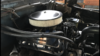
 I messed with the timing again after the test drive just to see what would happen. My truck was at a steady 20 inch vacuum at 12 BTDC but when I advanced the timing to 16,17 BTDC my vacuum raised to 21,22 inch. Is 16,17 BTDC too much advanced timing? I backed it back to 15 BTDC and got a steady 20.5 inch vacuum but when I took it for another drive I really didn't notice a difference in the engine.