


302 engine issues.

Mountain Pass

Joined: Aug 2014
Posts: 143
Likes: 2
Sure there is, it's relative to where it was installed prior. The distributor body can be re-positioned to compensate, BUT, there may not be enough "room" to get in the correct timing zone when it physically starts hitting things - the vacuum can for example might contact the intake, etc.
Right, this is a common mistake. It's not "one tooth" in this instance, it's off but a whole bunch of teeth. The distributor doesn't care so long as the firing order is maintained the wire set could be repositioned to the new arrangement and it will work fine.
Right, this is a common mistake. It's not "one tooth" in this instance, it's off but a whole bunch of teeth. The distributor doesn't care so long as the firing order is maintained the wire set could be repositioned to the new arrangement and it will work fine.
Semantics.......
Like has been said, the distributor could not care less how it's stabbed.....you can change the position of the wires to compensate. (In fact, you wrote that.)
Regarding the symptoms in the OP, the old "one tooth off" comment simply holds no water.....especially when the author indexed it in the same position.

Lead Driver


Joined: Sep 2003
Posts: 7,016
Likes: 208
From: SoCal

This was the cause of one of my power valve leaks. The two gaskets were stamped together, so they looke dlike one. Two gaskets will squish each other out of shape. You should install a single new one.

Post Fiend
Joined: Apr 2002
Posts: 19,311
Likes: 97
From: Waterloo, Iowa
When someone writes "I reinstalled my distributor. It runs, but I can't get to 6° BTDC before it hits the intake manifold." I know exactly what happened. If they don't understand the error they probably don't know they can re-arrange the wires either.
One of the automotive forums had a new guy log on who was unhappy with how untidy the spark plug wires looked under the hood. Fair point maybe. But, he asked "if they are in any special order" and wanted to arrange them so they looked nice. LOL! Sure just hook 'em up any ole way, that'll be fine.
Lead Driver
Joined: Sep 2003
Posts: 7,016
Likes: 208
From: SoCal
If you stabbed the distributor 180 degrees off, you can compensate by rotating all the wires 180 degrees. If you stabbed it 1 tooth off, you can compensate by rotating the distributor body, as long as it doesn't hit anything like the intake manifold or overstretch the wires. You can do a combination of the above to compensate for any range of distributor stabbing between 1 tooth and 180 degrees. So in a sense, it really doesn't matter how you stab the distributor.
But as someone mentioned, to reduce confusion, you should stab it in such that you can put everything into the reference positions, where the #1 plug wire is plugged onto the distributor terminal marked "1", and the optimal timing position is where the vacuum can is in the middle of movable range.
By the way, until recently, most aftermarket cams for the SBF was made for the 302 firing order, and they usually came with installation instructions to use the 302 firing order if you want to use the same cam in a 351. Now that most aftermarket cams made for the SBF are made for the 5.0 HO, they come with instructions that say if you want to install them into older engines to use the HO or 351 firing order.
But as someone mentioned, to reduce confusion, you should stab it in such that you can put everything into the reference positions, where the #1 plug wire is plugged onto the distributor terminal marked "1", and the optimal timing position is where the vacuum can is in the middle of movable range.
By the way, until recently, most aftermarket cams for the SBF was made for the 302 firing order, and they usually came with installation instructions to use the 302 firing order if you want to use the same cam in a 351. Now that most aftermarket cams made for the SBF are made for the 5.0 HO, they come with instructions that say if you want to install them into older engines to use the HO or 351 firing order.
Thread Starter
|
Elder User
Joined: Jun 2015
Posts: 664
Likes: 2
From: York Pa.
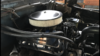
My neighbor came today and I got to try out my new OTC vacuum gauge. We hooked it up to the manifold vacuum port and started the engine. The gauge immediately went up to 18 and held steady. when the engine got up to operating temperature we tried to adjust the idle mixture screws to get a higher vacuum reading but ended up with a high reading of 18 with a slow drifting fluctuation between 18 and 17. With the thoughts this was about as good of a reading that we were going to get we tried slowly increasing throttle and the vacuum gauge also slowly raised. We than blipped the throttle and the vacuum gauge raised than dropped to or near zero. But we also got a backfire when we tried to blip the throttle a second time. We also turned the idle mixture screws all the way in and the engine died telling us the power valve is functioning, that's good. I wanted to know what size power valve I had so we decided to just pull the carb. and take it back apart, it's laying on my work bench right now. I have a 6.5 power valve, the jets read 64, the squirter reads 31, and I have a orange accelerator pump cam.
Post Fiend
Joined: Apr 2002
Posts: 19,311
Likes: 97
From: Waterloo, Iowa
Sounds like it's doing what a vacuum gauge does. 18" steady is OK. Download the vacuum gauge charts and study them. There's a lot that can be learned from a vacuum gauge. Ignition timing, valve problems, poor compression, exhaust system restrictions etc. The gauge is accurate for diagnostics at relatively slow RPM, around 500 to 600 in a stockish motor. If the engine is spooled up to 1000 it may not be accurate.
You should try advancing the distributor timing to see if you can hit 20", say. This is the optimum idle timing point generally speaking. It may end up being too much advance on the far end of the timing curve, but would indicate if the damper is defective. Usually a motor will increase idle RPM as the distributor is advanced, the vacuum will increase. At a certain point the idle RPM will start to "wander" or hunt and get a little vague and the engine vacuum start to drop off. The point of maximum steady vacuum (19" to 20") is right in the optimum zone, have to experiment, maybe back off 1/2" to 1" from the highest vacuum achieved to avoid engine knock with pump gas. If you put a light on it, might correspond to 12° or 14° BTDC, something like that.
Idle mixture screws just trim out the final idle AFR, as you turn them in equally, at the point they start to really lean out and cause a slowdown or stumble, just slightly richer from that point is the optimum point, should coincide with highest steady vacuum on the gauge. Sometimes called "best lean idle drop". Always want to see a steady needle, if it's wavering a full point it's probably too lean?
If you run the vacuum gauge in the cab you can see what the steady cruise vacuum is under light load, acceleration, different conditions - level ground, light grades or steep hills. This useful for dialing in the proper power valve. A 6.5" is a standard size but depending on your particular motor, modifications, carburetor, altitude and application you may want a higher or lower number for best performance and economy.
You should try advancing the distributor timing to see if you can hit 20", say. This is the optimum idle timing point generally speaking. It may end up being too much advance on the far end of the timing curve, but would indicate if the damper is defective. Usually a motor will increase idle RPM as the distributor is advanced, the vacuum will increase. At a certain point the idle RPM will start to "wander" or hunt and get a little vague and the engine vacuum start to drop off. The point of maximum steady vacuum (19" to 20") is right in the optimum zone, have to experiment, maybe back off 1/2" to 1" from the highest vacuum achieved to avoid engine knock with pump gas. If you put a light on it, might correspond to 12° or 14° BTDC, something like that.
Idle mixture screws just trim out the final idle AFR, as you turn them in equally, at the point they start to really lean out and cause a slowdown or stumble, just slightly richer from that point is the optimum point, should coincide with highest steady vacuum on the gauge. Sometimes called "best lean idle drop". Always want to see a steady needle, if it's wavering a full point it's probably too lean?
If you run the vacuum gauge in the cab you can see what the steady cruise vacuum is under light load, acceleration, different conditions - level ground, light grades or steep hills. This useful for dialing in the proper power valve. A 6.5" is a standard size but depending on your particular motor, modifications, carburetor, altitude and application you may want a higher or lower number for best performance and economy.

Laughing Gas
Joined: Apr 2014
Posts: 884
Likes: 5
From: Shreveport, LA
I think you're off to a good start and have gotten a lot of good info so far. A few things I would add are: make sure your plastic floats are good, check your accelerator pump diagram while it's out (unless it's new), make sure your coil is good (I've seen coils do some weird things).
A 6.5 power valve is going to be about right where you need to be. You check it by having the motor warmed up, full vacuum, drop it in gear (if it's an auto) or just a load on it, read the vacuum level, then half it. That's the power valve you need.
If you plan on keeping the carb, check the rear section. If it's got one of those secondary metering plates, check it for flatness or change to a jetted secondary metering block. The secondaries will be easier to tune with jets instead of plates.
I think 62 front jets will be in the ball park. But it your floats are adjusted too high, you're letting in too much fuel. When it's running you'll have to pull out the bowl sight screw on the side.
For carbed applications, I like to run as much initial timing as the motor can take (doesn't kick back on the starter) as long as it doesn't ping on the top end. Then if it does, you can adjust your weights and slots in the distributor but that's pain.
A 6.5 power valve is going to be about right where you need to be. You check it by having the motor warmed up, full vacuum, drop it in gear (if it's an auto) or just a load on it, read the vacuum level, then half it. That's the power valve you need.
If you plan on keeping the carb, check the rear section. If it's got one of those secondary metering plates, check it for flatness or change to a jetted secondary metering block. The secondaries will be easier to tune with jets instead of plates.
I think 62 front jets will be in the ball park. But it your floats are adjusted too high, you're letting in too much fuel. When it's running you'll have to pull out the bowl sight screw on the side.
For carbed applications, I like to run as much initial timing as the motor can take (doesn't kick back on the starter) as long as it doesn't ping on the top end. Then if it does, you can adjust your weights and slots in the distributor but that's pain.
Post Fiend
Joined: Apr 2002
Posts: 19,311
Likes: 97
From: Waterloo, Iowa
Pain in the azz for sure but this is the only way to really tune it correctly. The Y block in my slick is low compression, it starts OK with as much as 17° initial crank timing and is noticeably peppier. Around 12° to 14° is the sweet spot for a lot of V8, but most OEM distributors have way too much internal advance to use those numbers. So limiting the internal advance, and usually, using lighter springs, is the only way to get it really dialed in for performance and best range or economy. The main idea is to adjust the "all in" mechanical advance to 34° to 36°, maybe more, where most V8 like it. The exact number depends on fuel quality, compression ratio, altitude etc, but as much as it will stand without knock is optimum. Then hook up the vacuum advance and adjust it for steady level cruise, in high gear the RPM will be relatively low. So the maximum amount of distributor mechanical advance will be somewhat less than the "all in" figure. The vacuum advance under light loads when cruising (where most driving is done) will pull in extra timing to backfill. This improves overall driveability and fuel economy.
FTE Stories
Ford Trucks for Ford Truck Enthusiasts

3 Best / 3 Worst Parts of Modern Ford Ownership
Brett Foote
10 Amazing Upgrades That Solve Common Ford Truck Owner Headaches
Pouria Savadkouei
Every 2026 Ford Engine Explained
Brett Foote
10 Ugly Ford Trucks That We Still Kinda Love
Joe Kucinski
10 Things Every Truck Owner NEEDS (2026 Edition)
Michael S. Palmer
Rezvani's Latest Post-Apocalyptic Monster Is a Ford F-150 Raptor Underneath
Verdad Gallardo
Top 10 Most Expensive Ford Trucks Ever Sold on Bring a Trailer
Joe Kucinski
2027 Ford Super Duty Buyer's Guide (Every Model, Engine, & Package)
Brett Foote
Top 10 Ford Truck Tragedies
Joe Kucinski
Thread Starter
|
Elder User
Joined: Jun 2015
Posts: 664
Likes: 2
From: York Pa.
Sounds like it's doing what a vacuum gauge does. 18" steady is OK. Download the vacuum gauge charts and study them. There's a lot that can be learned from a vacuum gauge. Ignition timing, valve problems, poor compression, exhaust system restrictions etc. The gauge is accurate for diagnostics at relatively slow RPM, around 500 to 600 in a stockish motor. If the engine is spooled up to 1000 it may not be accurate.
You should try advancing the distributor timing to see if you can hit 20", say. This is the optimum idle timing point generally speaking. It may end up being too much advance on the far end of the timing curve, but would indicate if the damper is defective. Usually a motor will increase idle RPM as the distributor is advanced, the vacuum will increase. At a certain point the idle RPM will start to "wander" or hunt and get a little vague and the engine vacuum start to drop off. The point of maximum steady vacuum (19" to 20") is right in the optimum zone, have to experiment, maybe back off 1/2" to 1" from the highest vacuum achieved to avoid engine knock with pump gas. If you put a light on it, might correspond to 12° or 14° BTDC, something like that.
Idle mixture screws just trim out the final idle AFR, as you turn them in equally, at the point they start to really lean out and cause a slowdown or stumble, just slightly richer from that point is the optimum point, should coincide with highest steady vacuum on the gauge. Sometimes called "best lean idle drop". Always want to see a steady needle, if it's wavering a full point it's probably too lean?
If you run the vacuum gauge in the cab you can see what the steady cruise vacuum is under light load, acceleration, different conditions - level ground, light grades or steep hills. This useful for dialing in the proper power valve. A 6.5" is a standard size but depending on your particular motor, modifications, carburetor, altitude and application you may want a higher or lower number for best performance and economy.
You should try advancing the distributor timing to see if you can hit 20", say. This is the optimum idle timing point generally speaking. It may end up being too much advance on the far end of the timing curve, but would indicate if the damper is defective. Usually a motor will increase idle RPM as the distributor is advanced, the vacuum will increase. At a certain point the idle RPM will start to "wander" or hunt and get a little vague and the engine vacuum start to drop off. The point of maximum steady vacuum (19" to 20") is right in the optimum zone, have to experiment, maybe back off 1/2" to 1" from the highest vacuum achieved to avoid engine knock with pump gas. If you put a light on it, might correspond to 12° or 14° BTDC, something like that.
Idle mixture screws just trim out the final idle AFR, as you turn them in equally, at the point they start to really lean out and cause a slowdown or stumble, just slightly richer from that point is the optimum point, should coincide with highest steady vacuum on the gauge. Sometimes called "best lean idle drop". Always want to see a steady needle, if it's wavering a full point it's probably too lean?
If you run the vacuum gauge in the cab you can see what the steady cruise vacuum is under light load, acceleration, different conditions - level ground, light grades or steep hills. This useful for dialing in the proper power valve. A 6.5" is a standard size but depending on your particular motor, modifications, carburetor, altitude and application you may want a higher or lower number for best performance and economy.
Thread Starter
|
Elder User
Joined: Jun 2015
Posts: 664
Likes: 2
From: York Pa.
I think you're off to a good start and have gotten a lot of good info so far. A few things I would add are: make sure your plastic floats are good, check your accelerator pump diagram while it's out (unless it's new), make sure your coil is good (I've seen coils do some weird things).
A 6.5 power valve is going to be about right where you need to be. You check it by having the motor warmed up, full vacuum, drop it in gear (if it's an auto) or just a load on it, read the vacuum level, then half it. That's the power valve you need.
If you plan on keeping the carb, check the rear section. If it's got one of those secondary metering plates, check it for flatness or change to a jetted secondary metering block. The secondaries will be easier to tune with jets instead of plates.
I think 62 front jets will be in the ball park. But it your floats are adjusted too high, you're letting in too much fuel. When it's running you'll have to pull out the bowl sight screw on the side.
For carbed applications, I like to run as much initial timing as the motor can take (doesn't kick back on the starter) as long as it doesn't ping on the top end. Then if it does, you can adjust your weights and slots in the distributor but that's pain.
A 6.5 power valve is going to be about right where you need to be. You check it by having the motor warmed up, full vacuum, drop it in gear (if it's an auto) or just a load on it, read the vacuum level, then half it. That's the power valve you need.
If you plan on keeping the carb, check the rear section. If it's got one of those secondary metering plates, check it for flatness or change to a jetted secondary metering block. The secondaries will be easier to tune with jets instead of plates.
I think 62 front jets will be in the ball park. But it your floats are adjusted too high, you're letting in too much fuel. When it's running you'll have to pull out the bowl sight screw on the side.
For carbed applications, I like to run as much initial timing as the motor can take (doesn't kick back on the starter) as long as it doesn't ping on the top end. Then if it does, you can adjust your weights and slots in the distributor but that's pain.
Thread Starter
|
Elder User
Joined: Jun 2015
Posts: 664
Likes: 2
From: York Pa.
I bought a Equus 8068 tach. today when I picked up my size 62 main jets. And my neighbor said a new accelerator pump diaphragm came with the rebuild kit I purchased so the new diaphragm is in the carb.
And my neighbor said a new accelerator pump diaphragm came with the rebuild kit I purchased so the new diaphragm is in the carb.

Hotshot

Joined: May 2003
Posts: 11,141
Likes: 25
From: south louisiana
To address the backfiring, check the accelerator pump linkage, there should be little to no slack in the linkage, too much and that'll cause a lag in the pump shot, causing the backfire. Too little timing will also do this. Also I wouldn't worry about the mechanical advance inside the distributor until you have dialed everything else in. I'm running a stock reman 85 Stang distributor as is, right out of the box in my 331. I've found no need to screw with the mech advance weights or springs. The motor runs like it has EFI with it's 3x2 setup and stock Duraspark. Last time I checked it would pull down 16 mpg at 70 mph without overdrive (turning around 3 grand). And you change springs and weights you'll need to find someway to verify the results (dyno or passes at the track), otherwise you'll be shooting in the dark.
Thread Starter
|
Elder User
Joined: Jun 2015
Posts: 664
Likes: 2
From: York Pa.
It's Friday and my neighbor came up for two hours, that's all he is able to commit to helping me work on my truck each week, two hours. So we got busy and got my carburetor back on the motor after rechecking everything and putting in two new main jets, we went from 64 to 62. We then went through all the pre-start adjustments, throttle blade adjustments, the accelerator pump linkage adjustment, idle mixture, etc. Than we got my new Equus tach hooked up and operating properly. Than we went for the start up with the vacuum gauge hooked up to the intake port. We made adjustments to the idle mixture screws and the idle screw trying to get the vacuum number in the 18-22 range and steady while keeping the rpm between 600 and 700 but were not able to get it above 18 and maintain a steady needle today. We were also still getting the backfire when we blipped the throttle along with black smoke out the exhaust, bumber. Next week we will break out the timing light, vacuum gauge, and try it again. I think with the entire two hours focused on tuning we will be able to get it dialed in. Hopefully.
So we got busy and got my carburetor back on the motor after rechecking everything and putting in two new main jets, we went from 64 to 62. We then went through all the pre-start adjustments, throttle blade adjustments, the accelerator pump linkage adjustment, idle mixture, etc. Than we got my new Equus tach hooked up and operating properly. Than we went for the start up with the vacuum gauge hooked up to the intake port. We made adjustments to the idle mixture screws and the idle screw trying to get the vacuum number in the 18-22 range and steady while keeping the rpm between 600 and 700 but were not able to get it above 18 and maintain a steady needle today. We were also still getting the backfire when we blipped the throttle along with black smoke out the exhaust, bumber. Next week we will break out the timing light, vacuum gauge, and try it again. I think with the entire two hours focused on tuning we will be able to get it dialed in. Hopefully.

Senior User
Joined: Nov 2015
Posts: 111
Likes: 4
A few more thoughts as I think about this:
1) Already discussed, but I didn't see confirmation that you confirmed the integrity of your harmonic balancer. The "Positive Stop Method" would allow you to confirm when your piston is at TDC that your harmonic balancer is reading at TDC. If it has slipped then you are timing at the wrong spot.
2) In your initial post you mentioned timing was way advanced and once you retarded it, the backfiring and black smoke occurred. Have you tried running the timing up again just to see if that calms the backfiring?
3) Wondering if it's possible your dizzy is not advancing when you give it throttle. Can confirm with a timing light.
4) I think going to a smaller accelerator pump nozzle would exacerbate the problem. In my experience, stumbling off idle is because the engine isn't getting enough fuel for that transition from no load to load.
5) Spark is jumping to the wrong cylinder - possibly dist. cap or plug wires compromised.
6) If you have a smart phone and can post a video to YouTube with a link that would go a long way to help with diagnostics.
I know you've done a lot to confirm the timing, but going back to theory here the only way you can backfire through the carb is for the intake valve to be open when ignition occurs (someone correct me if this isn't the case - I think someone already said as much in the thread). I've seen others talk about a carb backfire under lean conditions but you clearly aren't running lean - I suspect this is because the engine is more susceptible to pre-ignition under lean conditions.
1) Already discussed, but I didn't see confirmation that you confirmed the integrity of your harmonic balancer. The "Positive Stop Method" would allow you to confirm when your piston is at TDC that your harmonic balancer is reading at TDC. If it has slipped then you are timing at the wrong spot.
2) In your initial post you mentioned timing was way advanced and once you retarded it, the backfiring and black smoke occurred. Have you tried running the timing up again just to see if that calms the backfiring?
3) Wondering if it's possible your dizzy is not advancing when you give it throttle. Can confirm with a timing light.
4) I think going to a smaller accelerator pump nozzle would exacerbate the problem. In my experience, stumbling off idle is because the engine isn't getting enough fuel for that transition from no load to load.
5) Spark is jumping to the wrong cylinder - possibly dist. cap or plug wires compromised.
6) If you have a smart phone and can post a video to YouTube with a link that would go a long way to help with diagnostics.
I know you've done a lot to confirm the timing, but going back to theory here the only way you can backfire through the carb is for the intake valve to be open when ignition occurs (someone correct me if this isn't the case - I think someone already said as much in the thread). I've seen others talk about a carb backfire under lean conditions but you clearly aren't running lean - I suspect this is because the engine is more susceptible to pre-ignition under lean conditions.