


Engine Rebuild Part 2

Thread Starter
|
Moderator


Joined: Dec 2007
Posts: 7,987
Likes: 104
From: Boise, Idaho

Thanks for those links. I'll get one of those ordered here soon. 
Next question, for the nuts on the rocker arms, I have stock rocker arms, but I also know that the stock setup was a torque-to-spec setup where you didn't have to adjust for valve lash, etc. So, as such, only one nut came with the rocker arms.
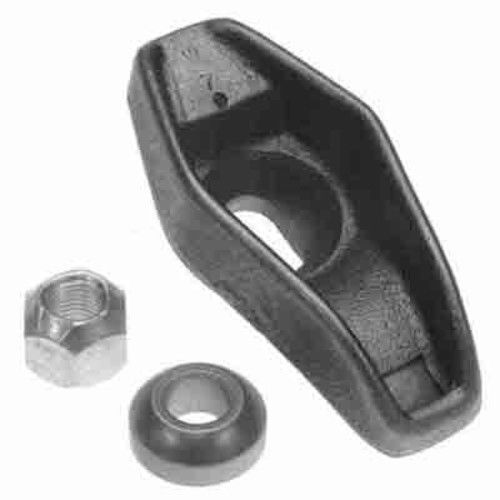
Now that I have screw in studs and my rockers are going to be adjustable, is the single nut going to work?
Or will it move after time?
Do I need a second hold-down nut?
If so, will any nut work, or is it something special?
Thanks.
Next question, for the nuts on the rocker arms, I have stock rocker arms, but I also know that the stock setup was a torque-to-spec setup where you didn't have to adjust for valve lash, etc. So, as such, only one nut came with the rocker arms.
Now that I have screw in studs and my rockers are going to be adjustable, is the single nut going to work?
Or will it move after time?
Do I need a second hold-down nut?
If so, will any nut work, or is it something special?
Thanks.

Fleet Mechanic
Joined: Nov 2002
Posts: 1,643
Likes: 69
Trend Performance makes off-the-shelf pushrods in .050" increments.
Fleet Mechanic
Joined: Nov 2002
Posts: 1,643
Likes: 69
Be aware, however, those torque prevailing nuts do not have an infinite life and will eventually get sloppy with repeated use, negating their locking feature.
Thread Starter
|
Moderator
Joined: Dec 2007
Posts: 7,987
Likes: 104
From: Boise, Idaho
Thanks FTF, that makes sense.
And I had heard before that the rocker arm nuts do fatigue over time, and one of the reasons they went to pedestal rockers. Is the slop/fatigue from repeated adjusting? Or just miles?
And I had heard before that the rocker arm nuts do fatigue over time, and one of the reasons they went to pedestal rockers. Is the slop/fatigue from repeated adjusting? Or just miles?

Elder User
Joined: Apr 2012
Posts: 544
Likes: 6
From: Kalispell, MT
you may want to consider running her up to temp, making your adjsutments, then shut it down after all fasteners are torqued. then snag some extras from a local fastenal and run them down to lock against the stock supplied "crimp nuts." might be a bit more insurance that they wont walk on you over time.
Lead Driver
Joined: Mar 2008
Posts: 7,182
Likes: 380
From: Near Los Angeles
Stop teasing us, AB. We want sound clips and vids, photos and descriptions of the power!!
Fire that baby up...please. We're waiting, dying to hear.
Fire that baby up...please. We're waiting, dying to hear.
FTE Stories
Ford Trucks for Ford Truck Enthusiasts

Rezvani's Latest Post-Apocalytic Monster Is a Ford F-150 Raptor Underneath
Verdad Gallardo
Top 10 Most Expensive Ford Trucks Ever Sold on Bring a Trailer
Joe Kucinski
2027 Ford Super Duty Buyer's Guide (Every Model, Engine, & Package)
Brett Foote
Top 10 Ford Truck Tragedies
Joe Kucinski
AEV FXL Super Duty - the Super Duty Raptor Ford Doesn't Make
Brett Foote
Lobo Vs Lobo: Proof the F-150 Lobo Should Be Even Lower!
Michael S. Palmer
Ford's 2001 Explorer Sportsman Concept Looks For a New Home
Verdad Gallardo
10 Best Ford Truck Engines We Miss the Most!
Joe Kucinski
2026 Shelby F-150 Off-Road: Better Than a Raptor R?
Brett Foote
Thread Starter
|
Moderator
Joined: Dec 2007
Posts: 7,987
Likes: 104
From: Boise, Idaho
It's getting closer.  I'm still collecting things to put it together, and that's on a budget as well.
The head gasket and ARP studs arrived a few days ago, so I'll be bolting that all together here soon. I'm also waiting on the paint I ordered to show up.
Once I get the head bolted to the block, things'll speed up a bit. But I still need to track down a few odds and ends like a water pump, oil sump screen, thermostat housing, etc.
Plus measure for pushrod length and get those on order once I get them zeroed in.
I'm anxious! But only so much money coming in at a time.
I'm starting to get a little cranky about how long it's taking though...
I'm still collecting things to put it together, and that's on a budget as well. The head gasket and ARP studs arrived a few days ago, so I'll be bolting that all together here soon. I'm also waiting on the paint I ordered to show up.
Once I get the head bolted to the block, things'll speed up a bit. But I still need to track down a few odds and ends like a water pump, oil sump screen, thermostat housing, etc.
Plus measure for pushrod length and get those on order once I get them zeroed in.
I'm anxious! But only so much money coming in at a time.
I'm starting to get a little cranky about how long it's taking though...
Thread Starter
|
Moderator
Joined: Dec 2007
Posts: 7,987
Likes: 104
From: Boise, Idaho
Originally Posted by The Frenchtown Flyer
If you end up with a set of V8 pistons make sure that they have ZERO PIN OFFSET or you will have a very noisy motor. At least two holes will have the pin orientated in the wrong direction.
Originally Posted by AbandonedBronco
Can you elaborate on this? I used 351 pistons in mine and don't ever remember any mention of this, nor do I know whether mine do or not.
Originally Posted by The Frenchtown Flyer
Some engines have the pin offset by about .050" to make the engine a little quieter by putting a little preload on the thrust side of the piston to prevent piston slap on compression as the piston rocks across TDC. The preload on a six should be toward the left hand (drivers) side of the engine. Since V8s generally use the same cylinder head on both sides of the engine the valve orientation, valve notches, dishes and domes will be mirror imaged from side-to-side. In the case of a V8 piston with no valve notches, dishes or domes - i.e. a true flat topped design - it would matter little and all pistons could be oriented correctly in the six. But with a dish or a dome if you wanted to keep the dish / dome alignment with the six's combustion chambers it would be necessary to turn two of the V8 pistons around, thereby not only negating the effects of an offset pin but making the piston slap worse by offsetting the piston in the wrong direction.
Another consideration is effective rod length. Pin offset affects effective rod length and piston speed through its travel, especially influencing the accel rates as it approaches TDC. So it has a slight effect on scavenging in the overlap phase.
Another consideration is effective rod length. Pin offset affects effective rod length and piston speed through its travel, especially influencing the accel rates as it approaches TDC. So it has a slight effect on scavenging in the overlap phase.
This is quickly making me nervous, since this is the first time I'm hearing about this. I would rather find out now that there's an issue with my pistons than after I get it all installed and fire it up.
I am using 19cc pistons from a 351w V8.
These, to be exact:
https://www.summitracing.com/parts/s...view/make/ford
I don't see anything about pin offsets, and I don't know the more intimate details about a 351w. However, is this something I need to be concerned about? How would I know? How can I check?


Thread Starter
|
Moderator
Joined: Dec 2007
Posts: 7,987
Likes: 104
From: Boise, Idaho
This is the only site I can find that lists any specifics about the pistons I got (H653CP).
https://www.fmmotorparts.com/fmstore...0#.WKI8wfkrKUk
It says that they have a 0.060" offset.
After reading about it, I can definitely see why having some offset would be beneficial. However, how do I find out if they're mirrored, or, if they're all the same, that they're installed correctly?
They do use a dish that's non-biased to one side or the other:

https://www.fmmotorparts.com/fmstore...0#.WKI8wfkrKUk
It says that they have a 0.060" offset.
After reading about it, I can definitely see why having some offset would be beneficial. However, how do I find out if they're mirrored, or, if they're all the same, that they're installed correctly?
They do use a dish that's non-biased to one side or the other:
Thread Starter
|
Moderator
Joined: Dec 2007
Posts: 7,987
Likes: 104
From: Boise, Idaho
Alright, so I unwrapped my present last night so I could look at the pistons. I wanted to keep it wrapped as long as possible to keep dirt and such out of it, but I needed to dive into this piston issue. Plus, I've just been wanting to look at it.


I noticed that all of the pistons had an arrow on them. I'm assuming pointing toward the front of the engine. However, I didn't find any other distinguishing marks that would state whether they're for the left or the right bank of cylinders on a V8.


No markings on the underside either. And it was too difficult to tell if a pin was 1/16" to the left or to the right.

Now, one thing I did forget to do was grab one of the two surplus pistons I have sitting in the box and look at them. They might tell me something, so I'll do that tonight.
I noticed that all of the pistons had an arrow on them. I'm assuming pointing toward the front of the engine. However, I didn't find any other distinguishing marks that would state whether they're for the left or the right bank of cylinders on a V8.
No markings on the underside either. And it was too difficult to tell if a pin was 1/16" to the left or to the right.
Now, one thing I did forget to do was grab one of the two surplus pistons I have sitting in the box and look at them. They might tell me something, so I'll do that tonight.
 That means your builder didn't flip two of them. So he probably didn't know about the offsets.