


Engine Rebuild Part 2
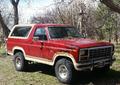
Thread Starter
|
Moderator


Joined: Dec 2007
Posts: 7,987
Likes: 104
From: Boise, Idaho

Engine Rebuild Part 2
Alright, let's try this again.
Off and on I've tried to get an engine rebuilt for my Bronco. Losing my job and then going back to school for 2 years for another degree kinda sorta put that on hold.
But now that I'm back working and things are a little easier financially, it's time to start again.
Here's the link to the previous thread I started on it. Figured it'd be better to start over than attach to the end of that one:
https://www.ford-trucks.com/forums/1...e-rebuild.html
The engine I'm working on is one I got off of Craigslist for $50 (delivered!). I ran it in the Bronco for about a year, but despite the fact that it ran very well, strong, and had great compression (about 150 - 160), it was terribly noisy, so I pulled it and swapped in the engine that came attached to the front of my my NP-435 transmission that I swapped in. This particular one has around 120 compression and has some blowby, but it's getting me by.
So, time to rebuild the $50 one. I pulled it all apart and didn't find anything wrong with it, so I have no idea why it was so noisy. Who knows, some new lifters might have just cleared everything right up.
The engine is in pristine shape. There are NO ridges at the top of the cylinder walls. None. I was able to slide all 6 pistons out without any trouble. All of the bearings were a clean, silver mirror finish, aside from two pistons. I am hopeful it won't take much, if anything, to clean it up.
My goal for the engine is a little bit more compression (around 9.0, nothing fancy), and some extra power. I'd love to get it to around 200hp, which would make me plenty happy.
Some head work, larger valves, performance cam, and just build it to be good, strong daily driver that I can off-road with when needs be. As much as I love my Bronco for hitting the trails, I have to keep in mind that it's my daily driver and sees 95% street.
Here's the engine as it's sat for the last few years. About the only thing I'd done is pulled the cam out a while back to inspect it.

The clutch was a bit rusted up from just sitting around. I have a new clutch/pressure plate/flywheel in the Bronco now, so I'll probably just recycle this stuff. The flywheel looks good though, so I might resurface it for a spare.


The head's been off for a while so it's a bit rusty, but it turned over with ease. I had to jam a crowbar behind the flywheel to keep it from spinning so I could undo the bolts.

Do NOT want to forget to install this. Been there... done that... It's heart sinking.

Forgot that I hadn't drained the oil... Nice mess to clean up.

Removed the oil pan and undid the main bearings.


Everything is nice and smooth:

These cranks are heavy


Unbolted the pistons and slid them out the top. As said, there was no ridge, so they came right out. The pistons were not stamped with an oversize number, so I imagine they're originals.

About the only wear I could find:


Close up of the cylinder walls. The oil is only from turning it over:


I dropped the block and crank off at the shop this morning, so I should hear back soon as to their condition. Hopefully all is well and cleaning it up will be relatively painless. He said he'd done performance work on 300s before and said the biggest issue he generally runs into is lack of aftermarket pistons for higher compression. But I do like hearing that he was well acquainted with it.
https://www.facebook.com/pages/Moffitt-Bratton/142851469094650
I'll post more when I get them back!
Off and on I've tried to get an engine rebuilt for my Bronco. Losing my job and then going back to school for 2 years for another degree kinda sorta put that on hold.
But now that I'm back working and things are a little easier financially, it's time to start again.
Here's the link to the previous thread I started on it. Figured it'd be better to start over than attach to the end of that one:
https://www.ford-trucks.com/forums/1...e-rebuild.html
The engine I'm working on is one I got off of Craigslist for $50 (delivered!). I ran it in the Bronco for about a year, but despite the fact that it ran very well, strong, and had great compression (about 150 - 160), it was terribly noisy, so I pulled it and swapped in the engine that came attached to the front of my my NP-435 transmission that I swapped in. This particular one has around 120 compression and has some blowby, but it's getting me by.
So, time to rebuild the $50 one. I pulled it all apart and didn't find anything wrong with it, so I have no idea why it was so noisy. Who knows, some new lifters might have just cleared everything right up.
The engine is in pristine shape. There are NO ridges at the top of the cylinder walls. None. I was able to slide all 6 pistons out without any trouble. All of the bearings were a clean, silver mirror finish, aside from two pistons. I am hopeful it won't take much, if anything, to clean it up.
My goal for the engine is a little bit more compression (around 9.0, nothing fancy), and some extra power. I'd love to get it to around 200hp, which would make me plenty happy.
Some head work, larger valves, performance cam, and just build it to be good, strong daily driver that I can off-road with when needs be. As much as I love my Bronco for hitting the trails, I have to keep in mind that it's my daily driver and sees 95% street.
Here's the engine as it's sat for the last few years. About the only thing I'd done is pulled the cam out a while back to inspect it.
The clutch was a bit rusted up from just sitting around. I have a new clutch/pressure plate/flywheel in the Bronco now, so I'll probably just recycle this stuff. The flywheel looks good though, so I might resurface it for a spare.
The head's been off for a while so it's a bit rusty, but it turned over with ease. I had to jam a crowbar behind the flywheel to keep it from spinning so I could undo the bolts.
Do NOT want to forget to install this. Been there... done that... It's heart sinking.
Forgot that I hadn't drained the oil... Nice mess to clean up.
Removed the oil pan and undid the main bearings.
Everything is nice and smooth:
These cranks are heavy
Unbolted the pistons and slid them out the top. As said, there was no ridge, so they came right out. The pistons were not stamped with an oversize number, so I imagine they're originals.
About the only wear I could find:
Close up of the cylinder walls. The oil is only from turning it over:
I dropped the block and crank off at the shop this morning, so I should hear back soon as to their condition. Hopefully all is well and cleaning it up will be relatively painless. He said he'd done performance work on 300s before and said the biggest issue he generally runs into is lack of aftermarket pistons for higher compression. But I do like hearing that he was well acquainted with it.
https://www.facebook.com/pages/Moffitt-Bratton/142851469094650
I'll post more when I get them back!

Postmaster
Joined: Mar 2005
Posts: 2,949
Likes: 6
From: Earth
Pistons are no worry. You can probably get all the compression increase you want by machining the block. Zero deck with stock pistons/head is good for ~.5 increase in static compression. With a little off the head it should be right near 9.0:1.
The 300 pistons are heavy. That's one area a set of 351W pistons is worth considering. Compare the weights for 300 & 351 pistons with the same dish and see if it's worth it. I've never fooled with pistons from a 351 out of a truck so there may not be much difference but the 351 pistons I've seen going into performance engines probably weighed half what a 300 piston does. Check these: http://www.summitracing.com/parts/slp-h653cp/overview/
I don't know what the machinist did with the old pistons from my new engine. Ford went to hypereutectic pistons in '95, which this one was. If your cylinders are round and can get by with a hone job I could check and send them to you if he hasn't already scrapped them.
Pay the extra to have it balanced.
Oh, and you can run a long bolt or piece of threaded rod through one of the flywheel bolt holes at ~11:00 or 1:00 o'clock until it contacts the block when tightening/removing bolts. Use thread sealer on the the flywheel bolts - the holes go all the way through the crank into the crankcase.
The 300 pistons are heavy. That's one area a set of 351W pistons is worth considering. Compare the weights for 300 & 351 pistons with the same dish and see if it's worth it. I've never fooled with pistons from a 351 out of a truck so there may not be much difference but the 351 pistons I've seen going into performance engines probably weighed half what a 300 piston does. Check these: http://www.summitracing.com/parts/slp-h653cp/overview/
I don't know what the machinist did with the old pistons from my new engine. Ford went to hypereutectic pistons in '95, which this one was. If your cylinders are round and can get by with a hone job I could check and send them to you if he hasn't already scrapped them.
Pay the extra to have it balanced.
Oh, and you can run a long bolt or piece of threaded rod through one of the flywheel bolt holes at ~11:00 or 1:00 o'clock until it contacts the block when tightening/removing bolts. Use thread sealer on the the flywheel bolts - the holes go all the way through the crank into the crankcase.
Thread Starter
|
Moderator
Joined: Dec 2007
Posts: 7,987
Likes: 104
From: Boise, Idaho
Thanks for the replies Baron.
That's what I was thinking as an alternative. Just have the block and/or head shaved and bump up the compression. I don't have any interest in going crazy with it, so even a 0.5 bump will be plenty. I still want to use 87 octane. 89 at the most.
This is some info I found on the 300/302/351 pistons (as they all have the same bore).
Compression Height
300 - 1.757"
302 - 1.605"
351 - 1.769"
Wrist Pin Diameter
300 rods - .9749-.9754"
302 rods - .9121-.9122"
351 rods - .9121-.9122"
If you can find a set of early 300 rods they have the same pin diameter or you can bush down a set of late model rods.
I do plan on going hypereutectic. I guess we'll see on what, if any, needs to be trued up. Thanks for the offer. 
As far as balancing, which part are you referring to? The crank?
Yeah, I would have looked into something like that for locking the flywheel in place, but it took all of about 30 seconds to find a good wedge point to hold it still, and then another 30 to bust them all loose. Not too bad at all.
I have no idea how long until I hear back from the shop or what their work load is, but hopefully it's not too long.
That's what I was thinking as an alternative. Just have the block and/or head shaved and bump up the compression. I don't have any interest in going crazy with it, so even a 0.5 bump will be plenty. I still want to use 87 octane. 89 at the most.
This is some info I found on the 300/302/351 pistons (as they all have the same bore).
Compression Height
300 - 1.757"
302 - 1.605"
351 - 1.769"
Wrist Pin Diameter
300 rods - .9749-.9754"
302 rods - .9121-.9122"
351 rods - .9121-.9122"
If you can find a set of early 300 rods they have the same pin diameter or you can bush down a set of late model rods.
As far as balancing, which part are you referring to? The crank?
Yeah, I would have looked into something like that for locking the flywheel in place, but it took all of about 30 seconds to find a good wedge point to hold it still, and then another 30 to bust them all loose. Not too bad at all.
I have no idea how long until I hear back from the shop or what their work load is, but hopefully it's not too long.

Lead Driver


Joined: Dec 2000
Posts: 6,293
Likes: 47
From: South central, Minnesota
I'm going with a set of 351W pistons in my 300. Here's the pistons I'm going with: http://www.summitracing.com/parts/ue...-030/overview/ I'm picking up a set of early 300 rods ( 65-67, .912" pin diameter ) and am going to have them bushed for the full floating piston pins. I'm going to use a 240 head with the chambers opened up slightly. My compression ratio should end up right around 9.0:1-to 9.25:1.
And on the 300 there's not really any need to balance the crank. Just have the Rods & pistons balanced ( weight matched ) .
And on the 300 there's not really any need to balance the crank. Just have the Rods & pistons balanced ( weight matched ) .
Thread Starter
|
Moderator
Joined: Dec 2007
Posts: 7,987
Likes: 104
From: Boise, Idaho
So, heard back from the machine shop.
The crank has some scarring and needs to be reground.
The block magnaflux checked out, but the cylinders are ovalled slightly, so they'll need to be bored back to round. Not sure how much yet.
He said a full engine kit including pistons, rings, gaskets, oil pump, cam, gears, etc. was around $550, but it's all stock stuff. I'll probably pick and mix so I can get what I want.
The crank has some scarring and needs to be reground.
The block magnaflux checked out, but the cylinders are ovalled slightly, so they'll need to be bored back to round. Not sure how much yet.
He said a full engine kit including pistons, rings, gaskets, oil pump, cam, gears, etc. was around $550, but it's all stock stuff. I'll probably pick and mix so I can get what I want.
Trending Topics
Postmaster
Joined: Mar 2005
Posts: 2,949
Likes: 6
From: Earth
If you can find one without the camshaft and valve springs those kits are a good deal. One for a 95-95 should work and it would have hypereutectic pistons with narrow, low-friction rings. Any money you save on parts is money you can spend on balancing. Or bigger valves and porting.
For my engine the machine shop charged $1,100 for all the machine work and assembly plus pistons, rings, ARP rod bolts. That included balancing the rotating assembly, rods, and pistons. And a valve job and assembly on the head. Another $350 for the cam and kit, $90 for a Cloyes timing set. Gasket set with silicone oil pan and valve cover gaskets was ~$90, oil pump ~$40. I also got a new clutch set and slave cylinder, new engine mounts, transmission mount. All told around $2,000 for the engine alone. Considering what I've got vs. a decent rebuilt stock long block at $1,800 that's a steal.
Have you settled on a cam yet?
For my engine the machine shop charged $1,100 for all the machine work and assembly plus pistons, rings, ARP rod bolts. That included balancing the rotating assembly, rods, and pistons. And a valve job and assembly on the head. Another $350 for the cam and kit, $90 for a Cloyes timing set. Gasket set with silicone oil pan and valve cover gaskets was ~$90, oil pump ~$40. I also got a new clutch set and slave cylinder, new engine mounts, transmission mount. All told around $2,000 for the engine alone. Considering what I've got vs. a decent rebuilt stock long block at $1,800 that's a steal.
Have you settled on a cam yet?
FTE Stories
Ford Trucks for Ford Truck Enthusiasts

Rezvani's Latest Post-Apocalytic Monster Is a Ford F-150 Raptor Underneath
Verdad Gallardo
Top 10 Most Expensive Ford Trucks Ever Sold on Bring a Trailer
Joe Kucinski
2027 Ford Super Duty Buyer's Guide (Every Model, Engine, & Package)
Brett Foote
Top 10 Ford Truck Tragedies
Joe Kucinski
AEV FXL Super Duty - the Super Duty Raptor Ford Doesn't Make
Brett Foote
Lobo Vs Lobo: Proof the F-150 Lobo Should Be Even Lower!
Michael S. Palmer
Ford's 2001 Explorer Sportsman Concept Looks For a New Home
Verdad Gallardo
10 Best Ford Truck Engines We Miss the Most!
Joe Kucinski
2026 Shelby F-150 Off-Road: Better Than a Raptor R?
Brett Foote
Thread Starter
|
Moderator
Joined: Dec 2007
Posts: 7,987
Likes: 104
From: Boise, Idaho
Yeah, I'm totally all for saving on parts, just as long as I get what I'm needing. If it's a full kit that comes with a bunch of stuff that I want to swap out (such as a 4 piece oil pan gasket, intake/exhaust gaskets, etc) or has extra stuff I don't use (like for an EFI engine), I wonder if it'd be better to pick and mix. Dunno, I haven't looked into it yet.
From the prices he quoted me, it sounds rather similarly priced. I also am wondering about zero-decking the block (unless that comes standard or something) for compression. And I agree that balancing everything is worth the extra. I regularly rev my engine to 4000+ RPMs as it is now, I imagine with an all new valve train with higher performance springs, better breathing cam, valves, etc. I will probably push that limit a bit higher and want everything nice and balanced.
For the cam, I'd like something mid-range. A bit more high end performance, but not too much of a loss on the low end torque. A 260 grind seems about the ticket. But, I'm open to suggestions.
From the prices he quoted me, it sounds rather similarly priced. I also am wondering about zero-decking the block (unless that comes standard or something) for compression. And I agree that balancing everything is worth the extra. I regularly rev my engine to 4000+ RPMs as it is now, I imagine with an all new valve train with higher performance springs, better breathing cam, valves, etc. I will probably push that limit a bit higher and want everything nice and balanced.
For the cam, I'd like something mid-range. A bit more high end performance, but not too much of a loss on the low end torque. A 260 grind seems about the ticket. But, I'm open to suggestions.
Thread Starter
|
Moderator
Joined: Dec 2007
Posts: 7,987
Likes: 104
From: Boise, Idaho
Spoke with the machinist again this morning and he said that he can pick/mix parts to create a custom kit to order. He's also a warehouse distributor for Comp and Elgin cams. (I'd never heard of the latter).
He said based on the specs and what I'm thinking of doing, he'd actually recommend the 268h cam to really take advantage of the 4bbl carb, higher compression, higher flowing head, etc. Any thoughts on it? Also, anyone heard of Elgin? There was an Elgin he recommended, but I can't seem to find a catalog on line to get the info on it.
Comp 252:
"Good torque and mileage for 240-300. Excellent throttle response."
500 - 4500 RPM range
Comp 260:
"Excellent torque and power for towing in 300 c.i. Smooth idle."
1000 to 5000
Comp 268:
"Moderate performance camshaft for 300 c.i. Strong in mid range RPM. Noticeable idle."
1200 to 5200
The RPM range for the 268 really isn't too different than the 260, and honestly as time goes on, I'm not the big MPG nut as I used to be. I don't want to kill it by any means, but if I lose a little bit for a good boost in power, I'm fine with that. I'm currently getting 16 and I imagine it'd be better with a fresh engine as my current one only has around 120 compression. If I get 15 - 17 when all said and done, I'll be happy. Would a 268 kill my mileage?
In other news, the crank is currently out getting reground, and now that I dropped off my main bearing caps, he'll start boring the block. He's guessing around .030 over just to clean it up due to the rust from sitting (which I blame myself for. It sat outside for around a year with the head off and without a cover on it.)
He suggested not zero decking it since he doesn't like to do that as it doesn't leave much room for future work, but says we shouldn't have a problem hitting 9:1 compression.
He said based on the specs and what I'm thinking of doing, he'd actually recommend the 268h cam to really take advantage of the 4bbl carb, higher compression, higher flowing head, etc. Any thoughts on it? Also, anyone heard of Elgin? There was an Elgin he recommended, but I can't seem to find a catalog on line to get the info on it.
Comp 252:
"Good torque and mileage for 240-300. Excellent throttle response."
500 - 4500 RPM range
Comp 260:
"Excellent torque and power for towing in 300 c.i. Smooth idle."
1000 to 5000
Comp 268:
"Moderate performance camshaft for 300 c.i. Strong in mid range RPM. Noticeable idle."
1200 to 5200
The RPM range for the 268 really isn't too different than the 260, and honestly as time goes on, I'm not the big MPG nut as I used to be. I don't want to kill it by any means, but if I lose a little bit for a good boost in power, I'm fine with that. I'm currently getting 16 and I imagine it'd be better with a fresh engine as my current one only has around 120 compression. If I get 15 - 17 when all said and done, I'll be happy. Would a 268 kill my mileage?
In other news, the crank is currently out getting reground, and now that I dropped off my main bearing caps, he'll start boring the block. He's guessing around .030 over just to clean it up due to the rust from sitting (which I blame myself for. It sat outside for around a year with the head off and without a cover on it.)
He suggested not zero decking it since he doesn't like to do that as it doesn't leave much room for future work, but says we shouldn't have a problem hitting 9:1 compression.
Postmaster
Joined: Mar 2005
Posts: 2,949
Likes: 6
From: Earth
OTOH, 300 blocks are cheap, plentiful, and if it's back for machine work again in the future it will probably need to be bored, align honed, etc. again anyway. Taking it to .010" deck will still produce some decent squish, though, so no biggie either way.
FORDSIX PERFORMANCE ? View topic - 240/300 STREET CAMSHAFT LIST
Wallace Racing - Cam Degree Calculator
I used a Comp 268 in the new Bronco engine but since it had a knock I haven't driven it yet. I'm either going to get another one if it's a cam issue (I made some errors with the install and may have wiped a lobe) or get a custom cam ground.
If you look at the valve timing on the stock cam vs. the Comp 268 the only difference is the stock ground 6° retarded and the Comp 268 ground 4° advanced (110 LSA/116 ICL vs. 110/106). So the Comp 268 is more or less like advancing the stock cam 10° and adding 1.8 ratio rockers.
As far as valve events go, when the intake closes has the biggest effect on where the engine makes power. The stock cam closes 70° ABDC, Comp 268 at 60° - closing 10° earlier adds about .5 to the dynamic compression ratio. Which means more compression.
Somebody on this board ran the Comp 268 and said it made more power at all RPM than the stock cam.
IIRC, there is a 351w Lightning replacement piston with a 16cc dish that should be pretty spot on for 9.0:1 with a 300 head.
FORDSIX PERFORMANCE ? View topic - 240/300 STREET CAMSHAFT LIST
Wallace Racing - Cam Degree Calculator
I used a Comp 268 in the new Bronco engine but since it had a knock I haven't driven it yet. I'm either going to get another one if it's a cam issue (I made some errors with the install and may have wiped a lobe) or get a custom cam ground.
If you look at the valve timing on the stock cam vs. the Comp 268 the only difference is the stock ground 6° retarded and the Comp 268 ground 4° advanced (110 LSA/116 ICL vs. 110/106). So the Comp 268 is more or less like advancing the stock cam 10° and adding 1.8 ratio rockers.
As far as valve events go, when the intake closes has the biggest effect on where the engine makes power. The stock cam closes 70° ABDC, Comp 268 at 60° - closing 10° earlier adds about .5 to the dynamic compression ratio. Which means more compression.
Somebody on this board ran the Comp 268 and said it made more power at all RPM than the stock cam.
IIRC, there is a 351w Lightning replacement piston with a 16cc dish that should be pretty spot on for 9.0:1 with a 300 head.
Thread Starter
|
Moderator
Joined: Dec 2007
Posts: 7,987
Likes: 104
From: Boise, Idaho
True on the blocks. Although, they may be plentiful now, but who knows about when I need to rebuild it next? Eh, as long as I can hit 9:1, I'll be happy.
Thanks for that information on the cams, Baron. That is good stuff to know. Cams are something I'm slowly learning about, but there's plenty left to learn as there is a lot of different aspects to how they work.
Maybe I'll just go for it, and get the 268. I hadn't considered it before, but who knows. It might just add that fun factor I'm looking for.
As for a flattened lobe, have you just popped off the valve cover and turned it over? It's a quick, easy check.
Otherwise, when mine lost a lobe, it sounded like this when I stepped on the gas:
Granted, that could change depending on whether it's an intake or exhaust lobe. Either way, I hope that's not the case for you.
Thanks for that information on the cams, Baron. That is good stuff to know. Cams are something I'm slowly learning about, but there's plenty left to learn as there is a lot of different aspects to how they work.
Maybe I'll just go for it, and get the 268. I hadn't considered it before, but who knows. It might just add that fun factor I'm looking for.
As for a flattened lobe, have you just popped off the valve cover and turned it over? It's a quick, easy check.
Otherwise, when mine lost a lobe, it sounded like this when I stepped on the gas:
Granted, that could change depending on whether it's an intake or exhaust lobe. Either way, I hope that's not the case for you.
Postmaster
Joined: Mar 2005
Posts: 2,949
Likes: 6
From: Earth
I left it sit and started on the engine for the F150, then deer season rolled around. The weather is supposed to be nice this weekend and I'm going to yank the valve cover and see if there's anything obviously wrong with the valve train. Which would be the best case scenario because if not it's in the bottom end. Either way I predict the engine is coming out.
The Isky 262 is a nice cam too. I'm thinking about a custom cam, probably ~262° adv duration but with steeper ramps than the Isky. Lunati has some 300 cams with crazy ramps, 219° at .050" and .499" lift with 262° adv duration. I'm sure Comp or Isky or whoever could do something similar.
The Isky 262 is a nice cam too. I'm thinking about a custom cam, probably ~262° adv duration but with steeper ramps than the Isky. Lunati has some 300 cams with crazy ramps, 219° at .050" and .499" lift with 262° adv duration. I'm sure Comp or Isky or whoever could do something similar.
Lead Driver
Joined: Dec 2000
Posts: 6,293
Likes: 47
From: South central, Minnesota
What's the casting # on that block? The dish in those stock pistons look weird. But I think I've got one that has the same ones in my hoard.
I'm shooting for the same compression ratio as you are but I'm zero decking my block. If you compare two 300's that both have 9.0:1 compression. One is zero decked with a larger dish in the piston and the other one has less dish but isn't zero decked. The zero decked one will perform better. And it's very unlikely that you'd ever have to deck the block again if it did need another rebuild. You'll warp the head way before you will the block.
I'm shooting for the same compression ratio as you are but I'm zero decking my block. If you compare two 300's that both have 9.0:1 compression. One is zero decked with a larger dish in the piston and the other one has less dish but isn't zero decked. The zero decked one will perform better. And it's very unlikely that you'd ever have to deck the block again if it did need another rebuild. You'll warp the head way before you will the block.
Thread Starter
|
Moderator
Joined: Dec 2007
Posts: 7,987
Likes: 104
From: Boise, Idaho
Hrm... I don't think I ever looked. It was out of a '78. At least, that's what the guy I bought it from said.
I agree that the style of piston kinda stands out. Usually they're the D shaped dish, whereas these are a circle.
As for the zero decking performing better, do you have some reasoning for that?
I agree that the style of piston kinda stands out. Usually they're the D shaped dish, whereas these are a circle.
As for the zero decking performing better, do you have some reasoning for that?