


Engine Rebuild Part 2
Thread Starter
|
Moderator


Joined: Dec 2007
Posts: 7,987
Likes: 104
From: Boise, Idaho

It's been a busy week!
Monday I took the engine out, which went quite smoothly.
Tuesday... blech. I spent the whole day cleaning. The blowby from the engine I took out just had everything covered in at least a half an inch of gunk. It was disgusting. I have most of it down to the bare paint/metal now, so once it's up and running, I think I'll take it to car wash where I can use some serious soap and spray power to clean the rest. The entire underside of the vehicle (which I haven't touched yet) is black from oil and grim all the way back to the rear differential. It's been a mess.
I probably removed a pound of dirt and junk, so with the weight savings alone, I should get better gas mileage.


It's been a very long time since I've actually been able to SEE the cross member.

Or the paint behind the engine.

I also cleaned and sanded down the manifolds with a wire brush attachment on my drill. Those things are great. (I think I posted a picture of them earlier). Cleaned them up really nice.


Now, here was an odd issue. I've had my carburetor off dozens of times. Every time I take it off, I usually unscrew the studs and remove them, so I can clean up the intake mating surface. They're put in hand tight, and I can 99% of the time remove them by hand. Every once in a while, one's a little snug and I have to tweak it with some pliers to free it up. The last time I had them out was maybe a month ago.
However.... I could not for the life of me get this stud out! I spent an hour on it. Vice grips, you name it. I finally gave up out of fear of busting it off! I am completely perplexed. Any ideas??


Either way, cleaned up the intake as well, and then painted everything to match the engine color scheme. I think they look great!


Wednesday was a short day, due to my parents visiting for the day, but I started out the morning installing the manifolds. Unfortunately, disaster struck and I busted off a tab.

Fortunately, the local machine shop was able to get it in right away and I was able to pick it up the next morning for $50 and move on. I realized what had happened, and the alignment pin I had installed was too long and prevented the intake from sitting flush against the head. I cut it shorter and all was well, but it was a dumb mistake that cost me time and money. Always check that he manifolds sit flush against the engine before torquing down. If I had just done that, I would have avoided the whole issue.


Thursday (yesterday) was another big day. With the intake/exhaust installed, the engine bay cleaned, and everything ready, it was time to install the engine.


It took about 2 - 3 hours of wrestling with it to get it in place. The biggest issue I had was honestly the fact that the exhaust manifolds were on. The studs in the rear manifold are seized in, and I can't remove them. They were continually catching on the exhaust pipe and hanging up. Eventually, I disconnected the transmission from the mount and shoved it back as far as it'd go and this gave me the wiggle room I needed.
Pro tip Head bolts have the same bolt size/pitch as transmission to engine bolts. They're also MUCH MUCH longer. These are a life saver when it comes to lining the engine up since the engine and transmission can still be 2 - 3 inches apart and you can get these bolts in. Just getting one in will help keep the two in line. Then, work on a second, and a third. Once they're lined up, push them together and remove the head bolts and replace with the much shorter transmission bolts. I've done this every time I've swapped engines and it's a huge time saver.


So now, the engine is in, mated with the transmission, torqued down, and in place! It better not be leaving that spot for a long time.
Today I'll be hooking everything back up and firing it up!
Monday I took the engine out, which went quite smoothly.
Tuesday... blech. I spent the whole day cleaning. The blowby from the engine I took out just had everything covered in at least a half an inch of gunk. It was disgusting. I have most of it down to the bare paint/metal now, so once it's up and running, I think I'll take it to car wash where I can use some serious soap and spray power to clean the rest. The entire underside of the vehicle (which I haven't touched yet) is black from oil and grim all the way back to the rear differential. It's been a mess.
I probably removed a pound of dirt and junk, so with the weight savings alone, I should get better gas mileage.
It's been a very long time since I've actually been able to SEE the cross member.
Or the paint behind the engine.
I also cleaned and sanded down the manifolds with a wire brush attachment on my drill. Those things are great. (I think I posted a picture of them earlier). Cleaned them up really nice.
Now, here was an odd issue. I've had my carburetor off dozens of times. Every time I take it off, I usually unscrew the studs and remove them, so I can clean up the intake mating surface. They're put in hand tight, and I can 99% of the time remove them by hand. Every once in a while, one's a little snug and I have to tweak it with some pliers to free it up. The last time I had them out was maybe a month ago.
However.... I could not for the life of me get this stud out! I spent an hour on it. Vice grips, you name it. I finally gave up out of fear of busting it off! I am completely perplexed. Any ideas??
Either way, cleaned up the intake as well, and then painted everything to match the engine color scheme. I think they look great!
Wednesday was a short day, due to my parents visiting for the day, but I started out the morning installing the manifolds. Unfortunately, disaster struck and I busted off a tab.
Fortunately, the local machine shop was able to get it in right away and I was able to pick it up the next morning for $50 and move on. I realized what had happened, and the alignment pin I had installed was too long and prevented the intake from sitting flush against the head. I cut it shorter and all was well, but it was a dumb mistake that cost me time and money. Always check that he manifolds sit flush against the engine before torquing down. If I had just done that, I would have avoided the whole issue.
Thursday (yesterday) was another big day. With the intake/exhaust installed, the engine bay cleaned, and everything ready, it was time to install the engine.
It took about 2 - 3 hours of wrestling with it to get it in place. The biggest issue I had was honestly the fact that the exhaust manifolds were on. The studs in the rear manifold are seized in, and I can't remove them. They were continually catching on the exhaust pipe and hanging up. Eventually, I disconnected the transmission from the mount and shoved it back as far as it'd go and this gave me the wiggle room I needed.
Pro tip Head bolts have the same bolt size/pitch as transmission to engine bolts. They're also MUCH MUCH longer. These are a life saver when it comes to lining the engine up since the engine and transmission can still be 2 - 3 inches apart and you can get these bolts in. Just getting one in will help keep the two in line. Then, work on a second, and a third. Once they're lined up, push them together and remove the head bolts and replace with the much shorter transmission bolts. I've done this every time I've swapped engines and it's a huge time saver.
So now, the engine is in, mated with the transmission, torqued down, and in place! It better not be leaving that spot for a long time.
Today I'll be hooking everything back up and firing it up!
Lead Driver
Joined: Mar 2008
Posts: 7,182
Likes: 380
From: Near Los Angeles
It looks great. Good for you! The only thing I'd change is the heat/coolant supply arms.
Didn't you go with a v.cover spacer to accompany the high lift cam? Don't remember. Didn't see it in the photo.
I would have used heat on the stud; copper anti-seize compound to install new.
I'd be surprised if you didn't need to calibrate your carb due to porting and cam.
Didn't you go with a v.cover spacer to accompany the high lift cam? Don't remember. Didn't see it in the photo.
I would have used heat on the stud; copper anti-seize compound to install new.
I'd be surprised if you didn't need to calibrate your carb due to porting and cam.
Posting Guru
Joined: Jun 2012
Posts: 1,061
Likes: 9
From: Mims, FL
Yes, like it! I've got to pull/replace the 300 in my '85 and dreading it as it's been leaking and blowby for eons - but it still runs! Hard to kill these engines.
Great job, thanks for all the updates.
Great job, thanks for all the updates.
Thread Starter
|
Moderator
Joined: Dec 2007
Posts: 7,987
Likes: 104
From: Boise, Idaho
Well, the fire up did not go as planned. I couldn't get it to start. It kept kinda/sorta wanting to but then would hiccup and spit like the timing was off.
I've installed a distributor dozens of times, and have checked it twice, and can't see how the timing would be off. But it sure acts like it.
I'll dive into it more today and hopefully can get it to start. Kinda frustrated at the moment as I really don't like cranking and cranking on a fresh rebuild.
I've installed a distributor dozens of times, and have checked it twice, and can't see how the timing would be off. But it sure acts like it.
I'll dive into it more today and hopefully can get it to start. Kinda frustrated at the moment as I really don't like cranking and cranking on a fresh rebuild.
Thread Starter
|
Moderator
Joined: Dec 2007
Posts: 7,987
Likes: 104
From: Boise, Idaho
So, it lives!
I adjusted the timing this morning and got it to fire up.
Thanks again to Brian (Brian_153624) for coming over and checking on me, and giving me a hand.
Good news:
It's running, I ran it for 20 minutes at around 2000 - 2500 RPMs to break the cam in, etc. That all seems to be going well. There are virtually no leaks whatsoever, and it is so smooth that you can't tell it's running by looking at it.
The vacuum at 2000 rpms was rock solid.
The issues:
At idle, it's around 14 hg of vacuum. I'm imagining that'll change once it starts to seat the rings, break in, etc. Hopefully.
The timing looks to be around 25° advance, which is a LOT. But, that's where it achieved highest vacuum and then backed off 1hg. Any lower than that, and it runs pretty rough. However, the starter is kicking back, and it pings on acceleration. I'm going to have to play with it.
The biggest issue though is that it *clacks*. The rocker arms are making an awful amount of noise. I've adjusted them several times and they are still very noisy. I'm not quite sure what to do. I might drive it to my machinist and have him comb over it.
Either way though, it's great to having it running, and it was a neat feeling driving it. I can tell it's going to be powerful, but there's a number of things that really feel out of sorts. It's not quite the perfect startup I was hoping for, but once the kinks are worked out, I think it's going to be great.
I adjusted the timing this morning and got it to fire up.
Thanks again to Brian (Brian_153624) for coming over and checking on me, and giving me a hand.
Good news:
It's running, I ran it for 20 minutes at around 2000 - 2500 RPMs to break the cam in, etc. That all seems to be going well. There are virtually no leaks whatsoever, and it is so smooth that you can't tell it's running by looking at it.
The vacuum at 2000 rpms was rock solid.
The issues:
At idle, it's around 14 hg of vacuum. I'm imagining that'll change once it starts to seat the rings, break in, etc. Hopefully.
The timing looks to be around 25° advance, which is a LOT. But, that's where it achieved highest vacuum and then backed off 1hg. Any lower than that, and it runs pretty rough. However, the starter is kicking back, and it pings on acceleration. I'm going to have to play with it.
The biggest issue though is that it *clacks*. The rocker arms are making an awful amount of noise. I've adjusted them several times and they are still very noisy. I'm not quite sure what to do. I might drive it to my machinist and have him comb over it.
Either way though, it's great to having it running, and it was a neat feeling driving it. I can tell it's going to be powerful, but there's a number of things that really feel out of sorts. It's not quite the perfect startup I was hoping for, but once the kinks are worked out, I think it's going to be great.

Logistics Pro


Joined: Dec 2003
Posts: 3,777
Likes: 863
From: Foothills of NC
Aggressive cams will lower intake vacuum at low rpms. The first big cam I put in, I checked the vacuum a few weeks later and had very little. I pulled the timing cover to make sure things were installed right, they were. Then I read about low vacuum and cams.
This was long before there was anything called the internet. If I had the resources then that are available today, I could have messed up a whole lot more things than I did...lol
This was long before there was anything called the internet. If I had the resources then that are available today, I could have messed up a whole lot more things than I did...lol
Thread Starter
|
Moderator
Joined: Dec 2007
Posts: 7,987
Likes: 104
From: Boise, Idaho
Well, it's been a frustrating few days.
The clatter is coming from the rocker arms, but my builder and I went over it and can't figure it out. But it's NOISY. The thing sounds like a diesel.
We're thinking of breaking in a new set of lifters to see if that's the issue. An idea that certainly doesn't excite me, but I have no other ideas.
Right now, I have the whole top end pulled apart and the lifters out.
The good news is that the wear marks on the tips of all of the valve stems are just about smack dab in the center, so my push rod lengths are all correct. One of them is a little out further toward the tip, so I'm contemplating throwing in my back up shorter one, but it should be okay if I don't.
Also, all of the lifters look great, so the cam break in was a success.
I don't see any odd wear marks where anything's hitting. I looked to see if the rockers were hitting the valve keepers anywhere, push rods hitting the ends of the guide holes, etc, but nothing. Everything looks okay. But man it is noisy.
Also... it drives terribly. Super smooth idle, and it cruises fine, but anything more than about 25% throttle and it'll start to surge and even back fire (already blew off a vacuum cap). The AFR looks good. Around 15:1 at cruise, 12:1 idle, and around 12:1 - 13:1 during acceleration, so it's not a lean issue (at least I don't think) but it's no way any fun to drive.
I pulled all six spark plugs and they all look about the same with a gentle burn area around the tip.
It's almost like the coil or ignition module died in the 48 hours it was out.
So, I'm frustrated, and am open to any and all ideas.
The clatter is coming from the rocker arms, but my builder and I went over it and can't figure it out. But it's NOISY. The thing sounds like a diesel.
We're thinking of breaking in a new set of lifters to see if that's the issue. An idea that certainly doesn't excite me, but I have no other ideas.
Right now, I have the whole top end pulled apart and the lifters out.
The good news is that the wear marks on the tips of all of the valve stems are just about smack dab in the center, so my push rod lengths are all correct. One of them is a little out further toward the tip, so I'm contemplating throwing in my back up shorter one, but it should be okay if I don't.
Also, all of the lifters look great, so the cam break in was a success.
I don't see any odd wear marks where anything's hitting. I looked to see if the rockers were hitting the valve keepers anywhere, push rods hitting the ends of the guide holes, etc, but nothing. Everything looks okay. But man it is noisy.
Also... it drives terribly. Super smooth idle, and it cruises fine, but anything more than about 25% throttle and it'll start to surge and even back fire (already blew off a vacuum cap). The AFR looks good. Around 15:1 at cruise, 12:1 idle, and around 12:1 - 13:1 during acceleration, so it's not a lean issue (at least I don't think) but it's no way any fun to drive.
I pulled all six spark plugs and they all look about the same with a gentle burn area around the tip.
It's almost like the coil or ignition module died in the 48 hours it was out.
So, I'm frustrated, and am open to any and all ideas.
FTE Stories
Ford Trucks for Ford Truck Enthusiasts

Top 10 Most Expensive Ford Trucks Ever Sold on Bring a Trailer
Joe Kucinski
2027 Ford Super Duty Buyer's Guide (Every Model, Engine, & Package)
Brett Foote
Top 10 Ford Truck Tragedies
Joe Kucinski
AEV FXL Super Duty - the Super Duty Raptor Ford Doesn't Make
Brett Foote
Lobo Vs Lobo: Proof the F-150 Lobo Should Be Even Lower!
Michael S. Palmer
Ford's 2001 Explorer Sportsman Concept Looks For a New Home
Verdad Gallardo
10 Best Ford Truck Engines We Miss the Most!
Joe Kucinski
2026 Shelby F-150 Off-Road: Better Than a Raptor R?
Brett Foote
2027 Super Duty Carhartt Package First Look: 12 Things You NEED to Know!
Michael S. Palmer
Lead Driver
Joined: Mar 2008
Posts: 7,182
Likes: 380
From: Near Los Angeles
AB, first off let me say I know what a bad feeling that is. Everyone wants to see you beat this and set it right. We're pulling for you.
Lifter noise: Are you certain you're not getting interference, either hitting a baffle in the v.cover, or the rockers clicking on the edge of the retainer? I'm sure you guys turned it over by hand and checked. Could it simply be too much lift for oem rockers? Do they rock up too far and then tap the valve tip when they come down and straighten out? If so, I see a set of roller rockers in your future.
Surging, backfire: Lean! I think you're not getting enough fuel. 25% of the pedal is right about where you're coming off the acc.pump shot, and there you go lean. It want/needs that extra fuel the acc.pump shot gave. That would be my guess. I'd jump up a jet size and see. And it clearly wants headers, ha ha. Had to get that in there, lol.
Your carb was dialed in for a stock 300, right, except for the dui? Now you have larger valves, a ported head, and big cam. I think you need to adjust for more fuel.
Is there a way to find out for certain if it is the lifters before spending money on a new set?
Are you still running 25* initial timing? If so, don't you need to dial back your v.advance so that you get a total of 32* advance?
Good luck.
P.S.: Thought you might like to see this: Scroll down a bit. http://www.sageparts.com/ford-300-engines.shtm
Lifter noise: Are you certain you're not getting interference, either hitting a baffle in the v.cover, or the rockers clicking on the edge of the retainer? I'm sure you guys turned it over by hand and checked. Could it simply be too much lift for oem rockers? Do they rock up too far and then tap the valve tip when they come down and straighten out? If so, I see a set of roller rockers in your future.
Surging, backfire: Lean! I think you're not getting enough fuel. 25% of the pedal is right about where you're coming off the acc.pump shot, and there you go lean. It want/needs that extra fuel the acc.pump shot gave. That would be my guess. I'd jump up a jet size and see. And it clearly wants headers, ha ha. Had to get that in there, lol.
Your carb was dialed in for a stock 300, right, except for the dui? Now you have larger valves, a ported head, and big cam. I think you need to adjust for more fuel.
Is there a way to find out for certain if it is the lifters before spending money on a new set?
Are you still running 25* initial timing? If so, don't you need to dial back your v.advance so that you get a total of 32* advance?
Good luck.
P.S.: Thought you might like to see this: Scroll down a bit. http://www.sageparts.com/ford-300-engines.shtm

Laughing Gas
Joined: Dec 2010
Posts: 924
Likes: 1
About the lifter noise. Assuming you had the same noise. I had the same problem when I first did the rebuild I thought maybe it was the rockers or lifters took it to my machinist when he was still alive he told me that lifter would settle in after a while of driving he was right now I turn it on and it super smooth idle I still hear them a little to none but not like that first time I also changed from Brad Penn 10w30 to Brad Penn 10w40 that seem to help as well.
Hope all goes well partner.
Hope all goes well partner.

Lead Driver
Joined: Jul 2009
Posts: 6,477
Likes: 19
From: Sheffield, AL
AB,
I see that you have the Power by Ford valve cover. I installed one on my 1986, which originally came with the one which is used for the fuel injection unit of 1987 and later engines. Immediately, there was a hard clacking sound which could be felt when laying your hand on the valve cover. One rocker on the #5 [I believe] cylinder was interfering with the baffles located under the PCV port.
I see that you have the Power by Ford valve cover. I installed one on my 1986, which originally came with the one which is used for the fuel injection unit of 1987 and later engines. Immediately, there was a hard clacking sound which could be felt when laying your hand on the valve cover. One rocker on the #5 [I believe] cylinder was interfering with the baffles located under the PCV port.
Thread Starter
|
Moderator
Joined: Dec 2007
Posts: 7,987
Likes: 104
From: Boise, Idaho
Lifter noise: Are you certain you're not getting interference, either hitting a baffle in the v.cover, or the rockers clicking on the edge of the retainer? I'm sure you guys turned it over by hand and checked. Could it simply be too much lift for oem rockers? Do they rock up too far and then tap the valve tip when they come down and straighten out? If so, I see a set of roller rockers in your future.
The rocker arm tip hitting the retainer at full lift, and for the under side of the arm hitting the retainer when it comes down. There was plenty of room and no interference.
Push rods hitting the ends of the holes in the head from having too much travel. Nothing.
The rockers, as far as I can see, have a very nice travel across the surface of the valve tip.
Also, I ran the engine very briefly with the valve cover off to see if there was any interference with the cover itself, and the noise persisted.
The only thing that I didn't check, that I thought of as I was going over things in my head when I woke up at 3am, was the slot in the rocker arm that the stud goes through, if it's allowing enough travel. I'm sure it is, but it's worth checking.
Surging, backfire: Lean! I think you're not getting enough fuel. 25% of the pedal is right about where you're coming off the acc.pump shot, and there you go lean. It want/needs that extra fuel the acc.pump shot gave. That would be my guess. I'd jump up a jet size and see. And it clearly wants headers, ha ha. Had to get that in there, lol.
Your carb was dialed in for a stock 300, right, except for the dui? Now you have larger valves, a ported head, and big cam. I think you need to adjust for more fuel.
Your carb was dialed in for a stock 300, right, except for the dui? Now you have larger valves, a ported head, and big cam. I think you need to adjust for more fuel.
And I knew something about headers had to be coming.
Is there a way to find out for certain if it is the lifters before spending money on a new set?
Are you still running 25* initial timing? If so, don't you need to dial back your v.advance so that you get a total of 32* advance?
About the lifter noise. Assuming you had the same noise. I had the same problem when I first did the rebuild I thought maybe it was the rockers or lifters took it to my machinist when he was still alive he told me that lifter would settle in after a while of driving he was right now I turn it on and it super smooth idle I still hear them a little to none but not like that first time I also changed from Brad Penn 10w30 to Brad Penn 10w40 that seem to help as well.
Hope all goes well partner.
Hope all goes well partner.
We also discussed oil weight. Right now, I'm running 5w30 break-in oil.
https://www.summitracing.com/parts/jgr-01806/overview/
I would think that it should be okay with a thinner oil especially with how tight all the tolerances are. But I dunno, maybe it's too thin?
AB,
I see that you have the Power by Ford valve cover. I installed one on my 1986, which originally came with the one which is used for the fuel injection unit of 1987 and later engines. Immediately, there was a hard clacking sound which could be felt when laying your hand on the valve cover. One rocker on the #5 [I believe] cylinder was interfering with the baffles located under the PCV port.
I see that you have the Power by Ford valve cover. I installed one on my 1986, which originally came with the one which is used for the fuel injection unit of 1987 and later engines. Immediately, there was a hard clacking sound which could be felt when laying your hand on the valve cover. One rocker on the #5 [I believe] cylinder was interfering with the baffles located under the PCV port.
Thanks for all the thoughts and help everyone, I appreciate it. We'll get it figured out.
Thread Starter
|
Moderator
Joined: Dec 2007
Posts: 7,987
Likes: 104
From: Boise, Idaho
Alright, some updates.
I broke in a new set of Crane lifters, which seemed to greatly quiet it down. It's still has some clack, which I really don't like, but it doesn't sound like the horrible top end noise I had the first time. I drove it to my builder and he said it was much much better, and that sound is a lot more normal.
I do wish it wasn't there, since I would love to have a nice, quiet powerful sounding engine and not like a diesel, but it's tolerable. I'm wondering if after a couple hundred miles, and an oil change to some thicker oil (like 10w30 or 10w40) or the like might quiet it down.
I also richened it up quite a bit. Upped the main jetting from 54 to 57, and then installed a size 40 accel pump with the aggressive blue cam. It is still quite lean, and still will backfire if I get on it too hard, but it's much better. I ran out of tuning parts, so I'm going to have to order more to be able to richen it up even more. I have a 42, 45, and 47 squirter and may try the brown cam (crazy aggressive) and see what that does. From what I've read, those may require me to go with the 50cc accel pump setup. Either way, it's thirsty for fuel on acceleration.
I am also thinking I'll order some smaller idle and main air bleeds, since I can easily swap them out on the QuickFuel. That should help to reduce the lean mixture.
Even with those changes, it drove much better, but it's still hungry.
Otherwise, I took it for a long drive yesterday along the river to a neighboring town up in the mountains and put about 150 miles on it. Lots of speed changes, up and down, etc. and it did really well. Even though I couldn't accelerate very well, I could tell it had a lot of power. I went up a few steep grades I used to lose speed on and was able to increase in speed in my biggest gear. I'd say that's a win.
Either way, it's running well, and I'll keep putting miles on it to break it in. Also, keep hacking away at richening up the tuning.
I just wish I could get rid of the drivetrain noise.
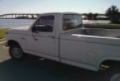
Here's a picture at the first 100 miles on the engine:

I broke in a new set of Crane lifters, which seemed to greatly quiet it down. It's still has some clack, which I really don't like, but it doesn't sound like the horrible top end noise I had the first time. I drove it to my builder and he said it was much much better, and that sound is a lot more normal.
I do wish it wasn't there, since I would love to have a nice, quiet powerful sounding engine and not like a diesel, but it's tolerable. I'm wondering if after a couple hundred miles, and an oil change to some thicker oil (like 10w30 or 10w40) or the like might quiet it down.
I also richened it up quite a bit. Upped the main jetting from 54 to 57, and then installed a size 40 accel pump with the aggressive blue cam. It is still quite lean, and still will backfire if I get on it too hard, but it's much better. I ran out of tuning parts, so I'm going to have to order more to be able to richen it up even more. I have a 42, 45, and 47 squirter and may try the brown cam (crazy aggressive) and see what that does. From what I've read, those may require me to go with the 50cc accel pump setup. Either way, it's thirsty for fuel on acceleration.
I am also thinking I'll order some smaller idle and main air bleeds, since I can easily swap them out on the QuickFuel. That should help to reduce the lean mixture.
Even with those changes, it drove much better, but it's still hungry.
Otherwise, I took it for a long drive yesterday along the river to a neighboring town up in the mountains and put about 150 miles on it. Lots of speed changes, up and down, etc. and it did really well. Even though I couldn't accelerate very well, I could tell it had a lot of power. I went up a few steep grades I used to lose speed on and was able to increase in speed in my biggest gear. I'd say that's a win.
Either way, it's running well, and I'll keep putting miles on it to break it in. Also, keep hacking away at richening up the tuning.
I just wish I could get rid of the drivetrain noise.
Here's a picture at the first 100 miles on the engine:

Lead Driver


Joined: Dec 2000
Posts: 6,293
Likes: 47
From: South central, Minnesota
Glad to hear you got it to quiet down some. Hopefully after the break in period, once you go to a thicker oil, it will quiet down some more.
You did a lot of work to get the head to flow more air. So it's going to need more fuel. I'm pretty sure you'll have to step up to the 50cc accelerator pump.
You did a lot of work to get the head to flow more air. So it's going to need more fuel. I'm pretty sure you'll have to step up to the 50cc accelerator pump.