



 I towed on 9 when I lost a COP.
Gas vs PSD

FTE Leadership Emeritus
Joined: Jul 2002
Posts: 42,561
Likes: 423
From: Long Island USA


I wonder why it DOES work. Again, if the diesel isn't provided with it, knowing that it works, why isn't it in the first place? What's so wrong with it that it can't be used, either in all vehicles, or because of environmental or emissions concerns?
I know all about cavitation. I have been around diesels a lot, working on them (repairs), maintaining, etc. Mechanical injection pump types, never had to work on the electronic ones.
The fact that I've been around diesels in one way or another for over 20 years made me choose a gasser


Postmaster
Joined: Apr 2008
Posts: 4,724
Likes: 4
From: Rogersville, TN
Also, speaking of cost, figure I'll throw some numbers out there for the higher maintenance costs of the diesel. We need some more figures and numbers and all that to keep this thread going lol.
Comparing my engine to yours, I will list the most common things to go wrong or need to be maintained. Let's assume the lifespan of the trucks to be 20 years.
water pump v10 $200 7.3 $150
alternator v10 $255 7.3 $170
starter v10 $175 7.3 $210
total cost for those items v10 $630 7.3 $530 $100 ahead for the 7.3.
Fuel costs. I get 4 mpg better than you on average. If we both drive 20,000 miles per year(my average driving) I will use 1052 gallons of fuel and you will use 1334 per year. That is 21,040 gallons for me and 26,680 for you over the lifespan. Diesel is $2.59 and gas is $2.45 here. I will spend $54,494 and you will spend $65,366. I will also buy 84 bottles of my fuel additive for those ~21,000 gallons. $10 per bottle x 84=$840. So I spend $55,334. $10,032 advantage for the 7.3 plus the previous $100=$10,132 in the 7.3's favor.
Coolant costs over the lifespan of the vehicles will be $320 in my favor from our earlier comparison, not counting the sca's. Over that span I will use one $2 test strip and $4 worth of sca's per year. That is $6 per year over 20 years, or $120. So now your coolant costs are $220 more than mine. Add that to the $10,132 and the 7.3 is ahead by $10,352.
If we change our oil every 5k miles we will make 4 oil changes per year. I use 14 quarts at $2 per quart and use a $10 filter. That is $38 per oil change times 4 changes per year=$152. $152x20 years=$3,040 on changes. Your v10 uses 7 quarts and a $5 filter. Even though diesel oil is cheaper per quart I will use the same price for yours. You spend $19 per change, or $76 per year times 20 years=$1,520. $1,520 advantage v10 bringing our total to $8,832 advantage for the 7.3.
Fuel filters for mine are $18 and yours are $7. The changer interval in my books for both of them are 60k miles. Over our 20 years of 20k miles per year that is 400k miles, or 7 changes total. 7 times $18=$126 for me. 7 times $7=49 for you. $77 advantage v10. Total=$8,755 advantage 7.3.
I don't know what your spark plug costs, but my glow plugs cost me $68 for a pack of 8(motorcraft) and they usually have to be changed at about 200k miles. According to johnny, the triton plugs should be changed every 30-50k miles. You will change your plugs 6-8 times while I will change my glow plugs twice. We can call this one even.
Add in $4k for the up front cost of the 7.3 and it still comes out ahead $4,755. That is $238 per year cheaper for the 7.3 over the lifespan of 20 years/400,000k miles.
Gasser guys usually say stuff like "you have to buy coolant additive, so that's a maintenance cost we don't have to spend." They never stop to think that our additive barely costs anything, our coolant lasts 6 times as long, and THEY actually end up spending more than we do. When figuring up maintenance costs you have to look at more than just the individual price per item. Look at how long it lasts, how often it has to be changed, and the price over the lifespan of the truck.
Comparing my engine to yours, I will list the most common things to go wrong or need to be maintained. Let's assume the lifespan of the trucks to be 20 years.
water pump v10 $200 7.3 $150
alternator v10 $255 7.3 $170
starter v10 $175 7.3 $210
total cost for those items v10 $630 7.3 $530 $100 ahead for the 7.3.
Fuel costs. I get 4 mpg better than you on average. If we both drive 20,000 miles per year(my average driving) I will use 1052 gallons of fuel and you will use 1334 per year. That is 21,040 gallons for me and 26,680 for you over the lifespan. Diesel is $2.59 and gas is $2.45 here. I will spend $54,494 and you will spend $65,366. I will also buy 84 bottles of my fuel additive for those ~21,000 gallons. $10 per bottle x 84=$840. So I spend $55,334. $10,032 advantage for the 7.3 plus the previous $100=$10,132 in the 7.3's favor.
Coolant costs over the lifespan of the vehicles will be $320 in my favor from our earlier comparison, not counting the sca's. Over that span I will use one $2 test strip and $4 worth of sca's per year. That is $6 per year over 20 years, or $120. So now your coolant costs are $220 more than mine. Add that to the $10,132 and the 7.3 is ahead by $10,352.
If we change our oil every 5k miles we will make 4 oil changes per year. I use 14 quarts at $2 per quart and use a $10 filter. That is $38 per oil change times 4 changes per year=$152. $152x20 years=$3,040 on changes. Your v10 uses 7 quarts and a $5 filter. Even though diesel oil is cheaper per quart I will use the same price for yours. You spend $19 per change, or $76 per year times 20 years=$1,520. $1,520 advantage v10 bringing our total to $8,832 advantage for the 7.3.
Fuel filters for mine are $18 and yours are $7. The changer interval in my books for both of them are 60k miles. Over our 20 years of 20k miles per year that is 400k miles, or 7 changes total. 7 times $18=$126 for me. 7 times $7=49 for you. $77 advantage v10. Total=$8,755 advantage 7.3.
I don't know what your spark plug costs, but my glow plugs cost me $68 for a pack of 8(motorcraft) and they usually have to be changed at about 200k miles. According to johnny, the triton plugs should be changed every 30-50k miles. You will change your plugs 6-8 times while I will change my glow plugs twice. We can call this one even.
Add in $4k for the up front cost of the 7.3 and it still comes out ahead $4,755. That is $238 per year cheaper for the 7.3 over the lifespan of 20 years/400,000k miles.
Gasser guys usually say stuff like "you have to buy coolant additive, so that's a maintenance cost we don't have to spend." They never stop to think that our additive barely costs anything, our coolant lasts 6 times as long, and THEY actually end up spending more than we do. When figuring up maintenance costs you have to look at more than just the individual price per item. Look at how long it lasts, how often it has to be changed, and the price over the lifespan of the truck.
Postmaster
Joined: Apr 2008
Posts: 4,724
Likes: 4
From: Rogersville, TN
I didn't say it didn't work
I wonder why it DOES work. Again, if the diesel isn't provided with it, knowing that it works, why isn't it in the first place?
I know all about cavitation. I have been around diesels a lot, working on them (repairs), maintaining, etc. Mechanical injection pump types, never had to work on the electronic ones.
The fact that I've been around diesels in one way or another for over 20 years made me choose a gasser
I wonder why it DOES work. Again, if the diesel isn't provided with it, knowing that it works, why isn't it in the first place?
I know all about cavitation. I have been around diesels a lot, working on them (repairs), maintaining, etc. Mechanical injection pump types, never had to work on the electronic ones.
The fact that I've been around diesels in one way or another for over 20 years made me choose a gasser
All diesels will get cavitation if you don't maintain the sca level. It's not something that only the psd is prone to. It's a simple and cheap thing to maintain, so not a big deal to diesel guys. No different than filling up with windshield washer fluid, topping off your antifreeze, or checking the air in your tires. If you maintain it properly then you'll never have problems.
I am the exact opposite of you. I maintain all my vehicles meticulously and I don't mind the few extra things involved with the diesel because I know I spend less on it over the vehicles lifetime.

Laughing Gas
Joined: Jun 2009
Posts: 903
Likes: 0
From: So Cal
As for all the additives - hadn't read up on them yet, but going to do my homework on diesel kleen. Was not aware that it was that cheep, or that effective. Thanks for the heads up.
What are the odds of stumbling across useful tech bits on this thread, of all places.


Thread Starter
|
Modular motor junkie
Joined: May 2009
Posts: 6,190
Likes: 8
From: Texas
No.
I just got it a week ago.
129,800 miles.
ran great, no oil in the water so I bought it and put the SCA and new coolant in.
50 miles of driving it and the it started blowing white smoke.
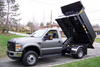
I am going to get to rebuild it.
I just got it a week ago.
129,800 miles.
ran great, no oil in the water so I bought it and put the SCA and new coolant in.
50 miles of driving it and the it started blowing white smoke.
I am going to get to rebuild it.
Laughing Gas
Joined: Mar 2009
Posts: 843
Likes: 6
From: Jessup, PA
Also, speaking of cost, figure I'll throw some numbers out there for the higher maintenance costs of the diesel. We need some more figures and numbers and all that to keep this thread going lol.
Comparing my engine to yours, I will list the most common things to go wrong or need to be maintained. Let's assume the lifespan of the trucks to be 20 years.
water pump v10 $200 7.3 $150
alternator v10 $255 7.3 $170
starter v10 $175 7.3 $210
total cost for those items v10 $630 7.3 $530 $100 ahead for the 7.3.
Fuel costs. I get 4 mpg better than you on average. If we both drive 20,000 miles per year(my average driving) I will use 1052 gallons of fuel and you will use 1334 per year. That is 21,040 gallons for me and 26,680 for you over the lifespan. Diesel is $2.59 and gas is $2.45 here. I will spend $54,494 and you will spend $65,366. I will also buy 84 bottles of my fuel additive for those ~21,000 gallons. $10 per bottle x 84=$840. So I spend $55,334. $10,032 advantage for the 7.3 plus the previous $100=$10,132 in the 7.3's favor.
Coolant costs over the lifespan of the vehicles will be $320 in my favor from our earlier comparison, not counting the sca's. Over that span I will use one $2 test strip and $4 worth of sca's per year. That is $6 per year over 20 years, or $120. So now your coolant costs are $220 more than mine. Add that to the $10,132 and the 7.3 is ahead by $10,352.
If we change our oil every 5k miles we will make 4 oil changes per year. I use 14 quarts at $2 per quart and use a $10 filter. That is $38 per oil change times 4 changes per year=$152. $152x20 years=$3,040 on changes. Your v10 uses 7 quarts and a $5 filter. Even though diesel oil is cheaper per quart I will use the same price for yours. You spend $19 per change, or $76 per year times 20 years=$1,520. $1,520 advantage v10 bringing our total to $8,832 advantage for the 7.3.
Fuel filters for mine are $18 and yours are $7. The changer interval in my books for both of them are 60k miles. Over our 20 years of 20k miles per year that is 400k miles, or 7 changes total. 7 times $18=$126 for me. 7 times $7=49 for you. $77 advantage v10. Total=$8,755 advantage 7.3.
I don't know what your spark plug costs, but my glow plugs cost me $68 for a pack of 8(motorcraft) and they usually have to be changed at about 200k miles. According to johnny, the triton plugs should be changed every 30-50k miles. You will change your plugs 6-8 times while I will change my glow plugs twice. We can call this one even.
Add in $4k for the up front cost of the 7.3 and it still comes out ahead $4,755. That is $238 per year cheaper for the 7.3 over the lifespan of 20 years/400,000k miles.
Gasser guys usually say stuff like "you have to buy coolant additive, so that's a maintenance cost we don't have to spend." They never stop to think that our additive barely costs anything, our coolant lasts 6 times as long, and THEY actually end up spending more than we do. When figuring up maintenance costs you have to look at more than just the individual price per item. Look at how long it lasts, how often it has to be changed, and the price over the lifespan of the truck.
Comparing my engine to yours, I will list the most common things to go wrong or need to be maintained. Let's assume the lifespan of the trucks to be 20 years.
water pump v10 $200 7.3 $150
alternator v10 $255 7.3 $170
starter v10 $175 7.3 $210
total cost for those items v10 $630 7.3 $530 $100 ahead for the 7.3.
Fuel costs. I get 4 mpg better than you on average. If we both drive 20,000 miles per year(my average driving) I will use 1052 gallons of fuel and you will use 1334 per year. That is 21,040 gallons for me and 26,680 for you over the lifespan. Diesel is $2.59 and gas is $2.45 here. I will spend $54,494 and you will spend $65,366. I will also buy 84 bottles of my fuel additive for those ~21,000 gallons. $10 per bottle x 84=$840. So I spend $55,334. $10,032 advantage for the 7.3 plus the previous $100=$10,132 in the 7.3's favor.
Coolant costs over the lifespan of the vehicles will be $320 in my favor from our earlier comparison, not counting the sca's. Over that span I will use one $2 test strip and $4 worth of sca's per year. That is $6 per year over 20 years, or $120. So now your coolant costs are $220 more than mine. Add that to the $10,132 and the 7.3 is ahead by $10,352.
If we change our oil every 5k miles we will make 4 oil changes per year. I use 14 quarts at $2 per quart and use a $10 filter. That is $38 per oil change times 4 changes per year=$152. $152x20 years=$3,040 on changes. Your v10 uses 7 quarts and a $5 filter. Even though diesel oil is cheaper per quart I will use the same price for yours. You spend $19 per change, or $76 per year times 20 years=$1,520. $1,520 advantage v10 bringing our total to $8,832 advantage for the 7.3.
Fuel filters for mine are $18 and yours are $7. The changer interval in my books for both of them are 60k miles. Over our 20 years of 20k miles per year that is 400k miles, or 7 changes total. 7 times $18=$126 for me. 7 times $7=49 for you. $77 advantage v10. Total=$8,755 advantage 7.3.
I don't know what your spark plug costs, but my glow plugs cost me $68 for a pack of 8(motorcraft) and they usually have to be changed at about 200k miles. According to johnny, the triton plugs should be changed every 30-50k miles. You will change your plugs 6-8 times while I will change my glow plugs twice. We can call this one even.
Add in $4k for the up front cost of the 7.3 and it still comes out ahead $4,755. That is $238 per year cheaper for the 7.3 over the lifespan of 20 years/400,000k miles.
Gasser guys usually say stuff like "you have to buy coolant additive, so that's a maintenance cost we don't have to spend." They never stop to think that our additive barely costs anything, our coolant lasts 6 times as long, and THEY actually end up spending more than we do. When figuring up maintenance costs you have to look at more than just the individual price per item. Look at how long it lasts, how often it has to be changed, and the price over the lifespan of the truck.
You forgot to add the finiancing onto the extra $4k to purchase the diesel. So depending on the interest rate back then it could mean over a thousand dollars more maybe even $1,500 more for a 5 year loan.
Then there is the situation if a person actually had the $4k to buy the diesel but bought the gas engine and invested the $4k to help maintain the gas engine or for the extra fuel cost.
How a person will use the truck and climate it is in will effect maintance costs. In my situation, I would be using it in a region that has 4 seasons and mostly short trips. In the winter time a diesel would pose a problem for me with no heat in the cab or having to start up way before I leave or using an engine block heater ( that electricty costs money ).
The gas engine may still cost more than the diesel in the end but it may not be as wide of a margin that was in your example, then again, it may even cost less for some.
Thread Starter
|
Modular motor junkie
Joined: May 2009
Posts: 6,190
Likes: 8
From: Texas
I need the mpgs but wont drive an econobox.
I will still use the V10 E350 for most of my towing.
At least until I can get a turbo on the 7.3

FTE Stories
Ford Trucks for Ford Truck Enthusiasts

Top 6 Best Deals Available on New Fords & Lincolns Right Now
Brett Foote
This Hennessey Takes the Expedition Tremor's Off-Roading Capability to the Next Level
Verdad Gallardo
Top 10 Fords at 2026 Carlisle Ford Nationals
Joe Kucinski
3 Best / 3 Worst Parts of Modern Ford Ownership
Brett Foote
10 Amazing Upgrades That Solve Common Ford Truck Owner Headaches
Pouria Savadkouei
Every 2026 Ford Engine Explained
Brett Foote
10 Ugly Ford Trucks That We Still Kinda Love
Joe Kucinski
10 Things Every Truck Owner NEEDS (2026 Edition)
Michael S. Palmer
Rezvani's Latest Post-Apocalyptic Monster Is a Ford F-150 Raptor Underneath
Verdad Gallardo
Postmaster
Joined: Apr 2008
Posts: 4,724
Likes: 4
From: Rogersville, TN
There is a white bottle and a gray bottle. I can't remember the names right off, but I never had any luck with the white bottle. The gray bottle gave me the best results as far as mpg's go. I buy mine at wal mart because I can get the big bottle(96 oz I think) for less than what the small bottle costs at napa.
Postmaster
Joined: Apr 2008
Posts: 4,724
Likes: 4
From: Rogersville, TN
You have made some good points, however certain things came to mind that were not taken into account.
You forgot to add the finiancing onto the extra $4k to purchase the diesel. So depending on the interest rate back then it could mean over a thousand dollars more maybe even $1,500 more for a 5 year loan.
How a person will use the truck and climate it is in will effect maintance costs. In my situation, I would be using it in a region that has 4 seasons and mostly short trips. In the winter time a diesel would pose a problem for me with no heat in the cab or having to start up way before I leave or using an engine block heater ( that electricty costs money ).
You forgot to add the finiancing onto the extra $4k to purchase the diesel. So depending on the interest rate back then it could mean over a thousand dollars more maybe even $1,500 more for a 5 year loan.
How a person will use the truck and climate it is in will effect maintance costs. In my situation, I would be using it in a region that has 4 seasons and mostly short trips. In the winter time a diesel would pose a problem for me with no heat in the cab or having to start up way before I leave or using an engine block heater ( that electricty costs money ).
I live in a region that has cold weather too and I don't have any problems with mine. 9 times out of 10 my shortest trip is 40 miles one way though. On really cold mornings I just have to take it easy for about the first 5 minutes of the ride so it can warm up.
Laughing Gas
Joined: Jun 2009
Posts: 903
Likes: 0
From: So Cal
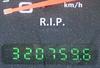
Actually, if you're interested in upgrading - everything that comes off my 7.3 to make room for the Garrett will be up for grabs...it's all in good shape and I won't have much use for it. Should be most of what you need, I'd love to help. pm me if you're interested. I'll send you a list if you like.
Lead Driver


Joined: Dec 2006
Posts: 7,093
Likes: 147
From: San Diego, CA
There is a white bottle and a gray bottle. I can't remember the names right off, but I never had any luck with the white bottle. The gray bottle gave me the best results as far as mpg's go. I buy mine at wal mart because I can get the big bottle(96 oz I think) for less than what the small bottle costs at napa.
The Diesel Kleen grey bottle is the lubricity additive and cetane boost (like octane boost for gasoline).
That's why you "see" the performance enhancement with only the grey bottle.
I also get my DK at Wal-Mart. The 96oz bottle is about $16.50. At 3gal/ounce that's less than $2/tank.
Super Moderator


Joined: Aug 2003
Posts: 25,479
Likes: 742
From: Isanti, MN
The white bottle is actually called "Diesel Fuel Supplement" and the grey bottle is "Diesel Kleen."
Power Service Products
The primary purpose of the white bottle stuff is to prevent fuel gelling in cold weather. It still contains cetane boost additives, but not as much due to the need for lots of antigel. This stuff also contains something they call "SlickDiesel" which is supposed to add lubricity.
The primary purpose of the grey bottle "Diesel Kleen" is to clean, lubricate, and increase the cetane of a tank of fuel. Has more cetane boosting additive but will NOT prevent fuel from gelling. Also contains their lubricity additive.
I did lots of reading on this when I first bought my truck. In cold weather, when it'll get below 10 degrees, I'll be using the white bottle. All other times I use the grey bottle. Definitely increases MPG, and therefore it's essentially a free additive because the cost is offset by the increased MPGs.
Great stuff!
Power Service Products
The primary purpose of the white bottle stuff is to prevent fuel gelling in cold weather. It still contains cetane boost additives, but not as much due to the need for lots of antigel. This stuff also contains something they call "SlickDiesel" which is supposed to add lubricity.
The primary purpose of the grey bottle "Diesel Kleen" is to clean, lubricate, and increase the cetane of a tank of fuel. Has more cetane boosting additive but will NOT prevent fuel from gelling. Also contains their lubricity additive.
I did lots of reading on this when I first bought my truck. In cold weather, when it'll get below 10 degrees, I'll be using the white bottle. All other times I use the grey bottle. Definitely increases MPG, and therefore it's essentially a free additive because the cost is offset by the increased MPGs.
Great stuff!
Postmaster
Joined: Apr 2008
Posts: 4,724
Likes: 4
From: Rogersville, TN
The Diesel Kleen white bottle is the winter bottle for anti-gelling. There may be some lubricity additive, I'm not sure, but it's mostly for anti-gelling.
The Diesel Kleen grey bottle is the lubricity additive and cetane boost (like octane boost for gasoline).
That's why you "see" the performance enhancement with only the grey bottle.
The Diesel Kleen grey bottle is the lubricity additive and cetane boost (like octane boost for gasoline).
That's why you "see" the performance enhancement with only the grey bottle.

