


Dad's Engine

Postmaster
Joined: Nov 2009
Posts: 4,575
Likes: 5
From: Broken Arrow , OK
That's the net. The gross would be 15% more.

Thread Starter
|
FTE Legend


Joined: Jul 2010
Posts: 32,875
Likes: 48
From: Northeast, OK
You mention the Flowkooler water pump.
Ought to get one of their nice RobertShaw thermostats for your 335 block while you're at it.
25# cap and 50 in the block seems like a LOT of pressure.
Does he have a figure for your intended 5,500 redline?
The heater core is going to have to survive.
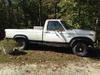
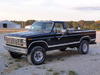
What are you going to do to get Dad's Truck to hook up with 500Hp?
That is going to cause a lot of wrap and hop.
Tubs under a tonneau cover and a shortened Strange 9"?
Ought to get one of their nice RobertShaw thermostats for your 335 block while you're at it.
25# cap and 50 in the block seems like a LOT of pressure.
Does he have a figure for your intended 5,500 redline?
The heater core is going to have to survive.
What are you going to do to get Dad's Truck to hook up with 500Hp?
That is going to cause a lot of wrap and hop.
Tubs under a tonneau cover and a shortened Strange 9"?
As for the pressure in the block, Flowkooler says it stays in the block as the thermostat throttles the flow. Which is why you don't run w/o a stat since there is nothing to throttle the pump and it can't build up pressure. So you have boiling along the wall and things go south from there. But, you are right that the heater core is in that loop so will see the pressure. Fortunately I'm not going to be spinning anywhere near 7K so won't see those pressures. But I do have a new heater core.
Now to the power. Are you trying to tell me something? I typically drive like the grandpa I am so I'm not intending to melt the tires - very often. Anyway, what are you saying?

pedant
Joined: Jan 2008
Posts: 23,576
Likes: 38
From: EXTREME southwest CT

I didn't realize that about the 335 engines.
My 385 and the W's, the heater loop bypass the thermostat completely.
Whatever pressure is in the block is in the heater core.
I had a lead foot when I bought this truck and have gone through well more than a dozen heater cores.
The highest pressure cap I ever ran was 15#.
I'm not saying anything about your driving habits.
I'm asking how you intend to keep the rear under control.
My 385 and the W's, the heater loop bypass the thermostat completely.
Whatever pressure is in the block is in the heater core.
I had a lead foot when I bought this truck and have gone through well more than a dozen heater cores.
The highest pressure cap I ever ran was 15#.
I'm not saying anything about your driving habits.
I'm asking how you intend to keep the rear under control.

Elder User
Joined: Sep 2013
Posts: 551
Likes: 0
Being an elder statesman of the community, I'm guessing bran plays a part 
Oh you meant the truck, I've seen the pics recently, Gary is pretty handy at throwing half a dozen bags of ballast in the tray
I'm a fan of not having absolute traction ( massive rubber, sticky compound) unless the entire driveline and chassis is really beefed up. Controlled wheelspin is a gentle fuse for the driveline.
But maybe Gary has a secret stash of ladder bars, 90/10 front shocks, trans brake, line locker etc. that he is going to unleash on the beast
Oh you meant the truck, I've seen the pics recently, Gary is pretty handy at throwing half a dozen bags of ballast in the tray
I'm a fan of not having absolute traction ( massive rubber, sticky compound) unless the entire driveline and chassis is really beefed up. Controlled wheelspin is a gentle fuse for the driveline.
But maybe Gary has a secret stash of ladder bars, 90/10 front shocks, trans brake, line locker etc. that he is going to unleash on the beast

Moderator


Joined: Nov 2007
Posts: 22,415
Likes: 92
From: Denver Metro Area, CO

Thread Starter
|
FTE Legend
Joined: Jul 2010
Posts: 32,875
Likes: 48
From: Northeast, OK
I'm glad to serve as the ...... point of the joke for y'all. But, its more cranberry juice than bran. 
Well, Bruno did promise me the line lock, so I could put it on the fronts and play like I've just won Daytona. But since I was a kid, which was loooooong ago if you really want to know, I've had an aversion to tearing up equipment, and especially something I've personally put together. So I doubt there'll be many burnouts - the operative word being "many".
However, as I think about it I'm going to have to teach my, now 2 year old, grandson to drive a stick.
Well, Bruno did promise me the line lock, so I could put it on the fronts and play like I've just won Daytona. But since I was a kid, which was loooooong ago if you really want to know, I've had an aversion to tearing up equipment, and especially something I've personally put together. So I doubt there'll be many burnouts - the operative word being "many".
However, as I think about it I'm going to have to teach my, now 2 year old, grandson to drive a stick.
Elder User
Joined: Sep 2013
Posts: 551
Likes: 0
Gary, you know i'm just ribbing ya! It was too good to let go through to the keeper
Now as far as burnouts go, one of the biggest waste management issues is the amount of old tyres sent to landfill or tyre stockpiles.
So - the socially responsible thing to do is minimise the bulk of those old tyres that you do send in
But if you do celebrate, don't do it like this guy did here at the weekend (check out the video);
Kaeding flips sprintcar in wild celebration - Speedcafe
Now as far as burnouts go, one of the biggest waste management issues is the amount of old tyres sent to landfill or tyre stockpiles.
So - the socially responsible thing to do is minimise the bulk of those old tyres that you do send in
But if you do celebrate, don't do it like this guy did here at the weekend (check out the video);
Kaeding flips sprintcar in wild celebration - Speedcafe
FTE Stories
Ford Trucks for Ford Truck Enthusiasts

AEV FXL Super Duty - the Super Duty Raptor Ford Doesn't Make
Brett Foote
Lobo Vs Lobo: Proof the F-150 Lobo Should Be Even Lower!
Michael S. Palmer
Ford's 2001 Explorer Sportsman Concept Looks For a New Home
Verdad Gallardo
10 Best Ford Truck Engines We Miss the Most!
Joe Kucinski
2026 Shelby F-150 Off-Road: Better Than a Raptor R?
Brett Foote
2027 Super Duty Carhartt Package First Look: 12 Things You NEED to Know!
Michael S. Palmer
10 Most Surprising 2026 Ford Truck Features!
Joe Kucinski
Top 10 Ford Trucks Coming to Mecum Indy 2026
Brett Foote
5 Best / 5 Worst Ford Truck Wheels of All Time
Joe Kucinski
Thread Starter
|
FTE Legend
Joined: Jul 2010
Posts: 32,875
Likes: 48
From: Northeast, OK
Yep - I got a chuckle out of the ribbing, both from you and Chris. No harm no foul.
As for the burnout, I've never really done one so am not likely to start. However, part of that may be due to the lack of power heretofore. Even the Bee wasn't tortured that way, even though it had 3.23 gears and an open diff so could light the right rear. But, I will see what happens when I mash the loud pedal after a reasonable launch.
As for the burnout, I've never really done one so am not likely to start. However, part of that may be due to the lack of power heretofore. Even the Bee wasn't tortured that way, even though it had 3.23 gears and an open diff so could light the right rear. But, I will see what happens when I mash the loud pedal after a reasonable launch.
pedant
Joined: Jan 2008
Posts: 23,576
Likes: 38
From: EXTREME southwest CT
I guess horsepower is one of those things it is better to have and not need, than to need and not have.
Torque is what might cause you problems.
No nit picking here Gary.
I think you are doing a great job and thoroughly investigating all the issues.
There is no way I could keep my focus on all the aspects you are juggling.
Torque is what might cause you problems.
No nit picking here Gary.
I think you are doing a great job and thoroughly investigating all the issues.
There is no way I could keep my focus on all the aspects you are juggling.
Senior User
Joined: Nov 2013
Posts: 328
Likes: 0
From: Los Angeles
My head is spinning just reading the conversation everyday. I don't know what 3/4 of it all means. I couldn't imagine juggling it all. Very impressive. Sometimes it's nice just being a fly on the wall.
Gary, thank you for letting me hang out your wall lol ;-)
Senior User
Joined: Jul 2012
Posts: 295
Likes: 1
From: Centerpoint, IN
Thread Starter
|
FTE Legend
Joined: Jul 2010
Posts: 32,875
Likes: 48
From: Northeast, OK
Ok guys, thanks for the encouragement. There are a lot of moving parts when doing something like this and there is no way I can keep everything rolling at the right speed for just-in-time delivery. So there will be gaps when I'll realize I don't have something ready. But, it is a hobby and that's ok.
And, I want to thank all of you for the suggestions on everything. The consensus was to go with the Aussie heads but it looks like I'm going to deviate from that. I talked to my brother today as he's quite interested in the truck since he was actually around it more than I, and he agrees the best approach is with the TFS heads. The cost adder isn't much when compared to the gains in power and we both think I'll always wish I stepped up to the better heads if I don't. Plus, there's the weight savings. I just weighed the bare cast iron heads at 60#/each, and TFS says the aluminum ones are 30#, so the savings is 60# in heads. And I weighed the cast iron intake (60#) and Edelbrock (15#) so there's another 45#.
However, I still have one concern that I'm asking for your input on - exhaust crossover. The TFS heads do not have exhaust crossover, which TFS says is only for the choke stove. But I've always heard that some heat is needed to give good efficiency. Is that wrong or will I be fine with using a 105°F air cleaner temp sensor (ACTS) to ensure good fuel vaporization? And, as a reminder, these intake manifolds are dry - they have no coolant in them.
Moving on, I think I've found the place for having shot peening done. Talked to Fred at United Plating Work and took these notes:
And, I want to thank all of you for the suggestions on everything. The consensus was to go with the Aussie heads but it looks like I'm going to deviate from that. I talked to my brother today as he's quite interested in the truck since he was actually around it more than I, and he agrees the best approach is with the TFS heads. The cost adder isn't much when compared to the gains in power and we both think I'll always wish I stepped up to the better heads if I don't. Plus, there's the weight savings. I just weighed the bare cast iron heads at 60#/each, and TFS says the aluminum ones are 30#, so the savings is 60# in heads. And I weighed the cast iron intake (60#) and Edelbrock (15#) so there's another 45#.
However, I still have one concern that I'm asking for your input on - exhaust crossover. The TFS heads do not have exhaust crossover, which TFS says is only for the choke stove. But I've always heard that some heat is needed to give good efficiency. Is that wrong or will I be fine with using a 105°F air cleaner temp sensor (ACTS) to ensure good fuel vaporization? And, as a reminder, these intake manifolds are dry - they have no coolant in them.
Moving on, I think I've found the place for having shot peening done. Talked to Fred at United Plating Work and took these notes:
- $75 for a set of 8 rods if they have to mask the bores, and $50 if not
- They are an aerospace company and do it quite scientifically. They measure the thickness of the part and refer to a MIL Spec that gives them the guidelines as well as the required test strips. They load up with the appropriate shot, set the PSI, and shoot against a test strip that must arc to a certain height. Then they shoot the part, and then shoot a test strip when done to prove they are still in calibration.
- A media blast cabinet like mine won't have enough vacuum to pull the steel shot properly. They use an elevator system that raises the shot above the work and then introduce the air as the shot falls.
- Proper shot peening increases the fatigue life 10x. For instance, if you took a part that would work-harden and fail after 10 bends and shot peened it the failure point would be somewhere beyond 100 bends.

Postmaster
Joined: Mar 2013
Posts: 3,066
Likes: 7
From: Over There
I came across this thread yesterday, subscribed and have been trying to read back when I have time as I'm very interested in building a 400 w/351C heads.
I think I can add to your question about the exhaust crossover, simply you have no need for it. You won't have an EGR(it's main use these days), and with aluminum heads and an aluminum manifold you'll have no shortage of heat in the manifold. For decent efficiency with a carbureted(or TBI) engine the manifold does need some heat under the carb. That heat vaporizes any fuel droplets in the manifold and prevents condensation of fuel droplets on the walls/floor of the manifold. This is why if you look inside most manifolds you'll see under the carburetor is often ridges or a cross hatch. This collects fuel droplets keeping them from rolling down the ports to the cylinder without being vaporized. All this said aluminum transfers heat very very well, much better then cast iron. So between heat transfer from the heads, and depending on your manifold choices heat from the oil and hot gasses under the manifold it will get and stay plenty hot without any need for an exhaust crossover.
EDIT;
One sure fire solution that I've always liked but is rarely seen and a little hard to come by is a coolant heated/cooled carb spacer, some Fords back in the day had them stock. The heater hose passes through a carb spacer, this does a great job managing the heat in the manifold and just if not more important the carburetor. In cold weather the carb can get too cold and ice up, this is rare and almost impossible with an aluminum manifold though. However on the flip side an aluminum manifold transfers heat so well that is can overheat some carbs, most of all the Edelbrocks. Coolant in the spacer will balance this heat and act as a heat barrier for the carb.

I think I can add to your question about the exhaust crossover, simply you have no need for it. You won't have an EGR(it's main use these days), and with aluminum heads and an aluminum manifold you'll have no shortage of heat in the manifold. For decent efficiency with a carbureted(or TBI) engine the manifold does need some heat under the carb. That heat vaporizes any fuel droplets in the manifold and prevents condensation of fuel droplets on the walls/floor of the manifold. This is why if you look inside most manifolds you'll see under the carburetor is often ridges or a cross hatch. This collects fuel droplets keeping them from rolling down the ports to the cylinder without being vaporized. All this said aluminum transfers heat very very well, much better then cast iron. So between heat transfer from the heads, and depending on your manifold choices heat from the oil and hot gasses under the manifold it will get and stay plenty hot without any need for an exhaust crossover.
EDIT;
One sure fire solution that I've always liked but is rarely seen and a little hard to come by is a coolant heated/cooled carb spacer, some Fords back in the day had them stock. The heater hose passes through a carb spacer, this does a great job managing the heat in the manifold and just if not more important the carburetor. In cold weather the carb can get too cold and ice up, this is rare and almost impossible with an aluminum manifold though. However on the flip side an aluminum manifold transfers heat so well that is can overheat some carbs, most of all the Edelbrocks. Coolant in the spacer will balance this heat and act as a heat barrier for the carb.
Thread Starter
|
FTE Legend
Joined: Jul 2010
Posts: 32,875
Likes: 48
From: Northeast, OK
Thanks. But, the M/400 uses what is referred to as the "turkey pan" that covers the vee of the engine so there is no oil nor hot gasses that hit the intake. I've attached a picture so it is easier to understand, but there is no contact between the intake and the turkey pan, much less the hot oil.