


Cool Tips and tricks

Hotshot


Joined: Jan 2001
Posts: 16,900
Likes: 3,140
From: SE Wisc. (the Rust Belt)
Neat set up, the only thing I'd add would be a convenient switch so you don't have to keep reaching past the grinder to turn it off. I don't like reaching over, past anything that is spinning and could grap a piece of clothing or cut skin.
Postmaster
Joined: Aug 2005
Posts: 2,760
Likes: 8
From: Gadsden Purchase
BTDT already! LOL :)
Was just looking at it yesterday and wonder how to make the little hand
grinder's "bench vise insert" use more than one hole. One hole's working
great so far, but still, two holes would hold >4 times as good.
BTW, my "best" tool is the bench vise. ;)
Even he's showing how anything that can-be-clamped in the vise will-be.
I skipped through it in little steps but saw how he burned the corners of
the wood really bad. I say, use a brand new sanding disc for wood. :)
It's the only way to -quickly- take the extra wood off the butt end of a
knife handle you're working on. Used hoof rasps and sand paper and all
sorts of stuff but a brand new sanding disc can do it without scorching the
wood if you're careful.
I hacksaw off all the material I can then go at it with whatever works.

^^ -old- velvet mesquite from NM ...harder to work than oak or maple
After using the disc for wood save the disc to shape -aluminum-. :)
Took that silly looking script off the upper intake on my '91 5.8, lickity split.
No gumming up either.
Alvin in AZ
Was just looking at it yesterday and wonder how to make the little hand
grinder's "bench vise insert" use more than one hole. One hole's working
great so far, but still, two holes would hold >4 times as good.
BTW, my "best" tool is the bench vise. ;)
Even he's showing how anything that can-be-clamped in the vise will-be.
I skipped through it in little steps but saw how he burned the corners of
the wood really bad. I say, use a brand new sanding disc for wood. :)
It's the only way to -quickly- take the extra wood off the butt end of a
knife handle you're working on. Used hoof rasps and sand paper and all
sorts of stuff but a brand new sanding disc can do it without scorching the
wood if you're careful.
I hacksaw off all the material I can then go at it with whatever works.
^^ -old- velvet mesquite from NM ...harder to work than oak or maple
After using the disc for wood save the disc to shape -aluminum-. :)
Took that silly looking script off the upper intake on my '91 5.8, lickity split.
No gumming up either.
Alvin in AZ
Postmaster
Joined: Aug 2005
Posts: 2,760
Likes: 8
From: Gadsden Purchase
A 7.3 according the SKF and Rockauto don't use a big 6303 it uses the
little 6003.
I just pulled my FE and T18 apart and the 6303 is like new and so is the
transmission input shaft after 25k miles.
Haven't pulled the 351w and ZF apart yet, that rig's got the little 6003
bearing in it.
6003 = 17x 35x 10mm (.669x 1.378x .394")
6203 = 17x 40x 12mm (.669x 1.575x .472")
6303 = 17x 47x 14mm (.669x 1.850x .551")
A/C clutch+pulley bearing = 5106 30x55x23mm (my '75 and '91 ;)
========================================
Goes with my post #302 and 70BumpClubCab's post #300...

Alvin in AZ

Hotshot


Joined: Oct 2004
Posts: 15,882
Likes: 88
From: Durham NC
Some woods will burn no matter what you do, especially fruit woods that have a lot of sugar in it like maple or cherry, or very dense hardwoods like rosewoods. The only solution with these woods is to sand with less and less pressure, finishing by hand sanding.
Postmaster
Joined: Aug 2005
Posts: 2,760
Likes: 8
From: Gadsden Purchase
You've used a little handgrinder with a new-sanding-disc on wood too? :)
What you describe is my experience too. :)
->brand new<- sanding disc (or only used on wood) is a must, IME.
A friend of mine swears by flap disks on wood but I haven't tried it yet. :/
I will soon tho since me and my wife need to make a bunch of knives.
Canvas Micarta handles mostly I'm guessing, like this one...
http://www.panix.com/~alvinj/file12/Logan1.jpg
http://www.panix.com/~alvinj/file12/Logan2.jpg
http://www.panix.com/~alvinj/file12/Logan3.jpg <--front end of handle
http://www.panix.com/~alvinj/file12/Logan4.jpg
http://www.panix.com/~alvinj/file12/Logan5.jpg
http://www.panix.com/~alvinj/file12/Logan6.jpg
Used to work and work at grinding out the blades but that was before
the little handgrinders hit the market. ;)
All hard (teeth to back 63-65 HRC M2 high speed steel) power hacksaw
blades.
IME, that stuff makes a terrible gasket scraper... ;)
Hard HSS digs into cast iron like it's wood. LOL :)
Alvin in AZ
Hotshot
Joined: Oct 2004
Posts: 15,882
Likes: 88
From: Durham NC
I have an MS in jewelry design with minor in wood design, and have studied and worked with a lot of common and exotic woods. I don't do much free shaping/sculpting on wood any more, more into lathe turning these days. My favorite way to finish hardwoods is by hand scraping, leaves a much more refined surface and really brings out the grain of the wood.
Postmaster
Joined: Aug 2003
Posts: 3,222
Likes: 6
From: Houston
I have an MS in jewelry design with minor in wood design, and have studied and worked with a lot of common and exotic woods. I don't do much free shaping/sculpting on wood any more, more into lathe turning these days. My favorite way to finish hardwoods is by hand scraping, leaves a much more refined surface and really brings out the grain of the wood.
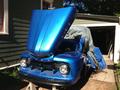
This was the first one that I built, for a client. A '40 Chevy with Ash and Mahogany. It began as a 4 door sedan.
FTE Stories
Ford Trucks for Ford Truck Enthusiasts

Top 6 Best Deals Available on New Fords & Lincolns Right Now
Brett Foote
This Hennessey Takes the Expedition Tremor's Off-Roading Capability to the Next Level
Verdad Gallardo
Top 10 Fords at 2026 Carlisle Ford Nationals
Joe Kucinski
3 Best / 3 Worst Parts of Modern Ford Ownership
Brett Foote
10 Amazing Upgrades That Solve Common Ford Truck Owner Headaches
Pouria Savadkouei
Every 2026 Ford Engine Explained
Brett Foote
10 Ugly Ford Trucks That We Still Kinda Love
Joe Kucinski
10 Things Every Truck Owner NEEDS (2026 Edition)
Michael S. Palmer
Rezvani's Latest Post-Apocalyptic Monster Is a Ford F-150 Raptor Underneath
Verdad Gallardo
Postmaster
Joined: Aug 2005
Posts: 2,760
Likes: 8
From: Gadsden Purchase
What about fine steel wool?
Results are something in between sanded and scraped?
Alvin in AZ
ps- Support the rear of the engine, don't take much, and on FE's
and FT's, use a 6303 sealed ball bearing for a pilot bearing! :)

Postmaster
Joined: Aug 2003
Posts: 3,222
Likes: 6
From: Houston
You can use sandpaper, just start with 80 or so and work your way up with 100, 120, 150, 180, 220, to as much as 400, 600. Don't skip any of the grits. Each finer grit will take off many of the scratch marks of the previous grit. Steel wool leaves the oil it comes with and fine pieces of the steel that breaks off in the grain. It also is almost impossible to get a flat surface because where your fingers are is where the steel wool works as opposed to having a flat pad back-up. Scotch bright works better than steel wool. And always rub any abrasive with the grain, not across.
Hotshot
Joined: Oct 2004
Posts: 15,882
Likes: 88
From: Durham NC
Yes, sanding will make the surface of wood smooth but it destroys the wood's beauty. Any sanding creates fine dust that gets pressed into the pores of the wood, the dust then obsures the fine character of the grain. it also "fuzzes" and spreads the cell walls. It's like someone putting powder on their face, it smooths over and blends everything together. Adding a finish turns the dust to mud permanently dulling the character. Scraping slices the wood's cell walls cleanly without fuzzing them or filling the pores, allowing the finest grain character of the wood to be displayed. When finish is then applied it fills the pores with transparent material which in turn allows light to penetrate and show thru the cell walls so they glow like near microscopic lanterns or lamp shades. It's similar to the difference between a true candy color paint job and an opaque paint, the difference is amazing.
Postmaster
Joined: Aug 2003
Posts: 3,222
Likes: 6
From: Houston
True, scraping and/or a very sharp well set plane leaves a cut with no scratches. Alas, it is not always possible to do in every case, either because of time or configuration constraints (such as compound curves, inside corners, or enough hours in the day). When it is not, then sanding with the proper steps will produce a very nice finish with no noticeable to the naked eye scratches. It does dull the wood, but oil does help to bring much of it back. Still nothing like a perfectly planed or scraped piece. You don't want to sand part of a project and scrape or plane the other part - too much very noticeable differences.
Hotshot
Joined: Oct 2004
Posts: 15,882
Likes: 88
From: Durham NC
In my experience it takes less time to scrape than to sand if you have a good set of sharp scrapers of various shapes. You only have to scrape the surface once, you have to sand it many times. I agree don't mix finishing methods, it will show.

Senior User
Joined: Mar 2013
Posts: 431
Likes: 0
From: Edenwold Saskatchewan
While trying to remove the very minty clutch and brake pedals from my 56 Merc,I discovered that after I heat the arms up the rubbers will come of very easy.After removed I used a Makita grinder wrench to spin off brake pedals from arm.
New User
Joined: May 2013
Posts: 5
Likes: 0
From: West Central Pa
[QUOTE=Kusto;5216004]Seal Removal and Installation.
Another way to destroy an otherwise useful screwdriver would be to weld a small sheet metal screw to the end screw it into the seal and tug the seal out.
I have also used a body slide hammer if you got the room . No need to pre drill hole use a self tapper in your slide hammer and use the weight to tap it while you turn the handle to run the screw into the seal
Another way to destroy an otherwise useful screwdriver would be to weld a small sheet metal screw to the end screw it into the seal and tug the seal out.
I have also used a body slide hammer if you got the room . No need to pre drill hole use a self tapper in your slide hammer and use the weight to tap it while you turn the handle to run the screw into the seal