When you click on links to various merchants on this site and make a purchase, this can result in this site earning a commission. Affiliate programs and affiliations include, but are not limited to, the eBay Partner Network.
I don't think you will find many businesses that will pay for returns unless it has been proven they sent the wrong parts, I've been stuck with parts I couldn't return simply because sending them back would cost too much and end up with nothing but empty pockets..
Tip for adjusting rear brakes on F4 and larger truck
Torch or plasma cut the center of a damaged wheel or WM wheel thru the hand holes. Install and torque it in place of the wheel on the rear hub when adjusting the brakes. It makes it a lot easier to access the slots in the drum for the feeler gage to adjust the toe and heel of the shoes. If you try to adjust the brakes without a wheel torqued in place, the drum will change shape when you do install the wheels and the brakes will be out of adjustment.
Mark
My drip rail on cab#2 looks like someone tried to lift the cab off by just putting a strap through the cab. This bends the drip rails as you can see. I found the best tool to straighten them is a pair of lock pliers. Just work them carefully and slowly along the bent area with the top jaw on top of the rail engaging the first tooth and the bottom jaw underneath and pry downward with little force. If you are careful you will not need to grind or fill.
I don't know if this has already been mentioned but a recent question in another post spurred this thought: If you are going to remove a water pump and later reinstall it do yourself a favor and toss it into a bucket of water while it's off the engine. And don't reinstall it until you're ready to finish up and add coolant. I've seen too many people have failures after leaving one sit out and the used seals sitting dry. It may not happen immediately but most seem to only make it a few days to a couple weeks before developing a case of the drips, or worse.
Per my previous posts I have installed a 4R70W automatic transmission behind an 8ba flathead V8 in my 1950 Ford F2. I used a Lokar COS6644R7700WAM shifter with a standard shift lever that looks a lot like the stock T9 shifter. When I installed it I had the cab off the frame so I had to guess where the shifter was located as the Lokar shifter has a variety of mounting locations.
Well I guessed wrong as I put it all the way to the rear. It turns out that it should be installed 1 set of holes back from the most forward position which gives good clearance to the dash and maximum clearance to the seat.
Wrong location - all the way to the rear.
1 set of holes back from the most forward position still gives good clearance to the dash in Park and will allow maximum clearance to the seat in low.
When I went to move my Lokar shifter position they use buttonhead, allen socket bolts. The allen sockets strip out very easily. So, after considering options I decided to make two parallel cuts either side of the socket and then use an adjustable wrench to remove the bolts. It worked like a charm and far better that trying to drill and tap or flush grinding the heads.
Pete, Stainless socket head cap screws are softer than the carbon steel ones. Button heads and flat heads have such shallow sockets it is not surprising that you had trouble removing them. Stainless socket head screws are a lot like Phillips head screws, they are usually a one time use screw. Your truck is coming along nicely!
Mark
Pete, Stainless socket head cap screws are softer than the carbon steel ones. Button heads and flat heads have such shallow sockets it is not surprising that you had trouble removing them. Stainless socket head screws are a lot like Phillips head screws, they are usually a one time use screw. Your truck is coming along nicely!
Mark
Thanks Mark. I try to do a little bit every day.
Those button heads were not SS as they were annozized. They were whatever Lokar shipped. Still too soft for that application.
But you are right. Here is an interesting page on SS bolts. Totally Stainless
Hi everyone,
Ok I got one. Anytime you are testing wires always load test the circuit.
I attached 2 long wires to both terminals of a fog light (or headlight) then you can check the power and ground side accurately.
The benefit of this over a test light or DVOM is that if only one or two strands of wire are connected your test light will light up but the circuit is bad. The fog light will show it up right away. You may have good voltage but no current...... It will tell you if you have to much paint under your ground, green wires from corrosion, loose clamp, etc.....
This is something that has saved me loads of time. Hope I explained it ok.... if any questions just ask.
Zac
When I went to move my Lokar shifter position they use buttonhead, allen socket bolts. The allen sockets strip out very easily. So, after considering options I decided to make two parallel cuts either side of the socket and then use an adjustable wrench to remove the bolts. It worked like a charm and far better that trying to drill and tap or flush grinding the heads.
I bought a used Vermont Castings wood stove for my garage that had rusty Allen head bolts in it. After stripping out the Allen holes (yes, it had been heavily presoaked with PB Blaster, Liquid Wrench and WD40) and using two different types of easy outs to no avail. I grabbed a Torx bit that was slightly larger than the Allen holes (it needed to be tapped into the hole) with a ratchet for leverage, all but one came out. So, yes, Torx bits make dandy easy-outs.
This Hennessey Takes the Expedition Tremor's Off-Roading Capability to the Next Level
Slideshow: The VelociRaptor Expedition gains a lift, upgraded suspension, Brembo brakes, and trail-ready equipment while retaining the stock 440-horsepower EcoBoost V6.
Rezvani's Latest Post-Apocalyptic Monster Is a Ford F-150 Raptor Underneath
Slideshow: Called the Fortress, the 850-horsepower pickup combines Raptor underpinnings with military-inspired features, survival equipment, and a starting price of $285,000.




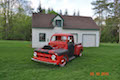





 . Your truck is coming along nicely!