When you click on links to various merchants on this site and make a purchase, this can result in this site earning a commission. Affiliate programs and affiliations include, but are not limited to, the eBay Partner Network.
Got to love "i checked the cables to the battery and they were tight nothing loose."
But what about the connection between the cable and battery?
"i checked battery voltage and were are at 12.8"
Bet you checked on the battery posts and not the clamps.
"i opened up the fuse box and found a blown fuse, it was a 15 amp and was in the radio. all the other fuses look fine."
If not getting power to the box then nothing will work.
See the first reply.
I have never seen a bad solenoid not send power to anything.
A bad connection at the solenoid would keep it from turning over but not power to anything.
I would pull every battery connection, both side of battery, and clean them and I bet you you will have power to everything.
Or do Karl's voltage drop test will tell you just where the issue is.
Dave ----
You mentioned the interior dome light stopped working. How about other circuits, such as the headlights or horn? If all are dead, suspect the positive battery cable. Don't be fooled by the external appearance. The internal load-carrying capacity is what matters. This troubleshooting guide primarily covers the starter circuit, but the procedure is applicable to any circuit:
Before even touching your multimeter, do you have this style battery terminal?:
If so, slam your hand in the door a few times as pennance. Then get yourself a proper cable assembly with pre-crimped terminals. A bad connection in either battery cable could cause the symptoms you have.
I went back and disconnected the cables on the battery. i found the positive cable crimp to be loose, it matches your picture, the negative cable is guess is precrimped. I tightened the bolts down just a little bit, i then looked at the battery terminals and found the connection was not metal on metal. I got a wire brush and cleaned until i saw bare metal on posts and connections. I tightened down everything then tapped the starter solenoid. the battery voltage is at 12.8 / 12.9 (+/- .10). i looked at the wire bundle and looked for burns and insulation that could be missing it checked out. i rechecked all the fuses in my box and they are ok. i ended up replacing a burnt fuse in my radio with a 15a spare. i put the key in and my light in the cab does not flicker it stays on and the engine cranks and turns on.
I ordered another solenoid its in the mail and will arrive tomorrow ill keep it in the truck if anything decides to melt down on me while on the road. I assume it was a faulty battery connection or a crimp connection and that's what caused it. Because i did unplug the solenoid from the battery i did reset the electrical system so i cannot completely rule out if it was the solenoid entirely because it is currently reset. But i can confirm the trucks electrical is totally working even the radio turns on and speakers work minus the drivers side speaker. the battery terminal connectors look ratty and there is electrical tape wound around the negative terminal.
i have learned:
1. keep the solenoid as cool as possible and dont over crank.
2. unplugging the battery terminals and cleaning with a wire brush should be added to maintenance list.
3. checking wire crimping should be added to maintenance list.
4. dont use cheap wire connectors it should be replaced with precrimped connectors.
5. always keep spare fuses in the truck
ill keep the solenoid for when it decides to crap out on me, but in the mean time ill swap out my negative battery wire with a precrimped one.
again thanks everyone for the help i am learning a whole lot about how to maintain this old truck
I went back and disconnected the cables on the battery. i found the positive cable crimp to be loose, it matches your picture, the negative cable is guess is precrimped. I tightened the bolts down just a little bit, i then looked at the battery terminals and found the connection was not metal on metal. I got a wire brush and cleaned until i saw bare metal on posts and connections. I tightened down everything then tapped the starter solenoid. the battery voltage is at 12.8 / 12.9 (+/- .10). i looked at the wire bundle and looked for burns and insulation that could be missing it checked out. i rechecked all the fuses in my box and they are ok. i ended up replacing a burnt fuse in my radio with a 15a spare. i put the key in and my light in the cab does not flicker it stays on and the engine cranks and turns on.
I ordered another solenoid its in the mail and will arrive tomorrow ill keep it in the truck if anything decides to melt down on me while on the road. I assume it was a faulty battery connection or a crimp connection and that's what caused it. Because i did unplug the solenoid from the battery i did reset the electrical system so i cannot completely rule out if it was the solenoid entirely because it is currently reset. But i can confirm the trucks electrical is totally working even the radio turns on and speakers work minus the drivers side speaker. the battery terminal connectors look ratty and there is electrical tape wound around the negative terminal.
i have learned:
1. keep the solenoid as cool as possible and dont over crank.
2. unplugging the battery terminals and cleaning with a wire brush should be added to maintenance list.
3. checking wire crimping should be added to maintenance list.
4. dont use cheap wire connectors it should be replaced with precrimped connectors.
5. always keep spare fuses in the truck
ill keep the solenoid for when it decides to crap out on me, but in the mean time ill swap out my negative battery wire with a precrimped one.
again thanks everyone for the help i am learning a whole lot about how to maintain this old truck
Important thing you need to learn in a no start situation; Always check the voltage at the same time someone is trying to crank it over. I think you would have found your 12.8 volts will suddenly drop to near zero if you get someone to turn the key while you are under the hood holding the meter. Voltage drops at the battery itself, dead or bad battery. Voltage drops at the starter solenoid; Bad connection or cable like you found.
It's pretty unusual to have a static charge at rest of 12.8 V. Unless freshly off the charger or running with the alternator. 12.6 + is all I ever see after 24 hrs at rest. What kind of meter do you use?
I was inspecting my truck today and i saw something totally shocking. The spark plug wire from my distributor on cylinder 3 was not on the plug. I had trouble starting the engine but could not figure why. I had shot some carb cleaner into the carb once per day because i thought the carb had gummed up from the stale gas in the tank. But i totally forgot to check all wires. Everything else was fine but it was so odd because you really have to push the wires on the plug and once its on it takes FORCE to remove it. I have never heard of a spark plug wire just falling out a plug. I had moved the truck forward a few feet forward because i wanted to get under it and clean the oil and dirt off the bottom so the engine was not on for more then 5 minutes total. Since i am using an inline 6 and the spark plug was not working i had an inline 5, that cylinder was not acting as a powered cylinder but sending compressed air fuel out and possibly mucking the exhaust/catalytic converter with extra rich air fuel mix. What kind of damage could this have caused? I am pretty good about inspecting all wires and plumbing i do it about every 5 or so trips but i did not catch this. Also when i do take off a plug you really got to heave and pull to get the plug off. I dont think normal engine usage could have caused this.
So heres what i plan on doing as the engine sounds normal:
Ill recheck all wires again then start it up then ill get the engine to temp to burn off anything in the exhaust system.
I had thought since i had a hard start up it was due to my carb being gummed up so i have been cleaning it with carb cleaner and it sure does run smooth.
You have to grab the BOOT of the plug wire, and twist it and pull it at the same time. It will then usually come off. If the wire came out of the boot, then that will have to be fixed and all the wires need to be checked with a ohmmeter. Try not to mess with them if you can help it. Once you take one apart and repair it, you will see how delicate it is. It's just a piece of string with graphite in it that carries the spark. Very easy to break.
That silcone grease that comes with the wire set will also help keep them from sticking to the plug.
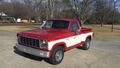
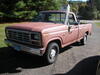
The truck is driving very smoothly but i did notice we have smoke venting from the dipstick and you can smell it inside the cab. I am not the original owner of this truck just keep that in mind. I poked around under the truck and saw the back tank at some point had a leak and the previous owner patched the leak with what looks like a black tar. I was walking behind the truck and i did notice a slight gas smell. If i was in the front i would check the carb to fuel pump line and this has no leaks. So i suspect we have a slight leak on the back tank - somewhere. I do think its stupid to have 2 tanks why not just have a big one instead of 2.
Where would you put this "one big tank"?
I can tell you you can not put a 19 gallon side tank in place of a 16 gallon there isno room I tried so the same would be true of a 19 gallon nothing bigger for the side tank.
Now we move to the rear all are 19 gallons
You cant go forward in size as the rear axle is there.
Cant go back as the rear of the truck is there.
Cant go up the bed floor is there.
and what do you have under that tank?
What is that big round thing under the tank, could it be a spare tire? I think it is.
Now you can go down and loose the spare tire as they make a 38 gallon tank IIRC
Put the spare in the bed and loose that room or not take a spare it is your call.
Heck the flare side bed trucks never had dual tanks and being a short bed only has the 16 gallon side tank, how far will that get you?
I added a 19 gallon rear tank and all the factory wiring, valve and switch from a parts truck and was the best thing I did beside the metal ribbed bed floor.
That is 25 gallons of fuel and I get to keep the spare tire where the factory put it.
Dave ----
i took the pcb valve off and it does rattle when i shake it. I put my finger on the hose and there is slight vacuum but no smoke is coming out of the hose. I did remove the spare tire so if i am going to add a 38 gallon tank it would be there. I also have a pipe flaring tool kit so i can connect a fuel line to the tank and hopefully find stainless steel tubing. I would have to learn how to bend the tubing as its very stiff maybe i would need a propane torch so i can heat it up and bend it. What ever the issue is its coming from the back tank ill have to inspect it more tomorrow and decide if ill swap in a standard 19 gallon tank or get a 38 gal tank and put it where the tire is.
I think ill get some silver solder and just clean the dip stick really well with acetone and close off the two holes with solder. Why would a dipstick have vent holes it makes no sense.
Can't you use something other than SS for the fuel lines ? race cars use steel braid hose. I made them up for our car years ago. There is also that easy to bend ni-cop brake line. I used those to replace the front brake lines. Or the plastic fuel line like my86' F150 has. Talk to the guy's at the auto parts store.
This Hennessey Takes the Expedition Tremor's Off-Roading Capability to the Next Level
Slideshow: The VelociRaptor Expedition gains a lift, upgraded suspension, Brembo brakes, and trail-ready equipment while retaining the stock 440-horsepower EcoBoost V6.
Rezvani's Latest Post-Apocalyptic Monster Is a Ford F-150 Raptor Underneath
Slideshow: Called the Fortress, the 850-horsepower pickup combines Raptor underpinnings with military-inspired features, survival equipment, and a starting price of $285,000.