When you click on links to various merchants on this site and make a purchase, this can result in this site earning a commission. Affiliate programs and affiliations include, but are not limited to, the eBay Partner Network.
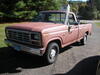
I got a 1982 f-150 xl with a inline 300 6 engine. The engine was rebuilt in 2015 but has had issues where the motor would just shut off while driving and that would result in power steering loss lol not fun. A few weeks ago I was warming the truck up for a doctors appointment and saw black clouds of carbon partials from the tail pipe and what looked like a lot of condensation. The outside temperature was around 20 degrees at the time. The motor struggled to stay on so I turned it off. When I got back I opened the hood and looked over to find any obvious issues and found nothing and the motor was still having a really bad time turning on much less staying on. I noticed when the motor was on my coolant was being sucked at a heavy rate so i assumed it was a head gasket failure and the carb needed adjustments. I bought a new head gasket, exhaust gasket and installed along with new engine bolts.
The process of removing the head from the engine was hard but I got the gasket on and reinstalled everything again, turns out its simple but requires a lot of work, and common sense. Even when I drained the coolant from the engine some coolant still got on the cylinder heads and i mopped that up quickly. Then I was adjusting the rocker arms and this milk shake oil started to come out of the rocker heads. Seems some coolant got into the oil pan from the cylinder. The engine has been on a total of about 1 minute but the slime it made is way though the entire system. Now I am fanatic about changing my oil I keep it super clean. So my thoughts were ok drain it, throw a new filter on and get fresh oil inside so I did. The motor turned over fine when I cranked it but lost rpms within 15 seconds until the motor just stopped. Before I turned the motor on I poked a camera into the cylinders to check if there is any liquid so I dont hydrolock and destroy piston rods and it was clear. The engine is not hydrolocked, the motor turns over but at a slower rate but does not start. What I can assume is the coolant did damage and now I dont have compression, I checked I have spark, I have fuel, I have air.
I know my rocker arms are not adjusted correctly but I am at a loss at my next step, the engine should work as the goal is to flush the slime with fresh oil but I had also saw a post where if coolant gets into the oil you basically need to rebuild it.
So I got 3 plans on the fire:
1. Drop in a crate motor from https://spprecision.com/products/for...gine-sale.html
2. Pull the engine out and use a rebuild kit and possible reboring and add some cylinder sleeves.
3. Adjust rocker arms again try to start it but i doubt anything will happen.
I doubt even if i adjust the rocker arms it will help because the oil got contaminated and I had to go on a business trip so the engine sat for about two days with a bit of coolant in the oil.
I got the inline 6 bible and it seems rebuilding these engines is not too hard just requires some custom tools and the motors themselves are not too expensive.
So what do you think here am I going in the right direction?
Oh and I got some pictures of the inside of the cylinders I can post if it helps.
Two day's of that milky oil is not that bad. Yeah, not great, but you may get lucky.
Check local machine shops to see what they will charge to rebuild your long block before you send money off to that link.
Did you check the head and engine deck for flatness and did a good job of cleaning the surfaces ?
You should be able to set the engine up on TDC and adjust the valves per the service manual. With the valve not adjusted properly, you won't have compression.
What's the voltage in the battery, a low battery will not spin the engine fast enough to start.
I charged the battery yesterday to 13.0, I assumed since I cranked it over the span of a month it did not get a charge.
I did not check for flatness of the heads when I reinstalled the engine head but the mating surfaces were cleaned and looked great when I put the gasket back on.
My rocker arms are adjustable. I was thinking that might as well swap in new rods and lifters. When I took the rods out I kept them in order.
I assume if I want to check tdc for the cylinders ill need to remove the fan and use a wrench and turn the motor over and stick a pencil into cylinder 1 and watch it move up and down or my camera?
Oh and thanks for the reply's on this issue I'm having
Your valves might not closing all the way, thus no compression .
If you loosen the nut on the rocker arm while there is oil pressure, the little piston in the lifter goes to full travel. It stays at this position, even if you tighten the nut back done. With the little piston in the lifter at full travel, you changed to a solid !ifter that is holding valve opened.
When the lifter is completely collapsed, which requires you to remove it, you measure the gap and if needed swap push rods.
The goal is to center the little piston in the middle of its travel during first assembly, which should be good for the life of the engine, which is why I believe hydraulic lifters are non adjustable.
I am aware there are different opinions on this issue, I am just sharing mine.
PS: sometimes the studs pull out of the head, which is a whole new problem.
Your valves might not closing all the way, thus no compression .
If you loosen the nut on the rocker arm while there is oil pressure, the little piston in the lifter goes to full travel. It stays at this position, even if you tighten the nut back done. With the little piston in the lifter at full travel, you changed to a solid !ifter that is holding valve opened.
When the lifter is completely collapsed, which requires you to remove it, you measure the gap and if needed swap push rods.
The goal is to center the little piston in the middle of its travel during first assembly, which should be good for the life of the engine, which is why I believe hydraulic lifters are non adjustable.
I am aware there are different opinions on this issue, I am just sharing mine.
PS: sometimes the studs pull out of the head, which is a whole new problem.
Sorry, might be de-railing this thread. But the word "adjustable" is in reference to the complete valvetrain assembly as a whole, not just the lifters. Bolt down rockers are not adjustable, except by the machine shop. Some rocker arms with locking nuts can be adjusted, like you said, to adjust the lifter to ride somewhere in the middle of it's travel.
You can do a compression test to see what you have. If a valve is hanging open, the compression test will show that. If you indeed find one too tight, you can adjust it while the engine is running if you do not mind a little oil mess. You can loosen the rocker till it taps, it may take a few revolutions but the lifter will bleed down the oil by itself after a few cycles if the rocker is loosened up.
Once the rocker taps, slowly tighten it till it quits tapping, and then give it 1/2 turn more of the nut to center the lifter. When you give it that 1/2 turn the engine will run rough for a little bit, till the lifter adjusts itself.
Sorry, might be de-railing this thread. But the word "adjustable" is in reference to the complete valvetrain assembly as a whole, not just the lifters. Bolt down rockers are not adjustable, except by the machine shop. Some rocker arms with locking nuts can be adjusted, like you said, to adjust the lifter to ride somewhere in the middle of it's travel.
You can do a compression test to see what you have. If a valve is hanging open, the compression test will show that. If you indeed find one too tight, you can adjust it while the engine is running if you do not mind a little oil mess. You can loosen the rocker till it taps, it may take a few revolutions but the lifter will bleed down the oil by itself after a few cycles if the rocker is loosened up.
Once the rocker taps, slowly tighten it till it quits tapping, and then give it 1/2 turn more of the nut to center the lifter. When you give it that 1/2 turn the engine will run rough for a little bit, till the lifter adjusts itself.
I probably have it too tight, the motor just turns over and does not turn on. I thought it was flooded so I waited about 30 minutes and retried same result. I will loosen the nuts tomorrow but my work window is narrow because the weather is so dam cold. I checked the dipstick and it came out clean so there is no more coolant in the pan, but when I had turned it on for a brief moment I smelled what I thought was sweet so ill recheck with the camera probe all the cylinders to make sure I don't hydrolock anything.
I also want to replace all the lifters, push rods because the muck went into it and the arms are easy to clean. Ill adjust do the rocker adjustments tomorrow just to see if i can get the motor to turn on then i want to pull everything out and replace with new hardware. The engine is very old (41) it feels like I am working on a living time capsule.
Its odd I never expected this project to be this labor intensive but even when I go by the book (I have both chiltons and haynes manuals) there is still a bit of anxiety when I turn the key to start it up. There is almost a bit of disbelief that there is no shrapnel in me from turning it on and I'm not missing any limbs. The biggest project I ever worked on is a bicycle or replacing a toilet.
If you replace the lifters you will need to do a cam break in and if it dose not start on the first try you run the risk of hurting the cam & new lifters.
Even with todays oils the cam break in can go south fast!
If me I would leave the lifters, clean the push rods & rockers, fill with fresh oil & filter and run it up to temp.
Drain the oil & change the filter and run it again up to temp. if it still looks a little mikly then maybe a 3rd change.
If not too bad, as you run it at temp it should boil any water in the oil / motor out, that is what the PCV is for.
Also note the 300 has been known to milk shake on the oil fill cap, under side of the valve cover and the dip stick.
Mine did this for a bit and dont know why as I was driving it 40 miles each way to work so it got up to temp.
The PCV was working so it should have pulled any badness out and burned it.
The only thing I can think is I played with my timing curve and I might be running less advance?
So dont think something is wrong if you see milk shake on the oil cap but in the oil is not good.
You should be able to tell if it is in the oil or on the dip stick tube when you pull it.
On the tube the shake will be on the upper part of the stick.
In oil you will see it in the oil at the bottom of the stick in the oil.
Dave ----
If you replace the lifters you will need to do a cam break in and if it dose not start on the first try you run the risk of hurting the cam & new lifters.
Even with todays oils the cam break in can go south fast!
To summarize Proust, for a new cam or lifters you must use special break-in oil with high zinc content. Newer oil formulations have much less zinc. The break-in oil is marketed as high in zinc, but it's pretty much the same formulation all oil had years ago when most vehicles had flat tappet cams. Supposedly new low-zinc oils are fine after break-in, but I'm not taking any chances with my second new engine.
Different engine (351W), but here's a new flat tappet lifter after only 30 minutes (!) run time with low zinc oil:
Before you spend a ton of money, I'd run a few cans of Gunk Motor flush through and change the oil after each time after driving for a few miles to get it warmed up.
Spend that $100 or so for cheap oil and filters before you buy a new cam and cam bearings, etc.
Or decide to spend a few $1000's to do it right the first time.
To summarize Proust, for a new cam or lifters you must use special break-in oil with high zinc content. Newer oil formulations have much less zinc. The break-in oil is marketed as high in zinc, but it's pretty much the same formulation all oil had years ago when most vehicles had flat tappet cams. Supposedly new low-zinc oils are fine after break-in, but I'm not taking any chances with my second new engine.
Different engine (351W), but here's a new flat tappet lifter after only 30 minutes (!) run time with low zinc oil:
Cheap China junk is what that problem is. Never used break in oil and never had a problem with cams or lifters, but it's been a few years since I have done any work like that. I have heard over and over lately about cam problems, and the professional shops have started complaining about it. Quality control is their most likely cause for it.
Cheap China junk is what that problem is. Never used break in oil and never had a problem with cams or lifters, but it's been a few years since I have done any work like that. I have heard over and over lately about cam problems, and the professional shops have started complaining about it. Quality control is their most likely cause for it.
That is what it is, its not the oil. ZDDP levels in oil today is at the same level it was in the 1950s. People think ZDDP levels are low right now and they are lower than ZDDP levels seen in oil from the 1980s, but the 1980s is when ZDDP levels peaked. The problem is improperly hardened cam components mainly because its chinese junk. It is a big reason why it is recommended to go full roller if you can cause it is way too hit and miss right now with flat tappets and the manufacturers give all kind of bs things to try from running lighter break in springs on the valve train to ZDDP additives to prevent the cam going flat.
To summarize Proust, for a new cam or lifters you must use special break-in oil with high zinc content. Newer oil formulations have much less zinc. The break-in oil is marketed as high in zinc, but it's pretty much the same formulation all oil had years ago when most vehicles had flat tappet cams. Supposedly new low-zinc oils are fine after break-in, but I'm not taking any chances with my second new engine.
Different engine (351W), but here's a new flat tappet lifter after only 30 minutes (!) run time with low zinc oil:
This is why I sourced a F1SE roller 302 block for my truck and went full roller build on my little engine build. Quality of modern day flat tappet cams are just junk. Its a big reason why I am keeping an eye out for a NOS cam and lifters for my '56 Fairlane cause I dont trust modern day productions to be strong enough to survive break-in in the modern day.
Still, even though I have a roller setup I still have Joe Gibbs Driven 10w40 break in oil in my engine. Not for the lifters, but to help break in of the rest of the engines including seating of the rings. My plan is to do two 15 minute idle periods to temperature with a cool down in between then a run around the block to load it up a bit then a final cool down period then a oil change for Valvoline conventional 10w30 and a new FL1A oil filter. Few oil changes then its full synthetic 10w30 valvoline for me.
Sorry, might be de-railing this thread. But the word "adjustable" is in reference to the complete valvetrain assembly as a whole, not just the lifters. Bolt down rockers are not adjustable, except by the machine shop. Some rocker arms with locking nuts can be adjusted, like you said, to adjust the lifter to ride somewhere in the middle of it's travel.
You can do a compression test to see what you have. If a valve is hanging open, the compression test will show that. If you indeed find one too tight, you can adjust it while the engine is running if you do not mind a little oil mess. You can loosen the rocker till it taps, it may take a few revolutions but the lifter will bleed down the oil by itself after a few cycles if the rocker is loosened up.
Once the rocker taps, slowly tighten it till it quits tapping, and then give it 1/2 turn more of the nut to center the lifter. When you give it that 1/2 turn the engine will run rough for a little bit, till the lifter adjusts itself.
This procedure is only for 3/8 "straight" studs, which haven't been used since 1977. 1978 to 1984 use a 5/16 base and have a shoulder that you tighten the nut against. Info is from summit. https://www.summitracing.com/parts/mel-mrds-943
The nut is torqued down,17-23 foot pounds, and as such is what I consider non adjustable. This is the same as the bolt down style used in 1985 and later inline 6.
While I do agree that the 1977 and older engines have a floating nut that does require adjustment. It just seems that even a old head that originally came with 3/8 straight stud would have been upgraded at head overhaul sometime in the last 45 years.
Once you loosen the rocker arm nut with oil pressue pushing the piston to full travel it can be very difficult to get it to bleed down again. There is a check valve built into the lifter body to prevent lifter bleed down with with valve spring pressure. This is why you can park your truck for a week and not get lifter noise on start up.
As for the OP, he might have filled up the lifter with gunk. Which would require removing them for disassembly and cleaning.
Jim
This procedure is only for 3/8 "straight" studs, which haven't been used since 1977. 1978 to 1984 use a 5/16 base and have a shoulder that you tighten the nut against. Info is from summit. https://www.summitracing.com/parts/mel-mrds-943
The nut is torqued down,17-23 foot pounds, and as such is what I consider non adjustable. This is the same as the bolt down style used in 1985 and later inline 6.
While I do agree that the 1977 and older engines have a floating nut that does require adjustment. It just seems that even a old head that originally came with 3/8 straight stud would have been upgraded at head overhaul sometime in the last 45 years.
Once you loosen the rocker arm nut with oil pressue pushing the piston to full travel it can be very difficult to get it to bleed down again. There is a check valve built into the lifter body to prevent lifter bleed down with with valve spring pressure. This is why you can park your truck for a week and not get lifter noise on start up.
As for the OP, he might have filled up the lifter with gunk. Which would require removing them for disassembly and cleaning.
Jim
I agree, but it seems some people are fudging some adjustment by using a locking nut. Most Ford engine do not have have an adjustable valvetrain, which really opens up a can of worms when the camshaft manufacturers push their camshafts on unsuspecting Ford engine owners. They may have one little line at the bottom of the description or a little asterisk saying "may require head modifications to properly set valve lash" but it seems most people ignore this.
Rezvani's Latest Post-Apocalyptic Monster Is a Ford F-150 Raptor Underneath
Slideshow: Called the Fortress, the 850-horsepower pickup combines Raptor underpinnings with military-inspired features, survival equipment, and a starting price of $285,000.