


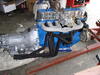
The engine that failed

More Turbo


Joined: Nov 2015
Posts: 715
Likes: 112
The chambers and piston tops are polished so you shouldn't have a problem with detonation with the correct ignition timing.
The cam will want an initial ignition timing around 15 degrees BTDC and the total timing will need to be near 36 degrees.
Detonation can be controlled on how slow rpm wise you bring the timing in between those two points with the mechanical advance.
What happens when the DCR is too high for the grade fuel is the mechanical advance timing is backed off to prevent detonation which also can reduce throttle response.
The cam will want an initial ignition timing around 15 degrees BTDC and the total timing will need to be near 36 degrees.
Detonation can be controlled on how slow rpm wise you bring the timing in between those two points with the mechanical advance.
What happens when the DCR is too high for the grade fuel is the mechanical advance timing is backed off to prevent detonation which also can reduce throttle response.
Thread Starter
|
Lead Driver


Joined: Mar 2008
Posts: 7,190
Likes: 384
From: Near Los Angeles
The chambers and piston tops are polished so you shouldn't have a problem with detonation with the correct ignition timing.
The cam will want an initial ignition timing around 15 degrees BTDC and the total timing will need to be near 36 degrees.
Detonation can be controlled on how slow rpm wise you bring the timing in between those two points with the mechanical advance.
What happens when the DCR is too high for the grade fuel is the mechanical advance timing is backed off to prevent detonation which also can reduce throttle response.
The cam will want an initial ignition timing around 15 degrees BTDC and the total timing will need to be near 36 degrees.
Detonation can be controlled on how slow rpm wise you bring the timing in between those two points with the mechanical advance.
What happens when the DCR is too high for the grade fuel is the mechanical advance timing is backed off to prevent detonation which also can reduce throttle response.
Tomorrow I'll lap the valves, using DIY Dykem in the form of a Sharpie! (Try to explain what Dykem is to the guys who work at AZone.I guess I should be happy they carry lapping compound still.)
I still have the original oil pump from 10 years ago. Should I use it? It's been sitting for all this time, unused.
I'm hoping I can install the rear main seal with the crank in.
Two in, four to go!
Thread Starter
|
Lead Driver
Joined: Mar 2008
Posts: 7,190
Likes: 384
From: Near Los Angeles
I was a bit troubled. When I lapped the valves I noticed that a couple of the exhaust valves slipped into their guides, but the last 1/2" felt rough or coarse.
Harte3: I always install valves twice for practice. The trick is to not install the seals the first time around, so you don't put undue wear on them by installing and then disassembling, and re-installing. Yep, that's how us pros do it!
Here is a beautiful sight:

After having to spend an unexpected $200 to have valves and seats ground, and have the head surfaced .006", I refused to pay for paint, and used high temp, bbq paint. I thought it was gloss, but it was flat black. I think it'll look good with the chrome side plate and polished Cliffy v.cover.
*On a side note: I see that Isky dot com has finally woken up and figured out that something was messed up with their site. They are also now making quite a few new cams, but nothing new for the 300, of course.
I decided to just paint my shorty cliffy headers and wrap them. I still haven't decided on a carburetor. I'm tempted to use my Quadrajet. I put the hedman header and offy dp on CL, and didn't get a single call. wow. Ebay here I come.
Harte3: I always install valves twice for practice. The trick is to not install the seals the first time around, so you don't put undue wear on them by installing and then disassembling, and re-installing. Yep, that's how us pros do it!
Here is a beautiful sight:
After having to spend an unexpected $200 to have valves and seats ground, and have the head surfaced .006", I refused to pay for paint, and used high temp, bbq paint. I thought it was gloss, but it was flat black. I think it'll look good with the chrome side plate and polished Cliffy v.cover.
*On a side note: I see that Isky dot com has finally woken up and figured out that something was messed up with their site. They are also now making quite a few new cams, but nothing new for the 300, of course.
I decided to just paint my shorty cliffy headers and wrap them. I still haven't decided on a carburetor. I'm tempted to use my Quadrajet. I put the hedman header and offy dp on CL, and didn't get a single call. wow. Ebay here I come.
Thread Starter
|
Lead Driver
Joined: Mar 2008
Posts: 7,190
Likes: 384
From: Near Los Angeles
Since you are trying to get more chamber volume, just go straight accross by increasing the wall angle.
If you take material from the bottom (Chamber ceiling) you weaken the chamber as you get close to the water jacket.
What size valves are in the head?
The Custom cam you have gives you power and reasonable fuel mileage.
I have a cam with 288/288, 232/232 on a 112 LSA getting 18 mpg at 70 mph and 15 around town with a 650 cfm 4 barrel carb.
If you change to a cam with less than 280 degrees adv duration you will certainly have detonation problems.
Keep the cam you have and advance it 2 degrees instead of 4.
If you take material from the bottom (Chamber ceiling) you weaken the chamber as you get close to the water jacket.
What size valves are in the head?
The Custom cam you have gives you power and reasonable fuel mileage.
I have a cam with 288/288, 232/232 on a 112 LSA getting 18 mpg at 70 mph and 15 around town with a 650 cfm 4 barrel carb.
If you change to a cam with less than 280 degrees adv duration you will certainly have detonation problems.
Keep the cam you have and advance it 2 degrees instead of 4.
More Turbo
Joined: Nov 2015
Posts: 715
Likes: 112
Clifford 4 barrel intake. The only reason I used the Clifford was I got it cheap on ebay otherwise I would use the new Offenhauser "C".
Quick Fuel HR-650 carburetor.
Hedman headers
MSD 6AL ignition. What several others have also found is that the MSD system produces the best low rpm response as well as best gas mileage.
1977 Ford 2WD pickup running about 2400 rpm @ 70 mph.
T18 4 speed transmission.
The engine will break the tires loose from about 1200 rpm in second gear. 1st gear is granny low and is rarely used in this truck.
Quick Fuel HR-650 carburetor.
Hedman headers
MSD 6AL ignition. What several others have also found is that the MSD system produces the best low rpm response as well as best gas mileage.
1977 Ford 2WD pickup running about 2400 rpm @ 70 mph.
T18 4 speed transmission.
The engine will break the tires loose from about 1200 rpm in second gear. 1st gear is granny low and is rarely used in this truck.
Thread Starter
|
Lead Driver
Joined: Mar 2008
Posts: 7,190
Likes: 384
From: Near Los Angeles
I found that my springs were not installed at the correct height that Isky required. I'm going to pop over to Isky asap and pick up some shims and new locks. Pmuller: remember when you were helping me design a cam with a lope at idle, and still low end torque? At that time I called Isky to see if they could grind me one to the specs you mentioned, but they wanted way too much money to do it. Now I find that they are offering a cam with almost the identical profile for the 300 (280 adv, 220 @ .050, .465 lift, 109 lsa). Maybe we started something.
Thread Starter
|
Lead Driver
Joined: Mar 2008
Posts: 7,190
Likes: 384
From: Near Los Angeles
Okay, pmuller, I have to ask: Your cam specs defy everything I thought I knew about cams. My online calculator shows that your cam has 64* overlap. Please tell me how you can be getting such excellent mpg with that cam. I think it's great that you are, but I'm trying to understand the how.
FTE Stories
Ford Trucks for Ford Truck Enthusiasts

3 Best / 3 Worst Parts of Modern Ford Ownership
Brett Foote
10 Amazing Upgrades That Solve Common Ford Truck Owner Headaches
Pouria Savadkouei
Every 2026 Ford Engine Explained
Brett Foote
10 Ugly Ford Trucks That We Still Kinda Love
Joe Kucinski
10 Things Every Truck Owner NEEDS (2026 Edition)
Michael S. Palmer
Rezvani's Latest Post-Apocalyptic Monster Is a Ford F-150 Raptor Underneath
Verdad Gallardo
Top 10 Most Expensive Ford Trucks Ever Sold on Bring a Trailer
Joe Kucinski
2027 Ford Super Duty Buyer's Guide (Every Model, Engine, & Package)
Brett Foote
Top 10 Ford Truck Tragedies
Joe Kucinski
More Turbo
Joined: Nov 2015
Posts: 715
Likes: 112
Okay, pmuller, I have to ask: Your cam specs defy everything I thought I knew about cams. My online calculator shows that your cam has 64* overlap. Please tell me how you can be getting such excellent mpg with that cam. I think it's great that you are, but I'm trying to understand the how.
It is true that the increased overlap gives more opportunity for the raw fuel to escape out the exhaust system.
What we found is that the engine produces good torque from 1200 rpm and at highway speeds the throttle barely needs to be open to maintain 70mph.
We focused on engine efficiency.
The .590" longer connecting rod significantly reduced rod angle and piston side loading along with shorter piston skirt for a reduction in piston to wall friction.
Piston reciprocating mass was reduced by 30%
Full roller rockers.
BWE Zero gap second piston ring.
Lean cruising speed mixture ignition improved with high energy multi spark system (MSD 6AL)
Higher 9.75 compression ratio.
Long small tube headers.
I can't tell you if unburned fuel is escaping out the exhaust above 2000 rpm at a small throttle opening, high vacuum operating point. An O2 sensor does not read hydrocarbons.
We are just doing a good job with what remains in the cylinder.
What would be interesting is if this same engine had port EFI where I could time the injectors to start just as the exhaust valve was closing.
At light engine loads the injectors pulse width should be short enough to stay within the intake stroke even with a delayed start.
Thread Starter
|
Lead Driver
Joined: Mar 2008
Posts: 7,190
Likes: 384
From: Near Los Angeles
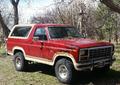
Yesterday I learned why never try to pull an engine without a helper ... with the hood on! It was a bear. I'm thinking I may break down and store the old engine since selling it is nearly impossible. Today I'll install the oil pump and p/u, clean and grind the pan to use the efi gasket. What a pain that Clifford made his v.covers to NOT fit an oem gasket. Cuss worthy! I need to helicoil one thread on my t.cover too.
Moderator
Joined: Dec 2007
Posts: 7,987
Likes: 104
From: Boise, Idaho

I've pulled my engine several times without a helper. But, uggghhh, I'd be grateful for one every time. It makes it so much easier.
So you have to get a special gasket from Clifford for their valve cover? Or just use RTV silicone?
I stripped a bolt hole on my timing cover as well and had to helicoil it. I figured I might as well just do all three across the bottom while I was at it. That aluminum get fatigued after years of tightening and loosening.
So you have to get a special gasket from Clifford for their valve cover? Or just use RTV silicone?
I stripped a bolt hole on my timing cover as well and had to helicoil it. I figured I might as well just do all three across the bottom while I was at it. That aluminum get fatigued after years of tightening and loosening.
Thread Starter
|
Lead Driver
Joined: Mar 2008
Posts: 7,190
Likes: 384
From: Near Los Angeles
I've pulled my engine several times without a helper. But, uggghhh, I'd be grateful for one every time. It makes it so much easier.
So you have to get a special gasket from Clifford for their valve cover? Or just use RTV silicone?
I stripped a bolt hole on my timing cover as well and had to helicoil it. I figured I might as well just do all three across the bottom while I was at it. That aluminum get fatigued after years of tightening and loosening.
So you have to get a special gasket from Clifford for their valve cover? Or just use RTV silicone?
I stripped a bolt hole on my timing cover as well and had to helicoil it. I figured I might as well just do all three across the bottom while I was at it. That aluminum get fatigued after years of tightening and loosening.
I refuse to deal with Clifford's. I use a standard cork gasket and trim with razor knife and hole punch, and weather strip adhesive the gasket to the cover, let dry, and then install. This time, however, since the cover hits one of the arp studs, I'm using two gaskets glued together, and studs to mount. I'm going studs everywhere: oil pan, v.cover, lifter cover, fuel pump, etc.
Monday I start welding on the frame. Hoorah!
So my cam and lifters arrived today! Very exciting. I was surprised to read that there were 4* advance ground into the cam. So, if I install straight up at zero advance, it is advanced 4*, right? I ended up with 280* adv., 220* @ .050, with .475 lift, on 112* lsa.
More Turbo
Joined: Nov 2015
Posts: 715
Likes: 112
So my cam and lifters arrived today! Very exciting. I was surprised to read that there were 4* advance ground into the cam. So, if I install straight up at zero advance, it is advanced 4*, right? I ended up with 280* adv., 220* @ .050, with .475 lift, on 112* lsa.
Wasn't the LSA supposed to be 108* ?
Thread Starter
|
Lead Driver
Joined: Mar 2008
Posts: 7,190
Likes: 384
From: Near Los Angeles
You are correct. I was set upon the 108 lsa. However, I realized that having a lope at idle was a novelty that I would pay for with economy mpg. Going with the 112* gave a bit more efficiency, dropped the overlap 4*, and hopefully retained the performance of the other cam choice. Now I am searching on ebay for cam degree wheel.
More Turbo
Joined: Nov 2015
Posts: 715
Likes: 112
The overlap is actually decreased by 8 degrees. The 112* LSA is a camshaft rotational reading. Overlap is a crankshaft reading.
you will like how the cam performs.
A 11" degree wheel works well. The Summit 11" degree wheel is a good price and gets the job done.
https://www.summitracing.com/parts/s...7-16/overview/
you will like how the cam performs.
A 11" degree wheel works well. The Summit 11" degree wheel is a good price and gets the job done.
https://www.summitracing.com/parts/s...7-16/overview/