When you click on links to various merchants on this site and make a purchase, this can result in this site earning a commission. Affiliate programs and affiliations include, but are not limited to, the eBay Partner Network.
Wiring is coming together pretty well. I'm waiting for a new ignition switch and a couple other things from mid fifty. In the mean time, I'm working on the seat mounts and the fuel filler. Also bleeding the brakes. I have a bad fitting underneath so I need to get in the mood to lay on my back and cut and flare the line with a new fitting. Probably not today!
The seat position relative to the steering wheel is about as comfortable as I can make it for my height and girth! I had the bed sitting under a pop up tent outside the garage but we had a big storm come through on Friday so we set it on the chassis. It's sitting on 4x4 so I still have room to work on the fuel tank and wiring
I have the under dash and rear wiring almost buttoned up. Just waiting on new ignition switch, balast, and brake light switch to arrive. I spent the evening roughing out the wiring in the engine bay.
Insulation is in on the floor and back wall. I left a trap door for the mc and am using a drop out battery box. I like the design of the older steering wheel and it was in better shape than the '56 one I have so I'm going with it. I have some crud in the steering shaft that I need to push out so I can run the horn wire.
Looking great! I understand your statement about the seat location for your body size! I'm 6'3" @ 265lbs, I'm doing the best I can in my '53 C500. Not a lot of leg room to work with.
Thanks for posting the pictures. Helps keep us motivated too!
Ken.
Looking great! I understand your statement about the seat location for your body size! I'm 6'3" @ 265lbs, I'm doing the best I can in my '53 C500. Not a lot of leg room to work with.
Thanks for posting the pictures. Helps keep us motivated too!
Ken.
I'm about the same dimensions as you and I drove one of these in high school and the leg room with tank in the cab was cramped. Of course, I was tall and skinny then! It seems to be a lot better with the tank out.
- fuel tank is fully installed and filler is mounted in bed
- wiring is 80% done
- brakes are fighting me and it really stinks having the master cylinder under the floor when trying to fix brake lines. New proportioning valve on the way since I stripped the threads on one of the outlets.
- front and back glass are in. My son helped and the back was easy. Front took about two hours of wrestling to get it 99% in. Of course, I broke it trying to get the last bit to set in. So another windshield will be going in next month.
I'm starting to do body assembly and hope to fire it up by the end of the weekend.
I’m with Wayne. The mere cutting off the half of the frame reduces the bending-stiffness by 8 times! Of course you boxed the frame at that spot, but it isn’t as strong as before. I guess your truck will have much more power than before? I’m curious of the further progress and the report of your test drives. Keep going!
I wish You all a quite first advent Sunday!
I agree with Rico and Wayne about the C-notch. Keep an eye on it. A lot of people do this and think adding an inner plate to box that section recovers the frame strength. It helps, but like Rico mentioned, it's not what is was before.
I agree with Rico and Wayne about the C-notch. Keep an eye on it. A lot of people do this and think adding an inner plate to box that section recovers the frame strength. It helps, but like Rico mentioned, it's not what is was before.
i understand the concern. The c-notched frame isn't this chassis, this one has stock suspension and frame under it. I do think the other frame is plenty strong, though. You go from a 2" by 4" C shape frame to effectively a 2" x 2" square tube. My understanding is that you have the same surface area, just splitting the 4" vertical into two 2" inch verticals.
My understanding is that you have the same surface area, just splitting the 4" vertical into two 2" inch verticals.
Nope. What thickness? But I guess you can just guess your way through it."In reviewing frame strength options, the following are terms and measures to know.
Section modulus. This measurement, in cubic inches, is based strictly on frame side-rail height, width, and thickness. As a frame of reference, the section modulus for the standard frame on a Chevrolet Kodiak C7500 is 9.58 cubic inches, while the strongest frame option for that chassis offers a section modulus of 17.93 cubic inches.
Yield strength. This factor refers to the maximum weight in pounds per square inch (psi) that can be placed on the frame allowing it to return to its original position without permanently bending or creasing. Typical yield strengths for Class 4-7 trucks range from 50,000-120,000 psi.
Resistance bending moment (RBM). This calculation combines section modulus and yield strength and seems a fair and accurate measure when comparing frame strengths between truck manufacturers. The formula: Section Modulus x Yield Strength = RBM. Revisit the previous example with the standard frame strength of the C7500. Here’s how the numbers compute: 9.58 cubic inch (Section Modulus) x 50,000 psi (Yield Strength) = 479,000 RBM. In comparison, the strongest frame option on that truck offers 2,151,600 RBM, based on a section modulus of 17.93 cubic inches and 120,000 psi yield strength."
Nope. What thickness? But I guess you can just guess your way through it."In reviewing frame strength options, the following are terms and measures to know.
Section modulus. This measurement, in cubic inches, is based strictly on frame side-rail height, width, and thickness. As a frame of reference, the section modulus for the standard frame on a Chevrolet Kodiak C7500 is 9.58 cubic inches, while the strongest frame option for that chassis offers a section modulus of 17.93 cubic inches.
Yield strength. This factor refers to the maximum weight in pounds per square inch (psi) that can be placed on the frame allowing it to return to its original position without permanently bending or creasing. Typical yield strengths for Class 4-7 trucks range from 50,000-120,000 psi.
Resistance bending moment (RBM). This calculation combines section modulus and yield strength and seems a fair and accurate measure when comparing frame strengths between truck manufacturers. The formula: Section Modulus x Yield Strength = RBM. Revisit the previous example with the standard frame strength of the C7500. Here’s how the numbers compute: 9.58 cubic inch (Section Modulus) x 50,000 psi (Yield Strength) = 479,000 RBM. In comparison, the strongest frame option on that truck offers 2,151,600 RBM, based on a section modulus of 17.93 cubic inches and 120,000 psi yield strength."
I'm not an engineer and I'm not guessing. Was simply stating my understanding.
Am I understanding correctly from your post that the key is the thickness of the original frame vs the thickness of the boxing plate? And if the boxing plate is less thick then the 2x2 is less strong than the original c shape frame? Or are you staying that the 4" height of the c frame makes it stronger than any square tube that is less than 4" in height?
Finished up the engine bay and front end wiring last night. Also started installing interior. Today will be door internals and rear fenders. I still need to paint the hood, front valance, and a few other pieces. Will do that in the next few days. Running boards need some alignment help, I'll tackle that when doing the fenders.
Seats and carpet are in. I left the carpet lose for now until I finish the brakes. It will tuck under the firewall cover and I bought stainless brackets that will hold it down along the door frame. Do you guys typically glue the carpet in spots or just hold it down like that? Rear fenders ready to go on. Ug. So close to getting the windshield in. I got impatient and used a little body panel pry bar to try and slide it in. I wouldn't recommend that approach!
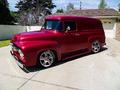
I've been pushing hard to make progress on the truck lately because I had decided I would drive it on my bday. Well, today is the day and I got it running! Pulled it out of the garage under its own power for the first time since I've owned it.
Rezvani's Latest Post-Apocalytic Monster Is a Ford F-150 Raptor Underneath
Slideshow: Called the Fortress, the 850-horsepower pickup combines Raptor underpinnings with military-inspired features, survival equipment, and a starting price of $285,000.