When you click on links to various merchants on this site and make a purchase, this can result in this site earning a commission. Affiliate programs and affiliations include, but are not limited to, the eBay Partner Network.
More pictures.... Extra gasket to be trimmed This was not exactly level, so minor adjustments had to be made Block heater installed All the parts for the lift pump Stacked up Bolts started Fully installed
Tappet cover pictures Gasket prep Bushings stuck to cover Small amount of RTV on the block Installed (the first time) Fell down inside. you can see it sitting there in the bottom. Awl stuck through the bushing Stick stuck with tape
Aaannndd...the head... Pushrods installed and lubed All the pushrods in Unpacking all the parts Everything prepped and cleaned up Gasket comparison Head placed on block Head bolts in and torqued Valve Adjustment
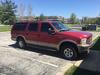
Well, finally put Clifford under the knife this weekend. Got the whole front end off down past the fan and shroud. Turbo is off, exhaust, driveshafts, and torque converter bolts are out. The font end removal went pretty good with no major issues. Things are old and plastic parts are fragile at this point so I'm being pretty careful. The push lock tabs (christmas trees) are all getting cut. There's no way I'm gonna sit and try to monkey with those things to salvage them. Just not worth the effort. The front driveshaft straps went ok with the exception of one of the bolts rounded off, so I had to bend the strap around to get it loose. I'm pretty sure the driveshafts have not been out since the X was built. Which, is pretty amazing given the miles. Still had a pretty good torque on them and the factory loctite seemed to be there. It wasn't fun, that's for sure. I'll be investing in some short wobble impact sockets as there just isn't much room in there. Everything is getting rebuilt anyway, so minor parts like bolts and straps will just have to be replaced. Project creep just got real as looking at my front end, the ball joints will all get replaced along with any other components. I need to do the steering box test to see how that looks as well. Seems silly at this point to do all this work and not fix as I go. Turbo came out relatively easy as I used antiseize on the pedestal bolts after I rebuilt it a while back. the y pipe clamp was stuck, but nothing a little 5 pound sledge and a long bar can't take care of.
Motor mounts are largely something folks buy when doing a cummins swap, but I'm not sure why. I suppose for folks who don't do fabrication, this would be a problem, but looking at the 6.0 mounts, I should be able to use them to my advantage. More on that when I get to it. Overall, not a super hard process, but it is quite a bit of work. I have a gantry over the work area and I'll use 2 chainfalls to lift the body when I get to it. Last time Clifford will be together for a while. Transmission cooler lines had a bunch of sand and crap just inside the hose to the clamp. Nasty!
Well, no good pictures, but was able to get the engine, transmission, and transfer case out this weekend finally. I contracted some sort of demon flu just over a week ago and have been down with that off and on. Just doesn't seem to want to go away.
So, engine is out, transfer case off of the transmission. It wasn't too terrible, but the y pipe has to come off and it helps to remove the FICM and bracket. I figured that out AFTER I had the engine hanging on a chain. Simple enough, but took a bit of time. Transmission came out with not much effort aside from the fact that it's heavy and moving it around on gravel/hard pack doesn't work very well. WE ended up lifting the X with the tractor to get it to slide out from under. From there, I pulled the transfer case off, which was NOT fun either. Ended up having to pry it off using a long bar and a block of wood one side at a time. The dowel pin was stuck and for some odd reason, the output shaft had some rust on it. Weird part was the gasket was in real good shape and no obvious leaks anywhere. So, next weekend I'll break out the steam genny and clean everything up and prep for paint under there. Still not super sure what I'm gonna do for motor mounts. I looked at the 6.0 mounts, and while I like them, I'm not sure I'll be able to adapt them well enough. I may end up building them from scratch. I'll need to strip the harness off the 6.0 and pair it down so I can adapt it to the cummins and keep my electronic gauges in the dash and add the mechanical ones.
On the engine side, I painted a few more items to be put on here this week. It's all the little things that have to go together to fully dress it out. Once I get that under control, I'll have to break open my transfer case and the G56 to see what the story is with that. Aside from not feeling great, the weather was good, and the beer cold. Overall a good weekend to work on the X.
Got quite a bit done over the weekend, but still not enough. We were supposed to have crazy storms on Sunday, bu that turned out not to be the case. Had some wind, but no rain. Anywho, got some stuff done. The water pump I bought originally was supposed to be new, and it appeared new, until I got an actual new one. When I put it in, I cracked the housing because the impeller lodged against the inside of the motor just prior to the final torque. So, I ordered an AC Delco from Rock Auto. I'm not sure why I didn't order it from there in the first place, but hindsight is 20/20. The new one fit perfectly, and actually looks like a new (not reman). From there, I went ahead and put on the exhaust manifold after prime and paint with the high temp in a can. We'll see how it holds up. The better half would never let me cook it in the oven, so it'll have to be an "on the truck" cook. Which is fine. I also primed/painted the exhaust housing on the turbo while I was at it. The install went fine on the manifold. I ordered bolts from highway and heavy parts and they were to my door the next day. I love those guys. Next up was the intake. I got my grid heater in as well, so I could put all that together. The manual says to use thread sealer on the bolts. I didn't have any, so I went without. Anyone see an issue with that? I used a good heavy coat of copper gasket spray on all 3 gaskets, so I don't see that seal not working well. For some reason I didn't get a picture of it all put together, but it's on there. Next up was the belt tensioner. I purchased a kit for the Dodge Cummins with the belt (which I won't be able to use). Found the bracket and bolts, painted it up and put it on. Turns out the Dodge version has the alignment pin on the opposite side vs the RV version. They sit in the same position, just doesn't fit right. So, I think I can get it to orient correctly by drilling out the hole in the bracket a little bigger to make it line up. If not, I'll have to source the Dodge bracket or make my own. Either way, not a huge issue, but enough of a difference to cause more work. Also got my KDP covered up using a small piece of sheet metal I had left over from rocker panel work. I cut out a piece 1x2, drilled the hole, shaped it, and bolt in with loctite. Painted the valve covers, which I'll be replacing with a set that a guy I know has out of a school bus. They (well one) has a ford logo on it, which should be pretty cool. I'll try and polish that set as they're in pretty good condition. Since my engine was involved in a fire, the AL covers were in nasty condition and it took a fair amount of glass bead to get them cleaned up. One in particular is deformed and has some pretty good pits in it. It's on there for now. I went ahead and shot a coat of paint on the front cover and put it on with the bolts finger tight. I haven't installed the seal yet and I'm going to wait until I get my p-pump installed and the vac/power steering pump in there to do so. Other misc items were the side plug on my oil pan (nice that someone already put one in in case I need it), cleaned up the motor mount bracket on the drivers side only to find out I can't use it. It's actually a block for the oil drain on the old air compressor that was on there, which I don't need. Metal Gaskets Bolts Started Final Torque Killer Dowel Pin (KDP) Cover so I don't chew up a pin with my gears Nasty Valve Cover Old vs New Pin on opposite sides of tensioner The orientation is super wonky and will not work Grid heater ready to go on Gaskets and parts placed There's a giant hole in the side of the block where the motor mount will go that I need to cover up. I looked in the FSM I have, but I didn't see it right away. I have a couple I can look at out where I'm putting this in, so that may help. Lastly on the engine was the thermostat. I had it in my head that there were two rubber gaskets. There aren't. Watched a couple videos, looked online, nothing. Turns out, there are two different size thermostats. The Dodge version is 63mm flange, and my version is 54mm flange. The extra gasket I had goes on the lower radiator outlet, which I was able to get on. Ordered a Cummins thermostat for my application so hopefully it'll be here in a few days. I need it on there so I can #1 lift the engine off the stand, and #2 so I can built my alternator bracket and mount that. So, I fumbled with that for a while yesterday. On the truck side, I got the engine bay cleaned up, rear carpet and seat out, and a bunch of the plastic out. Since I'm pulling to body off to paint the frame and rebuild just about everything from the ground up, the whole interior has to come out. I didn't have the proper T bits for the seats and belts, so the rest of the interior will have to wait until next weekend. I used a steam genny to clean up the engine bay as the 6.0 had started puking oil out of the turbo drain. Let me tell you, if you ever have the chance to buy one, do it. I call the pressure washer the "Magic Eraser" and this thing is amazing compared to a regular pressure washer. Grease peeled right off with the hot water/steam. It was amazing. So, with any luck, I'll be hauling my engine out next weekend for the first test fit and motor mount mockup. Fingers crossed!!
Because I know ya'll love your pics.... Water pump comparison Old drain plug with new washer Installed...shiny! Don't mind my black RTV mess...you won't see it when installed... Super dirty under there.... All clean and ready for test fit!!! Then paint... Interior comes out pretty quick...wish I would have had the correct T sockets. I did get the center console out as well.
Dug into the G56 last night. I was a bit concerned about some input shaft play (side to side, not in and out), but after tearing it apart and reading some more information on the internets, I'm happy with it as-is. I came across this thread and post #4 specifically. That, coupled with what I see inside the trans means my pocketbook survives another day.
So, steps are fairly easy, but having the service manual helps. Drain the fluid, all of it. I made a huge mess on my floor because I didn't have it all drained. Not fun. Remove the shift tower (10mm bolts), making sure it's in neutral. Tie the shift forks together with a zip tie, set the trans on its rear, remove the reverse sensor (8mm). Remove the 5-6 shift fork pivot pins from both sides of the case and then the reverse idler shaft pin from the rear housing. These were fairly tight. I had to use a long breaker bar and a cheater pipe on one of the shift fork pivot pins. Remove all the transmission housing bolts. Split the case. Mine needed a reseal anyway, so it came apart pretty easily. I also removed the throwout bearing and fork and the input shaft retainer. I'll be putting a new seal in the rear as this one was a 2WD and a new front seal as I don't want it to leak and I'm not sure how many miles are on the trans. Oh, and careful with the 5-6 gear synchro. I moved mine around and 2 of the three detents went flying. I spent at least 15 minutes and several curse words finding them. I removed the input shaft and the bearing looks good. I can see some wear on it, but nothing major. The race looks good as well. There is one seal on the input shaft that I may change. It looks fairly good, but may as well if I'm replacing seals. The countershaft all looks good with no chips, uneven wear, or other major wear on any of the parts. The races in the case look good as well. I didn't pull the mainshaft yet, but I expect that it'll be in fairly good condition. The syncro (5-6) looked really good with little to no wear. That makes me happy because those things are super expensive! The reverse gear also looked really good but it had some handwriting on it. So, this transmission may have been gone through by someone at some point.
Make sure the transmission is on its' rear when you pull the reverse gear bolt. Otherwise, it'll fall out into the case. If you're opening it up, not such a big deal. But, if you weren't planning on it, you'd be screwed. Not sure why you'd pull the bolt if you weren't cracking the case, but folks do weird stuff sometimes.
On to the pictures! I'll update as I get through putting it back together. Shift Tower Bottom of shift tower. No major wear Shift Forks Reverse gear bolt in the side of the housing Throwout bearing removed Input shaft retainer. I'll have to clean this up a bit 5-6 Shift fork Pivot Pins Case Split open Input Shaft Seal
More pics of the G56 teardown Input shaft seal and gear More input shaft This is the 5-6 synchro that I pulled up by mistake trying to jockey the countershaft out Writing on the reverse gear Countershaft out. All bearings and gears look darn good! Detent that went flying. Not fun to find in a messy, packed, small garage.
Got my injectors in the mail yesterday, and obviously had to put them right in! I ended up with 260 Bar, 5x012 VCO injectors with a 145* spray. These are fueled more than stock, and supposedly are a +90HP injector. I had originally decided not to add fuel, but the addition of a fuel stop plate (#10) and some increased timing, I figured why not. They were on sale and overall not super expensive. If I decide it's too much fuel and I don't like them, I could sell them and buy another set.
So, when installing 12V Cummins injectors, there's a little ball on the side of the injector that matches up with a corresponding hole in the head. You have to make sure they line up. The first one I did, I got a little sideways during the install and almost ruined a brand new injector. So, here's the "how to":
1. Keep everything clean.
2. Check your injector hole for debris and make sure it's clean.
3. Remove the protective cover over the nozzle and the sealing washer.
4. Add a drop of engine oil (clean) to the end of the injector where the sealing washer sits, reinstall sealing washer.
5. Put a VERY light coating of anti-seize on the body of the injector just below the overflow hole where the nut will sit.
6. GENTLY place the injector into the hole, lining up the ball. Don't force it. If everything is clean as it should be, the injector sits right down in.
7. Add a small amount of anti-seize on the threads of the CLEAN nut.
8. Sit the nut down on top of the injector and screw it in by by hand. You should not have to force it, and it should go almost all the way in. Keep the injector straight and make sure it doesn't rotate.
8. Torque to 44 foot pounds. During this step, if you threaded your nut correctly, it should only move about 1/3 of a turn to get to torque. I rotated a small amount, twice, to check that the injector was still in the same spot before hitting the torque.
9. Install the gasket around the top of the injector nut. I used a small pick to get them down in there.
10. Sit back and admire your shiny new parts.
I then installed the fuel overflow line onto the injectors. It took me a bit because after kicking around in my garage for 6 months, and being put to sandpaper to clean up, it must have gotten slightly bent. The holes didn't line up, and specifically one was pretty bad. It bends fairly easily to get it to line up though. I cleaned all the bolts in parts cleaner and blew everything out with 100psi to make sure not grit or dirt was in any of the holes. Again, be clean about it! You don't want to trash your shiny new fuel system! The bolts are torqued to 80 INCH pounds, which isn't a lot.
Now I can put my thermostat housing back on that I had to pull off to get the #1 injector in. I also cleaned up (for the most part) the G56 case after getting those dang detents back in. I'll be happy if I never have to do that again! Picture time!! Dirty parts. I have two sets of injectors, so I used the best of the lot. All clean! Injector out of the box. Use a SMALL amount of anti-seize. A little goes a long way! Installed and torqued. This little tool works perfect for pushing the gasket in. Had to bend this last part of the return line pretty good. All done!
Got my engine cradle built this morning and loaded it up in an old Dodge Ram 1500 with new rear springs and air bags. It was an interesting lift given my driveway slopes down a bit the the truck owner had the bags at about 30 psi. I wasn’t smart enough to let the air out to drop the truck a bit. Had to go out to the last hole on the 3000 pound hoist, which the PO put in. Not fun and I got a wheel on the cradle sideways between he tailgate and truck bed. Let’s just say I’m glad I kept it hooked to the hoist until I was sure it was secure in the bed. 1200 pounds falling over would have made for a bad day. Pictures forthcoming. Nothing else got done due to cold nasty rain. But, the engine is now located with the X!
Pictures from the engine load into the truck. Let's just say I don't want to do that again by myself. Not fun. If I was smarter, I would have let the air out of the airbags in the truck to help with the height a bit more. That, and my driveway is a bit of a slope. Not much, but enough to make the tailgate a bit higher. Not much to be done about that though. Pictures as promised!
Found that it was easier to make sure the cradle will fit by rotating the engine on the stand. It's top heavy so getting it back up was a chore. Wheels on. Last time (hopefully) on the stand. Barely enough lift to get it on the truck. Not nearly enough to get it int he cradle. Had to set it down to reset the boom. I was a little scared that the tailgate would break. It's an old crusty farm truck. In the cradle, but not safe. This is the point at which it tried to tip over. Boom extended fully and almost to the center of the truck. I put a chain on it and tied it to the hoist to keep it from rolling into the cab. All tied up and secure. Whew!!
Last night I was able to get the G56 put back together for the most part. Have a few more steps to take, but the hard part is done.
Again, keep everything clean and make sure any dirty or grit is out of the case. I ended up scrubbing the outside of the case with a scotch brite pad and parts cleaner. It mostly came clean, but there's years of grime and grease on the AL case. Not super fun to clean up. Installed a new input and output shaft seal. Got the PTO covers cleaned up and all the bolts wire wheeled. Pretty sure I've just about worn out my wire wheel on the grinder. Make sure all gasketing surfaces are clean, grease free, and dry BEFORE you start assembly. I used black RTV on the PTO covers when installing them. Fairly straightforward installation. Put the RTV on the transmission case and place the cover. Install all 6 bolts to 43 FT/LBS torque. The main shaft is very heavy and awkward to set by yourself. I had trouble getting it in with all the shift fork actuators in place. I had to take the 5-6 shift fork actuator off to get it in, and then I couldn't get the dang thing in because of the detents that are in the case. Ended up having to **** the shaft sideways to get it it there, thereby letting the 5-6 shift detents flying AGAIN. Ugh. Stop everything and find them and put them back in. Next up was the reverse gear placement and then the countershaft. That went fairly well with no real issues. After that, it was the input shaft, which really just sits on the top of the main shaft. Then I placed the reverse gear rod (not sure what it's called) and installed the bolt. Torque to 43 Ft/LBS.
During assembly, I lubed everything up with synthetic 75W-90 gear lube. Mercedes recommends this as the fluid while Dodge recommends ATF. I can't see using ATF in a manual transmission, especially one that has no center support for the gears and they just sort of float around in there (sort of). I'll also add a quart to the fill level after I'm done putting it together to possibly help with gear rollover noise. Anyway, back to assembly.
From there, I put the anaerobic gasket maker on the bottom half of the case for assembly. Went to put the top half of the case on and couldn't get the shift fork actuators in the proper position. Pulled the top cover back off and tied them together with a zip tie. Then I realized that I hadn't put the 5-6 shift fork on. Glad I caught it because I didn't want to have to pull the case half back off to put it on. Rest assured I would have found it on the work bench after the gasket maker had cured. With the shift fork actuators tied and the shift fork installed, I was able to get everything lined up and the top half put in place. All the bolts installed with blue loctite and torqued to 43 FT/LBS. Next up will be the reverse sensor and the input shaft retainer.
Couple things if you're gonna tackle this:
Use the manual and follow it step by step. This will prevent missing parts like shift forks, and more work later.
Make sure you have a clean work area where you can get all the way around the transmission. It can be difficult to torque the case bolts as they are upside down and the transmission likes to slide around.
Had to remove the front seal from the outside. Use the wood part of the sledge handle to gently tap the new seal in. Case cleaned with the new output shaft seal installed. Black RTV on the PTO cover area of the transmission. PTO Cover cleaned and ready for install. PTO Cover Installed All 3 shafts installed. Notice the shift fork at the top is missing. Anaerobic sealer on the bottom (back) half of the case. Case halves put together.
This Hennessey Takes the Expedition Tremor's Off-Roading Capability to the Next Level
Slideshow: The VelociRaptor Expedition gains a lift, upgraded suspension, Brembo brakes, and trail-ready equipment while retaining the stock 440-horsepower EcoBoost V6.
Rezvani's Latest Post-Apocalyptic Monster Is a Ford F-150 Raptor Underneath
Slideshow: Called the Fortress, the 850-horsepower pickup combines Raptor underpinnings with military-inspired features, survival equipment, and a starting price of $285,000.