




Big Blue

Thread Starter
|
FTE Legend


Joined: Jul 2010
Posts: 32,875
Likes: 48
From: Northeast, OK
It takes a whole lot more than the battery, Charles. Depending on how you plan to do it, you will need a relay that parallels the two batteries for charging, and cabling, etc.
But, if you decide to do it we will walk you through it.
But, if you decide to do it we will walk you through it.
Thread Starter
|
FTE Legend
Joined: Jul 2010
Posts: 32,875
Likes: 48
From: Northeast, OK
Thread Starter
|
FTE Legend
Joined: Jul 2010
Posts: 32,875
Likes: 48
From: Northeast, OK
Yes, via the web. Reviews, tests, etc. What I've found is that there appear to be two levels of pricing: the high end, which is where Warn and Ramsey are, and the low end, which is where Suoerwinch, Smittybilt, HF, etc are. And within those levels there is a lot of commonality, albeit with some usually-minor differences. And it was very confusing.
So, we went into 4 Wheel Parts on Mingo just south of 71st St. They carry Warn and Smittybilt, which are two of the big ones from the two pricing levels. That simplified things. And when the salesman said he wheels most weekends and uses his Smittybilt frequently and without problems, that got my attention. I pressed him on why the Warn is twice the price and he couldn't explain it. Said they sell 10 Smittybilts to 1 Warn, and people seem to love them.
They are having a sale tomorrow, so we are coming down to pick up a winch and maybe a battery as they also sell the Odyssey Extreme. With the sale it looks like their price will beat that of Amazon, and I'll have someone local for support.
So, we went into 4 Wheel Parts on Mingo just south of 71st St. They carry Warn and Smittybilt, which are two of the big ones from the two pricing levels. That simplified things. And when the salesman said he wheels most weekends and uses his Smittybilt frequently and without problems, that got my attention. I pressed him on why the Warn is twice the price and he couldn't explain it. Said they sell 10 Smittybilts to 1 Warn, and people seem to love them.
They are having a sale tomorrow, so we are coming down to pick up a winch and maybe a battery as they also sell the Odyssey Extreme. With the sale it looks like their price will beat that of Amazon, and I'll have someone local for support.

More Turbo
Joined: May 2008
Posts: 585
Likes: 11
I don't know about the cheaper Warn winches, but I do remember reading that their flagship 8274 model is assembled by hand which explains the $1,900 price tag. But IMO they are a bullet proof design. They've been in continuous production for 40 years and have earned a very trusted reputation. On the other end of the spectrum though...I know several guys in my off-road club that use the $300 Harbor Freight winches and haven't had any trouble with them either.
FTE Stories
Ford Trucks for Ford Truck Enthusiasts

Top 6 Best Deals Available on New Fords & Lincolns Right Now
Brett Foote
This Hennessey Takes the Expedition Tremor's Off-Roading Capability to the Next Level
Verdad Gallardo
Top 10 Fords at 2026 Carlisle Ford Nationals
Joe Kucinski
3 Best / 3 Worst Parts of Modern Ford Ownership
Brett Foote
10 Amazing Upgrades That Solve Common Ford Truck Owner Headaches
Pouria Savadkouei
Every 2026 Ford Engine Explained
Brett Foote
10 Ugly Ford Trucks That We Still Kinda Love
Joe Kucinski
10 Things Every Truck Owner NEEDS (2026 Edition)
Michael S. Palmer
Rezvani's Latest Post-Apocalyptic Monster Is a Ford F-150 Raptor Underneath
Verdad Gallardo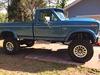
Posting Guru
Joined: Apr 2011
Posts: 1,636
Likes: 5
From: Orlando area
I have my positive cables running to a Cole-Hersee switch (A or A+B) so both are charged at the same time when in A+B position, or I can disconnect from the aux battery (B). From the CH switch the output stud is connected to the bat terminal of the fender-mounted starter solenoid. This setup has worked well over the years.
The original thought was, I would disconnect the main battery when camping or such, and then I could draw from (run down) the Aux battery with out concern of not being able restart the truck days later.
The original thought was, I would disconnect the main battery when camping or such, and then I could draw from (run down) the Aux battery with out concern of not being able restart the truck days later.
Thread Starter
|
FTE Legend
Joined: Jul 2010
Posts: 32,875
Likes: 48
From: Northeast, OK
Yes, it does depend on how you are going to use it. But if you aren't going to have some serious accessory, like a winch or a camper, then why have the second battery? You can easily get more CCA than you'll need for just the truck's normal load in a single battery.
But, with the serious accessory you need a way to make sure that you can still get the truck started if you run the aux battery flat. Or, run the engine while running the accessory - but make sure you stop short of killing the engine due to lack of ignition.
Big Blue has the stock aux battery wiring, which means a relay is pulled in to parallel the batteries any time the key is on. So, if the load is a camper then you can drain the aux battery and still have the main battery to crank the engine. However, if the aux battery is flat there's going to be a lot of current wanting to flow between the two batteries when the key is turned on. And, that is going to try to equalize the batteries, which means neither have their full charge.
I'm thinking the system I put on the boat is a better solution. It is a Cole-Hersee smart isolator system that parallels the batteries only when the primary battery gets to 13.2v and stays there for 2 minutes. And, it will disconnect the batteries if the primary gets down to 12.7v. So, if winching with the engine running you'd have both batteries in play unless the primary got down to 12.7v. And if you ran the aux flat with the engine off it wouldn't parallel the two batteries until the primary was up to 13.2 for two minutes.
But, with the serious accessory you need a way to make sure that you can still get the truck started if you run the aux battery flat. Or, run the engine while running the accessory - but make sure you stop short of killing the engine due to lack of ignition.
Big Blue has the stock aux battery wiring, which means a relay is pulled in to parallel the batteries any time the key is on. So, if the load is a camper then you can drain the aux battery and still have the main battery to crank the engine. However, if the aux battery is flat there's going to be a lot of current wanting to flow between the two batteries when the key is turned on. And, that is going to try to equalize the batteries, which means neither have their full charge.
I'm thinking the system I put on the boat is a better solution. It is a Cole-Hersee smart isolator system that parallels the batteries only when the primary battery gets to 13.2v and stays there for 2 minutes. And, it will disconnect the batteries if the primary gets down to 12.7v. So, if winching with the engine running you'd have both batteries in play unless the primary got down to 12.7v. And if you ran the aux flat with the engine off it wouldn't parallel the two batteries until the primary was up to 13.2 for two minutes.
Thread Starter
|
FTE Legend
Joined: Jul 2010
Posts: 32,875
Likes: 48
From: Northeast, OK
I love that setup on the boat. We had it out today and I played the sound system, complete with a 12" Kicker sub and two separate amps, for quite a while with the engine off. But, I have the sound system hooked to battery 2 and crank the engine with battery 1, although I can change that with the 1/2/1+2 switch, so I have no fear of killing the battery and not getting the engine started.
More Turbo
Joined: May 2008
Posts: 585
Likes: 11
I'm thinking the system I put on the boat is a better solution. It is a Cole-Hersee smart isolator system that parallels the batteries only when the primary battery gets to 13.2v and stays there for 2 minutes. And, it will disconnect the batteries if the primary gets down to 12.7v. So, if winching with the engine running you'd have both batteries in play unless the primary got down to 12.7v. And if you ran the aux flat with the engine off it wouldn't parallel the two batteries until the primary was up to 13.2 for two minutes.
Thread Starter
|
FTE Legend
Joined: Jul 2010
Posts: 32,875
Likes: 48
From: Northeast, OK
I think that's the plan - the Cole-Hersee isolator with a 3G alternator. But, I think I'll do it in stages, with the isolator first while running the 1G and existing cabling, and then the 3G upgrade with new cables.
Thread Starter
|
FTE Legend
Joined: Jul 2010
Posts: 32,875
Likes: 48
From: Northeast, OK
Here are some further details about the plan. First, there is an upgrade to the Cole-Hersee battery isolator that I made on the boat and may do on the truck. I like to put the little HF battery tenders on the batteries for the winter, and I use two of them so each battery can seek its own level. But I discovered that the battery isolator parallels the batteries as the chargers bring the batteries above 13.7v, which defeats the separate chargers plan. Plus, the pull-in current of the battery isolator's relay is almost as much as the HF charger puts out. And, it runs the solenoid all winter, needlessly.
So, I used a relay triggered by the ignition switch to provide the ground to the battery isolator. That way it won't parallel the batteries unless the engine is running. And, since Ford provided a similar wire from the ignition switch right to the aux battery relay on these trucks I'll probably do the same thing on Big Blue. But, in this case I'll probably use another fuel pump relay, housed in the holder Bill Vose sent me, which will mean I'll have another spare relay, just in case.
However, in thinking about it I realized that the CH battery isolator will disconnect the aux battery from the alternator when it and the main battery, since they'll be paralleled at that point, are down to 12.7v. Since the batteries will drop to 12.7v quite quickly when winching, the aux/winch battery will not be charged while the winch is being used, and yet the alternator will be spinning but not throwing much current as the main battery will be charged fully. The solution to that is the Optional Start Assist function described in the above link. That is designed to be a momentary switch that will pull the relay in at the operator's command in order to parallel the batteries for starting. But, if I put a toggle switch in the relay could be pulled in to parallel the batteries while winching, but then shut off when the voltage starts getting a bit low. And, I could use the Emissions warning light to provide an indication that the batteries are paralleled, obviously creating a new label. In addition, I could tie it into the warning buzzer on the truck so my offspring know they aren't supposed to run that way.
Which brings up the question of how one knows when the voltage is getting low on the batteries. Since I have the aftermarket voltmeter I'll know the voltage on both batteries when they are paralleled. But, what about when they aren't? Well, why not convert the ammeter to a volt meter and have it monitor the main battery, and use the aftermarket one for the aux battery.
So, I used a relay triggered by the ignition switch to provide the ground to the battery isolator. That way it won't parallel the batteries unless the engine is running. And, since Ford provided a similar wire from the ignition switch right to the aux battery relay on these trucks I'll probably do the same thing on Big Blue. But, in this case I'll probably use another fuel pump relay, housed in the holder Bill Vose sent me, which will mean I'll have another spare relay, just in case.
However, in thinking about it I realized that the CH battery isolator will disconnect the aux battery from the alternator when it and the main battery, since they'll be paralleled at that point, are down to 12.7v. Since the batteries will drop to 12.7v quite quickly when winching, the aux/winch battery will not be charged while the winch is being used, and yet the alternator will be spinning but not throwing much current as the main battery will be charged fully. The solution to that is the Optional Start Assist function described in the above link. That is designed to be a momentary switch that will pull the relay in at the operator's command in order to parallel the batteries for starting. But, if I put a toggle switch in the relay could be pulled in to parallel the batteries while winching, but then shut off when the voltage starts getting a bit low. And, I could use the Emissions warning light to provide an indication that the batteries are paralleled, obviously creating a new label. In addition, I could tie it into the warning buzzer on the truck so my offspring know they aren't supposed to run that way.
Which brings up the question of how one knows when the voltage is getting low on the batteries. Since I have the aftermarket voltmeter I'll know the voltage on both batteries when they are paralleled. But, what about when they aren't? Well, why not convert the ammeter to a volt meter and have it monitor the main battery, and use the aftermarket one for the aux battery.