




Engine Rebuild Part 2
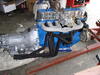
Lead Driver


Joined: Mar 2008
Posts: 7,182
Likes: 380
From: Near Los Angeles
Also, keep in mind, that just to spice things up, Ford changed the length of their valves. Pls. confirm the year, but I believe it was around 1986. SI valves used to list 'early length,' or 'newer length.' I would call the guy at SI. He would certainly recommend the valves you want/need.

Thread Starter
|
Moderator
Joined: Dec 2007
Posts: 7,987
Likes: 104
From: Boise, Idaho

Well, I just took a look at SI's new 2016 catalog. Looks like they still have them.
http://sivalves.com/2016-SI-Catalog.pdf
Pg. 28.
Intake:
240/300 Ford Intake Early
1.940 Intake
4.810
Part# SEV-2533
240/300 Ford Exhaust Early,
1.600 Exhaust
4.810
Part# SEV-3005
http://sivalves.com/2016-SI-Catalog.pdf
Pg. 28.
Intake:
240/300 Ford Intake Early
1.940 Intake
4.810
Part# SEV-2533
240/300 Ford Exhaust Early,
1.600 Exhaust
4.810
Part# SEV-3005
Lead Driver
Joined: Mar 2008
Posts: 7,182
Likes: 380
From: Near Los Angeles
Thanks for the clarification, FTF.
My rods with .912 small end arrived. One of them has a nick in the cap that can be seen inside and out. I'm guessing it is trash. None of the others have it, and I'm wondering if it would allow oil behind the bearing? Or, is it simply weak as is? Opinions?


I guess it brings up one more question: If it needs to be replaced, would that be problem having mismatched rods, with they're all balanced?
My rods with .912 small end arrived. One of them has a nick in the cap that can be seen inside and out. I'm guessing it is trash. None of the others have it, and I'm wondering if it would allow oil behind the bearing? Or, is it simply weak as is? Opinions?


I guess it brings up one more question: If it needs to be replaced, would that be problem having mismatched rods, with they're all balanced?

Postmaster
Joined: Mar 2005
Posts: 2,949
Likes: 6
From: Earth
I used these valves:
Chevy 16 305 400 350 327 Stainless Steel Valves 1 6 1 94 Elgin Performance | eBay
Chevy 16 305 400 350 327 Stainless Steel Valves 1 6 1 94 Elgin Performance | eBay

Posting Guru
Joined: Jun 2012
Posts: 1,061
Likes: 9
From: Mims, FL
Well, I just took a look at SI's new 2016 catalog. Looks like they still have them.
http://sivalves.com/2016-SI-Catalog.pdf
Pg. 28.
Intake:
240/300 Ford Intake Early
1.940 Intake
4.810
Part# SEV-2533
240/300 Ford Exhaust Early,
1.600 Exhaust
4.810
Part# SEV-3005
http://sivalves.com/2016-SI-Catalog.pdf
Pg. 28.
Intake:
240/300 Ford Intake Early
1.940 Intake
4.810
Part# SEV-2533
240/300 Ford Exhaust Early,
1.600 Exhaust
4.810
Part# SEV-3005
> I also see farther down the page p/n's SEV-3005-S (ex) SEV-3006-S (in); I'm guessing here the S is for stainless so is it worth getting those instead? Also the height is 4.750 vs 4.810.
> Cheby valve lengths are 4.905, and certainly much cheaper (don't know SEV cost yet, but everything Cheby usually is). How "big a deal" is it using the longer valves? You'd have to spec longer valve springs I'd think, but any cam company would be well versed in an off the shelf solution, yes? Any other problems?
So now we have 3 lengths, 4.750 - 4.810 - 4.905 EDIT: I see the first two are Ford late and early respectively.
I do like the idea of supporting companies that support parts for our old 300s, so want to know more.
Comments?
Last edited by fljab; Mar 21, 2016 at 06:46 PM. Reason: additional info

Lead Driver


Joined: Dec 2000
Posts: 6,293
Likes: 47
From: South central, Minnesota
Well, I just took a look at SI's new 2016 catalog. Looks like they still have them.
http://sivalves.com/2016-SI-Catalog.pdf
Pg. 28.
Intake:
240/300 Ford Intake Early
1.940 Intake
4.810
Part# SEV-2533
240/300 Ford Exhaust Early,
1.600 Exhaust
4.810
Part# SEV-3005
http://sivalves.com/2016-SI-Catalog.pdf
Pg. 28.
Intake:
240/300 Ford Intake Early
1.940 Intake
4.810
Part# SEV-2533
240/300 Ford Exhaust Early,
1.600 Exhaust
4.810
Part# SEV-3005
They had them on there website but someone here or a Fordsix.com said they were no longer making them. So you might want to call and confirm they are still available.
FTE Stories
Ford Trucks for Ford Truck Enthusiasts

Top 10 Most Expensive Ford Trucks Ever Sold on Bring a Trailer
Joe Kucinski
2027 Ford Super Duty Buyer's Guide (Every Model, Engine, & Package)
Brett Foote
Top 10 Ford Truck Tragedies
Joe Kucinski
AEV FXL Super Duty - the Super Duty Raptor Ford Doesn't Make
Brett Foote
Lobo Vs Lobo: Proof the F-150 Lobo Should Be Even Lower!
Michael S. Palmer
Ford's 2001 Explorer Sportsman Concept Looks For a New Home
Verdad Gallardo
10 Best Ford Truck Engines We Miss the Most!
Joe Kucinski
2026 Shelby F-150 Off-Road: Better Than a Raptor R?
Brett Foote
2027 Super Duty Carhartt Package First Look: 12 Things You NEED to Know!
Michael S. Palmer
Thread Starter
|
Moderator
Joined: Dec 2007
Posts: 7,987
Likes: 104
From: Boise, Idaho
I'll contact them on the valves and confirm.
On another note, I contacted Silv-O-Lite on the 1170 and they confirmed that it is a 19cc piston for the 300.
Silv-O-Lite Cast Pistons 1170-030 - Free Shipping on Orders Over $99 at Summit Racing
On another note, I contacted Silv-O-Lite on the 1170 and they confirmed that it is a 19cc piston for the 300.
Silv-O-Lite Cast Pistons 1170-030 - Free Shipping on Orders Over $99 at Summit Racing
Thread Starter
|
Moderator
Joined: Dec 2007
Posts: 7,987
Likes: 104
From: Boise, Idaho
So, I'm starting to second guess myself here. Is 9:1 compression shooting too high? Am I going to have to run 89 or 91 octane with that? Or do you all think 9:1 is going to be okay with 87?
I imagine polishing the head will help with pre-detonation, and a custom curved ignition will help, but I want to be sure. I'd rather play it safe and not have to put premium in it all the time.
But hey, if I can do 9:1 on 87 octane, then I want 9:1.
I imagine polishing the head will help with pre-detonation, and a custom curved ignition will help, but I want to be sure. I'd rather play it safe and not have to put premium in it all the time.
But hey, if I can do 9:1 on 87 octane, then I want 9:1.
Postmaster
Joined: Mar 2005
Posts: 2,949
Likes: 6
From: Earth
Well beyond static CR it's going to depend on the cam and when the intake valve closes. The old V8 rule of thumb for dynamic compression ratio was 8.0:1 or below was fine on regular gas. I don't think you'll have any issues.
Thread Starter
|
Moderator
Joined: Dec 2007
Posts: 7,987
Likes: 104
From: Boise, Idaho
Okay, that makes sense.
So, I've been trying to calculate what my dynamic compression ratio is (or would be). I'm using an online calculator:
https://www.uempistons.com/index.php...tors&type=comp
It's asking for: Intake Closing Point (degrees) ABDC @ 0.050 lift plus 15 degrees
For the Comp 260, the ABDC is listed as 56°. 15 added to that is 71°.
66-237-4 - High Energy? Hydraulic Flat Tappet Camshafts
71° gives a Dynamic Compression Ratio of 6.959.
Does this sound right? If so, seems like I should be fine.
So, I've been trying to calculate what my dynamic compression ratio is (or would be). I'm using an online calculator:
https://www.uempistons.com/index.php...tors&type=comp
It's asking for: Intake Closing Point (degrees) ABDC @ 0.050 lift plus 15 degrees
For the Comp 260, the ABDC is listed as 56°. 15 added to that is 71°.
66-237-4 - High Energy? Hydraulic Flat Tappet Camshafts
71° gives a Dynamic Compression Ratio of 6.959.
Does this sound right? If so, seems like I should be fine.

Senior User
Joined: Nov 2010
Posts: 458
Likes: 1
Originally Posted by AbandonedBronco
I imagine polishing the head will help with pre-detonation . . .
Polishing the combustion chamber, or piston crown, or whatever, reduces exposed area on a microscopic scale, somewhat retarding heat transfer out of the head, or into the piston. Retaining the heat where it can do useful work makes the engine more efficient. But for a given amount of compression it might also get you closer to detonation.
If you are close to detonation you might want instead to improve heat transfer out of the combustion chamber. Evans Coolant has studied detonation and concluded that hot spots in the water jacketing above the combustion chamber are a major cause. The hot spots lead to steam bubbles, and those do not carry away heat. What's needed is to get those steam bubbles scrubbed off immediately by the coolant flow. Pretty tough for any of us to revise coolant flows in the water jackets of our automotive heads (one good reason to race 2-strokes, Flyer, tee hee!!). You can easily improve heat transfer a little with Red Line Water Wetter, or improve it a little more with Evens Coolant, which I understand is more of a problem to deal with. You could possibly pump the coolant a little faster.
Or you can let discretion be the better part of valor, and be somewhat conservative with C.R..
OR . . . you could consider the observation of the old master of detonation, Sir Harry Ricardo, that the most potent anti-detonant of all is . . .
W A T E R I N J E C T I O N !!!!!!
. . . with a good water injection system you can build some serious compression into your engine. Of course, there might come a day when the system hiccups . . . at which point you need to be able to switch to a second fuel tank, full of the highest octane race-gas you can find.