



HPFP failures
Super Moderator


Joined: Aug 2003
Posts: 25,479
Likes: 742
From: Isanti, MN

You missed my point. The 2011+ Duramax trucks have been out for over a year. These do not use the CP3 anymore, they use the same CP4.2 that you've been attacking since you've come here.
Where are the mass failures? Same here, we have some 6.7L trucks here with over 80,000 miles already. Yet still very few failures.
Where are the mass failures? Same here, we have some 6.7L trucks here with over 80,000 miles already. Yet still very few failures.

Junior User
Joined: Sep 2010
Posts: 76
Likes: 0
NinerBikes , I'am going to have to respectfully disagree with your theory of a bad design . I'll play the numbers game here for a second . Bosch has sold over 3 million of these cp4.2 hp pumps since 2010 , even at a 10% failure rate that would mean 300,000 cars and trucks would be in shops with this problem . Even at a 1% failure rate thats 30,000 units that would be effected.
From what i could research , 3 superduty's, a handful of audi's ,some jeep's with the 3.0 diesel, and the vw tdi's. Total i give you maybe 10,000 cars and trucks with this pump have failed and thats on the excessive side. That's less than 1 percent. Which from a manufacture's point a 99% product success rate does not constitute a design flaw.
Jay
From what i could research , 3 superduty's, a handful of audi's ,some jeep's with the 3.0 diesel, and the vw tdi's. Total i give you maybe 10,000 cars and trucks with this pump have failed and thats on the excessive side. That's less than 1 percent. Which from a manufacture's point a 99% product success rate does not constitute a design flaw.
Jay

Senior User
Joined: Oct 2011
Posts: 142
Likes: 0
NinerBikes , I'am going to have to respectfully disagree with your theory of a bad design . I'll play the numbers game here for a second . Bosch has sold over 3 million of these cp4.2 hp pumps since 2010 , even at a 10% failure rate that would mean 300,000 cars and trucks would be in shops with this problem . Even at a 1% failure rate thats 30,000 units that would be effected.
From what i could research , 3 superduty's, a handful of audi's ,some jeep's with the 3.0 diesel, and the vw tdi's. Total i give you maybe 10,000 cars and trucks with this pump have failed and thats on the excessive side. That's less than 1 percent. Which from a manufacture's point a 99% product success rate does not constitute a design flaw.
Jay
From what i could research , 3 superduty's, a handful of audi's ,some jeep's with the 3.0 diesel, and the vw tdi's. Total i give you maybe 10,000 cars and trucks with this pump have failed and thats on the excessive side. That's less than 1 percent. Which from a manufacture's point a 99% product success rate does not constitute a design flaw.
Jay

I'd also like to see your source of 3 million of these pumps being sold by Bosch. That would be proprietary sales information, the sales figures for Bosch. The pump alone goes for 1000 Euro.
Maybe you can share with us why so many Bosch CP4.1 pumps on tiny little 2.0 liter 4 banger motors are failing?
1% is unacceptable, when someone can get killed when the motor dies permanently. Ask a jury... and if you think it's acceptable, let's try that statistic in the airlines industry, or the aerospace industry. I'm not adjusting my expectations downwards, ever, for such mediocre performance. It's unacceptable, when the damage cracks 9 to 10 grand a pop.
Respectfully submitted... NinerBikes
Super Moderator
Joined: Aug 2003
Posts: 25,479
Likes: 742
From: Isanti, MN
ON edit:
And I agree with you that it's not acceptable for a defect to cost the customer that much money. It is ridiculous, and there's no getting around that. But we just haven't seen enough of these to say that it's a defective pump, and we have yet to find a correlation between failure modes of the 4.2s found on the GM, Ford, and VW vehicles.

Junior User
Joined: Feb 2011
Posts: 91
Likes: 0
That is my point exactly. If Ford says that WIF caused the damage, well are they going to prove it! No WIF light, no record of it in the PCM, was the fuel tested for water? How can such claims be made with no standing? For all we know Rick could have gotten a ticking time bomb of a HPFP. Ford has to come a little better than this IMO before voiding a warranty claim.
Am I off base here?
Am I off base here?
Misfueling (gasoline, urea, improper additive containing emulsifiers)
Owner neglect/improper maintenance such as failing to replace fuel filters at recommended interval, or using filters that don't meet Ford specifications.
If you do everything Ford says you need to do, according to the maintenance schedule in the manual, I don't see how they can not cover failure of a warranted part.

Fleet Owner


Joined: Mar 2003
Posts: 24,724
Likes: 74
From: Blue Hill Township
I've mentioned this to you before, and I'm growing tired of it. For the last time, this is not relevant. These trucks do not use the CP4.1 pump. This is neither a VW TDI forum nor a Bosch forum, it's a Ford Trucks forum. And these engines do not use the apparently trouble-prone CP4.1 pump.
ON edit:
And I agree with you that it's not acceptable for a defect to cost the customer that much money. It is ridiculous, and there's no getting around that. But we just haven't seen enough of these to say that it's a defective pump, and we have yet to find a correlation between failure modes of the 4.2s found on the GM, Ford, and VW vehicles.
ON edit:
And I agree with you that it's not acceptable for a defect to cost the customer that much money. It is ridiculous, and there's no getting around that. But we just haven't seen enough of these to say that it's a defective pump, and we have yet to find a correlation between failure modes of the 4.2s found on the GM, Ford, and VW vehicles.

Senior User
Joined: Sep 2011
Posts: 305
Likes: 1
From: Colorado
Only two scenarios in which a warranty claim for a failed HPFP could legitimately be rejected:
Misfueling (gasoline, urea, improper additive containing emulsifiers)
Owner neglect/improper maintenance such as failing to replace fuel filters at recommended interval, or using filters that don't meet Ford specifications.
If you do everything Ford says you need to do, according to the maintenance schedule in the manual, I don't see how they can not cover failure of a warranted part.
Misfueling (gasoline, urea, improper additive containing emulsifiers)
Owner neglect/improper maintenance such as failing to replace fuel filters at recommended interval, or using filters that don't meet Ford specifications.
If you do everything Ford says you need to do, according to the maintenance schedule in the manual, I don't see how they can not cover failure of a warranted part.
I'm guessing that if the cost to us is $10,000 to fix the engine when a pump grenades, the actual cost to Ford is more like $5,000. If the number of such failures is as low as only perhaps 6 failures at this point, I'd think it would make good business sense to go ahead with warranty repair.
FTE Stories
Ford Trucks for Ford Truck Enthusiasts

Top 10 Fords at 2026 Carlisle Ford Nationals
Joe Kucinski
3 Best / 3 Worst Parts of Modern Ford Ownership
Brett Foote
10 Amazing Upgrades That Solve Common Ford Truck Owner Headaches
Pouria Savadkouei
Every 2026 Ford Engine Explained
Brett Foote
10 Ugly Ford Trucks That We Still Kinda Love
Joe Kucinski
10 Things Every Truck Owner NEEDS (2026 Edition)
Michael S. Palmer
Rezvani's Latest Post-Apocalyptic Monster Is a Ford F-150 Raptor Underneath
Verdad Gallardo
Top 10 Most Expensive Ford Trucks Ever Sold on Bring a Trailer
Joe Kucinski
2027 Ford Super Duty Buyer's Guide (Every Model, Engine, & Package)
Brett Foote
Super Moderator
Joined: Aug 2003
Posts: 25,479
Likes: 742
From: Isanti, MN
They are all in the same family, but are not the same pumps. I believe the CP4.x series has been around for a couple years now, and it's likely that Bosch implemented some revisions that make the ones used in the D-Max and Powerstroke to make them more reliable. The pumps between the D-Max and Powerstroke have mechanical differences, and I'm sure that also means that our pumps are different from the VWs.
This thread is going every which way, and we need to keep this focused on the pumps on the Ford Powerstroke 6.7L engine.
Senior User
Joined: Sep 2011
Posts: 305
Likes: 1
From: Colorado
Given the facts as I know them, I still think that Rick's pump failure should have been covered by warranty. If some very reasonable amount of emulsified water is in the fuel, as is implied by biodiesel, the pump should be resistant to damage. (That's not to imply that Rick had any emulsified water or biodiesel in his fuel)
It might be illuminating if a third-party engineer examined Rick's failed pump and injectors.

Postmaster
Joined: Apr 2009
Posts: 3,839
Likes: 2
Great question...I was accused of running biodiesel by the first dealer...never bought a drop of the stuff for this truck
Senior User
Joined: Oct 2011
Posts: 142
Likes: 0
The problem is that the failure modes between these different pumps just hasn't been consistent. For some reason the CP4.1 pump has been having numerous failures at low miles in the Volkswagen application. These pump failures are commonplace, but limited to the Volkswagen/Audi pumps. The CP4.2s used in the larger TDI VW and Audi engines also have not demonstrated similar failures to those used in the D-Max and Powerstroke engines.
They are all in the same family, but are not the same pumps. I believe the CP4.x series has been around for a couple years now, and it's likely that Bosch implemented some revisions that make the ones used in the D-Max and Powerstroke to make them more reliable. The pumps between the D-Max and Powerstroke have mechanical differences, and I'm sure that also means that our pumps are different from the VWs.
This thread is going every which way, and we need to keep this focused on the pumps on the Ford Powerstroke 6.7L engine.
They are all in the same family, but are not the same pumps. I believe the CP4.x series has been around for a couple years now, and it's likely that Bosch implemented some revisions that make the ones used in the D-Max and Powerstroke to make them more reliable. The pumps between the D-Max and Powerstroke have mechanical differences, and I'm sure that also means that our pumps are different from the VWs.
This thread is going every which way, and we need to keep this focused on the pumps on the Ford Powerstroke 6.7L engine.
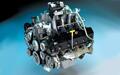
These Bosch CR pumps on the Ford are so simple in design, it's stupid, compared to older models that were mechanical Injector pumps. Now fueling is controlled electronically by a brain, crank sensors, cam sensors, needle lift sensors, piezos pressure sensors on the glow plugs, not mechanically.
Really, it is a pump, a high pressure one that makes up to 28,000 psi in the rail at full throttle applications, but most of the time, it runs around 10 to 14,000 psi. If it doesn't make enough pressure, either the pressure sensor on the pump, or the pressure sensor on the common rail near the bleed off valve shuts the Electronic control unit down, and the software says your fuel pressure is out of spec, kill the motor from running. As the pump starts grenading... with metal on metal contact and no lube film barrier, or rotation of the piston and cam follower in the bore, possibly getting 90 degrees out of alignment, metal bits go everywhere, including the pressure sensor on the HPFP, which has a very small trap screen built in to it. The trap screen gets overloaded with metal swarf and debris, clogs up, pressure drops, sensor then shuts the motor off for too low a fuel pressure. You can run an OBD II scan and see something like P0082, fuel pressure too low stored in the memory. As a matter of consideration, if your goes and stops running, everyone should have an OBD II reader to pull the code, and then look it up on the internet, what the code means. I am not sure, but with 2 rails on your motors, the code could be off by a number or, two, one code will direct you to the left bank, another code, one one digit higher or lower, with direct you to the other bank of the motor. If both rails have low pressure, well, look at the HPFP then.
Really, guys, it pays for you to educate yourselves on how these systems run... they are complex, and you need to know more than the dealership servicing your trucks, so you can tell when you are getting a snow job. I really feel bad for Ric on this, I've seen the same thing happen to owners of other CR Bosch CP4x systems, and it's like deja vu all over again.
So, lets see some pictures, less talk, more pictures. Anyone frequent truck boards where the guys actually tear in to these pumps and take pictures after warranty is denied?

Super Moderator
Joined: Aug 2003
Posts: 25,479
Likes: 742
From: Isanti, MN
Enlighten me as to the mechanical differences internally, on the working parts, the cams, the rollers, the followers, the plungers and the bores of plungers on the DMax motor and the 6.7 PS, perhaps with some pictures of the internal guts, because the CP4X pumps I've seen all have the same amount of teeth on them that the crankshaft does, they turn at the same speed as the crank, which is double the RPM's that the old VPS 37 and 44 systems did.
I do know that they are not identical. Furthermore I know that there are over 400,000 of these trucks on the road and some have been for almost a year and a half. And yet failure seems downright rare. By your own opinion these pumps should be failing every day, and yet they are not. If you do some google searching you will find Rick's story on no fewer than three message boards and little else. These pumps have NOT proven to be unreliable in these trucks yet. I'm not saying that they won't, but they certainly haven't been failing at 10-15,000 miles like you are implying.
And also,
Originally Posted by NinerBikes
Really, it is a pump, a high pressure one that makes up to 28,000 psi in the rail at full throttle applications, but most of the time, it runs around 10 to 14,000 psi.