


Formula 1
FTE Leadership Emeritus


Joined: Jan 2003
Posts: 161,999
Likes: 75
From: 3rd Rock

WOW what a great one...all the classics...all the famous passes and Senna at Suzuki.......sweet
FTE Leadership Emeritus
Joined: Jan 2003
Posts: 161,999
Likes: 75
From: 3rd Rock
Well crap on a cracker...I missed that prediction he signed with my team can get any better for me Fernando and Kimi.....YEEEHAAA
I am not sure Kimi would be tolerant with all the Vettel/Marko BS that happens at Red Bull.
I think Lotus have done a good job in giving him enough freedom for Kimi still to be Kimi, that I don't think he would get at Red Bull, not to mention, I think Lotus have given him a "good enough" car not to be swayed.
Ferrari are looking good this year - great to have Alonso in a car that wasn't entered in a soap box derby. Even Massa looks competitive!
It will be interesting if Mercedes can improve their race pace, in qualifying, they look as strong as the Red Bulls. Hamilton defiantly looks like he made the right move, Mercedes being quick isn't overly surprising, but McLaren being so slow is...
I think Lotus have done a good job in giving him enough freedom for Kimi still to be Kimi, that I don't think he would get at Red Bull, not to mention, I think Lotus have given him a "good enough" car not to be swayed.
Ferrari are looking good this year - great to have Alonso in a car that wasn't entered in a soap box derby. Even Massa looks competitive!
It will be interesting if Mercedes can improve their race pace, in qualifying, they look as strong as the Red Bulls. Hamilton defiantly looks like he made the right move, Mercedes being quick isn't overly surprising, but McLaren being so slow is...
Last edited by IB Tim; Jan 11, 2014 at 09:13 AM.

Elder User
Joined: Jun 2013
Posts: 712
Likes: 0
From: Booneville, Missouri
Hello and good morning Tim!
The 2014 will be very interesting with the return of the Turbo Engine.
Ferrari definitely knows how to build a Turbocharged Engine so it will most definitely help Alonso.
I concur that Red Bull have dominated the series but they also had the best car. Not taking away from Vettel but he is no Senna, Prost, Mansell or Piquet.
I do not feel that Red Bull will dominate any longer and this will be a true test of his capabilities.
Schumacher no doubt is a great driver but he always had the best car and he is rated #2 behind Senna regardless of the statistics.
Nonetheless, it will be a very interesting season.
Take care Tim.
Boon
The 2014 will be very interesting with the return of the Turbo Engine.
Ferrari definitely knows how to build a Turbocharged Engine so it will most definitely help Alonso.
I concur that Red Bull have dominated the series but they also had the best car. Not taking away from Vettel but he is no Senna, Prost, Mansell or Piquet.
I do not feel that Red Bull will dominate any longer and this will be a true test of his capabilities.
Schumacher no doubt is a great driver but he always had the best car and he is rated #2 behind Senna regardless of the statistics.
Nonetheless, it will be a very interesting season.
Take care Tim.
Boon
Fleet Owner
Joined: Sep 2005
Posts: 28,609
Likes: 18
From: Lake Tahoe, Nevada

I found the first half of '13 to be one of the best seasons ever. Of course when Vettel came on song and swept the second half, I was getting bored. How he managed to pull out 2,3 or four second on the first lap??? That is just having a much fast car, but having said that, mid race seeing much lesser cars closing on him it just makes no sense. I DO thing that Vettel is a phenom but we have a group of six or more drivers that I judge to be his equal in driving skills. But take Fernando or Kimmi, maybe others who perform better and better when the pressure is really on.
So what I am saying is, supposing the various teams bring our some great new hardware, we may be in for a truly historic season in 2014. So much talent in the field.
So what I am saying is, supposing the various teams bring our some great new hardware, we may be in for a truly historic season in 2014. So much talent in the field.
Elder User
Joined: Jun 2013
Posts: 712
Likes: 0
From: Booneville, Missouri
F1 Racing
Alright, what does AN and WDC mean? Oh I get it: Adrian Newey and World Driving Championship.
This will be one of the most exciting seasons in recent years because of the reintroduction of the Turbo. We know that Ferrari most always has a powerful Turbo so let us see what the others do.
I feel that this season will be the first real test for Vettel; is he one of the greats or did he just have the best car?
I am going with Alonso if he is with Ferrari.
Who do you guys like?
Take care and Godspeed!
Boon
P.S. I recall in 87 the 1.5L Honda Turbo put out 1100+ BHP in Qualifying Trim.
Elder User
Joined: Jun 2013
Posts: 712
Likes: 0
From: Booneville, Missouri
Senna Documentary
Hello again guys.
Have any of you seen the movie "Senna, the right to win"?
I have yet to see it but it did win the Sundance Award for documentaries.
Boon
Have any of you seen the movie "Senna, the right to win"?
I have yet to see it but it did win the Sundance Award for documentaries.
Boon
FTE Stories
Ford Trucks for Ford Truck Enthusiasts

Top 10 Fords at 2026 Carlisle Ford Nationals
Joe Kucinski
3 Best / 3 Worst Parts of Modern Ford Ownership
Brett Foote
10 Amazing Upgrades That Solve Common Ford Truck Owner Headaches
Pouria Savadkouei
Every 2026 Ford Engine Explained
Brett Foote
10 Ugly Ford Trucks That We Still Kinda Love
Joe Kucinski
10 Things Every Truck Owner NEEDS (2026 Edition)
Michael S. Palmer
Rezvani's Latest Post-Apocalyptic Monster Is a Ford F-150 Raptor Underneath
Verdad Gallardo
Top 10 Most Expensive Ford Trucks Ever Sold on Bring a Trailer
Joe Kucinski
2027 Ford Super Duty Buyer's Guide (Every Model, Engine, & Package)
Brett Foote
FTE Leadership Emeritus
Joined: Jan 2003
Posts: 161,999
Likes: 75
From: 3rd Rock
It sucks ....but
Adrian Newey admits Pirelli tyre change helped Red Bull in 2013
By Jonathan Noble and Matt Beer Saturday, December 28th 2013, 13:32 GMT
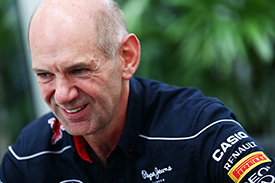
Red Bull technical chief Adrian Newey admits that the 2013 Formula 1 season fell into his team's hands after Pirelli's mid-season tyre change.
Despite Sebastian Vettel's eventual domination of the world championship, Newey felt the team was in a close fight until Pirelli returned to its 2012 tyre construction for the second half of the season.
"There was no guarantee that we were going to come out with a good car this year, and everyone has been chipping away at it," Newey told AUTOSPORT.
"It is the fifth season of this band of regulations - which is an ever-tightening band to work in.
"I think we saw at the start of the season it was very tight. Ferrari started off very strong and Mercedes came on very strongly, and certainly going into August we were feeling that this was going to be really tough.
"And then I think we made some small improvements to the car, Pirelli also had to go back to the 2012 tyres which seemed to suit the car better and it suddenly fell into our hands."
By Jonathan Noble and Matt Beer Saturday, December 28th 2013, 13:32 GMT
Red Bull technical chief Adrian Newey admits that the 2013 Formula 1 season fell into his team's hands after Pirelli's mid-season tyre change.
Despite Sebastian Vettel's eventual domination of the world championship, Newey felt the team was in a close fight until Pirelli returned to its 2012 tyre construction for the second half of the season.
"There was no guarantee that we were going to come out with a good car this year, and everyone has been chipping away at it," Newey told AUTOSPORT.
"It is the fifth season of this band of regulations - which is an ever-tightening band to work in.
"I think we saw at the start of the season it was very tight. Ferrari started off very strong and Mercedes came on very strongly, and certainly going into August we were feeling that this was going to be really tough.
"And then I think we made some small improvements to the car, Pirelli also had to go back to the 2012 tyres which seemed to suit the car better and it suddenly fell into our hands."
FTE Leadership Emeritus
Joined: Jan 2003
Posts: 161,999
Likes: 75
From: 3rd Rock
I will always pick my red team....I have been following them since 1964....a VERY long time....and not very many time I am happy 
Hello and good afternoon Tim.
Alright, what does AN and WDC mean? Oh I get it: Adrian Newey and World Driving Championship.
This will be one of the most exciting seasons in recent years because of the reintroduction of the Turbo. We know that Ferrari most always has a powerful Turbo so let us see what the others do.
I feel that this season will be the first real test for Vettel; is he one of the greats or did he just have the best car?
I am going with Alonso if he is with Ferrari.
Who do you guys like?
Take care and Godspeed!
Boon
P.S. I recall in 87 the 1.5L Honda Turbo put out 1100+ BHP in Qualifying Trim.
Alright, what does AN and WDC mean? Oh I get it: Adrian Newey and World Driving Championship.
This will be one of the most exciting seasons in recent years because of the reintroduction of the Turbo. We know that Ferrari most always has a powerful Turbo so let us see what the others do.
I feel that this season will be the first real test for Vettel; is he one of the greats or did he just have the best car?
I am going with Alonso if he is with Ferrari.
Who do you guys like?
Take care and Godspeed!
Boon
P.S. I recall in 87 the 1.5L Honda Turbo put out 1100+ BHP in Qualifying Trim.
Fleet Owner
Joined: Sep 2005
Posts: 28,609
Likes: 18
From: Lake Tahoe, Nevada
I think in '87 they were turning up 20,000 rpm. Anyone know what the new cars will be allowed? (BTW, I think it is stupid that there is a regulation for rpm. Let them go where angels fear to tread and take their chances.)
 ....30 seconds at a time and 160 HP
  .....so sweet
FTE Leadership Emeritus
Joined: Jan 2003
Posts: 161,999
Likes: 75
From: 3rd Rock
Unbelievable what they can achieve .....if the WORLD wants it to work on a vehicle....then give it to F1 and they will do it in 6 months
See bold below...imagine Ford or ANY auto maker making THAT happen
See bold below...imagine Ford or ANY auto maker making THAT happen
Energy Recovery Systems (ERS)
Long-time fans of Formula One racing will be familiar with the concept of a Kinetic Energy Recovery System (KERS), technology that was introduced to the sport in 2009 and was a mainstay from 2011. KERS worked by harnessing waste energy created under braking and transforming it into electrical energy, providing an additional 60kW (approximately 80bhp) of power for up to 6.67 seconds per lap.
The Energy Recovery Systems (ERS) which form an integral part of an F1 car’s power unit from 2014 take the concept of KERS to another level, combining twice the power with a performance effect around ten times greater.
ERS comprise two energy recovery systems (Motor Generator Unit - Kinetic [MGU-K] and Motor Generator Unit - Heat [MGU-H]), plus an Energy Store (ES) and control electronics.
The motor generator units convert mechanical and heat energy to electrical energy and vice versa. MGU-K works like an uprated version of KERS, converting kinetic energy generated under braking into electricity (rather than it escaping as heat). It also acts as a motor under acceleration, returning up to 120kW (approximately 160bhp) power to the drivetrain from the Energy Store.
MGU-H is an energy recovery system connected to the turbocharger of the engine and converts heat energy from exhaust gases into electrical energy. The energy can then be used to power the MGU-K (and thus the drivetrain) or be retained in the ES for subsequent use. Unlike the MGU-K which is limited to recovering 2MJ of energy per lap, the MGU-H is unlimited. MGU-H also controls the speed of the turbo, speeding it up (to prevent turbo lag) or slowing it down in place of a more traditional wastegate.
A maximum of 4MJ per lap can be returned to the MGU-K and from there to the drivetrain - that’s ten times more than with 2013’s KERS. That means drivers should have an additional 160bhp or so for approximately 33 seconds per lap.
Long-time fans of Formula One racing will be familiar with the concept of a Kinetic Energy Recovery System (KERS), technology that was introduced to the sport in 2009 and was a mainstay from 2011. KERS worked by harnessing waste energy created under braking and transforming it into electrical energy, providing an additional 60kW (approximately 80bhp) of power for up to 6.67 seconds per lap.
The Energy Recovery Systems (ERS) which form an integral part of an F1 car’s power unit from 2014 take the concept of KERS to another level, combining twice the power with a performance effect around ten times greater.
ERS comprise two energy recovery systems (Motor Generator Unit - Kinetic [MGU-K] and Motor Generator Unit - Heat [MGU-H]), plus an Energy Store (ES) and control electronics.
The motor generator units convert mechanical and heat energy to electrical energy and vice versa. MGU-K works like an uprated version of KERS, converting kinetic energy generated under braking into electricity (rather than it escaping as heat). It also acts as a motor under acceleration, returning up to 120kW (approximately 160bhp) power to the drivetrain from the Energy Store.
MGU-H is an energy recovery system connected to the turbocharger of the engine and converts heat energy from exhaust gases into electrical energy. The energy can then be used to power the MGU-K (and thus the drivetrain) or be retained in the ES for subsequent use. Unlike the MGU-K which is limited to recovering 2MJ of energy per lap, the MGU-H is unlimited. MGU-H also controls the speed of the turbo, speeding it up (to prevent turbo lag) or slowing it down in place of a more traditional wastegate.
A maximum of 4MJ per lap can be returned to the MGU-K and from there to the drivetrain - that’s ten times more than with 2013’s KERS. That means drivers should have an additional 160bhp or so for approximately 33 seconds per lap.
Last edited by IB Tim; Jan 12, 2014 at 05:23 PM.
Fleet Owner
Joined: Sep 2005
Posts: 28,609
Likes: 18
From: Lake Tahoe, Nevada
That is amazing!
"Unbelievable what they can achieve .....if the WORLD wants it to work on a vehicle....then give it to F1 and they will do it in 6 months"
I totally agree. The F! industry contains a treasure trove of brain power. They have amazed me time and time again that they could even keep up with the silly rules changing that goes on.
"Unbelievable what they can achieve .....if the WORLD wants it to work on a vehicle....then give it to F1 and they will do it in 6 months"
I totally agree. The F! industry contains a treasure trove of brain power. They have amazed me time and time again that they could even keep up with the silly rules changing that goes on.
FTE Leadership Emeritus
Joined: Jan 2003
Posts: 161,999
Likes: 75
From: 3rd Rock
Update on Michael s skiing accident
Gary Hartstein was Formula 1's official medical delegate from 2005-12. He has been following news of Michael Schumacher's head injury closely, and in this exclusive column for AUTOSPORT, he provides in-depth insight into the clinical situation at present.
Let's take a look at what's happened to Michael Schumacher, from his fall until roughly now. It goes without saying that this is based on what we've been told at the press conferences, viewed and interpreted through my eyes.
I will not speculate, but will rather read between the caring physicians' lines and put this into the context of the treatment of severely head-injured patients.
It's useful to think of the impact against the rock as having done two things: it essentially immediately created a series of severe lesions, and it set into motion processes that, left to themselves, would aggravate the damage already done.
What about the initial lesions? There were probably at least four types of injury produced by the fall.
The first is formation of haematomas. Torn and damaged blood vessels let blood escape in sufficient quantity to coalesce. They are dangerous both because they are markers of severe impact as well as because they cause the intracranial pressure (ICP) to rise.
Gary Hartstein © XPB
We've been told that Michael had a right-sided extradural haematoma (between the skull and the dura, a membrane surrounding the brain) that was evacuated surgically, and a series of intracerebral (within the brain tissue itself) haematomas. One of these, on the left, was evacuated during the week after the fall, but there are several others, located on the left, on the right and in the centre.
The second type of injury is contusions. These are bruises, just like when you bang your arm or leg. Tiny quantities of blood seep from the vessels, but not enough to collect. This gives that black-and-blue look. There's also swelling of course, which adds to the ICP increase caused by the haematomas.
Third is the possibility of damage to the long 'cables' in the brain. Injury to these axons is harder to see with modern imagery, but is often associated with poor neurological outcome.
Last, I have heard insistent stories of damage to one of the four arteries feeding the brain. Even if true, the significance of this is hard to assess, as most people have extensive connections between the four arteries, allowing flow through one to compensate for blockages in another.
What about the vicious circles I alluded to above? The most important revolves around the ICP. Increased ICP compresses the tiny blood vessels nourishing the brain.
The problem is, when the brain isn't receiving enough blood, what do you think it does? Right - it swells. This aggravates the already high ICP, and the already low blood flow.
Taking care of severely head-injured patients involves rigorous adherence to a few principles. Basically, the brain needs to consistently receive adequate amounts of oxygen and nutrients.
For this to happen, the air passages are maintained open and secure by a tube placed in the windpipe. Oxygenation and ventilation are provided by sophisticated ventilators, and adjusted to values as close to normal as possible. In order to ensure proper brain blood flow, it is urgent to control elevated ICP.
Ferrari fans pay tribute to Schumacher outside the hospital
The first step in controlling high ICP was done on the Sunday and Monday after Schumacher's accident. The surgically accessible haematomas were evacuated.
In addition, the bone flaps opened by the surgeon weren't closed, allowing the brain to physically swell a bit before the pressure rises.
It turns out that cooling the patient just a few degrees can help make sure that energy delivery is adequate. This is because cooling slows the brain's metabolism. That means that any given level of oxygen and nutrient delivery is more likely to be sufficient for the brain's needs. Hypothermia is also very effective against elevated ICP.
It's also important to understand what is meant by, and the role of, the 'medically-induced coma'.
I mentioned controlling the airway with a tube in the trachea, controlling breathing with a ventilator and reducing body temperature. Now, realistically you just can't do this to a patient, even a severely head-injured patient (especially not a head-injured patient!) without anaesthetising them. So all these patients are put to sleep.
This also helps ensure that the patient doesn't shiver during the period of hypothermia (usually 48-72 hours). If despite all the above the ICP stays elevated, the anaesthesia is deepened significantly. This aims at temporarily abolishing electric activity in the brain, in order that all available energy be used for vital cellular maintenance, not 'superfluous' activity.
The future? A long, long road. Months at least. Short term, the anaesthetic needs to be lightened when the ICP is normal and stable. That's the next big step.
Gary Hartstein was Formula 1's official medical delegate from 2005-12. He has been following news of Michael Schumacher's head injury closely, and in this exclusive column for AUTOSPORT, he provides in-depth insight into the clinical situation at present.
Let's take a look at what's happened to Michael Schumacher, from his fall until roughly now. It goes without saying that this is based on what we've been told at the press conferences, viewed and interpreted through my eyes.
I will not speculate, but will rather read between the caring physicians' lines and put this into the context of the treatment of severely head-injured patients.
It's useful to think of the impact against the rock as having done two things: it essentially immediately created a series of severe lesions, and it set into motion processes that, left to themselves, would aggravate the damage already done.
What about the initial lesions? There were probably at least four types of injury produced by the fall.
The first is formation of haematomas. Torn and damaged blood vessels let blood escape in sufficient quantity to coalesce. They are dangerous both because they are markers of severe impact as well as because they cause the intracranial pressure (ICP) to rise.
Gary Hartstein © XPB
We've been told that Michael had a right-sided extradural haematoma (between the skull and the dura, a membrane surrounding the brain) that was evacuated surgically, and a series of intracerebral (within the brain tissue itself) haematomas. One of these, on the left, was evacuated during the week after the fall, but there are several others, located on the left, on the right and in the centre.
The second type of injury is contusions. These are bruises, just like when you bang your arm or leg. Tiny quantities of blood seep from the vessels, but not enough to collect. This gives that black-and-blue look. There's also swelling of course, which adds to the ICP increase caused by the haematomas.
Third is the possibility of damage to the long 'cables' in the brain. Injury to these axons is harder to see with modern imagery, but is often associated with poor neurological outcome.
Last, I have heard insistent stories of damage to one of the four arteries feeding the brain. Even if true, the significance of this is hard to assess, as most people have extensive connections between the four arteries, allowing flow through one to compensate for blockages in another.
What about the vicious circles I alluded to above? The most important revolves around the ICP. Increased ICP compresses the tiny blood vessels nourishing the brain.
The problem is, when the brain isn't receiving enough blood, what do you think it does? Right - it swells. This aggravates the already high ICP, and the already low blood flow.
Taking care of severely head-injured patients involves rigorous adherence to a few principles. Basically, the brain needs to consistently receive adequate amounts of oxygen and nutrients.
For this to happen, the air passages are maintained open and secure by a tube placed in the windpipe. Oxygenation and ventilation are provided by sophisticated ventilators, and adjusted to values as close to normal as possible. In order to ensure proper brain blood flow, it is urgent to control elevated ICP.
Ferrari fans pay tribute to Schumacher outside the hospital
The first step in controlling high ICP was done on the Sunday and Monday after Schumacher's accident. The surgically accessible haematomas were evacuated.
In addition, the bone flaps opened by the surgeon weren't closed, allowing the brain to physically swell a bit before the pressure rises.
It turns out that cooling the patient just a few degrees can help make sure that energy delivery is adequate. This is because cooling slows the brain's metabolism. That means that any given level of oxygen and nutrient delivery is more likely to be sufficient for the brain's needs. Hypothermia is also very effective against elevated ICP.
It's also important to understand what is meant by, and the role of, the 'medically-induced coma'.
I mentioned controlling the airway with a tube in the trachea, controlling breathing with a ventilator and reducing body temperature. Now, realistically you just can't do this to a patient, even a severely head-injured patient (especially not a head-injured patient!) without anaesthetising them. So all these patients are put to sleep.
This also helps ensure that the patient doesn't shiver during the period of hypothermia (usually 48-72 hours). If despite all the above the ICP stays elevated, the anaesthesia is deepened significantly. This aims at temporarily abolishing electric activity in the brain, in order that all available energy be used for vital cellular maintenance, not 'superfluous' activity.
The future? A long, long road. Months at least. Short term, the anaesthetic needs to be lightened when the ICP is normal and stable. That's the next big step.