January 2025 all topic thread

Lead Driver


Joined: Sep 2012
Posts: 7,830
Likes: 96
From: Manteca,Ca
Lead Driver
Joined: Sep 2012
Posts: 7,830
Likes: 96
From: Manteca,Ca
 , but it rains and something I’ve never had to experience is Moss grows everywhere , the roof pitch is steeper for snow so getting up there is more challenging to dump moss b gone , i spray it off a 8’ ladder, lots of deer in the yard and sometimes a bear will stroll through , I think the mountain lion and bobcats are too busy down the way with goats and chickens.
Logistics Pro


Joined: Oct 2007
Posts: 4,865
Likes: 497
I agree with free range being a better product.
Mass produced, corporate food, from large producers with government subsidies is what most Americans buy. Pricing and availability. It's usually the lowest cost, and it's readily available at supermarkets and big box stores.
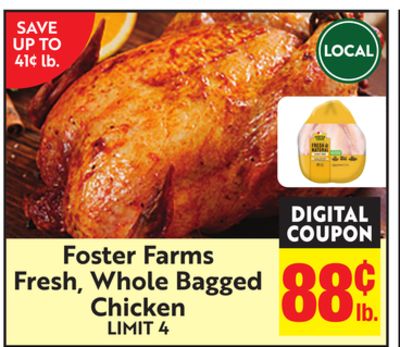

For more years than I have been alive, the government has had farm bills. Not so simple to say Republicans this, or Democrats that. I don't know how "red" or "blue" a farm bill has to be. I know that I can buy a chicken for $0.88 per lb from Lucky Stores, and $0.99 per lb from Smart & Final, this week. They say it's local. Foster Farms from Modesto, California. Foster Farms took over the operation of "local" competitor Zacky Farms in Fresno, California.
Foster Farms is a big corporation. Not a small local chicken rancher. Foster Farms is big enough to put small chicken ranchers under their thumb, or drive them out of business completely. Who are the small chicken farmers? Where do they sell their chicken? Do they simply raise however many chickens, then sell them to Foster Farms? Are they contracted to produce chickens for Foster Farms? If Foster Farms chickens are sold for $1 a pound retail, what does Foster Farms pay the chicken rancher?
I was in Petaluma, California not long ago. Petaluma is known for Petaluma Poultry. If you drive around, you see the signs in front of the farms. I stopped at a farm with a little farm store, hoping to get a fresh local bird. The people in the store, at the chicken ranch, only sold frozen birds. Supposedly, all of their chickens are processed as packaged and frozen for distribution. No fresh chicken for sale. They offered a "sale" price of $5 per pound. My dreams of a farm fresh hen were immediately dashed.
I get it, that there is a bird flu which destroyed egg laying hens. That's why the price of eggs is so high. Funny how that bird flu didn't affect the price of food chickens, which still sell for $0.99 per pound. There has to be some deeper politics in regards to egg prices. Maybe a political conspiracy. Like the Chicken Tax 25% tariff on light trucks from The Johnson Administration.
Thread Starter
|
FTE Chapter Leader


Joined: Nov 2006
Posts: 21,084
Likes: 245
From: Fresno, CA.

The only two places I shop for food are Walmart and Winco. Every now and then I will get something from the local Dollar Tree stores. I noticed recently that some items there are a penny or two more expensive than Walmart, so I just save time and go to Walmart. Nothing at the Dollar tree stores are a dollar anymore. Everything is $1.25 and up. Mostly up. The only thing I have seen cheaper is their generic laundry soap. They also have smaller sizes than Walmart or Winco.
Jim
Jim
Lead Driver
Joined: Sep 2012
Posts: 7,830
Likes: 96
From: Manteca,Ca
Were all regulated from corporate America , back when grampa could sell pickles either on the side of the road or go store to store , USDA stopped all that which hurt the little guy , small farmers/ ranchers try to compete with other small ranchers , corporations in large scale can produce a week old bird in the market, small ranchers can collect a kill list then produce fresh, that’s what I did with my beef and pork other wise I would need to freeze all of what I butchered, when you buy from the little guy your supporting a farmer and generations of way of life , when you buy from foster farms your supporting a union of corporate and chicken that’s caged , feed supply companies have raised prices so high it’s really not worth it for the small guy unless they can free range , another reason to support the small guy .
Logistics Pro
Joined: Oct 2007
Posts: 4,865
Likes: 497
The food industry is corporate. The corporations have lobbyists to influence political policies. Congress passes farm bills, and that money doesn't trickle down to the small farmer. Farmland itself is being bought up by farmland REITs, which are corporations that don't even pay taxes......
It's idealistic to support small businesses. Not just farmers. But there are missing pieces to the puzzle.
In The City, even a small produce stand or local butcher is getting deliveries from large suppliers. If a small farmer can't even produce enough cattle, pork, chicken, etc..... to meet the demand in just one local market, and be able to consistently fill orders at a competitive price......
How is the end user supposed to support the small farmer? In major metropolitan areas, where people have higher income, they are willing to spend more money on quality. I want a steak, locally raised, and better than Costco - but there's nowhere to buy it. Even small neighborhood butcher shops sell the same corporate meat from IBP Tyson. The same meat that I can buy from a supermarket. I am not driving 2 hours to a farm, then driving 2 hours back home.
Small farmers face a challenge in marketing. No reliable distribution for their product. The small farmer isn't going to start his own delivery to supply my local market. There's no middle man who will go to all of the small farms, pickup product, and then run a delivery route out to The City.
It's idealistic to support small businesses. Not just farmers. But there are missing pieces to the puzzle.
In The City, even a small produce stand or local butcher is getting deliveries from large suppliers. If a small farmer can't even produce enough cattle, pork, chicken, etc..... to meet the demand in just one local market, and be able to consistently fill orders at a competitive price......
How is the end user supposed to support the small farmer? In major metropolitan areas, where people have higher income, they are willing to spend more money on quality. I want a steak, locally raised, and better than Costco - but there's nowhere to buy it. Even small neighborhood butcher shops sell the same corporate meat from IBP Tyson. The same meat that I can buy from a supermarket. I am not driving 2 hours to a farm, then driving 2 hours back home.
Small farmers face a challenge in marketing. No reliable distribution for their product. The small farmer isn't going to start his own delivery to supply my local market. There's no middle man who will go to all of the small farms, pickup product, and then run a delivery route out to The City.
Were all regulated from corporate America , back when grampa could sell pickles either on the side of the road or go store to store , USDA stopped all that which hurt the little guy , small farmers/ ranchers try to compete with other small ranchers , corporations in large scale can produce a week old bird in the market, small ranchers can collect a kill list then produce fresh, that’s what I did with my beef and pork other wise I would need to freeze all of what I butchered, when you buy from the little guy your supporting a farmer and generations of way of life , when you buy from foster farms your supporting a union of corporate and chicken that’s caged , feed supply companies have raised prices so high it’s really not worth it for the small guy unless they can free range , another reason to support the small guy .
FTE Stories
Ford Trucks for Ford Truck Enthusiasts

Rezvani's Latest Post-Apocalytic Monster Is a Ford F-150 Raptor Underneath
Verdad Gallardo
Top 10 Most Expensive Ford Trucks Ever Sold on Bring a Trailer
Joe Kucinski
2027 Ford Super Duty Buyer's Guide (Every Model, Engine, & Package)
Brett Foote
Top 10 Ford Truck Tragedies
Joe Kucinski
AEV FXL Super Duty - the Super Duty Raptor Ford Doesn't Make
Brett Foote
Lobo Vs Lobo: Proof the F-150 Lobo Should Be Even Lower!
Michael S. Palmer
Ford's 2001 Explorer Sportsman Concept Looks For a New Home
Verdad Gallardo
10 Best Ford Truck Engines We Miss the Most!
Joe Kucinski
2026 Shelby F-150 Off-Road: Better Than a Raptor R?
Brett Foote
Lead Driver
Joined: Sep 2012
Posts: 7,830
Likes: 96
From: Manteca,Ca
Jim, Fresno was or use to be farm land , out skirts of that large city are ranchers being built around by track homes .
Rob that’s the problem with little guy , not enough to keep stores or restaurants with full orders , they want the better cuts , but the little guy just wants to sell 1/4 , 1/2 or whole , they get the innards too , heart , liver , oxtails , etc , I made my own customer base program , with reoccurring customers on my products, individual buyers looking to fill their freezers , so far so good .
we have right now beef for sale , if your looking .
Rob that’s the problem with little guy , not enough to keep stores or restaurants with full orders , they want the better cuts , but the little guy just wants to sell 1/4 , 1/2 or whole , they get the innards too , heart , liver , oxtails , etc , I made my own customer base program , with reoccurring customers on my products, individual buyers looking to fill their freezers , so far so good .
we have right now beef for sale , if your looking .
Logistics Pro
Joined: Oct 2007
Posts: 4,865
Likes: 497
The little guys need to ban together to form a cooperative of sorts. If 1 small farmer cannot produce the volume to fill even one order; maybe 5, 10, or 25 small guys could band together. Standardize your production and share marketing. Make contacts with the high end steak houses. Most of those are independent restaurants with only 1 or 2 locations. Places like House of Prime Rib. Then follow that up with selling other cuts to smaller restaurants and butchers. In ethnic neighborhoods, you could easily sell the livers, hearts, and anything that could be ground beef and sausage. Huge demand for things like tripe, ox tail, and cheek meat...... my local Costco always sells out. 5 small farmers may be able to run one slaughterhouse, and a small front office to do sales. And with a coop, you can even share labor and equipment. It's not reinventing the wheel.

Thread Starter
|
FTE Chapter Leader
Joined: Nov 2006
Posts: 21,084
Likes: 245
From: Fresno, CA.
48 degrees here in the armpit of California. No plans today. no football to watch. Supposed to rain this evening, and early morning. Won't affect me as I don't plan on being outside at those times.
Jim
Jim