


learning wheel alignment

Thread Starter
|
4wd Low
Joined: Apr 2014
Posts: 11
Likes: 3
learning wheel alignment
hello,
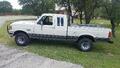
i have a 1996 f250 7.5L A4OD two-tone extended cab & extended bed. I'm looking to do a wheel alignment on this truck.
since the truck has been out in the aleutian islands (about 2020), its never had an alignment. there are service stations, but none of them have an alignment machine.
I've read a few posts regarding why people would want to do their own alignment when a shop charges a very reasonable price. i hope I've conviced you that I'd be an exception to this rule.
i have access to a level concrete floor and i have tools. because there is very little in the way of doing your own wheel alignment, any guidence would be immensely helpful.
thank you
i have a 1996 f250 7.5L A4OD two-tone extended cab & extended bed. I'm looking to do a wheel alignment on this truck.
since the truck has been out in the aleutian islands (about 2020), its never had an alignment. there are service stations, but none of them have an alignment machine.
I've read a few posts regarding why people would want to do their own alignment when a shop charges a very reasonable price. i hope I've conviced you that I'd be an exception to this rule.
i have access to a level concrete floor and i have tools. because there is very little in the way of doing your own wheel alignment, any guidence would be immensely helpful.
thank you

New User
Joined: Sep 2021
Posts: 2
Likes: 2
I've had good results setting the toe on my 1989 4x4 with a tape measure. I choose my measuring points on the tires carefully, making sure they're repeatable as I compare front and back numbers. Maybe I've just been lucky using this method in the past, but I have even tread wear.
Yeah, this is my first post. Been reading great info here for years, but thought it was time to give something back. I hope this qualifies.
Yeah, this is my first post. Been reading great info here for years, but thought it was time to give something back. I hope this qualifies.

Cargo Master


Joined: Mar 2010
Posts: 3,331
Likes: 292
From: Laramie, WY
Setting the toe with a tape measure works well with me as well.
If you're looking to do a full front end alignment, this may help. First, with the toe set to ~1/8" toe-in, I use an app on my phone for an angle finder, and dial in camber that way. After making a camber adjustment, reset toe to 1/8" toe-in & recheck camber. Note: only check camber and toe after rolling the truck forward a good distance, gently stopping. If you're a heavy guy, not a bad idea to put your body weight in the driver seat while you measure camber & toe. Once I have toe set to about 1/8" toe-in and 0 degree camber, I pay attention to if the truck pulls to one side on an average crowned road. If it pulls to the right, lay the right wheel caster back a 1/2 degree more (then reset toe) and try again. I usually end up with 1/4 degree more caster angle on the right side to account for road crown, but I often don't actually know what my caster angles are.
If you're looking to do a full front end alignment, this may help. First, with the toe set to ~1/8" toe-in, I use an app on my phone for an angle finder, and dial in camber that way. After making a camber adjustment, reset toe to 1/8" toe-in & recheck camber. Note: only check camber and toe after rolling the truck forward a good distance, gently stopping. If you're a heavy guy, not a bad idea to put your body weight in the driver seat while you measure camber & toe. Once I have toe set to about 1/8" toe-in and 0 degree camber, I pay attention to if the truck pulls to one side on an average crowned road. If it pulls to the right, lay the right wheel caster back a 1/2 degree more (then reset toe) and try again. I usually end up with 1/4 degree more caster angle on the right side to account for road crown, but I often don't actually know what my caster angles are.

Logistics Pro


Joined: Aug 2014
Posts: 3,558
Likes: 852

Tuned
Joined: Jan 2018
Posts: 414
Likes: 42
From: State of Confusion
The way I do toe alignments involves a couple pieces of angle iron and jackstands. Put the angle iron on the jackstands and push it against the wheels, making sure it's tight up against the sidewalls (not held at a weird angle by sidewall tread or lettering) and not up against the edges of the stands. Measure in front of the wheels, measure forward the diameter of the wheels, measure again. I find this much easier than measuring behind the wheels, mainly because there isn't a truck in the way. Write down how much it's out each time and how much you turn the adjusters. If the wheel is straight to begin with, adjust both sides the same amount each time; if not, adjust one side more than the other and you can work on the toe and the wheel centering at the same time. When you think it's done, take it for a drive and then check it again, especially if you didn't use the greased plates. I'm usually in and out of the garage several times before I'm happy with it.
The first time I tried doing an alignment, I measured between the tread grooves, and discovered after much frustration that the tread on my Michelins wasn't quite straight. Spin the wheel and the groove I was using wandered back and forth, which explained why I had been chasing the alignment all over the place.
Unless your truck has been in an accident, you've replaced front end parts, or something has worn out, you shouldn't have to do much. If it's out by more than you like, note where it started and make small adjustments until it's where you want it. The spray paint tip from wwhite's link is a good one if you have that style of alignment adjuster. Also works great on torsion bar adjusters.
The first time I tried doing an alignment, I measured between the tread grooves, and discovered after much frustration that the tread on my Michelins wasn't quite straight. Spin the wheel and the groove I was using wandered back and forth, which explained why I had been chasing the alignment all over the place.
Unless your truck has been in an accident, you've replaced front end parts, or something has worn out, you shouldn't have to do much. If it's out by more than you like, note where it started and make small adjustments until it's where you want it. The spray paint tip from wwhite's link is a good one if you have that style of alignment adjuster. Also works great on torsion bar adjusters.
Trending Topics
Thread Starter
|
4wd Low
Joined: Apr 2014
Posts: 11
Likes: 3
I'll be replacing all the suspension parts in the next few months. it has a dana50 front end if that makes a difference
FTE Stories
Ford Trucks for Ford Truck Enthusiasts

10 Things Every Truck Owner NEEDS (2026 Edition)
Michael S. Palmer
Rezvani's Latest Post-Apocalyptic Monster Is a Ford F-150 Raptor Underneath
Verdad Gallardo
Top 10 Most Expensive Ford Trucks Ever Sold on Bring a Trailer
Joe Kucinski
2027 Ford Super Duty Buyer's Guide (Every Model, Engine, & Package)
Brett Foote
Top 10 Ford Truck Tragedies
Joe Kucinski
AEV FXL Super Duty - the Super Duty Raptor Ford Doesn't Make
Brett Foote
Lobo Vs Lobo: Proof the F-150 Lobo Should Be Even Lower!
Michael S. Palmer
Ford's 2001 Explorer Sportsman Concept Looks For a New Home
Verdad Gallardo
10 Best Ford Truck Engines We Miss the Most!
Joe Kucinski
Senior User
Joined: Jul 2018
Posts: 229
Likes: 32
From: New York
I put the steering wheel straight then I use a 4ft level across the topside of the tires horizontally in-line with the raised strip on the front bumper and also a tape measure using the front bumper as a referrence point to adjust my frontend....Works great for me and havent been to an alignment shop in over 25 years.
Mine adjusts perfect when theres 2" of gap between the front bumper and the 4ft level.
For the camber adjustment I bought a cheap magnetic camber gauge with bubble gauge off of ebay which works great too.Before that I used a magnetic torpedo level.......heres a link
https://www.ebay.com/itm/38371363560...Cclp%3A2334524
I bought these to complete the task..
https://www.ebay.com/itm/28441559001...EAAOSwrAJhHcsj
Mine adjusts perfect when theres 2" of gap between the front bumper and the 4ft level.
For the camber adjustment I bought a cheap magnetic camber gauge with bubble gauge off of ebay which works great too.Before that I used a magnetic torpedo level.......heres a link
https://www.ebay.com/itm/38371363560...Cclp%3A2334524
I bought these to complete the task..
https://www.ebay.com/itm/28441559001...EAAOSwrAJhHcsj
Lead Driver

Joined: Feb 2002
Posts: 7,961
Likes: 594
From: Greater Austin, Texas

Set toe as mentioned using a tape measure. You can set camber using a level across the face of the tire. Don't worry about caster - caster does not wear your tires.
If you are done and it pulls to one side or another, *then* we can talk about caster.
If you are done and it pulls to one side or another, *then* we can talk about caster.


Thread
Thread Starter
Forum
Replies
Last Post