



Check Engine Light- constant on

It's a Van Gogh


Joined: Feb 2010
Posts: 7,819
Likes: 1,336
From: Elk Grove, CA

Any chance it's a Canadian Excursion?
Fleet Mechanic
Joined: Aug 2006
Posts: 1,465
Likes: 17
From: Jacksonville, FL
I haven't read all the thread, so forgive me if I ask a question that has been asked previously, but is there any way the original GPCM failed or was damaged and they just put a GPR in as it was a cheaper, easier fix? Especially as the DTC wasn't an issue at the time given the state the truck was originally registered in following the repair / rebuild?
I don't know anything about this system, so forgive me if the above isn't even a remote possibility!
I don't know anything about this system, so forgive me if the above isn't even a remote possibility!

Elder User
Joined: Sep 2011
Posts: 979
Likes: 4
From: Vancouver
I guess an obvious question is: Are there wires in the wiring harness to even connect to a GPCM on this vehicle? The relay only requires (besides main battery power source and wiring for the glow plugs) a +12 volt control power and ground control wire (from the PCM). The GPCM is more complicated and requires more wiring to monitor the glow plugs and to communicate with the PCM.
There is piece missing from this puzzle! It would be great to find out that the puzzle could actually be solved.
Larry
There is piece missing from this puzzle! It would be great to find out that the puzzle could actually be solved.
Larry

Thread Starter
|
Mountain Pass
Joined: Jun 2007
Posts: 103
Likes: 5
From: Anaheim
AAWLBERNINF350- No. According to the VIN this Excursion rolled off the line in 1999 in the USA.
VIN 1FMSU43FXYEA99974
RICKSTER- Yes, that question has been debated and eliminated as a possibility. See late July early August if interested.
Larry- No there are no additional wires that would indicate a different kind of harness. And I agree, it is a conundrum! A very frustrating one!
VIN 1FMSU43FXYEA99974
RICKSTER- Yes, that question has been debated and eliminated as a possibility. See late July early August if interested.
Larry- No there are no additional wires that would indicate a different kind of harness. And I agree, it is a conundrum! A very frustrating one!
Hotshot


Joined: Dec 2005
Posts: 10,257
Likes: 7,696
From: Chino Valley, Arizona
here is a quick read on gpr on excursions
https://www.ford-trucks.com/forums/1...ted-equal.html
this is an early build 2 owner 2000 excursion with 89,000 miles on it
https://www.ford-trucks.com/forums/1...ted-equal.html
this is an early build 2 owner 2000 excursion with 89,000 miles on it
It's a Van Gogh
Joined: Feb 2010
Posts: 7,819
Likes: 1,336
From: Elk Grove, CA
Apparently we have two early production Excursions with GPRs. As Stewart said, unicorns! Fun to see something rare.
So if the OPs Ex is throwing GPCM codes it stands to reason it's not the original PCM.
Got the PCM code? Or PCM family number?
So if the OPs Ex is throwing GPCM codes it stands to reason it's not the original PCM.
Got the PCM code? Or PCM family number?

Super Moderator

Joined: May 2004
Posts: 29,380
Likes: 118
From: Central Coast of CA
here is a quick read on gpr on excursions
https://www.ford-trucks.com/forums/1...ted-equal.html
this is an early build 2 owner 2000 excursion with 89,000 miles on it
https://www.ford-trucks.com/forums/1...ted-equal.html
this is an early build 2 owner 2000 excursion with 89,000 miles on it
The following quote is from that thread above, posted here now for further info:
Early 2000 model Excursions utilized a glow plug relay with a shunt on it. The PCM is able to monitor both banks of glow plugs through that. The PCM for these Excursions is a DPC-432. It is the same PCM used in most California model 1999 trucks.
Late 2000 through 2003 models utilized the glow plug control module (GPCM). This device replaced the relay and shunt, but served the same purpose. The PCM used in the 2000-2001 models is a DPC-452, and the PCM used in 2002-2003 models is a DPC-492. These are the same PCM's used in the California model trucks of the same years. Really the only difference in the programming is the addition of PATS to the Excursion's.
Late 2000 through 2003 models utilized the glow plug control module (GPCM). This device replaced the relay and shunt, but served the same purpose. The PCM used in the 2000-2001 models is a DPC-452, and the PCM used in 2002-2003 models is a DPC-492. These are the same PCM's used in the California model trucks of the same years. Really the only difference in the programming is the addition of PATS to the Excursion's.
Gotta try and see if this can be sussed out completely to get good numbers on when Ford stopped using the DPC-432 PCM.
Stewart
FTE Stories
Ford Trucks for Ford Truck Enthusiasts

3 Best / Worst Features Of The 2025+ Ford Expedition
Brett Foote
10 Ways Ford is LOSING to the Competition
Joe Kucinski
Top 6 Best Deals Available on New Fords & Lincolns Right Now
Brett Foote
This Hennessey Takes the Expedition Tremor's Off-Roading Capability to the Next Level
Verdad Gallardo
Top 10 Fords at 2026 Carlisle Ford Nationals
Joe Kucinski
3 Best / 3 Worst Parts of Modern Ford Ownership
Brett Foote
10 Amazing Upgrades That Solve Common Ford Truck Owner Headaches
Pouria Savadkouei
Every 2026 Ford Engine Explained
Brett Foote
10 Ugly Ford Trucks That We Still Kinda Love
Joe Kucinski
Thread Starter
|
Mountain Pass
Joined: Jun 2007
Posts: 103
Likes: 5
From: Anaheim
What's interesting is our mechanic found a chip on the PCM he could not identify and now I remember that since I bought this Ex I have had a few mechanics comment on the chip and none of them have been able to determine who made the chip or whether it is programmed correctly or even whether it is suitable for this Excursion (ie:GPR, PCM DPC-432, etc.) So the previous owner or the guy that restored it may have put the chip in thinking it would improve performance and maybe it just caused the disconnect between the PCM and the GPR??? He is going to remove it and see if it clears up the communication breakdown.
But yes Stewart, I'm glad someone finally convinced you that my Ex has always had a GPR!
But yes Stewart, I'm glad someone finally convinced you that my Ex has always had a GPR!
Super Moderator
Joined: May 2004
Posts: 29,380
Likes: 118
From: Central Coast of CA
 The added information provided by Justin basically backs up the conclusion that was slowly being arrived at, and only confirms the logical conclusion, that being, we have Unicorns!!
Now it's all about getting as much proper information discovered regarding when the switch was made, so it can be disseminated on the forum.
Stewart
Super Moderator
Joined: May 2004
Posts: 29,380
Likes: 118
From: Central Coast of CA
I bring this post from August back to the top to remind you about the bridge on the GPR that California GPR's for 7.3's use that is missing in your picture.
This would be an easy, cheap fix to replace the bridge.
Stewart
PS - I use the term "bridge" but I have no clue if that's correct. Justin refers to the same metal piece in the quoted post above, but he calls it a shunt. Just for clarification, we mean the same piece.
I was referring to the bridge on the GPR.
Before Ford started using the GPCM, the Cali emissions prepped E99 trucks (E = "Early") came with GPR's that had a bridge on them, like was referred to earlier in this thread.
Pete (we have several Pete's, the one I'm referring to goes by @duck fan here) was telling me about an E99 truck he was working on that belongs to Andy (aka Fat Diesel) and he had a similar problem, if not the same problem (foggy memory, sorry) and it came down to the bridge on the GPR not being there for Andy's California truck.
Do like Pik stated and replace the bridge that he identified as missing when referencing one of the pictures you posted.
Stewart
PS - Whether your Ex came off the line that way, or someone changed it, there is a way to fix it. I'm thinking based on the info you've posted, treat your rig like an E99 F250 with a California emissions prep, and get it back to that standard to see if it fixes the DTC.
Before Ford started using the GPCM, the Cali emissions prepped E99 trucks (E = "Early") came with GPR's that had a bridge on them, like was referred to earlier in this thread.
Pete (we have several Pete's, the one I'm referring to goes by @duck fan here) was telling me about an E99 truck he was working on that belongs to Andy (aka Fat Diesel) and he had a similar problem, if not the same problem (foggy memory, sorry) and it came down to the bridge on the GPR not being there for Andy's California truck.
Do like Pik stated and replace the bridge that he identified as missing when referencing one of the pictures you posted.
Stewart
PS - Whether your Ex came off the line that way, or someone changed it, there is a way to fix it. I'm thinking based on the info you've posted, treat your rig like an E99 F250 with a California emissions prep, and get it back to that standard to see if it fixes the DTC.
Stewart
PS - I use the term "bridge" but I have no clue if that's correct. Justin refers to the same metal piece in the quoted post above, but he calls it a shunt. Just for clarification, we mean the same piece.
Last edited by Stewart_H; Nov 3, 2016 at 01:31 PM.
Thread Starter
|
Mountain Pass
Joined: Jun 2007
Posts: 103
Likes: 5
From: Anaheim
Oh, ok got it. I will mention it to the mechanic, but he seems to be really on it regarding this excursion. Most of the time if we mention something like shunt or harness or 42 pin thingy he has already looked into it and ruled it out. He's pretty darned sharp. Not fast, but sharp.
Super Moderator
Joined: May 2004
Posts: 29,380
Likes: 118
From: Central Coast of CA
Oh, ok got it. I will mention it to the mechanic, but he seems to be really on it regarding this excursion. Most of the time if we mention something like shunt or harness or 42 pin thingy he has already looked into it and ruled it out. He's pretty darned sharp. Not fast, but sharp.
If I have been able to find the correct pictures and schematics, this is the shunted GPR you should have. (Photo and info courtesy of Bob aka Guzzle Welcome to guzzle's White-Rodgers (Stancor) GPR replacement Mod Web Page )
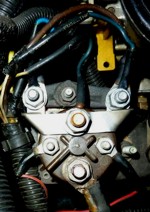
"NOTE FOR TRUCKS WITH A GPR SHUNT:
It is possible to replace the factory GPR on trucks with the shunt on the outlet power terminal. It will be necessary to bend the outer terminals of the shunt to fit the larger White-Rodgers relay but it will not damage the shunt to do this.
WIRING:
If you remove the wiring on the shunt, make sure that you wire the shunt back up properly.
There are three smaller blue wires going to the shunt. One of the blue wires is connected to a fusable link and then to a white/green trace wire. This wire must be connected to the large center post (relay outlet) where the shunt connects to the GPR.
The larger brown GP wire and the blue wire that is connected to a fusable liknk and then to a white/purple trace is connected to one side of the shunt.
The remaining blue wire and Yellow GP wire is connected to the other side of the shunt. It does not matter which side is connected to the shunt as long as you match the correct blue wire with the GP wire."
It is possible to replace the factory GPR on trucks with the shunt on the outlet power terminal. It will be necessary to bend the outer terminals of the shunt to fit the larger White-Rodgers relay but it will not damage the shunt to do this.
WIRING:
If you remove the wiring on the shunt, make sure that you wire the shunt back up properly.
There are three smaller blue wires going to the shunt. One of the blue wires is connected to a fusable link and then to a white/green trace wire. This wire must be connected to the large center post (relay outlet) where the shunt connects to the GPR.
The larger brown GP wire and the blue wire that is connected to a fusable liknk and then to a white/purple trace is connected to one side of the shunt.
The remaining blue wire and Yellow GP wire is connected to the other side of the shunt. It does not matter which side is connected to the shunt as long as you match the correct blue wire with the GP wire."

DTC Description
P0380 = Glow plug circuit malfunction
P1391 = 4 Glow plugs open right bank
P1392 = Glow plug circuit high input bank No. 1 (right)
P1393 = 4 Glow plugs open left bank
P1394 = Glow plug circuit high input bank No. 2 (left)
P1395 = 1 to 3 Glow plugs open right bank
P1396 = 1 to 3 Glow plugs open left bank
P1397 = System voltage out of self test range
Stewart
Last edited by Stewart_H; Nov 3, 2016 at 02:28 PM.
Super Moderator
Joined: May 2004
Posts: 29,380
Likes: 118
From: Central Coast of CA


Stewart

Super Moderator


Joined: Dec 2011
Posts: 13,361
Likes: 6,152
There are two emissions certification calibrations for the first model year (2000) of the 7.3L Excursion. Since the PCM exercises logic over the GPCM, it stands to reason that a revised calibration would be needed once the GPCM was brought into production.
First (earlier) version:
Catch Code # ZYS5
Calibration # 0-L11-9Y0-B07
Processor & Calibration (PCM) Engineering # YC3F-12A650-ARF
Processor & Calibration (PCM) Service Part # YC3Z-12A650-ARF
Second (later) version:
Catch Code # AXD0
Calibration # 0-L11-9Y0-B10
Processor & Calibration (PCM) Engineering # YC3F-12A650-AVA
Processor & Calibration (PCM) Service Part # YC3Z-12A650-AVB
BOTH of the above calibration labels state:
"This vehicle conforms to California regulations applicable to 2000 model year new LEV medium duty vehicles with diesel engines for sale in California, and with US EPA regulations HSC 39037.05 Low Emission Motor Vehicle. OBDII Certified."
Now, some 17 years later, it is somewhat ironic to be reminded that when this multipurpose medium duty vehicle was introduced, the media crucified it brutally, branding it as the so called "Exxon Excursion"... when in actual fact it was certified as a "Low Emissions Vehicle", not only by EPA standards, but by the far more stringent state of California no less.
Source: Ford Technical Support Operations, Ford Customer Service Division, 2000 Car & Truck Engine/Emissions Fact Book, Publication Date October, 2000.
Yes, an actual book. NOT the internet.