


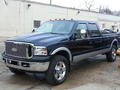

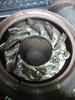


Why a coolant filter can damage your engine?

Hotshot


Joined: Dec 2003
Posts: 15,368
Likes: 121
From: Stuttgart, Ar

You also don't hear claims about oil filters removing the additive packages from oil either.

Lead Driver

Joined: Oct 2010
Posts: 5,420
Likes: 16
From: Ouray, CO
I'm confused by that. It says that the coolant filter has removed the silicates that have fallen out of suspension due to not maintaining the coolant properly. So they're saying that you WANT a silicate coolant? Silicate is sand. Sand is what's been clogging up the oil coolers. It doesn't make sense to me as to why almost all of the long-life coolants these days are silicate free when this person says you need the silicates? Totally lost here. Also, this is the first time I've EVER heard of anyone saying a coolant filter is bad. I think what's being confused is the difference between an SCA and a non-SCA filter. Also, I agree with Benny. The stuff that was in my filter was for sure sand. Silicate drop out looks quite a bit different than sand does.
Ford gold uses silicates to reduce chances of cavitation.
Elc, silicate free, uses a diff method to prevent cVitation. When switching to elc, you should, vc9/restore to remove silicate coating. The down side, it takes 5 k miles for the elc anti cav. Coating to become fully effective.
I'm not sure what causes silicate dropout
Sent from my Sprint PC36100 using IB AutoGroup

Certified Thread Hijacker

Joined: Aug 2001
Posts: 14,441
Likes: 60
Also, the oil bypasses the filter significantly more than you think it does. Especially cold start and WOT
Either way.... LOL
Josh
Token Redneck
Joined: Jun 2007
Posts: 9,337
Likes: 346
From: Breckenridge, TX
Where's highbinder and his chemistry? Didn't he test a bunch of crap that came out of a clogged oil cooler and figure out what it was? If the oil cooler itself it pulling silicates out of the coolant, is a bypass filter any worse than a full-flow component inside the engine? Plus you should change out Ford Gold every 30k anyway, how much is the coolant degrading in that short of a time period?
Laughing Gas
Joined: Sep 2006
Posts: 1,097
Likes: 9
From: Minnesota
I'm hitting easy street


Joined: Nov 2009
Posts: 6,395
Likes: 27
From: Central Oregon
Silicate Gelation
Sodium silicate is added to the antifreeze to protect the aluminum surfaces from corrosion and pitting. Silicate gelation is the tendency for silicate that is added to antifreeze to drop out of the solution and form a jelly like substance that will plug radiators, heaters, aftercoolers and other parts of the cooling system.
This drop out of silicate can be attributed to a combination of factors and cooling system interactions, including:
• Higher amounts of silicate and phosphate in coolant
• Hotter running engines
• Aftercoolers
• Additive packages
When antifreeze is overconcentrated with SCAs, the excess silicate will drop out of the coolant and form silicate gel on heat transfer surfaces. This results in reduced coolant flow and engine overheating. It is also possible for silicate to drop out at low coolant temperature and plug radiator tubes. The reduction of the sodium silicate in the coolant makes the solution evaporate in a shorter period of time.
Additionally, coolant that has evaporated due to the drop out of silicates will leave a white, caked, powder-like substance.
Sodium silicate is added to the antifreeze to protect the aluminum surfaces from corrosion and pitting. Silicate gelation is the tendency for silicate that is added to antifreeze to drop out of the solution and form a jelly like substance that will plug radiators, heaters, aftercoolers and other parts of the cooling system.
This drop out of silicate can be attributed to a combination of factors and cooling system interactions, including:
• Higher amounts of silicate and phosphate in coolant
• Hotter running engines
• Aftercoolers
• Additive packages
When antifreeze is overconcentrated with SCAs, the excess silicate will drop out of the coolant and form silicate gel on heat transfer surfaces. This results in reduced coolant flow and engine overheating. It is also possible for silicate to drop out at low coolant temperature and plug radiator tubes. The reduction of the sodium silicate in the coolant makes the solution evaporate in a shorter period of time.
Additionally, coolant that has evaporated due to the drop out of silicates will leave a white, caked, powder-like substance.
FTE Stories
Ford Trucks for Ford Truck Enthusiasts

Top 10 Most Expensive Ford Trucks Ever Sold on Bring a Trailer
Joe Kucinski
2027 Ford Super Duty Buyer's Guide (Every Model, Engine, & Package)
Brett Foote
Top 10 Ford Truck Tragedies
Joe Kucinski
AEV FXL Super Duty - the Super Duty Raptor Ford Doesn't Make
Brett Foote
Lobo Vs Lobo: Proof the F-150 Lobo Should Be Even Lower!
Michael S. Palmer
Ford's 2001 Explorer Sportsman Concept Looks For a New Home
Verdad Gallardo
10 Best Ford Truck Engines We Miss the Most!
Joe Kucinski
2026 Shelby F-150 Off-Road: Better Than a Raptor R?
Brett Foote
2027 Super Duty Carhartt Package First Look: 12 Things You NEED to Know!
Michael S. Palmer
Tuned
Joined: Feb 2008
Posts: 445
Likes: 1
From: Forest Grove, BC
That's a good write up.
I have 06 f350 6.0 160K earier this year ford did a flush and changed coolant. Im now adding a filter from BD Diesel, Still using the ford Gold for now. I will make sure it gets flushed and changed every 2 years, 40 to 50 K, and regularly change coolant filter and inspect. Also keep a close eye on temps while driving.
I have 06 f350 6.0 160K earier this year ford did a flush and changed coolant. Im now adding a filter from BD Diesel, Still using the ford Gold for now. I will make sure it gets flushed and changed every 2 years, 40 to 50 K, and regularly change coolant filter and inspect. Also keep a close eye on temps while driving.
Lead Driver
Joined: Feb 2011
Posts: 8,241
Likes: 155
From: L.A. (Lower Alabama)

 (kinda)
This (link above^^) is one of the documents I ran across that leads me to believe it's important to flush with chemicals when changing coolant TYPES. May people are understandably hesitant to use restore/VC9 etc because of concerns about loosening corrosion and other junk and clogging an oil cooler thats working well. But in reality you are mixing chemicals that are not designed to work together. A fresh water flush doesn't remove the residue from the previous coolant.
Back on subject, the "sand is silicate drop out" theory is simply incorrect. The issue of removing all the sand after the block is cast has been ongoing for many years, there were similar problems with the 7.3 and most other manufacturers have had issues at one time or another. Castings are designed with consideration for cleaning. Corners have fillets or are some times areas are completely filled with molten iron when it's not structurally necessary because the sand would be difficult to remove from these areas. Good old green coolant is based on a silicate and I have found manufactures info to retailers recommending rotating stock so that the bottles don't settle out. That is to say, it doesn't even require heat for the settling to occur in the green coolant. And finally, in all the stuff I read the precipitate is described as a jell or refers to "jelling", nothing refers to crystalizing or sand like precipitate.



Fleet Mechanic
Joined: May 2006
Posts: 1,376
Likes: 12
From: Illinois
Where's highbinder and his chemistry? Didn't he test a bunch of crap that came out of a clogged oil cooler and figure out what it was? If the oil cooler itself it pulling silicates out of the coolant, is a bypass filter any worse than a full-flow component inside the engine? Plus you should change out Ford Gold every 30k anyway, how much is the coolant degrading in that short of a time period?

Fleet Mechanic
Joined: Jan 2007
Posts: 1,741
Likes: 3
You'll have to go to the shop to find them at all. And the shop may not be willing to part with them.
Go to a big-truck dealer parts department or heavy-truck-parts store (TruckPro, Inland Truck Parts, etc)
A bottle of 50 test strips will run you about $10-$20.
Pencool is the brand I've used.
-blaine

Thread Starter
|
Senior User
Joined: Dec 2012
Posts: 166
Likes: 3
No. . .I'm still here. I was wondering if there was any consensus on this topic.
Apparently not, or at least not yet.
I tend to lean toward the owner of the garage's point-of-view from which the quote was pulled.
He could sell coolant filter kits if he wanted, but he doesn't.
Nor does he provide a recommendation to install one.
That's a pretty strong "recommendation" in itself.
Apparently not, or at least not yet.
I tend to lean toward the owner of the garage's point-of-view from which the quote was pulled.
He could sell coolant filter kits if he wanted, but he doesn't.
Nor does he provide a recommendation to install one.
That's a pretty strong "recommendation" in itself.