






"Oddballs" pics
Logistics Pro


Joined: Aug 2007
Posts: 3,773
Likes: 169
From: Pt.St.Lucie , Fla.

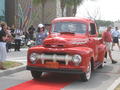
This one might still be available. I'd known of the truck from its auction sale, then heard it might be again for sale. A year or more ago I tracked it down and talked to the guy about it. Offered him much more than he paid for it, left my name and number, then never heard from him. Maybe you will have more luck than I did. These are my pictures of the truck, not some pulled off the web. Stu


This rare truck needs to be saved and brought back to life . Believed to have made fort the U.S forestry service . One from Tx. sold on ebay quite a few yrs. ago to a man in S.Fla . Less than 30 made & maybe 15 survived . If anyone knows more please chime in . Thanks , Denny .
Marmon-Herrington Man


Joined: Jul 2005
Posts: 11,986
Likes: 446
From: Central Illinois

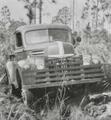
This one survives, if you call holding that sign survival. Probably sits today where you see it in my pics. The owner's name was Murphy and he can probably still be contacted through the restaurant. He told me that he'd sell it. I just got the impression he knows what he has and wants a king's ransom for it. The auction sale record from years ago is online showing he paid under $5000 iirc. I offered $7000. Hard for me to believe it's worth more than that in the shape it's in, and knowing what it costs to put one back together. I hope somebody goes back after it and rescues it from restaurant duty. Stu

Logistics Pro


Joined: Nov 2011
Posts: 4,685
Likes: 81
From: Northville, MI
I'll bet most people don't know or care that the truck is rare. Maybe you could sweeten the deal by throwing in a less rare truck? Maybe someone's F-1 parts truck? As an advertisement for a restaurant it should have the same impact.
Marmon-Herrington Man
Joined: Jul 2005
Posts: 11,986
Likes: 446
From: Central Illinois
Yeah, that's a good option. Pretty sure the truck sits in his front yard and there were other collector vehicles sitting in a shed. As I recall he's a Chevy guy, and matter-of-fact he drove into the drive way in a late '50s era Chevy pickup. He knows what he has, and I doubt I was the first to track him down about the truck. But I'm not the guy that will pay what my gut tells me it will take to haul it home from Kansas. Stu
Believe Nothing
Joined: Jun 2004
Posts: 7,516
Likes: 403
From: W. Central FL.
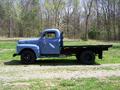
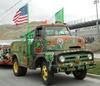
Guys, look closely at the bed on the mud truck shown in 425. Looks very close to being a Ford, maybe script bed.
Carb placement would indicate GM engine. Probably started life as an old Army truck, WW11 vintage.
Are those blackout lights outboard of the headlights.
Carb placement would indicate GM engine. Probably started life as an old Army truck, WW11 vintage.
Are those blackout lights outboard of the headlights.
Logistics Pro
Joined: Nov 2011
Posts: 4,685
Likes: 81
From: Northville, MI
FTE Stories
Ford Trucks for Ford Truck Enthusiasts

Top 10 Fords at 2026 Carlisle Ford Nationals
Joe Kucinski
3 Best / 3 Worst Parts of Modern Ford Ownership
Brett Foote
10 Amazing Upgrades That Solve Common Ford Truck Owner Headaches
Pouria Savadkouei
Every 2026 Ford Engine Explained
Brett Foote
10 Ugly Ford Trucks That We Still Kinda Love
Joe Kucinski
10 Things Every Truck Owner NEEDS (2026 Edition)
Michael S. Palmer
Rezvani's Latest Post-Apocalyptic Monster Is a Ford F-150 Raptor Underneath
Verdad Gallardo
Top 10 Most Expensive Ford Trucks Ever Sold on Bring a Trailer
Joe Kucinski
2027 Ford Super Duty Buyer's Guide (Every Model, Engine, & Package)
Brett Foote
Cargo Master

Joined: Jan 2004
Posts: 2,196
Likes: 351
From: Mandan, ND
not sure what it is, but it sure is odd...
Attachment 83972
Attachment 83973
the front sure looks like a power wagon, but the cab doesnt... I'm confused
Attachment 83972
Attachment 83973
the front sure looks like a power wagon, but the cab doesnt... I'm confused
http://www.bing.com/images/search?q=...+ww2&FORM=IGRE
Post Fiend
Joined: Sep 2006
Posts: 14,325
Likes: 14
From: Island Southeast Alaska
That's a Chevy 1.5 ton 4x4 1941-45. They had the 235 (GMC had the GMC 270), and a four speed non snchro (GMC had five speed). Winch looks like a later M-series. Front bumper certainly is not original.
chevy 1.5 ton ww2 - Bing Images
chevy 1.5 ton ww2 - Bing Images
Are you sure? I thought the 216 babbit pounder was used then.
And 1950 sedan delivery I had was a 216 as well. Yet the 54 I had was a 235.
Just sayin as they where both stock.


Welder User
Joined: Feb 2009
Posts: 5,269
Likes: 50
From: northwest MT
GMC had a 228? cube six. Both had babbitt bearings....
Cargo Master
Joined: Jan 2004
Posts: 2,196
Likes: 351
From: Mandan, ND
Can't/won't argue with you fellas, but am going on what a friend, who has two of these and knows them front to back (from hands on and original manuals), told me.
Of course there's this site, and others as well.
Chevrolet 1 1/2 ton 4x4 G506 Series
270 to 302
Appears 235 Chevy and 270 GMC it is.
Of course there's this site, and others as well.
Chevrolet 1 1/2 ton 4x4 G506 Series
270 to 302
Appears 235 Chevy and 270 GMC it is.
Post Fiend
Joined: Sep 2006
Posts: 14,325
Likes: 14
From: Island Southeast Alaska
How about this from Wikipedia? Thanks bud I learned something today.
And thank Google. It's your friend.
In 1941, a 235.5 cu in (3,859 cubic centimetres) version of the 216 engine was introduced for use in large trucks. Both the bore (3.5625” or 90.49 mm) and stroke (3.9375” or 100.01 mm) were increased over the 216. This engine also had an oil "dipper system" as described above, in reference to the oiling system, as in the 216.
This 235-cubic-inch (3.9 L) version was added to cars in 1950 to complement the new http://en.wikipedia.org/wiki/Powerglide http://en.wikipedia.org/wiki/Automatic_transmission, and 3.55:1 rear differential. Hydraulic lifters were used in the Powerglide 235 and a fully pressurized lubrication system was introduced in 1953, but only in cars ordered with the "Powerglide" transmission. The 216-cubic-inch (3.5 L) continued to be standard powerplant for cars with the three-speed manual transmission until 1953, when the 235-cubic-inch (3.9 L) became the standard powerplant on all Chevrolet passenger cars. Two versions were used in 1953 cars - a solid-lifter version with 123 hp (92 kW) for standard transmissions and the hydraulic-lifter 136 hp (101 kW) version (the Blue Flame) for Powerglide use. The "Blue Flame" moniker had been used in Chevrolet advertising since 1934. A blue rather than yellow flame within the cylinder meant that perfect combustion was achieved, promised GM's ad men.<sup id="cite_ref-LaVie1533_1-1" class="reference">http://en.wikipedia.org/wiki/Chevrolet_straight-6_engine#cite_note-LaVie1533-1</sup>
And thank Google. It's your friend.
In 1941, a 235.5 cu in (3,859 cubic centimetres) version of the 216 engine was introduced for use in large trucks. Both the bore (3.5625” or 90.49 mm) and stroke (3.9375” or 100.01 mm) were increased over the 216. This engine also had an oil "dipper system" as described above, in reference to the oiling system, as in the 216.
This 235-cubic-inch (3.9 L) version was added to cars in 1950 to complement the new http://en.wikipedia.org/wiki/Powerglide http://en.wikipedia.org/wiki/Automatic_transmission, and 3.55:1 rear differential. Hydraulic lifters were used in the Powerglide 235 and a fully pressurized lubrication system was introduced in 1953, but only in cars ordered with the "Powerglide" transmission. The 216-cubic-inch (3.5 L) continued to be standard powerplant for cars with the three-speed manual transmission until 1953, when the 235-cubic-inch (3.9 L) became the standard powerplant on all Chevrolet passenger cars. Two versions were used in 1953 cars - a solid-lifter version with 123 hp (92 kW) for standard transmissions and the hydraulic-lifter 136 hp (101 kW) version (the Blue Flame) for Powerglide use. The "Blue Flame" moniker had been used in Chevrolet advertising since 1934. A blue rather than yellow flame within the cylinder meant that perfect combustion was achieved, promised GM's ad men.<sup id="cite_ref-LaVie1533_1-1" class="reference">http://en.wikipedia.org/wiki/Chevrolet_straight-6_engine#cite_note-LaVie1533-1</sup>
Logistics Pro
Joined: Jul 2004
Posts: 4,364
Likes: 84
From: Utah
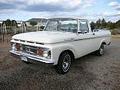
Not sure if this has already been posted, didn't ,make it back through all the posts here.
1951 Ford f2 Stewart Station Wagon
1951 Ford f2 Stewart Station Wagon