Cheetos Crew Build

Lead Driver
Joined: May 2007
Posts: 6,993
Likes: 15
From: Costa Mesa, CA
caster : The forward or rearward tilt of the projected steering axis from true vertical, as viewed from the side. This line is formed by extending a line through the upper and lower steering knuckle pivot points. For vehicles with front control arms, visualize the line extending through the upper and lower ball joints. Caster is always viewed from the side of the vehicle. When the upper pivot point is rearward of the lower pivot point, caster is positive. If the upper pivot is forward of the lower pivot point, caster is negative. When the two points are straight up and down from each other, the caster is zero. Caster is not a normal tire wearing angle and is used as a directional control for stability and steering returnability. Caster effect is necessary so that the load of the vehicle is "carried" through the steering axis line formed on the upper and lower pivot points. Here is a diagram explaining different caster settings.
effects of positive caster : positive caster promotes directional stability, however, excessive positive caster can cause two problems. The first is that excessive caster will cause a high level of road shock to be transmitted to the driver when the vehicle hits a bump, etc. The second problem is that a tire/wheel assembly with positive caster has a tendency to toe inward when the vehicle is being driven. If one side has more positive caster than the other, this causes it to toe inward with more force than the other side. This will cause a lead or pull to the side with least amount of positive caster.
effects of negative caster : a vehicle with negative caster will have a tendency to be easier to steer but will lack directional stability. It is also affected by any road surface variation such as small road irregularities or bumps. With the point of load pushing the tire along (negative caster), any bumps or road irregularities which are encountered have a tendency to immediately affect directional stability and vehicle handling.
effects of positive caster : positive caster promotes directional stability, however, excessive positive caster can cause two problems. The first is that excessive caster will cause a high level of road shock to be transmitted to the driver when the vehicle hits a bump, etc. The second problem is that a tire/wheel assembly with positive caster has a tendency to toe inward when the vehicle is being driven. If one side has more positive caster than the other, this causes it to toe inward with more force than the other side. This will cause a lead or pull to the side with least amount of positive caster.
effects of negative caster : a vehicle with negative caster will have a tendency to be easier to steer but will lack directional stability. It is also affected by any road surface variation such as small road irregularities or bumps. With the point of load pushing the tire along (negative caster), any bumps or road irregularities which are encountered have a tendency to immediately affect directional stability and vehicle handling.
Lead Driver
Joined: May 2007
Posts: 6,993
Likes: 15
From: Costa Mesa, CA
Do it.
Since you've changed WTF you were doing 3,024 times I can't remember what you have any more. Are you still running the 2wd frame you put leafs on? If so definitely check your caster. You want the top of the knuckle leaning back towards the truck - not pointing away from it. The closer you get to vertical the "looser" the thing will get. If you get into having the top of knuckle pointing forward it will get bad. Think about how squirrelly a shopping cart is...
You can obviously lean the things back to far as well but about 5-8" is decent for street driving. The more angle to go in this direction the more the vehicle will want to track straight & snap back to straight (like if you're driving & take you hands off the wheel - the thing will track to a straight line). In dedicated desert trucks with i-beams I've seen guys go up to about 15*, but that's a bit too much for something that will live a bunch of it's life on the street.
Since you've changed WTF you were doing 3,024 times I can't remember what you have any more. Are you still running the 2wd frame you put leafs on? If so definitely check your caster. You want the top of the knuckle leaning back towards the truck - not pointing away from it. The closer you get to vertical the "looser" the thing will get. If you get into having the top of knuckle pointing forward it will get bad. Think about how squirrelly a shopping cart is...
You can obviously lean the things back to far as well but about 5-8" is decent for street driving. The more angle to go in this direction the more the vehicle will want to track straight & snap back to straight (like if you're driving & take you hands off the wheel - the thing will track to a straight line). In dedicated desert trucks with i-beams I've seen guys go up to about 15*, but that's a bit too much for something that will live a bunch of it's life on the street.

Thread Starter
|
Post Fiend
Joined: Sep 2006
Posts: 5,181
Likes: 3
From: Across from the neighbors

Ok the knuckle is leaned back toward the truck. And with my angle finder on the spot where the factory tie rod goes it looks as though the angle of the dangle is 9*.
Lead Driver
Joined: May 2007
Posts: 6,993
Likes: 15
From: Costa Mesa, CA
FTE Stories
Ford Trucks for Ford Truck Enthusiasts

Top 6 Best Deals Available on New Fords & Lincolns Right Now
Brett Foote
This Hennessey Takes the Expedition Tremor's Off-Roading Capability to the Next Level
Verdad Gallardo
Top 10 Fords at 2026 Carlisle Ford Nationals
Joe Kucinski
3 Best / 3 Worst Parts of Modern Ford Ownership
Brett Foote
10 Amazing Upgrades That Solve Common Ford Truck Owner Headaches
Pouria Savadkouei
Every 2026 Ford Engine Explained
Brett Foote
10 Ugly Ford Trucks That We Still Kinda Love
Joe Kucinski
10 Things Every Truck Owner NEEDS (2026 Edition)
Michael S. Palmer
Rezvani's Latest Post-Apocalyptic Monster Is a Ford F-150 Raptor Underneath
Verdad Gallardo

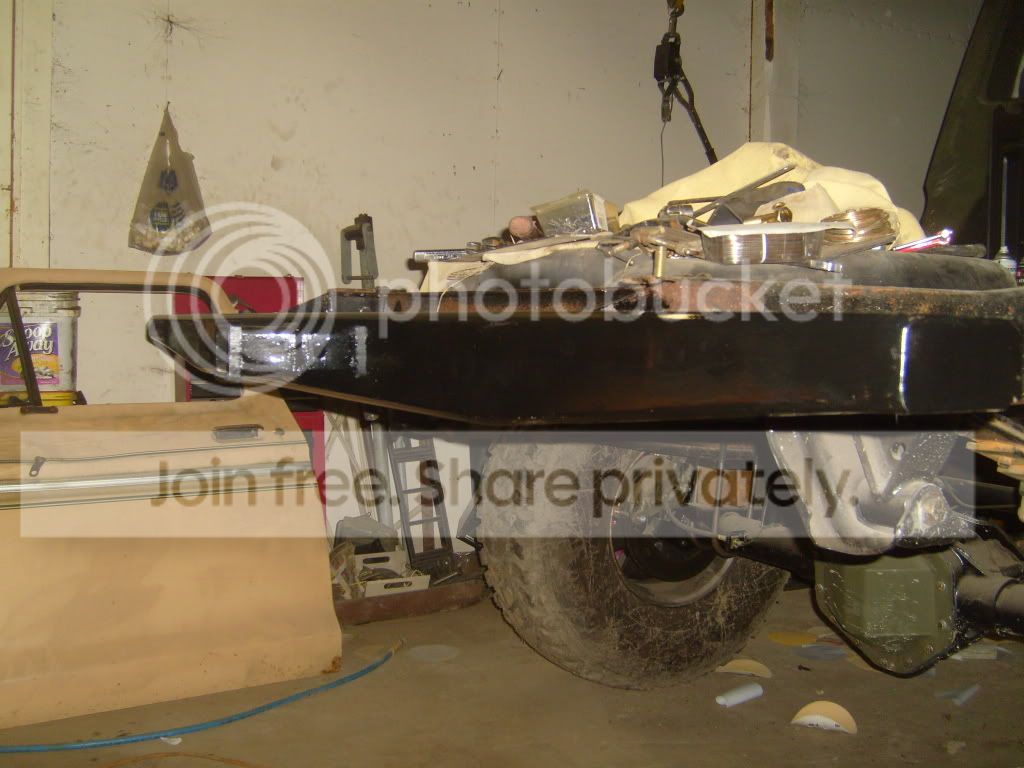
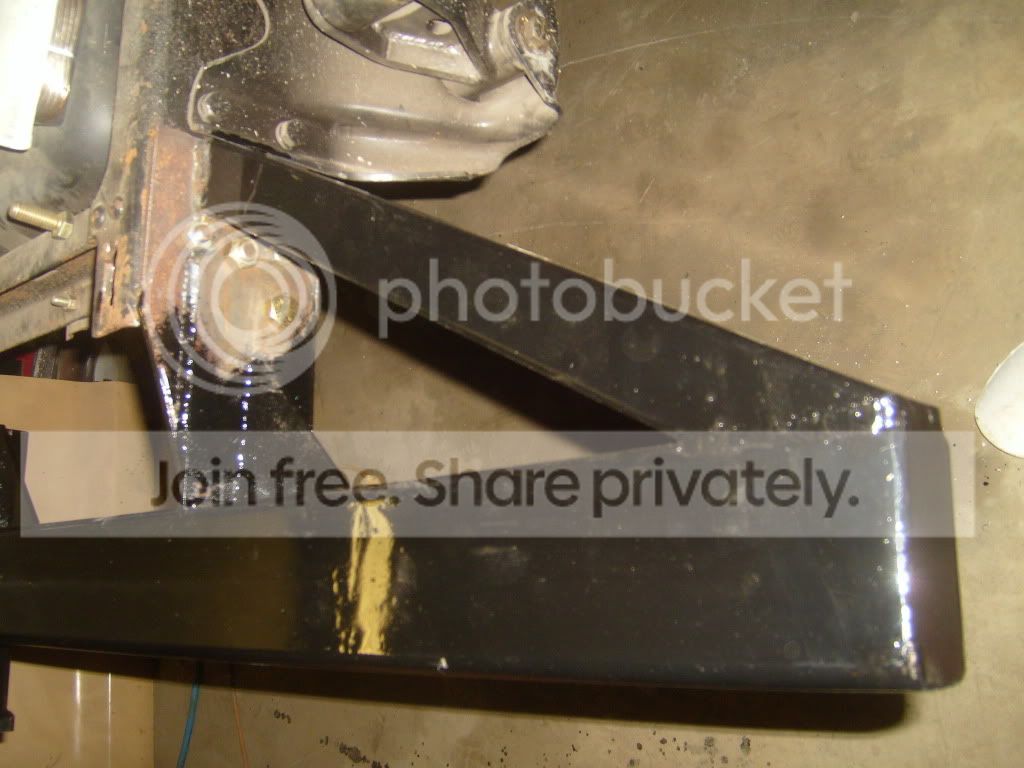


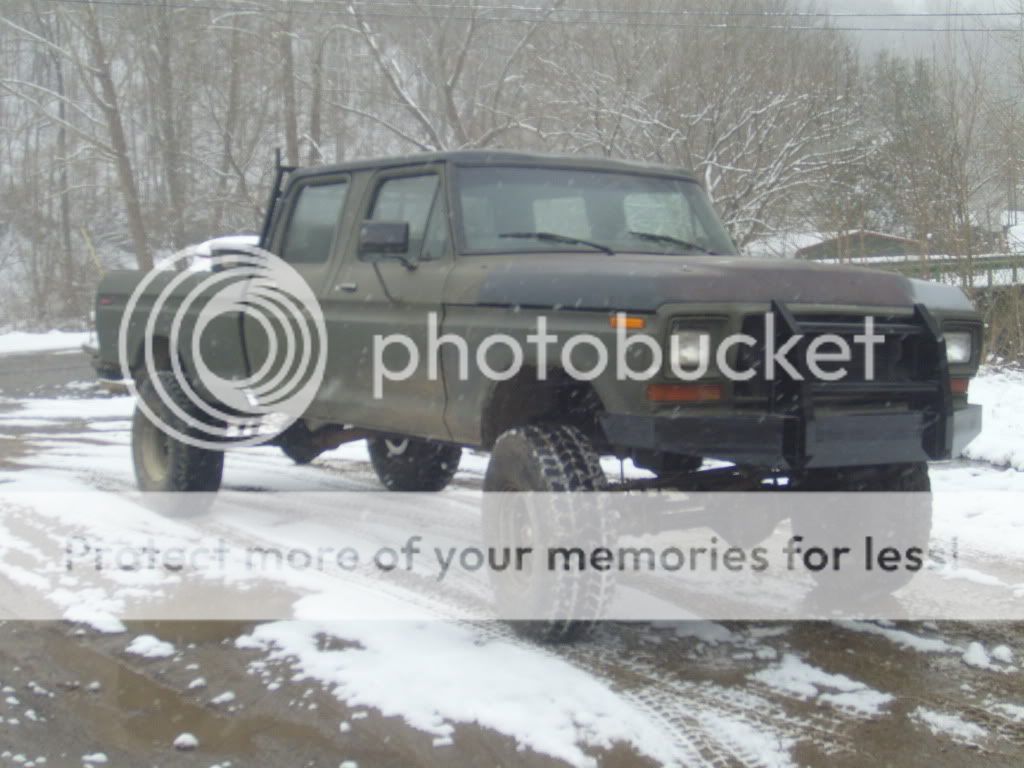

Postmaster
Joined: Oct 2005
Posts: 3,083
Likes: 4
From: Victoria , BC
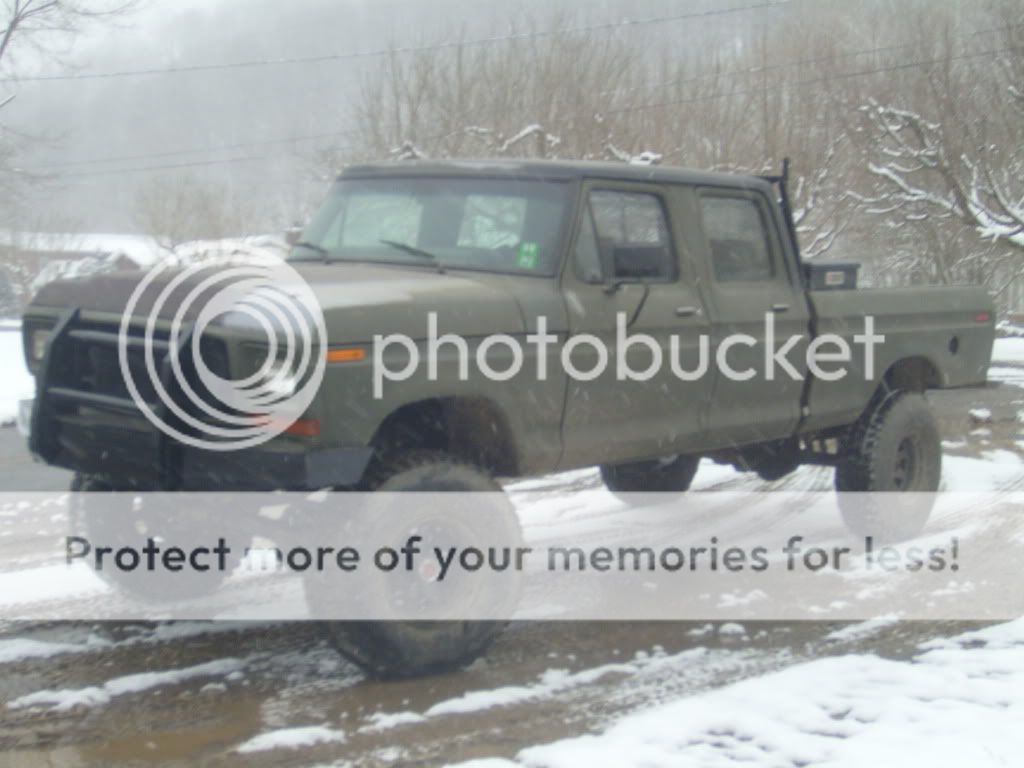
Cant say I like the painted grill surround. Im also a big fan of the full racetrack trim on these trucks. Looks like a bush/farm truck. Might appeal to more people with a two tone paint job or maybe all silver would look sweet