



Ignition Timing Problems
More Turbo


Joined: Jan 2021
Posts: 603
Likes: 172
From: Flo-rida
Ive got one straw to grasp at..... And it kinda sounds like the engine maybe be breathing thru a straw too...... By chance is the choke stuck on even slightly???
The timing light going crazy and black out makes me think its not air/fuel related.
The timing light going crazy and black out makes me think its not air/fuel related.

Laughing Gas
Joined: Dec 2020
Posts: 869
Likes: 186
From: Near my truck
Oh no ! 
I saw the D4006 but really hoped that you got the incomplete one instead.
The chances of a 'new' complete dizzy having the exact same fault as the original dizzy is slim.
Now my deafness has worsened and I can just about hear my own thoughts. LOL
I'd picked up that the module wasn't the culprit, and thinking about it some more, an electrical fault (backfiring) should be present with no vacuum advance connected as well.
Add 'vacuum reading' to your to do list.
Seeing as the engine can idle acceptably, it wouldn't hurt to see what the vacuum level is, and how the needle behaves. (I'm running out of straws. LOL)
It might even reflect the number 2 cylinder tick, or rule it out completely, for example.(Now that would be a coincidence !)
There were only two variables initially, the dizzy, and Go Seahawks! .
The dizzy has been replaced.
Hmmm, that only leaves Go Seahawks! .
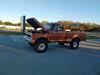
I'm happy to swap places with you, which means I'd take the Ranchero.
And talking about the Ranchero, wow!, it oozes class and character.
I don't like chrome wheels, but yours look great.
U2 wrote a song inspired by your Ranchero, called ''Even better then the real thing''.
Hiya 77 HOS, any chance that you have some spare headache tablets ??? LOL
I saw the D4006 but really hoped that you got the incomplete one instead.
The chances of a 'new' complete dizzy having the exact same fault as the original dizzy is slim.
Now my deafness has worsened and I can just about hear my own thoughts. LOL
I'd picked up that the module wasn't the culprit, and thinking about it some more, an electrical fault (backfiring) should be present with no vacuum advance connected as well.
Add 'vacuum reading' to your to do list.
Seeing as the engine can idle acceptably, it wouldn't hurt to see what the vacuum level is, and how the needle behaves. (I'm running out of straws. LOL)
It might even reflect the number 2 cylinder tick, or rule it out completely, for example.(Now that would be a coincidence !)
There were only two variables initially, the dizzy, and Go Seahawks! .
The dizzy has been replaced.
Hmmm, that only leaves Go Seahawks! .
I'm happy to swap places with you, which means I'd take the Ranchero.
And talking about the Ranchero, wow!, it oozes class and character.
I don't like chrome wheels, but yours look great.
U2 wrote a song inspired by your Ranchero, called ''Even better then the real thing''.
Hiya 77 HOS, any chance that you have some spare headache tablets ??? LOL
More Turbo
Joined: Jan 2021
Posts: 603
Likes: 172
From: Flo-rida
6 by 8
Tablets, yes few more been saving them for my final dial in day coming soon. Replaced lifters shes quiet now. In will update my build thread with more info as soon as I have time. A/F almost perfect some minor adjustment needed. Had to use my share of the tablets minus the few I stashed.
Sorry for off topic rant, and fact i dont have any useful info to provide.
Tablets, yes few more been saving them for my final dial in day coming soon. Replaced lifters shes quiet now. In will update my build thread with more info as soon as I have time. A/F almost perfect some minor adjustment needed. Had to use my share of the tablets minus the few I stashed.
Sorry for off topic rant, and fact i dont have any useful info to provide.
Laughing Gas
Joined: Dec 2020
Posts: 869
Likes: 186
From: Near my truck
LOL, that wasn't a rant, and I think that Go Seahawks! will agree that the headache tablets are spot on topic.
We might need to revisit your 'stash' !
I look forward to reading your updates.
I suggested earlier that the chances of a replacement dizzy having the exact same problems as the initial dizzy was slim, but now I remember that your replacement dizzy carried the same fault as the 'new' one !! (Cam and springs)
Seeing as it's silly season with straws and boxes (inside and out), can you (Go Seahawks!) borrow a dizzy to use for testing, or would you consider a new one ?
I'll leave this link here as a simple food for thought :
https://www.summitracing.com/parts/sum-850026/make/ford
We might need to revisit your 'stash' !
I look forward to reading your updates.
I suggested earlier that the chances of a replacement dizzy having the exact same problems as the initial dizzy was slim, but now I remember that your replacement dizzy carried the same fault as the 'new' one !! (Cam and springs)
Seeing as it's silly season with straws and boxes (inside and out), can you (Go Seahawks!) borrow a dizzy to use for testing, or would you consider a new one ?
I'll leave this link here as a simple food for thought :
https://www.summitracing.com/parts/sum-850026/make/ford

Thread Starter
|
Mountain Pass

Joined: Dec 2019
Posts: 249
Likes: 10
Manual choke, wide open. Yeah, I’m losing spark apparently. I haven’t touched the carb.
Thread Starter
|
Mountain Pass
Joined: Dec 2019
Posts: 249
Likes: 10
Oh no !
I saw the D4006 but really hoped that you got the incomplete one instead.
The chances of a 'new' complete dizzy having the exact same fault as the original dizzy is slim.
Now my deafness has worsened and I can just about hear my own thoughts. LOL
I'd picked up that the module wasn't the culprit, and thinking about it some more, an electrical fault (backfiring) should be present with no vacuum advance connected as well.
Add 'vacuum reading' to your to do list.
Seeing as the engine can idle acceptably, it wouldn't hurt to see what the vacuum level is, and how the needle behaves. (I'm running out of straws. LOL). Good thought. Another data point to add and consider.
It might even reflect the number 2 cylinder tick, or rule it out completely, for example.(Now that would be a coincidence !)
There were only two variables initially, the dizzy, and Go Seahawks! .
The dizzy has been replaced.
Hmmm, that only leaves Go Seahawks! . Wait! How is my fault that a 47 year old vehicle decides to act up during my stint as it’s steward??
I'm happy to swap places with you, which means I'd take the Ranchero.
And talking about the Ranchero, wow!, it oozes class and character.
I don't like chrome wheels, but yours look great.
U2 wrote a song inspired by your Ranchero, called ''Even better then the real thing''. Thanks! I have an emotional connection with this vehicle that goe back to my dad who passed in 2012. There is roughly double the amount of $$ “invested” in it than I could expect out of it on its best day, but that’s not the point with this one.
Hiya 77 HOS, any chance that you have some spare headache tablets ??? LOL
I saw the D4006 but really hoped that you got the incomplete one instead.
The chances of a 'new' complete dizzy having the exact same fault as the original dizzy is slim.
Now my deafness has worsened and I can just about hear my own thoughts. LOL
I'd picked up that the module wasn't the culprit, and thinking about it some more, an electrical fault (backfiring) should be present with no vacuum advance connected as well.
Add 'vacuum reading' to your to do list.
Seeing as the engine can idle acceptably, it wouldn't hurt to see what the vacuum level is, and how the needle behaves. (I'm running out of straws. LOL). Good thought. Another data point to add and consider.
It might even reflect the number 2 cylinder tick, or rule it out completely, for example.(Now that would be a coincidence !)
There were only two variables initially, the dizzy, and Go Seahawks! .
The dizzy has been replaced.
Hmmm, that only leaves Go Seahawks! . Wait! How is my fault that a 47 year old vehicle decides to act up during my stint as it’s steward??
I'm happy to swap places with you, which means I'd take the Ranchero.
And talking about the Ranchero, wow!, it oozes class and character.
I don't like chrome wheels, but yours look great.
U2 wrote a song inspired by your Ranchero, called ''Even better then the real thing''.
Thanks! I have an emotional connection with this vehicle that goe back to my dad who passed in 2012. There is roughly double the amount of $$ “invested” in it than I could expect out of it on its best day, but that’s not the point with this one.Hiya 77 HOS, any chance that you have some spare headache tablets ??? LOL
Thread Starter
|
Mountain Pass
Joined: Dec 2019
Posts: 249
Likes: 10
LOL, that wasn't a rant, and I think that Go Seahawks! will agree that the headache tablets are spot on topic.
Totally and completely agree! Besides, any distraction, rant or otherwise, is welcomed right now!
We might need to revisit your 'stash' !
I look forward to reading your updates.
I suggested earlier that the chances of a replacement dizzy having the exact same problems as the initial dizzy was slim, but now I remember that your replacement dizzy carried the same fault as the 'new' one !! (Cam and springs) New dizzy came complete with new cams and springs. There’s no common parts EXCEPT the inducer. Why did I swap the inducer from the old unit to the new one, you ask? The inducer in the old unit was new, having been replaced when the old one was destroyed when the wires got caught by the reluctor. The factory pigtail had been cut off by the PO and hardwired so I had to do the same. I didn’t want to risk the core credit being denied by sending the old dizzy back with cut wires so I returned it with the new inducer installed.
Seeing as it's silly season with straws and boxes (inside and out), can you (Go Seahawks!) borrow a dizzy to use for testing, or would you consider a new one ? Don’t know anyone to borrow one and not ready to buy another one.
I'll leave this link here as a simple food for thought :
https://www.summitracing.com/parts/sum-850026/make/ford
Totally and completely agree! Besides, any distraction, rant or otherwise, is welcomed right now!
We might need to revisit your 'stash' !
I look forward to reading your updates.
I suggested earlier that the chances of a replacement dizzy having the exact same problems as the initial dizzy was slim, but now I remember that your replacement dizzy carried the same fault as the 'new' one !! (Cam and springs) New dizzy came complete with new cams and springs. There’s no common parts EXCEPT the inducer. Why did I swap the inducer from the old unit to the new one, you ask? The inducer in the old unit was new, having been replaced when the old one was destroyed when the wires got caught by the reluctor. The factory pigtail had been cut off by the PO and hardwired so I had to do the same. I didn’t want to risk the core credit being denied by sending the old dizzy back with cut wires so I returned it with the new inducer installed.
Seeing as it's silly season with straws and boxes (inside and out), can you (Go Seahawks!) borrow a dizzy to use for testing, or would you consider a new one ? Don’t know anyone to borrow one and not ready to buy another one.
I'll leave this link here as a simple food for thought :
https://www.summitracing.com/parts/sum-850026/make/ford
Aerosmith… Uriah Heep… UFO… Rainbow… Tom Petty… Bob Seger… and of course, appropriately, Cars!

Lead Driver


Joined: Nov 2006
Posts: 5,217
Likes: 506
From: Pa.

See above. No time spent on the Ranchero yesterday but thought a lot about this ongoing saga. There are a couple of things I’m going to check when I get back next week. One is engine vacuum as 6 by 8 suggested. The other is the #1 HT lead. Talk about grasping. Maybe switching it with another one to see if that changes anything.
Aerosmith… Uriah Heep… UFO… Rainbow… Tom Petty… Bob Seger… and of course, appropriately, Cars!
Aerosmith… Uriah Heep… UFO… Rainbow… Tom Petty… Bob Seger… and of course, appropriately, Cars!
You hurt my feelings..BTW great truck

Highest achievable manifold vacuum reading at idle is also going to be close to best initial timing minus until no ping. With the vacuum advance disconnected and vacuum line plugged of course. Then it's just a matter of determining at what RPM you want to be all in. Driving style, fuel type, engine HP, and gear ratio are going to make that decision ultimately.
FTE Stories
Ford Trucks for Ford Truck Enthusiasts

10 Things Every Truck Owner NEEDS (2026 Edition)
Michael S. Palmer
Rezvani's Latest Post-Apocalyptic Monster Is a Ford F-150 Raptor Underneath
Verdad Gallardo
Top 10 Most Expensive Ford Trucks Ever Sold on Bring a Trailer
Joe Kucinski
2027 Ford Super Duty Buyer's Guide (Every Model, Engine, & Package)
Brett Foote
Top 10 Ford Truck Tragedies
Joe Kucinski
AEV FXL Super Duty - the Super Duty Raptor Ford Doesn't Make
Brett Foote
Lobo Vs Lobo: Proof the F-150 Lobo Should Be Even Lower!
Michael S. Palmer
Ford's 2001 Explorer Sportsman Concept Looks For a New Home
Verdad Gallardo
10 Best Ford Truck Engines We Miss the Most!
Joe Kucinski
Thread Starter
|
Mountain Pass
Joined: Dec 2019
Posts: 249
Likes: 10
Take no offense redroad! In fact I owe you a thanks. This time I was referring to 6 x 8’s suggestion to get vacuum readings, but this is the 2nd time you’ve brought up setting initial by vacuum. I’m going to give that a whirl. Should be interesting, never watched vacuum while adjusting the dizzy.
BTW, great taste in music. Gotta love the blues! The basis for good ol’ rock and roll! Allman Brothers… CCR… Lynyrd Skynyrd…
BTW, great taste in music. Gotta love the blues! The basis for good ol’ rock and roll! Allman Brothers… CCR… Lynyrd Skynyrd…
Laughing Gas
Joined: Dec 2020
Posts: 869
Likes: 186
From: Near my truck
Hello ? The question is not ''How is it my fault that.......'', but rather ''Why'' .
And the answer to that question is that I get to become the new owner.

However !
Seeing as the Ranchero is emotionally linked to your late Dad, I rescind all comments on the subject of my wishful thinking ownership, and hope that it reminds you fondly of your Dad daily.
The cams and springs I referred to where actually 77 HOS's. His brand new dizzy had faulty ones, and his brand new exchange ones were also faulty. (Actually, I think it was just a crap design.)
I thought that the inducer had been fitted, and was working ok, prior to the current scenario.
If you suspect it, or the hardwiring, by all means take a close look again, and/or replace.
Hmmm, you did say that the reluctor caught the wires after.
Now that you've given extra info, there may well be a clue right there.
I mentioned vacuum readings purely to know the state of the engine's health, without making any changes.
If you're curious to observe vacuum readings by advancing the ignition timing, by all means advance away, but put it back to 16* when you're done.
I say put it back to16* so as not to make changes while we're investigating an unknown problem.
A while back you said that the backfire at 1800 RPM with vac advance plugged is back.
What EXACTLY did you do just prior to the return of the backfire ?
No backfiring at 1,800rpm with no vacuum adv connected, and then it returned. Another clue ?
You made changes to the adjustable vacuum can, which changed the behavior of the backfiring. Hmm. Do any wires inside the dizzy come into contact with the advance arm ?
What made you say that the coil is nagging you ?
Also, what makes you suspect the #1 HT lead as opposed to any other ?
While you're dialing in the motor for extra pep and checking the motor's health, it wouldn't hurt to do a compression test (with throttle blades held open) on a warm engine, and note the 8 numbers.
I hope you're keeping a to do list. I've lost track of the straw grasping etc suggestions.
Have a great trip.
@Redroad, at least your hurt feelings look to be unhurt now. I'm still deaf.
Eric Clapton, Santana, Rolling Stones, Janata, Jimi Hendrix, REM.
And the answer to that question is that I get to become the new owner.
However !
Seeing as the Ranchero is emotionally linked to your late Dad, I rescind all comments on the subject of my wishful thinking ownership, and hope that it reminds you fondly of your Dad daily.
The cams and springs I referred to where actually 77 HOS's. His brand new dizzy had faulty ones, and his brand new exchange ones were also faulty. (Actually, I think it was just a crap design.)
I thought that the inducer had been fitted, and was working ok, prior to the current scenario.
If you suspect it, or the hardwiring, by all means take a close look again, and/or replace.
Hmmm, you did say that the reluctor caught the wires after.
Now that you've given extra info, there may well be a clue right there.
I mentioned vacuum readings purely to know the state of the engine's health, without making any changes.
If you're curious to observe vacuum readings by advancing the ignition timing, by all means advance away, but put it back to 16* when you're done.
I say put it back to16* so as not to make changes while we're investigating an unknown problem.
A while back you said that the backfire at 1800 RPM with vac advance plugged is back.
What EXACTLY did you do just prior to the return of the backfire ?
No backfiring at 1,800rpm with no vacuum adv connected, and then it returned. Another clue ?
You made changes to the adjustable vacuum can, which changed the behavior of the backfiring. Hmm. Do any wires inside the dizzy come into contact with the advance arm ?
What made you say that the coil is nagging you ?
Also, what makes you suspect the #1 HT lead as opposed to any other ?
While you're dialing in the motor for extra pep and checking the motor's health, it wouldn't hurt to do a compression test (with throttle blades held open) on a warm engine, and note the 8 numbers.
I hope you're keeping a to do list. I've lost track of the straw grasping etc suggestions.
Have a great trip.
@Redroad, at least your hurt feelings look to be unhurt now. I'm still deaf.
Eric Clapton, Santana, Rolling Stones, Janata, Jimi Hendrix, REM.

Laughing Gas
Joined: Mar 2016
Posts: 757
Likes: 43
From: Cheyenne, Wy
I've been reading this with much interest. Thanks to everyone for your input. It is helping me also.
GOSEAHAWKS..... Nice rancheo. Beautiful color and car.
Thinking waaaaay outside the box. What about the power valve causing the backfire?
Back to sitting on the side with popcorn.
GOSEAHAWKS..... Nice rancheo. Beautiful color and car.
Thinking waaaaay outside the box. What about the power valve causing the backfire?
Back to sitting on the side with popcorn.
Thread Starter
|
Mountain Pass
Joined: Dec 2019
Posts: 249
Likes: 10
I thought that the inducer had been fitted, and was working ok, prior to the current scenario. You’re correct.
If you suspect it, or the hardwiring, by all means take a close look again, and/or replace.
Hmmm, you did say that the reluctor caught the wires after.
Now that you've given extra info, there may well be a clue right there.
I mentioned vacuum readings purely to know the state of the engine's health, without making any changes.
If you're curious to observe vacuum readings by advancing the ignition timing, by all means advance away, but put it back to 16* when you're done.
I say put it back to16* so as not to make changes while we're investigating an unknown problem. Exactly
A while back you said that the backfire at 1800 RPM with vac advance plugged is back.
What EXACTLY did you do just prior to the return of the backfire ? Nothing that I can identify. I returned to the shop the next day and it was there again. Yeah, I know. Not likely but that’s how it went…
No backfiring at 1,800rpm with no vacuum adv connected, and then it returned. Another clue ?
You made changes to the adjustable vacuum can, which changed the behavior of the backfiring. Hmm. Do any wires inside the dizzy come into contact with the advance arm ? No. Checked more than once.
What made you say that the coil is nagging you ? The timing light behavior (erratic then dark during rough running) is a big clue that seems to point to obvious electrical and not fuel related, right? The timing light shows dizzy output. Dizzy input comes from the coil. How do you measure/observe that to see if it’s being interrupted?
Also, what makes you suspect the #1 HT lead as opposed to any other ? Nothing. Grasping straws.
While you're dialing in the motor for extra pep and checking the motor's health, it wouldn't hurt to do a compression test (with throttle blades held open) on a warm engine, and note the 8 numbers. I have an OTC Instruments compression test kit I bought specifically for this vehicle a year or so back. I also got a leakdown kit at the same time. This engine is tired. I don’t remember the exact numbers, and they weren’t entirely accurate since the engine was cold, but suffice to say this engine is tired with significant blowby through the PVC. But it runs well, considering the low compression.
I hope you're keeping a to do list. I've lost track of the straw grasping etc suggestions.
If you suspect it, or the hardwiring, by all means take a close look again, and/or replace.
Hmmm, you did say that the reluctor caught the wires after.
Now that you've given extra info, there may well be a clue right there.
I mentioned vacuum readings purely to know the state of the engine's health, without making any changes.
If you're curious to observe vacuum readings by advancing the ignition timing, by all means advance away, but put it back to 16* when you're done.
I say put it back to16* so as not to make changes while we're investigating an unknown problem. Exactly
A while back you said that the backfire at 1800 RPM with vac advance plugged is back.
What EXACTLY did you do just prior to the return of the backfire ? Nothing that I can identify. I returned to the shop the next day and it was there again. Yeah, I know. Not likely but that’s how it went…
No backfiring at 1,800rpm with no vacuum adv connected, and then it returned. Another clue ?
You made changes to the adjustable vacuum can, which changed the behavior of the backfiring. Hmm. Do any wires inside the dizzy come into contact with the advance arm ? No. Checked more than once.
What made you say that the coil is nagging you ? The timing light behavior (erratic then dark during rough running) is a big clue that seems to point to obvious electrical and not fuel related, right? The timing light shows dizzy output. Dizzy input comes from the coil. How do you measure/observe that to see if it’s being interrupted?
Also, what makes you suspect the #1 HT lead as opposed to any other ? Nothing. Grasping straws.
While you're dialing in the motor for extra pep and checking the motor's health, it wouldn't hurt to do a compression test (with throttle blades held open) on a warm engine, and note the 8 numbers. I have an OTC Instruments compression test kit I bought specifically for this vehicle a year or so back. I also got a leakdown kit at the same time. This engine is tired. I don’t remember the exact numbers, and they weren’t entirely accurate since the engine was cold, but suffice to say this engine is tired with significant blowby through the PVC. But it runs well, considering the low compression.
I hope you're keeping a to do list. I've lost track of the straw grasping etc suggestions.
6 by 8, I added my comments to yours in the quote above.
Here’s my plan:
1. Warm vehicle and reconfirm timing curve at 16* initial. Note behavior re: backfire and timing light
2. Connect vacuum gauge, note reading at 16*. Adjust for maximum vacuum, note timing advance, then return to 16*.
3. Switch #1 and #2 HT leads at plugs and cap. Observe and note timing curve and light behavior or backfires. Switch wires back if no change in behaviors.
I might be missing a test. I’ll review the preceding few posts to see before I am done.
One of the really weird things is, not only why does the backfire start at around 1800 RPM but also why does it go away after 2100 RPM or so?
I hope to get in the shop tomorrow.
Laughing Gas
Joined: Dec 2020
Posts: 869
Likes: 186
From: Near my truck
I like your attitude towards the hunting.
While you were chilling with your Brother, I was at the Doctor being diagnosed with GoSeahawks!itous.
The Doc said that the only cure was to stay away from the thread.
It worked. Yesterday I could hear the sweet sounds of Eric Clapton on his gee-tar.
But, I just read your latest post and I'm deaf again. LOL
I wonder if catching the reluctor wires did in fact cause damage.
The return of the backfire, with no vacuum advance connected, and nothing touched, kinda confirms an intermittent electrical fault.
Why only in a 300rpm range ? I don't know.
Initially I was thinking it was 'load' related, but then one would expect a wider range.
That said, it wouldn't hurt to go for a short drive, with no vac advance connected, not exceeding 3,000 rpms, and see if the fault is amplified or not.
Yes, the timing light going dark, in that 300 rpm range, certainly implies a break in the electrical power supply, somewhere, somehow, as opposed to a carb issue.
Is somebody helping you when you are working on the engine ?
I ask because I'm wondering how you read the rpms when using the timing light.
Ah, I now see your logic behind changing the number one HT lead. Good logic.
Thinking about it, attaching the timing light to ANY HT lead should show similar behavior, so you could maybe try that before swapping 1 and 2.
To test the power input at the coil, attach a multi meter to the battery - post and coil + lead.
Maybe use 2 pieces of wire, as an extension, connected to the coil + terminal and meter + side, and coil - to battery - ,held in place with electrical tape.
Thinking about it some more, I think the timing gun could be aimed absolutely anywhere.
You could hold the gun next to the multi meter, making it safe and easy to observe, while you, or a helper, are applying throttle.
Depending on where you stand, ensure that all loose wires are securely held away from moving parts.
@ black and blue 78/9
The power valve is a good suggestion.
A fault free power valve opens when vacuum drops to +/- 6.5'', under acceleration, but in this case the vacuum is too high, during observations, to open it.
Feel free to share that popcorn !
While you were chilling with your Brother, I was at the Doctor being diagnosed with GoSeahawks!itous.
The Doc said that the only cure was to stay away from the thread.
It worked. Yesterday I could hear the sweet sounds of Eric Clapton on his gee-tar.
But, I just read your latest post and I'm deaf again. LOL
I wonder if catching the reluctor wires did in fact cause damage.
The return of the backfire, with no vacuum advance connected, and nothing touched, kinda confirms an intermittent electrical fault.
Why only in a 300rpm range ? I don't know.
Initially I was thinking it was 'load' related, but then one would expect a wider range.
That said, it wouldn't hurt to go for a short drive, with no vac advance connected, not exceeding 3,000 rpms, and see if the fault is amplified or not.
Yes, the timing light going dark, in that 300 rpm range, certainly implies a break in the electrical power supply, somewhere, somehow, as opposed to a carb issue.
Is somebody helping you when you are working on the engine ?
I ask because I'm wondering how you read the rpms when using the timing light.
Ah, I now see your logic behind changing the number one HT lead. Good logic.
Thinking about it, attaching the timing light to ANY HT lead should show similar behavior, so you could maybe try that before swapping 1 and 2.
To test the power input at the coil, attach a multi meter to the battery - post and coil + lead.
Maybe use 2 pieces of wire, as an extension, connected to the coil + terminal and meter + side, and coil - to battery - ,held in place with electrical tape.
Thinking about it some more, I think the timing gun could be aimed absolutely anywhere.
You could hold the gun next to the multi meter, making it safe and easy to observe, while you, or a helper, are applying throttle.
Depending on where you stand, ensure that all loose wires are securely held away from moving parts.
@ black and blue 78/9
The power valve is a good suggestion.
A fault free power valve opens when vacuum drops to +/- 6.5'', under acceleration, but in this case the vacuum is too high, during observations, to open it.
Feel free to share that popcorn !
Thread Starter
|
Mountain Pass
Joined: Dec 2019
Posts: 249
Likes: 10
I broke away today for some time in the shop. I basically followed the tests I outlined in my last post. I’ll jump to the end right now to cut the suspense: the backfire is still there. 
Here are the steps I took and the observed results. I’m using a digital dial back timing light so I can see both timing and engine speed on the display:
-verified 16* initial on warm engine at 850 RPM idle. Observed a nice if slow curve: 27* / 1500, 30* / 2000 and 33* / 2500.
-ran the curve twice with identical results.
-backfires started at 1780 RPM / 27*. It stops at 2050 +/- .
-measured vacuum at 850 idle, 16* advance = 17.5” vacuum
-ran a vacuum “curve” for grins. Why not? Saw a low of 17” @ 12* and high of 19” @ 20* advanced.
-set initial at 18* and ran a curve. It wasn’t what I expected so I ran it again and got identical results: 26* / 1500, 29* / 2000 and 32* / 2500.
-2* higher initial but 1* lower throughout the curve? Not logical but reconfirmed.
-backfires identical to 16* initial
I set initial back to 16 and replaced the rotor and cap. Tested and backfires persist.
Hooked up wires to test coil. I have NO idea what value I’m supposed to see but what the hey. Saw between 4.5 - 5.0 volts at idle. It was all over the place with revs. Oookayyyyy….
The backfire/rough running is accentuated when the vac advance is connected. It starts around 1600-1650 RPM, much more pronounced. It begins with more of a stumble before the pops begin in the exhaust. I did not run the revs up to see if it would work through.
A couple of other notes: I did not see any evidence of the timing light changing pattern or going dark today. Not sure why that changed. Maybe a bad battery connection the other day? Also, the engine starts and runs effortlessly except for the backfire/vac advance issue(s). It revs easily up to and through the backfire zone.
I need to put it on the road as was suggested by 6 by 8, but it rained off and on all day. I’ll put it on wet roads if I have to but not pouring rain and that’s what we had pretty much all day.
The only other thought I have right now concerns the HT leads. I saw some greenish white corrosion on every end that plugs into the cap. They are 12 year old Taylor 8mm Spiro wires. But why does the backfire smooth back out? The million dollar question… that follows the one that asks where it’s coming from in the first place…
Here are the steps I took and the observed results. I’m using a digital dial back timing light so I can see both timing and engine speed on the display:
-verified 16* initial on warm engine at 850 RPM idle. Observed a nice if slow curve: 27* / 1500, 30* / 2000 and 33* / 2500.
-ran the curve twice with identical results.
-backfires started at 1780 RPM / 27*. It stops at 2050 +/- .
-measured vacuum at 850 idle, 16* advance = 17.5” vacuum
-ran a vacuum “curve” for grins. Why not? Saw a low of 17” @ 12* and high of 19” @ 20* advanced.
-set initial at 18* and ran a curve. It wasn’t what I expected so I ran it again and got identical results: 26* / 1500, 29* / 2000 and 32* / 2500.
-2* higher initial but 1* lower throughout the curve? Not logical but reconfirmed.
-backfires identical to 16* initial
I set initial back to 16 and replaced the rotor and cap. Tested and backfires persist.
Hooked up wires to test coil. I have NO idea what value I’m supposed to see but what the hey. Saw between 4.5 - 5.0 volts at idle. It was all over the place with revs. Oookayyyyy….
The backfire/rough running is accentuated when the vac advance is connected. It starts around 1600-1650 RPM, much more pronounced. It begins with more of a stumble before the pops begin in the exhaust. I did not run the revs up to see if it would work through.
A couple of other notes: I did not see any evidence of the timing light changing pattern or going dark today. Not sure why that changed. Maybe a bad battery connection the other day? Also, the engine starts and runs effortlessly except for the backfire/vac advance issue(s). It revs easily up to and through the backfire zone.
I need to put it on the road as was suggested by 6 by 8, but it rained off and on all day. I’ll put it on wet roads if I have to but not pouring rain and that’s what we had pretty much all day.
The only other thought I have right now concerns the HT leads. I saw some greenish white corrosion on every end that plugs into the cap. They are 12 year old Taylor 8mm Spiro wires. But why does the backfire smooth back out? The million dollar question… that follows the one that asks where it’s coming from in the first place…
Laughing Gas
Joined: Dec 2020
Posts: 869
Likes: 186
From: Near my truck
My comments about coil voltage testing using 2 extension wires, and the power valve, in my last post, are nothing short of pure dumb !! 
Please call me out when I write crap.
If you read 4.5 - 5.0v with the multi meter + connected to the coil +, and the multi meter - connected to the battery -, then yes, it is too low. (Is that how you connected it ?)
For context :
With the engine not running, but ignition turned on, the battery voltage should read +/- 12.6v, and the coil should read +/- 9v, if the coil power is supplied via a resistor wire or ballast resistor.
(Both would read similar 12.6v if non resistor wire was in use, but that depends on the dizzy/coil requirements.)
With the engine running, the battery should read +/- 14v, and the coil should read +/- 11v (I'm guessing that number), if the coil power is supplied via a resistor wire or ballast resistor.
(Both would read similar 14v if non resistor wire was in use, but that depends on the dizzy/coil requirements.)
Lower readings could indicate a worn 'n tired resistor wire, and/or a tired coil.
Two more quick coil tests can be done measuring ohms.
Remove he coil HT lead and place the multi meter + to the coil +, and the multi meter (MM) - into the HT fitting. (10,000 ohms say) This is secondary resistance.
Next, keep the MM + on the coil +, and fit the MM - to the coil -. (0.8 ohms say). This is primary resistance.
Then refit the HT lead.
The coil manufacturer will specify the ohms for their coil, so that would be the numbers to compare to.
The dizzy manufacturer should specify their minimum ohms too. Too many ohms in the coil feed wire would simply rob power from the engine, so I always aimed for the minimum.
When you read 17.5'' of vacuum at 850rpms at 16* timing, was the needle steady ?
Hmmm, corrosion in the HT caps is not good.
At 12 years old, and corroded, it may be time to buy some new ones. (Maybe this is 'the coincidence' !!??)
A simple ohms test can be done on the existing HT leads, and I recommend it even on new ones. (You'd be surprised how many new ones are out of spec.)
MM probes to either side of an HT lead. MSD, for example, states <500 ohms per foot. You'd have to find out Taylor's guideline to compare.
Mind you, if a test showed zero ohms, no comparison would be required. LOL
I had an HT lead show zero ohms once, but all I observed was a misfire while cruising, and nothing else.
Another HT lead test is to observe them with a running engine, in a dark garage.
A miniature lightening storm in any lead would indicate time for a replacement of that lead.
The backfire still being present is actually good news, as an intermittent problem can be a real nightmare to identify and correct.
Up until now I thought that attaching the vacuum advance 'only' amplified the backfire. (It is connected to manifold vacuum ?)
I see now that you mention 'rough running' as well. (Or I missed it previously.)
When you connect the vac adv, do your rpms increase to +/- 1,000 rpms immediately ? (assuming manifold vacuum)
Grasping at more straws, connect the manifold vac adv and observe the vacuum reading at idle, especially the needle.
And then do the same with ported connected.
These vacuum readings might give us a clue.
You've always mentioned a backfire, but now you mention popping at the exhaust, which I would classify as a misfire.
I still have no idea why the backfiring(popping?) only says hello during a 300rpm range, but to be honest, if it was my engine, I wouldn't care, I'd just want it fixed. LOL
Maybe the removal of the HT leads when you first worked on the dizzy, was enough to wake up a problem caused by the cap corrosion !?
I had suspected maybe cracked end connections, but hey, corrosion is possibly just as bad.
It sounds like the dizzy itself is fault free, so next up is a process of elimination by replacement, starting with the HT leads (after testing them). ?
Double check that the HT leads are fitted 100% in accordance with the firing order. (Yup, that's definitely a straw. LOL)
No worries at all about not driving in the rain.
The timing curve is 'good enough' for now.
Please call me out when I write crap.
If you read 4.5 - 5.0v with the multi meter + connected to the coil +, and the multi meter - connected to the battery -, then yes, it is too low. (Is that how you connected it ?)
For context :
With the engine not running, but ignition turned on, the battery voltage should read +/- 12.6v, and the coil should read +/- 9v, if the coil power is supplied via a resistor wire or ballast resistor.
(Both would read similar 12.6v if non resistor wire was in use, but that depends on the dizzy/coil requirements.)
With the engine running, the battery should read +/- 14v, and the coil should read +/- 11v (I'm guessing that number), if the coil power is supplied via a resistor wire or ballast resistor.
(Both would read similar 14v if non resistor wire was in use, but that depends on the dizzy/coil requirements.)
Lower readings could indicate a worn 'n tired resistor wire, and/or a tired coil.
Two more quick coil tests can be done measuring ohms.
Remove he coil HT lead and place the multi meter + to the coil +, and the multi meter (MM) - into the HT fitting. (10,000 ohms say) This is secondary resistance.
Next, keep the MM + on the coil +, and fit the MM - to the coil -. (0.8 ohms say). This is primary resistance.
Then refit the HT lead.
The coil manufacturer will specify the ohms for their coil, so that would be the numbers to compare to.
The dizzy manufacturer should specify their minimum ohms too. Too many ohms in the coil feed wire would simply rob power from the engine, so I always aimed for the minimum.
When you read 17.5'' of vacuum at 850rpms at 16* timing, was the needle steady ?
Hmmm, corrosion in the HT caps is not good.
At 12 years old, and corroded, it may be time to buy some new ones. (Maybe this is 'the coincidence' !!??)
A simple ohms test can be done on the existing HT leads, and I recommend it even on new ones. (You'd be surprised how many new ones are out of spec.)
MM probes to either side of an HT lead. MSD, for example, states <500 ohms per foot. You'd have to find out Taylor's guideline to compare.
Mind you, if a test showed zero ohms, no comparison would be required. LOL
I had an HT lead show zero ohms once, but all I observed was a misfire while cruising, and nothing else.
Another HT lead test is to observe them with a running engine, in a dark garage.
A miniature lightening storm in any lead would indicate time for a replacement of that lead.
The backfire still being present is actually good news, as an intermittent problem can be a real nightmare to identify and correct.
Up until now I thought that attaching the vacuum advance 'only' amplified the backfire. (It is connected to manifold vacuum ?)
I see now that you mention 'rough running' as well. (Or I missed it previously.)
When you connect the vac adv, do your rpms increase to +/- 1,000 rpms immediately ? (assuming manifold vacuum)
Grasping at more straws, connect the manifold vac adv and observe the vacuum reading at idle, especially the needle.
And then do the same with ported connected.
These vacuum readings might give us a clue.
You've always mentioned a backfire, but now you mention popping at the exhaust, which I would classify as a misfire.
I still have no idea why the backfiring(popping?) only says hello during a 300rpm range, but to be honest, if it was my engine, I wouldn't care, I'd just want it fixed. LOL
Maybe the removal of the HT leads when you first worked on the dizzy, was enough to wake up a problem caused by the cap corrosion !?
I had suspected maybe cracked end connections, but hey, corrosion is possibly just as bad.
It sounds like the dizzy itself is fault free, so next up is a process of elimination by replacement, starting with the HT leads (after testing them). ?
Double check that the HT leads are fitted 100% in accordance with the firing order. (Yup, that's definitely a straw. LOL)
No worries at all about not driving in the rain.
The timing curve is 'good enough' for now.