When you click on links to various merchants on this site and make a purchase, this can result in this site earning a commission. Affiliate programs and affiliations include, but are not limited to, the eBay Partner Network.
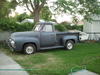
Okay, update on 49 won't start. Did as suggested, an additional soak of Marvel oil and lacquer thinner. Got the gas out of the manifold. Blew air in both directions through carburetor hole and through each open valve. Cleaned it up, new head gasket, buffed up all the bolts, used Rector seal, initial torque to 60. Rebuilt the carburetor and then went to put it on. I noticed a stack of gaskets, like spacers. Without the spacer gaskets the carburetor sits too low on the bolts. Searched online to see if there is a metal spacer (could not find one) I should be using and apparently this is common to stack? I also noticed the new gasket has a small hole on one side (can't really see what it is for), but the stack of spacers do not. Can I use this stack of old gaskets? Do I have to make a new stack? Does there need to be a hole through all of them? Should I not stack, use one gasket only and put a stack of washers and lock washer on top to mount the carburetor? I checked the forum but could not find info. Got any suggestions? Thanks for the help. Phil
Okay, update on 49 won't start. Did as suggested, an additional soak of Marvel oil and lacquer thinner. Got the gas out of the manifold. Blew air in both directions through carburetor hole and through each open valve. Cleaned it up, new head gasket, buffed up all the bolts, used Rector seal, initial torque to 60. Rebuilt the carburetor and then went to put it on. I noticed a stack of gaskets, like spacers. Without the spacer gaskets the carburetor sits too low on the bolts. Searched online to see if there is a metal spacer (could not find one) I should be using and apparently this is common to stack? I also noticed the new gasket has a small hole on one side (can't really see what it is for), but the stack of spacers do not. Can I use this stack of old gaskets? Do I have to make a new stack? Does there need to be a hole through all of them? Should I not stack, use one gasket only and put a stack of washers and lock washer on top to mount the carburetor? I checked the forum but could not find info. Got any suggestions? Thanks for the help. Phil
If you look closely you'll see that the gaskets are stapled together. They're acting like a heat sink for vapor lock. Some engines will have a phenolic spacer instead, and some of the bigger trucks will have a governor in that space. Just use the old gasket stack and don't worry about the small hole, you don't have a governor.
Now just to be clear, you did verify the firing order. I my 292 that was given to me because PO son did tune up and messed that up. I also recommend the 12 v battery to crank and to make it start you can give coil battery voltage for a short while. When I had my 55 with the I6 I would jump start it with 12v and use either not gas to make it fire.
New starter relay with 6 volt battery connected. Started right up. The starter seems to be okay. I guess it needed that 12 volt boost at the expense of a relay. I am okay with that. I think the not starting issue was mostly carburetion and age. On to the next step/steps. No video as I keep getting the prompt not an accepted file type and my online research isn't helping me solve that. Thanks for the help, Phil
New starter relay with 6 volt battery connected. Started right up. The starter seems to be okay. I guess it needed that 12 volt boost at the expense of a relay. I am okay with that. I think the not starting issue was mostly carburetion and age. On to the next step/steps. No video as I keep getting the prompt not an accepted file type and my online research isn't helping me solve that. Thanks for the help, Phil
Great news, Phil. Glad it's up and running.
Your video has to be uploaded to You Tube, or another video hosting site, and then you just copy and paste a link to it in your post.
Phil I see from your profile you're a fellow Wisconsinite. DW and I live just north of Milwaukee. I have to admit I Googled your name, are you in Madison?
Sorta have a plan. I would like to keep this engine running so I need to hook up my cooling system. And I need to check my radiator. When I had it boiled the fellow said I had several pin holes he could not fix. He suggested condensed milk or maybe stop leak might fix it. So I have to see what is up with that. And I'm not sure if my oil pump is working (remember no wiring, so no gauges) which needs to happen to keep the engine running too. I think I saw somewhere in one of the threads one of you said loosen the cover on the oil filter and if oil shoots out it is working. There is so much oil covering the pan and lower engine. So I have some questions for the crew.
The heater hoses need some addressing. I pulled the shut off valve and have one ordered. So I won't have to work on the heater right now I'll just have it shut off. I have this thermostatically controlled unit (see pic) on the driver side of the engine that looks pretty rough. And, I don't really know what it is. I am not sure what it does. Do I need to replace it or can I take it off and bypass it? It too has a hose which goes
back into the lower block under the distributor. Have not tried to pull that plug, but maybe I don't need to. And can one of you describe the water flow? Like what direction does everything flow because I cannot figure it out.
For the oil and oil pan, should I do an oil change and run it awhile to see if it is working before I drop the pan? Then if it is working I could drop the pan and do a clean. Or should I go ahead drop the pan now, clean everything, put it all back together and hope the oil pump is working okay and hope I won't have to do it again? Your suggestions are helpful. Phil
If I was a little closer I'd bring my F-2 over and we could compare trucks to see what you have going on there.
You can pull the round clean up plate off the bottom of your oil pan and was what you have. It's a good idea to change the oil before you run it too long. If you have oil in it now you could get an oil pressure gauge and tap into your oil line but these engines are by pass type system the oil pressure might not be too high.
That thing is a 110 volt AC block heater that's used in cold climates to pre-heat the engine before starting, or leave it plugged in all night to prevent freezing. There should be a 110 volt plug on the end of a wire somewhere.
I don't understand the radiator thing. If there's pinholes in a tube, block off that tube. If there's pinholes in one of the tanks, solder them up or solder a patch over it. Maybe a re-core is in order.
Get a cheap set of mechanical gauges and temporarily install them before you do anything else. They will thread into where the original sending units are, and will give you a rough idea what you're dealing with. Maybe if you like them put them underneath the dash.
Yes, that is an in line heater. Has a plug to connect to house current. So I should be able to eliminate (I'm sure it does not work) it if I am not going to use it right? I think I have the circulation figured out. Water from lower block (driver side) comes up and joins at the Y where the line from the upper block and shut off valve are (passenger side) and they go into the heater. If the valve is shut off the one line feeds through the heater and if the valve is open then the heater gets additional water from the other line with more heat. The exit hose from the heater is the line that goes back to the upper part of the water pump. Is that correct? I cannot find any diagrams. Here is another question. If I am not going to work on the heater right now, can I just put plugs in all three holes that are in the block, one at water pump, one on upper head (passenger side) and one at bottom of engine (driver side) and I would still get water circulation through the engine?
As for the oil I will pull the clean up plate as suggested and see what we've got and report back. Can I get may hand in there and scrape sludge out?
Also off to get some mechanical gauges.
Thanks men. Phil
As for the oil I will pull the clean up plate as suggested and see what we've got and report back. Can I get may hand in there and scrape sludge out?
It's been a while since I had mine off but I don't think there is much room, the round oil pick up takes up most of the room. There is a screen on the pick up that comes off so you can clean if off. To really get the pan clean you have to pull the pan off. You'll need a gasket kit for the pan. If you pull just the clean out plate you can easily make your own. Get a roll of gasket material or get a tube of permatex gasket maker for the oil pan.
This Hennessey Takes the Expedition Tremor's Off-Roading Capability to the Next Level
Slideshow: The VelociRaptor Expedition gains a lift, upgraded suspension, Brembo brakes, and trail-ready equipment while retaining the stock 440-horsepower EcoBoost V6.
Rezvani's Latest Post-Apocalyptic Monster Is a Ford F-150 Raptor Underneath
Slideshow: Called the Fortress, the 850-horsepower pickup combines Raptor underpinnings with military-inspired features, survival equipment, and a starting price of $285,000.