





Hitch Falure

Thread Starter
|
More Turbo


Joined: Apr 2017
Posts: 736
Likes: 225
Hitch Falure
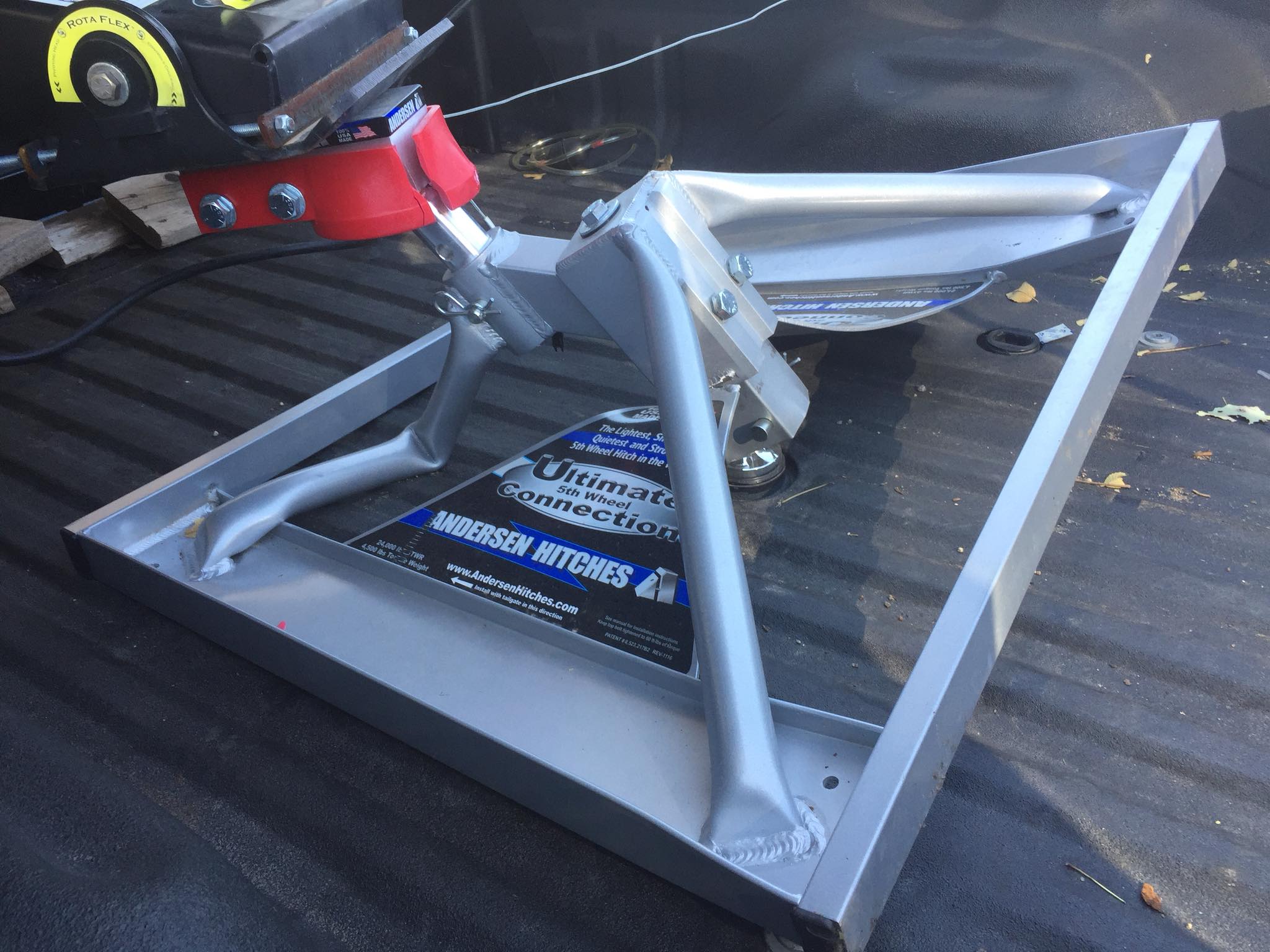
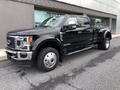
Just a FYI, the below pictures were posted on the Grand Design Facebook page. It is still playing out on what caused the failure. A 2015 Momentum 380TH (42' long toy hauler with an empty weight of 15,500 lbs and 2950 lb pin weight) was being pulled by a Ford Dually. Speculation is that the Roto-Flex pinbox could have contributed to the failure. It happened at low speed, and neiher the truck or 5th wheel had any damage.


FTE Leadership Emeritus


Joined: May 2014
Posts: 27,352
Likes: 5,946
From: Lake Hartwell, GA

Wow, that is some serious carnage! That is the aluminum version of the AUH if I am not mistaken. The trailer weight would be a bit of a concern for me being 15.5K lbs dry. I am a big supporter of the AUH, but with that size of a trailer I would probably have selected a B&W. Of course, you will never see me pulling that big of a trailer, I don't have enough ambition for something like that.
Just watched a video about the Rota-Flex because I am not familiar with it. I am not sure how the pin box would have effected the operation of the hitch enough to cause failure, but clearly something went wrong.
I just realized that the AUH in the picture is the goose neck version. That may have had something to do with it as well and between the goose neck mount, the Rota Flex box and the 15.5K dry weight trailer it was a perfect storm.
Keep us posted with the outcome. I have the steel 4 point mount 5th wheel rail version of the AUH and pull a 12K lbs trailer when it is fully loaded. I am still comfortable with hooking up my AUH and trailer and heading out.
Just watched a video about the Rota-Flex because I am not familiar with it. I am not sure how the pin box would have effected the operation of the hitch enough to cause failure, but clearly something went wrong.
I just realized that the AUH in the picture is the goose neck version. That may have had something to do with it as well and between the goose neck mount, the Rota Flex box and the 15.5K dry weight trailer it was a perfect storm.
Keep us posted with the outcome. I have the steel 4 point mount 5th wheel rail version of the AUH and pull a 12K lbs trailer when it is fully loaded. I am still comfortable with hooking up my AUH and trailer and heading out.

Posting Guru
Joined: Aug 2015
Posts: 2,399
Likes: 12
I'm a fan of my B&W as well. Giving the AUH the benefit of the doubt, the engineer in me suspects that bent pipe was damaged before failing. Maybe something heavy smacked it and put a dent in it. The dent may have been small and not noticed. The AUH design depends on undamaged pipes. I think my B&W could take a serious beating without significant weakening.

Senior User
Joined: Aug 2003
Posts: 155
Likes: 0
My guess. Overloaded hitch. GD 380TH GVWR is 19900. Wouldn't take much to exceed AUH rating of 4000# or so. Hope we find out what the cause of failure was!
Trending Topics
Moderator


Joined: May 2004
Posts: 6,519
Likes: 918
From: Home Base Nebraska
Just looked at the AUH site and the aluminum version is rated for 4500 lbs pin weight and 24000 lbs gross trailer weight.
I've never seen a standard style hitch fail by being crushed by pin weight, if it's that's was caused by a dented tube it's as faculty design IMO.
Denny
I've never seen a standard style hitch fail by being crushed by pin weight, if it's that's was caused by a dented tube it's as faculty design IMO.
Denny
FTE Stories
Ford Trucks for Ford Truck Enthusiasts

10 Things Every Truck Owner NEEDS (2026 Edition)
Michael S. Palmer
Rezvani's Latest Post-Apocalyptic Monster Is a Ford F-150 Raptor Underneath
Verdad Gallardo
Top 10 Most Expensive Ford Trucks Ever Sold on Bring a Trailer
Joe Kucinski
2027 Ford Super Duty Buyer's Guide (Every Model, Engine, & Package)
Brett Foote
Top 10 Ford Truck Tragedies
Joe Kucinski
AEV FXL Super Duty - the Super Duty Raptor Ford Doesn't Make
Brett Foote
Lobo Vs Lobo: Proof the F-150 Lobo Should Be Even Lower!
Michael S. Palmer
Ford's 2001 Explorer Sportsman Concept Looks For a New Home
Verdad Gallardo
10 Best Ford Truck Engines We Miss the Most!
Joe Kucinski
Tuned
Joined: Oct 2016
Posts: 371
Likes: 15
More to it
I am a Mechanical Engineer.
There is certainly more to this story. That hitch is rated for that trailer. In order for a catastrophic failure like that to occur, it would have been subjected to forces far in excess of the design load. I certainly am not privy to AUH design specifications, however it is standard practice for hardware like a hitch to be designed with a high factor of safety in order to withstand any surge loads that may occur while towing. It most likely has a factor of safety of at least 2.0 . This means it could withstand loads at least twice what it was designed to carry as a working load.
This is most likely a case of prior damage that reduced the capacity, or improper installation of the hitch or mating hardware, or some violent event causing extreme stress like perhaps an accident.
It is highly unlikely that this would have occurred under normal operating loads and conditions.
It would be interesting to find out what really occurred.
There is certainly more to this story. That hitch is rated for that trailer. In order for a catastrophic failure like that to occur, it would have been subjected to forces far in excess of the design load. I certainly am not privy to AUH design specifications, however it is standard practice for hardware like a hitch to be designed with a high factor of safety in order to withstand any surge loads that may occur while towing. It most likely has a factor of safety of at least 2.0 . This means it could withstand loads at least twice what it was designed to carry as a working load.
This is most likely a case of prior damage that reduced the capacity, or improper installation of the hitch or mating hardware, or some violent event causing extreme stress like perhaps an accident.
It is highly unlikely that this would have occurred under normal operating loads and conditions.
It would be interesting to find out what really occurred.


Banned
Joined: Jan 2017
Posts: 359
Likes: 19
We towed our Grand Design fifth wheel its first 12,000 miles with an Andersen Ultimate. The first thing the service manager told us when setting up our truck for us was that a Roto-Flex pin box was NEVER to be used with the Andersen hitch (and this came directly from Andersen). This is because the Roto-Flex, without the stabilizing influence of a standard fifth wheel hitch plate, does not keep the pin box plate on a horizontal plane. The MOR/ryde and Demco Glide Ride pin boxes are fine (we used the Demco). This person should have been steered away from the Roto-Flex.
Rob
Rob
Logistics Pro
Joined: Mar 2005
Posts: 2,536
Likes: 200
From: southeast PA
If you look real close you'll see two bolts and steel plates that were installed to lock the roto-flex out.
I've said it before and I'll say it again. I don't understand the hype behind the Andersen. Yes you can lift it out easy, but do you really want the lightest possible means connecting your truck and trailer? I sure don't. I'll keep my Reese Elite.
I've said it before and I'll say it again. I don't understand the hype behind the Andersen. Yes you can lift it out easy, but do you really want the lightest possible means connecting your truck and trailer? I sure don't. I'll keep my Reese Elite.

Elder User
Joined: Apr 2017
Posts: 523
Likes: 0
From: Eagan, MN
If you look real close you'll see two bolts and steel plates that were installed to lock the roto-flex out.
I've said it before and I'll say it again. I don't understand the hype behind the Andersen. Yes you can lift it out easy, but do you really want the lightest possible means connecting your truck and trailer? I sure don't. I'll keep my Reese Elite.
I've said it before and I'll say it again. I don't understand the hype behind the Andersen. Yes you can lift it out easy, but do you really want the lightest possible means connecting your truck and trailer? I sure don't. I'll keep my Reese Elite.
https://andersenhitches.com/Products...ckout-kit.aspx