


292 Revival

Logistics Pro

Joined: Feb 2005
Posts: 3,952
Likes: 117
From: Upper Left Coast
The only way you can dissolve rust is to use an acid which might cause more damage than you're trying to prevent.........
There is no mechanic in a can unfortunately.............

Thread Starter
|
Lead Driver


Joined: Apr 2007
Posts: 5,958
Likes: 105
From: Houston
Made some more progress, got the battery Friday after work, and got it installed. Hit the key to check on the starter and nothing. Not even a click. So I pulled the ignition and the start wires off the solenoid and attached a jumper wire to the start terminal and touched it to the positve on the battery. Starter engaged and turned the motor.
So starter is good, solenoid is good. Its either the key switch is bad or theres a break in the wire to the solenoid. Once I am over this cold that hit me Friday I will use a multimeter on the start wire at the solenoid and see if I have power at the solenoid when the key is turned. If not then I will test it at the key switch itself.
I am leaning towards the ignition switch though cause they can and do go out. Odds of the start wire breaking I think are very slim.
I will hold off on purchasing a new ignition switch till I verify it is the switch and not the wire. But the orignal shop manual I have from '56 says that if the solenoid doesnt click theres only three causes, the ignition switch is bad, the solenoid is bad, or theres a break in the wire. I already ruled out the solenoid, just need to rule out one of the others now.
I also got in on friday two bottles of Red Line Lead additive, and the rebuilt carb is mounted already. Just need to mount the rebuilt fuel pump and add fuel and go from there.
So starter is good, solenoid is good. Its either the key switch is bad or theres a break in the wire to the solenoid. Once I am over this cold that hit me Friday I will use a multimeter on the start wire at the solenoid and see if I have power at the solenoid when the key is turned. If not then I will test it at the key switch itself.
I am leaning towards the ignition switch though cause they can and do go out. Odds of the start wire breaking I think are very slim.
I will hold off on purchasing a new ignition switch till I verify it is the switch and not the wire. But the orignal shop manual I have from '56 says that if the solenoid doesnt click theres only three causes, the ignition switch is bad, the solenoid is bad, or theres a break in the wire. I already ruled out the solenoid, just need to rule out one of the others now.
I also got in on friday two bottles of Red Line Lead additive, and the rebuilt carb is mounted already. Just need to mount the rebuilt fuel pump and add fuel and go from there.
Thread Starter
|
Lead Driver
Joined: Apr 2007
Posts: 5,958
Likes: 105
From: Houston
Used volt meter on the start wire at the solenoid and with the key in the start position it is reading 0.24 Volts. With the key in the run position its reading around 0.12 Volts. I need to check the other wire just to make sure I am not testing the wire that runs to the coil for the start bypass on the resistor. I dont think I am but I like to be sure though.
I have the ignition switch coming in along with a new points for a '57 - '59 Y8 seeing as this is vacuum and mechanical advanced distributor on the engine now. Probably will hate seeing it go for the correct load o matic distributor to run the orignal holley 4bbl and intake. But I do want this vehicle to atleast win a couple trophies at some car shows.
I have the ignition switch coming in along with a new points for a '57 - '59 Y8 seeing as this is vacuum and mechanical advanced distributor on the engine now. Probably will hate seeing it go for the correct load o matic distributor to run the orignal holley 4bbl and intake. But I do want this vehicle to atleast win a couple trophies at some car shows.
Thread Starter
|
Lead Driver
Joined: Apr 2007
Posts: 5,958
Likes: 105
From: Houston
I redid the ignition system, new points, condenser, cap, rotor, ballast resistor, coil, resistor to coil wire, coil to dist wire, and new sparkplug wires. I havent changed the plugs out yet though.
I checked spark at cylinder 5 and it jumps a standard ignition spark gap on the tester. I rebuilt the carb and filled the fuel bowl with fuel since the tank has a decent sized pin hole in it.
I tried to run it saturday but all I get is a spin over slowing down and speeding up while cranking. Then it tries to bust off and run by firing one or two cylinders then back to cranking.
I noticed the battery cable from the solenoid to the starter has no coating left on it and the bare wire is green and oxidized. I think this might be my problem I do not know.
I am posting this update to get everyone caught up and just incase if someone knows something I dont know. I will check my shop manual for a flow chart if it still does this after replacing the battery cables.
One thing I did notice is that the bypass wire that goes from the solenoid to the positive on the coil was not hooked up to begin with. It was taped up to the ignition wire to the ballastic resistor. I hooked it back up.
I am one step closer just dont know why the engine seems to turn over so slow and doesnt seem to want to run. It spins over more than it attemps to fire. I havent checked compression but the engine is spinning over way slower with the plugs in than it did with the plugs out so I am confident that the engine has compression.
The point gap is set in the middle of the spec range listed in the shop manual. I think it was 0.014 to 0.016" and I set it at 0.015". I didnt see the spark though but from how it was described it did not sound like it was a good vivid blue spark but I heard the snap while cranking inside the car so I think it is a strong spark. I pulled cylinder 5 plug out after cranking on it and it was slightly wet with fuel so I dont know if its flooding out but even holding the throttle to the floor it does the same thing spin over till it attempts to fire a couple times then back to spinning over. Might need to just replace the plugs but I dont see how all 8 plugs could just go bad sitting.
One other thing I noticed is the exhaust valve on the passenger side is frozen, I havent tried to unstick it but it should start up reguardless just run bad.
I checked spark at cylinder 5 and it jumps a standard ignition spark gap on the tester. I rebuilt the carb and filled the fuel bowl with fuel since the tank has a decent sized pin hole in it.
I tried to run it saturday but all I get is a spin over slowing down and speeding up while cranking. Then it tries to bust off and run by firing one or two cylinders then back to cranking.
I noticed the battery cable from the solenoid to the starter has no coating left on it and the bare wire is green and oxidized. I think this might be my problem I do not know.
I am posting this update to get everyone caught up and just incase if someone knows something I dont know. I will check my shop manual for a flow chart if it still does this after replacing the battery cables.
One thing I did notice is that the bypass wire that goes from the solenoid to the positive on the coil was not hooked up to begin with. It was taped up to the ignition wire to the ballastic resistor. I hooked it back up.
I am one step closer just dont know why the engine seems to turn over so slow and doesnt seem to want to run. It spins over more than it attemps to fire. I havent checked compression but the engine is spinning over way slower with the plugs in than it did with the plugs out so I am confident that the engine has compression.
The point gap is set in the middle of the spec range listed in the shop manual. I think it was 0.014 to 0.016" and I set it at 0.015". I didnt see the spark though but from how it was described it did not sound like it was a good vivid blue spark but I heard the snap while cranking inside the car so I think it is a strong spark. I pulled cylinder 5 plug out after cranking on it and it was slightly wet with fuel so I dont know if its flooding out but even holding the throttle to the floor it does the same thing spin over till it attempts to fire a couple times then back to spinning over. Might need to just replace the plugs but I dont see how all 8 plugs could just go bad sitting.
One other thing I noticed is the exhaust valve on the passenger side is frozen, I havent tried to unstick it but it should start up reguardless just run bad.

Senior User
Joined: Jun 2014
Posts: 291
Likes: 1
From: California
I would definitely replace the hot lead to the solenoid, though if the engine is trying to fire, sounds like it's spinning fast enough. Fixing the ballast bypass was a good catch.
I would follow up with a compression test. It's possible you only have good compression in a couple of cylinders, which might explain why it won't catch and run.
I had a situation on a 390 in similar shape. While trying to get it started, it flooded so bad that one cylinder was full of liquid gas. I had the same fast-slow crank you're seeing (and of course, no start). I didn't catch it until I pulled the plugs for a compression test and pumped the fuel out the spark plug hole. Still not sure why it happened--I ended up with a flow restrictor on the fuel line.
~Steve
I would follow up with a compression test. It's possible you only have good compression in a couple of cylinders, which might explain why it won't catch and run.
I had a situation on a 390 in similar shape. While trying to get it started, it flooded so bad that one cylinder was full of liquid gas. I had the same fast-slow crank you're seeing (and of course, no start). I didn't catch it until I pulled the plugs for a compression test and pumped the fuel out the spark plug hole. Still not sure why it happened--I ended up with a flow restrictor on the fuel line.
~Steve
Thread Starter
|
Lead Driver
Joined: Apr 2007
Posts: 5,958
Likes: 105
From: Houston
I would definitely replace the hot lead to the solenoid, though if the engine is trying to fire, sounds like it's spinning fast enough. Fixing the ballast bypass was a good catch.
I would follow up with a compression test. It's possible you only have good compression in a couple of cylinders, which might explain why it won't catch and run.
I had a situation on a 390 in similar shape. While trying to get it started, it flooded so bad that one cylinder was full of liquid gas. I had the same fast-slow crank you're seeing (and of course, no start). I didn't catch it until I pulled the plugs for a compression test and pumped the fuel out the spark plug hole. Still not sure why it happened--I ended up with a flow restrictor on the fuel line.
~Steve
I would follow up with a compression test. It's possible you only have good compression in a couple of cylinders, which might explain why it won't catch and run.
I had a situation on a 390 in similar shape. While trying to get it started, it flooded so bad that one cylinder was full of liquid gas. I had the same fast-slow crank you're seeing (and of course, no start). I didn't catch it until I pulled the plugs for a compression test and pumped the fuel out the spark plug hole. Still not sure why it happened--I ended up with a flow restrictor on the fuel line.
~Steve
I am contemplating spraying a little either in the carb to see if the fuel is bad. I did get this fuel about 3 weeks ago and had to drain it out cause the tank was leaking. But then I found the thing wasnt even sparking then I ordered all the ignition components which resulted in me waiting a good month. This fuel might be bad is what I am thinking right now as I think about it. I could also run a jumper wire from the terminal on the solenoid to the positive on the coil just to see if that makes a difference as well.
I did crank on it at lunch time here just a few moments ago but the problem is after about 10 to 15 seconds it started spinning slower and slower like the battery was dead. I know its not a powerful battery at just four hundred and some change cold cranking amps but I didnt want to fork over big bucks for a reproduction 29N rated at 700 CCA if I have to overhaul the engine and the battery go bad sitting a few years till I get the money to do a overhaul.
Thread Starter
|
Lead Driver
Joined: Apr 2007
Posts: 5,958
Likes: 105
From: Houston
I tried some either just now but it didnt make a bit of difference engine is spinning over weakly I think that battery cable is part of my problem. I also need to find out if its the red wire or the black wire is the start bypass as I removed one and ran a bypass wire from the key switch as the circuit is busted from the key switch to the solenoid. Maybe I dont even hve the bypass wire attached at the moment something I need to look into.
FTE Stories
Ford Trucks for Ford Truck Enthusiasts

Top 10 Most Expensive Ford Trucks Ever Sold on Bring a Trailer
Joe Kucinski
2027 Ford Super Duty Buyer's Guide (Every Model, Engine, & Package)
Brett Foote
Top 10 Ford Truck Tragedies
Joe Kucinski
AEV FXL Super Duty - the Super Duty Raptor Ford Doesn't Make
Brett Foote
Lobo Vs Lobo: Proof the F-150 Lobo Should Be Even Lower!
Michael S. Palmer
Ford's 2001 Explorer Sportsman Concept Looks For a New Home
Verdad Gallardo
10 Best Ford Truck Engines We Miss the Most!
Joe Kucinski
2026 Shelby F-150 Off-Road: Better Than a Raptor R?
Brett Foote
2027 Super Duty Carhartt Package First Look: 12 Things You NEED to Know!
Michael S. Palmer
Post Fiend
Joined: Apr 2002
Posts: 19,311
Likes: 97
From: Waterloo, Iowa
Remember a weak spark in the air will never be able to fire a fuel mixture under actual compression inside the combustion chamber.
If you roast a starter they tend to hog the current prior to failure and make starting difficult or impossible because the ignition will be starved at the moment it's needed.
Make sure your grounds are bulletproof at the battery and block, distributor to block, firewall. Crack them loose and file the pad down to bright shiny metal. EVERY electrical connection will be marginal because of corrosion by now. New ground cables will help.
And try a known good condenser - the new manufacture ones seem to be universally bad lately.
If you roast a starter they tend to hog the current prior to failure and make starting difficult or impossible because the ignition will be starved at the moment it's needed.
Make sure your grounds are bulletproof at the battery and block, distributor to block, firewall. Crack them loose and file the pad down to bright shiny metal. EVERY electrical connection will be marginal because of corrosion by now. New ground cables will help.
And try a known good condenser - the new manufacture ones seem to be universally bad lately.


Thread Starter
|
Lead Driver
Joined: Apr 2007
Posts: 5,958
Likes: 105
From: Houston
Remember a weak spark in the air will never be able to fire a fuel mixture under compression. If you roast the starter it will hog the current and it will never start because the ignition will be starved at the exact moment it's needed.
Make sure your grounds are bulletproof at the battery and block, distributor to block, firewall. Crack them loose and file the pad down to bright shiny metal. EVERY electrical connection will be marginal because of corrosion by now. New ground cables will help.
And try a known good condenser - the new manufacture ones seem to be universally bad lately.
Make sure your grounds are bulletproof at the battery and block, distributor to block, firewall. Crack them loose and file the pad down to bright shiny metal. EVERY electrical connection will be marginal because of corrosion by now. New ground cables will help.
And try a known good condenser - the new manufacture ones seem to be universally bad lately.
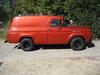
Is there supposed to be a ground wire from the dist to the block? I seen reference to it but no reproductions and I dont see where it would bolt up at.
Post Fiend
Joined: Apr 2002
Posts: 19,311
Likes: 97
From: Waterloo, Iowa
Hot rodders will sometimes run a dedicated ground wire. It grounds through the boss though, yes. Paint or crud can interfere with this.
Keep your battery topped off with your charger. Extended cranking is a real torture test! Batteries aren't rated for continuous duty either.
I don't recall reading that you've absolutely checked for a good spark? Were they (plugs) installed ever during your solvent soaks? A plug that is fouled with fuel or oils, especially penetrating oil I'd imagine can sometimes go dud.
Make sure they are cleaned up and dress with a file. If spark is good can also try advancing (clockwise) the distributor housing a bit at a time and see if it likes that.
Keep your battery topped off with your charger. Extended cranking is a real torture test! Batteries aren't rated for continuous duty either.
I don't recall reading that you've absolutely checked for a good spark? Were they (plugs) installed ever during your solvent soaks? A plug that is fouled with fuel or oils, especially penetrating oil I'd imagine can sometimes go dud.
Make sure they are cleaned up and dress with a file. If spark is good can also try advancing (clockwise) the distributor housing a bit at a time and see if it likes that.
Thread Starter
|
Lead Driver
Joined: Apr 2007
Posts: 5,958
Likes: 105
From: Houston
Hot rodders will sometimes run a dedicated ground wire. It grounds through the boss though, yes.
Keep your battery topped off with your charger. Extended cranking is a real torture test! They aren't rated for continuous duty either.
I don't recall reading that you've absolutely checked for a good spark? Were they (plugs) installed ever during your solvent soaks? A plug that is fouled with fuel or oils, especially penetrating oil can sometimes go dud.
Make sure they are cleaned up and dress with a file. If spark is good can also try advancing (clockwise) the distributor housing a bit at a time and see if it likes that.
Keep your battery topped off with your charger. Extended cranking is a real torture test! They aren't rated for continuous duty either.
I don't recall reading that you've absolutely checked for a good spark? Were they (plugs) installed ever during your solvent soaks? A plug that is fouled with fuel or oils, especially penetrating oil can sometimes go dud.
Make sure they are cleaned up and dress with a file. If spark is good can also try advancing (clockwise) the distributor housing a bit at a time and see if it likes that.
I did check for spark, I did not how ever physically see what the spark looked like in the tester as I was the one doing the cranking. I will get someone to crank it over or just turn the key on and use a remote starter switch on the solenoid. They were not able to tell me how the spark looked but it did jump a good sized gap on the tester but they didnt say it was a white spark it was like a yellowish spark in color. I will have to see for myself one day and see what it really looks like.
As far as the plugs goes, they were kept out of the engine when I was soaking the cylinders with solvent. They werent installed till after I spun the engine over with the starter and pumped out any MMO that remained in the cylinders. They were not replaced and these plugs have sat for almost 30 years. I have new plugs but did not put them in as I couldnt believe that all eight plugs would just go bad. I might go ahead and put the new ones in when I get the battery cables in and swap those out.
I just keep thinking the engine is spinning over way to slowly and I think it all stems from the battery cable from the solenoid to the starter that is really messed up. I will know more probably after the holidays as I dont expect the cables will get in and be installed till after then.
But thanks to everyone that has responded. Has confirmed some of my beliefs that I was not fully sure about and was starting to second guess, and I also got some ideas of alternative ways of testing to rule out other issues.
Post Fiend
Joined: Apr 2002
Posts: 19,311
Likes: 97
From: Waterloo, Iowa
You want to keep the battery charged. They last far longer. Anything less than about a 75% charge for more than a couple days and they will start to sulfate, then will never take a full charge after that. If you have a tach, use it...the spec for 292 is 150-180RPM on crank.
Monitor the battery voltage at the posts while cranking (no boost or charger) and see what you have. Yellow spark is no good. You want to see a healthy bluish white spark that snaps audibly.
Monitor the battery voltage at the posts while cranking (no boost or charger) and see what you have. Yellow spark is no good. You want to see a healthy bluish white spark that snaps audibly.