



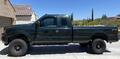


Best tow rig setup?

Hotshot


Joined: Jan 2011
Posts: 18,849
Likes: 179
From: Puget Sound
I'll explain that better to be very clear: I have seen HPOPs deliver 2800 PSI in stock tune, then a hot tune that asks for 3000 PSI and way more fuel than the injector capacity dropped the Injector Control Pressure from 3000 PSI to 1700 PSI. I have also seen a hot tune drop a T500 on its face with stock sticks, Stage Is and Stage IIs... which is no easy task. Smoke and heat, smoke and heat... but nary a grin in sight.
Just remember... this is a graph for a stage I stick, or any other single-shot injector with stock nozzles. The 30%, 80%, and 100% nozzle graphs will be steeper... but I can only estimate where the data points are.

Postmaster
Joined: Dec 2010
Posts: 2,951
Likes: 4
From: Gary,Indiana
This happens way more often than you could possibly imagine. The Golden Rule: If you ask more out of the injector than it has to offer, Injector Control Pressure will suffer. I have seen ICP PSI losses of 1300 PSI on a hot tune.
I'll explain that better to be very clear: I have seen HPOPs deliver 2800 PSI in stock tune, then a hot tune that asks for 3000 PSI and way more fuel than the injector capacity dropped the Injector Control Pressure from 3000 PSI to 1700 PSI. I have also seen a hot tune drop a T500 on its face with stock sticks, Stage Is and Stage IIs... which is no easy task. Smoke and heat, smoke and heat... but nary a grin in sight.
Just remember... this is a graph for a stage I stick, or any other single-shot injector with stock nozzles. The 30%, 80%, and 100% nozzle graphs will be steeper... but I can only estimate where the data points are.
I'll explain that better to be very clear: I have seen HPOPs deliver 2800 PSI in stock tune, then a hot tune that asks for 3000 PSI and way more fuel than the injector capacity dropped the Injector Control Pressure from 3000 PSI to 1700 PSI. I have also seen a hot tune drop a T500 on its face with stock sticks, Stage Is and Stage IIs... which is no easy task. Smoke and heat, smoke and heat... but nary a grin in sight.
Just remember... this is a graph for a stage I stick, or any other single-shot injector with stock nozzles. The 30%, 80%, and 100% nozzle graphs will be steeper... but I can only estimate where the data points are.
Now when I look at your graph of the differences in split & single shot I see that it moves the fuel load to the front side of the SOI instead of the weak pulse to start like split. But it makes me concerned that if a tuner moves the SOI more BTDC over stock timing that sure it will make more power but would be something I would NOT want done for my truck! I could see maybe adding a 1/2* or 1* btdc with a split shot so the main fuel load comes in at the correct timing per hp rating that you are looking for. But that is still a iffie in my book as far as my goals and B50 life.. So my question would be other then asking a tuner, what data could you look for to see if this is going on. Because I would think a longer pw would give you the same data as moving the SOI around. Other than a drop in ICP.
Hotshot
Joined: Jan 2011
Posts: 18,849
Likes: 179
From: Puget Sound
I have to reiterate that I am not a tuner, but I grasp what's happening in there. It's always best to wait for a tuner to jump in and correct me (if needed). The split-shot main fueling event is late in the cycle, and adjusting the timing is limited by the early event. The single-shot circumvents this problem, so by just keeping stock tuning - you get more power by default. The stock tuning works with AC 160s, but the fueling is excessive... so you need a single-shot tune to prevent heat, smoke, a touchy throttle, and a rough idle.
Looking at the graph, you can see why the fueling is excessive: The split-shot injects, backs off, then injects more in... say... 2.5 ms. The single-shot (with the same SOI as stock) uses that 2.5 ms differently, by getting the bulk of the fuel in before the split even gets a chance to finish ramping up... but the single shot isn't done fueling yet. Remember, this graph is 140 CC single vs. 140 CC split... the 160 CC will be identical only up to a point, then it delivers fuel quantities off this chart. The single-shot profile also advances the SOI ever-so-slightly, so the noise level and power goes up because of this. Dialing the tune for singles may or may not involve backing off the SOI, depending on what your driving goals are - but it will involve the fueling tables in a tune to avoid overfueling in daily driving. Once a tune is dialed, you may possibly get a small bump in fuel economy (don't count on it) with the slightly-earlier injection, but the tradeoff will be the noise level. There's always something waiting to jump under the bus.

Now... let's throw a 100% nozzle on the stick and things change dramatically. My SOI is aggressive without tuning, as is my fueling. I have the stock-ish tune on my Hydra (stock torque and HP), but I also have tuner bypass available. I recently accidentally started in tuner bypass and boy howdy - that was one aggressive start. It was more like an explosion to life, and it took a few seconds for the idle to settle down to just billowing white smoke without fuel straight-up gushing out the exhaust. I exaggerate... a little... but that was startling.
Looking at the graph, you can see why the fueling is excessive: The split-shot injects, backs off, then injects more in... say... 2.5 ms. The single-shot (with the same SOI as stock) uses that 2.5 ms differently, by getting the bulk of the fuel in before the split even gets a chance to finish ramping up... but the single shot isn't done fueling yet. Remember, this graph is 140 CC single vs. 140 CC split... the 160 CC will be identical only up to a point, then it delivers fuel quantities off this chart. The single-shot profile also advances the SOI ever-so-slightly, so the noise level and power goes up because of this. Dialing the tune for singles may or may not involve backing off the SOI, depending on what your driving goals are - but it will involve the fueling tables in a tune to avoid overfueling in daily driving. Once a tune is dialed, you may possibly get a small bump in fuel economy (don't count on it) with the slightly-earlier injection, but the tradeoff will be the noise level. There's always something waiting to jump under the bus.
Now... let's throw a 100% nozzle on the stick and things change dramatically. My SOI is aggressive without tuning, as is my fueling. I have the stock-ish tune on my Hydra (stock torque and HP), but I also have tuner bypass available. I recently accidentally started in tuner bypass and boy howdy - that was one aggressive start. It was more like an explosion to life, and it took a few seconds for the idle to settle down to just billowing white smoke without fuel straight-up gushing out the exhaust. I exaggerate... a little... but that was startling.
Postmaster
Joined: Dec 2010
Posts: 2,951
Likes: 4
From: Gary,Indiana
No I don't think this tread has gone sideways it has dug into the how and whys' something makes for a great tow set up. Grant most guys don't care how their tow tunes work or if they are getting the most out of their injectors. But for me this data, graphs and info is very helpful to me as far as helping me understand and get my truck to be the best it can at towing. I myself am not ready to pull the trigger on injectors yet but all this stuff is helping me make decisions on making the right choices for me. I know it might seem off subject but actually it is just breaking it ALL the way down to the PW and cc's of things.

Logistics Pro

Joined: Jul 2009
Posts: 3,635
Likes: 3
From: Lansdale, PA
FTE Stories
Ford Trucks for Ford Truck Enthusiasts

Top 10 Fords at 2026 Carlisle Ford Nationals
Joe Kucinski
3 Best / 3 Worst Parts of Modern Ford Ownership
Brett Foote
10 Amazing Upgrades That Solve Common Ford Truck Owner Headaches
Pouria Savadkouei
Every 2026 Ford Engine Explained
Brett Foote
10 Ugly Ford Trucks That We Still Kinda Love
Joe Kucinski
10 Things Every Truck Owner NEEDS (2026 Edition)
Michael S. Palmer
Rezvani's Latest Post-Apocalyptic Monster Is a Ford F-150 Raptor Underneath
Verdad Gallardo
Top 10 Most Expensive Ford Trucks Ever Sold on Bring a Trailer
Joe Kucinski
2027 Ford Super Duty Buyer's Guide (Every Model, Engine, & Package)
Brett Foote
Logistics Pro
Joined: Jul 2009
Posts: 3,635
Likes: 3
From: Lansdale, PA
The arc that the bar has to travel, essentially "lengthens" as it arcs upwards under suspension compression. Now if the distance the lower eyelet travels backward (if you were to put a plumbbob at eyelet unloaded vs max compression) isn't equal to the amount of movement the axle naturally moves during its compression (being the springs have an arch and the shackle allows the spring to lengthen as it compresses), it causes either binding, or it forces the axle more than it is designed, causing a stiff suspension and harshness if the two amounts are not the same.
Know what I mean.
Very curious how it rides and flexes.

Post Fiend
Joined: Jun 2004
Posts: 9,293
Likes: 10
From: Parker, CO
It's not wether or not one pivots and one doesn't, it's geometry.
The arc that the bar has to travel, essentially "lengthens" as it arcs upwards under suspension compression. Now if the distance the lower eyelet travels backward (if you were to put a plumbbob at eyelet unloaded vs max compression) isn't equal to the amount of movement the axle naturally moves during its compression (being the springs have an arch and the shackle allows the spring to lengthen as it compresses), it causes either binding, or it forces the axle more than it is designed, causing a stiff suspension and harshness if the two amounts are not the same.
Know what I mean.
Very curious how it rides and flexes.
The arc that the bar has to travel, essentially "lengthens" as it arcs upwards under suspension compression. Now if the distance the lower eyelet travels backward (if you were to put a plumbbob at eyelet unloaded vs max compression) isn't equal to the amount of movement the axle naturally moves during its compression (being the springs have an arch and the shackle allows the spring to lengthen as it compresses), it causes either binding, or it forces the axle more than it is designed, causing a stiff suspension and harshness if the two amounts are not the same.
Know what I mean.
Very curious how it rides and flexes.
Also took it off road a few times on the Colorado Jeep trails. Never an issue.
You don't know it's there until you hit the pedal hard. Then you realize you don't have axle wrap. Plain and simple.
Now that I just took the lift off my truck, I need to find another setup. Definitely can feel the axle wrap again. But the old traction bars didn't fit with stock suspension. They are set up for specific suspension configurations.

Lead Driver
Joined: Jun 2013
Posts: 5,648
Likes: 893
From: north of Minneapolis, MN
Last fall I was out collecting some AE data...had the big horse trailer hooked up, and a 80hp tow tune. From a dead stop and pedal meeting the mat I had a bunch of noise coming from the driveline...Sounded like u-joint bind.
Then along comes Rich....Coupled with the video posted it all makes sense now. Axle wrap.
Then along comes Rich....Coupled with the video posted it all makes sense now. Axle wrap.
Hotshot
Joined: Jan 2011
Posts: 18,849
Likes: 179
From: Puget Sound
Stock everything, except for the 7.3L feed system (Stinky like his air and fuel) and the transmission.


Thread
Thread Starter
Forum
Replies
Last Post