


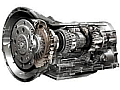


 lol
lol

Mercon LV and SP
Senior User


Joined: Jul 2006
Posts: 226
Likes: 0
From: Jeffersonville , Indiana
Hey Mark do you know the differences between the two? Is LV a better all around fluid than SP?

Senior User
Joined: May 2005
Posts: 122
Likes: 0
From: Orange Park, Fl
article
Ford Unveils New Transmission Fluid
By Lisa Tocci
Ford Motor Co. last week gave the lubricants industry its first look at a new automatic transmission fluid specification. Mercon LV is intended to be a fill-for-life fluid for the automaker's emerging transmission technologies, explained Ford Mercon Committee Chairman Chintan Ved. The automaker also has streamlined its Mercon V licensing program in ways that will greatly cut costs for transmission fluid branders and re-branders.
Ved unveiled the new trademarked fluid and described the licensing program changes during the SAE World Congress in Detroit, at the April 17 meeting of SAE Technical Committee 3 on Transmission Fluids and Gear Oils. He reminded listeners that Ford's older Mercon spec has been replaced with Mercon V, and any remaining Mercon licenses will expire by June 30. Current and older models that recommend Mercon should be serviced with licensed Mercon V products now.
Mercon LV is something else -- a forward-looking fluid designed to deliver key performance benefits for 2008 models and beyond, he said. It is intended to coexist with Mercon V going forward, and the two are not interchangeable.
Mercon LV, Ved explained last week in an interview with Lube Report, offers stable frictional performance, potential fuel economy benefits, improved anti-shudder performance and anti-foaming/aeration performance, and greater oxidation stability in step-type transmissions.
Licensing for Mercon LV -- the LV stands for "low viscosity," not 55 -- begins July 1, and the fluid will be used as factory fill for 2008 models such as the Ford Focus when they roll off the assembly line this year. Ford wants it ready for the service-fill market at the same time.
"Drain intervals across the board with the new fluid will be 150,000 miles for passenger cars and trucks, in normal service," Ved said. Ford says Mercon LV has strong potential for increasing the severe-duty service change intervals, as well, which it will announce at a later date.
Only one additive package, made by Afton Chemical, has been approved for Mercon LV, Ved pointed out. It took some three years to validate the additive package for Ford's factory fill, and only then was it considered for service fill as well. The Afton package includes a detergent-inhibitor package and a shear-stable viscosity index improver package. Depending on the base stock used, treat levels are expected to be in the range of 11 to 14 percent.
To meet the performance demanded by Mercon LV, most products will need to be formulated with Group III oils, Ved added. "Based on Mercon LV's viscosity, shear stability and antioxidancy requirements, use of higher-end Group IIs, Group III and PAOs will be the best scenario." He said there seems to be adequate supply of Group IIIs to meet the volume needs, as the LV market develops; also, there will be less turnover of the fluid, since the transmission fill intervals will be so much longer.
Mercon LV joins Mercon V and Mercon SP as the only current Mercon products for conventionally shifted automatic transmissions. (There is also Mercon C, designed for CVTs).
"The goal with LV was to create a more robust fluid, even beyond that of Mercon V," Ved said. "We aren't yet replacing SP, which is used in our conventionally shifted five-speed and six-speed transmissions, but there is a significant amount of testing ongoing to replace SP with Mercon LV."
Due to viscosity differences, LV is not intended as a substitute for Mercon V. "Newer transmission technologies are being developed with low-viscosity fluid," he added. "It's fill-for-life, and has more stable friction properties, and will maintain the shift feel throughout the fluid's life. It also will maintain its viscosity with less than 5 percent viscosity change over the life of the fluid."
The major additive companies all hope to gain the automakers' factory-fill business, and Laurie Strasser, marketing manager at Afton Chemical in Richmond, Va., said her company was gratified that its package got the nod from Ford. "We're blessed with an excellent research team, who put forth solid technology, considerable persistence and hard work," she said.
The key, as with all emerging technologies, was to provide measurable improvements in multiple areas. "Every OEM is looking to boost fuel economy by optimizing the transfer of power along the complete drivetrain," she said. "Another key demand is for greater friction stability. We've seen this emphasized with General Motors' Dexron VI fluid, with the JASO specification in Japan, and now Ford's Mercon LV. The OEMs want consistent friction performance -- shift feel -- throughout the life of the product, and for the product to have a longer life as well."
Automakers around the globe have launched low-viscosity fluids, Strasser stated, but each is unique, and not always interchangeable the way Ford's Mercon and GM's Dexron III were. "GM's Dexron VI and Toyota's low-viscosity WS and Ford's Mercon LV are not currently compatible, because the design criteria and frictional requirements are different. The arena of transmission fluids is not converging," she told Lube Report. "These are different fluids with different design characteristics.
"We in North America have been used to having 60 percent of the market satisfied with a single transmission fluid, Dexron/Mercon. That isn't so any more. Now there's a new paradigm, with each of the OEMs having unique, stand-along fluids."
Strasser noted that the base stock needed for the new LV specification is mostly going to be a Group III, with its better thermal and oxidative properties. Most Group III base stock suppliers will be able to meet the specification, she added. "Ford is a global company and will want to be assured of supply for its factories and dealers worldwide."
Even as it adds this new specification, Ford is trying to wean users away from using its old Mercon product, and Ved reiterated that Mercon V is the proper fluid now for all 2007 and earlier models. No new Mercon licenses have been issued since last July, and Ford hopes to see the product fade from the marketplace. That includes issuing service bulletins to all dealers reminding them to use Mercon V only.
"We're tightening the specs and are taking steps -- such as field monitoring -- to make sure that what fluid goes into the box is identical or as nearly identical as possible to what we use as factory fill, mostly Mercon V," Ved said. "Transmission fluid is the blood of the transmission. New systems always are developed with the fluid in mind, with how they'll interact. ATF compatibility with various components, like elastomers, composites, friction materials, gears, bearings, etc., is very critical to transmission performance, and hence we don't want the wrong fluid going in Ford transmissions."
In speaking to the SAE Technical Committee 3 meeting, Ved also had good news for lubricant marketers regarding Mercon V. Three additive packages -- one each from Afton Chemical, Infineum and Lubrizol -- have been approved for Mercon V.
The test requirement for Mercon V licensing and renewals also has been optimized, resulting in program costs being reduced for the applicants. Mu-V characterization (anti-shudder) and the GM cycling test (oxidation) have been dropped, as Ford believes those performance parameters are adequately demonstrated in other tests.
New licensees also can avoid performing two friction-durability tests for Mercon V when they begin initial production, and those who renew will not have to repeat certain annual tests for antifoam, elastomer compatibility, wear and oxidation properties.
A few new bench test parameters, most of them already part of the aluminum beaker oxidation test, have been added to the Mercon V regime, but overall these changes mean that original formulator costs have been reduced by $40,000, and reblend test programs will also avoid some $20,000 in cost.
Ved's Mercon Committee has approval authority for all its fluids; licensing paperwork and administration are handled through its program coordinator, Southwest Research Institute. For information, e-mail merconprogramcoordinator@swri.org.
By Lisa Tocci
Ford Motor Co. last week gave the lubricants industry its first look at a new automatic transmission fluid specification. Mercon LV is intended to be a fill-for-life fluid for the automaker's emerging transmission technologies, explained Ford Mercon Committee Chairman Chintan Ved. The automaker also has streamlined its Mercon V licensing program in ways that will greatly cut costs for transmission fluid branders and re-branders.
Ved unveiled the new trademarked fluid and described the licensing program changes during the SAE World Congress in Detroit, at the April 17 meeting of SAE Technical Committee 3 on Transmission Fluids and Gear Oils. He reminded listeners that Ford's older Mercon spec has been replaced with Mercon V, and any remaining Mercon licenses will expire by June 30. Current and older models that recommend Mercon should be serviced with licensed Mercon V products now.
Mercon LV is something else -- a forward-looking fluid designed to deliver key performance benefits for 2008 models and beyond, he said. It is intended to coexist with Mercon V going forward, and the two are not interchangeable.
Mercon LV, Ved explained last week in an interview with Lube Report, offers stable frictional performance, potential fuel economy benefits, improved anti-shudder performance and anti-foaming/aeration performance, and greater oxidation stability in step-type transmissions.
Licensing for Mercon LV -- the LV stands for "low viscosity," not 55 -- begins July 1, and the fluid will be used as factory fill for 2008 models such as the Ford Focus when they roll off the assembly line this year. Ford wants it ready for the service-fill market at the same time.
"Drain intervals across the board with the new fluid will be 150,000 miles for passenger cars and trucks, in normal service," Ved said. Ford says Mercon LV has strong potential for increasing the severe-duty service change intervals, as well, which it will announce at a later date.
Only one additive package, made by Afton Chemical, has been approved for Mercon LV, Ved pointed out. It took some three years to validate the additive package for Ford's factory fill, and only then was it considered for service fill as well. The Afton package includes a detergent-inhibitor package and a shear-stable viscosity index improver package. Depending on the base stock used, treat levels are expected to be in the range of 11 to 14 percent.
To meet the performance demanded by Mercon LV, most products will need to be formulated with Group III oils, Ved added. "Based on Mercon LV's viscosity, shear stability and antioxidancy requirements, use of higher-end Group IIs, Group III and PAOs will be the best scenario." He said there seems to be adequate supply of Group IIIs to meet the volume needs, as the LV market develops; also, there will be less turnover of the fluid, since the transmission fill intervals will be so much longer.
Mercon LV joins Mercon V and Mercon SP as the only current Mercon products for conventionally shifted automatic transmissions. (There is also Mercon C, designed for CVTs).
"The goal with LV was to create a more robust fluid, even beyond that of Mercon V," Ved said. "We aren't yet replacing SP, which is used in our conventionally shifted five-speed and six-speed transmissions, but there is a significant amount of testing ongoing to replace SP with Mercon LV."
Due to viscosity differences, LV is not intended as a substitute for Mercon V. "Newer transmission technologies are being developed with low-viscosity fluid," he added. "It's fill-for-life, and has more stable friction properties, and will maintain the shift feel throughout the fluid's life. It also will maintain its viscosity with less than 5 percent viscosity change over the life of the fluid."
The major additive companies all hope to gain the automakers' factory-fill business, and Laurie Strasser, marketing manager at Afton Chemical in Richmond, Va., said her company was gratified that its package got the nod from Ford. "We're blessed with an excellent research team, who put forth solid technology, considerable persistence and hard work," she said.
The key, as with all emerging technologies, was to provide measurable improvements in multiple areas. "Every OEM is looking to boost fuel economy by optimizing the transfer of power along the complete drivetrain," she said. "Another key demand is for greater friction stability. We've seen this emphasized with General Motors' Dexron VI fluid, with the JASO specification in Japan, and now Ford's Mercon LV. The OEMs want consistent friction performance -- shift feel -- throughout the life of the product, and for the product to have a longer life as well."
Automakers around the globe have launched low-viscosity fluids, Strasser stated, but each is unique, and not always interchangeable the way Ford's Mercon and GM's Dexron III were. "GM's Dexron VI and Toyota's low-viscosity WS and Ford's Mercon LV are not currently compatible, because the design criteria and frictional requirements are different. The arena of transmission fluids is not converging," she told Lube Report. "These are different fluids with different design characteristics.
"We in North America have been used to having 60 percent of the market satisfied with a single transmission fluid, Dexron/Mercon. That isn't so any more. Now there's a new paradigm, with each of the OEMs having unique, stand-along fluids."
Strasser noted that the base stock needed for the new LV specification is mostly going to be a Group III, with its better thermal and oxidative properties. Most Group III base stock suppliers will be able to meet the specification, she added. "Ford is a global company and will want to be assured of supply for its factories and dealers worldwide."
Even as it adds this new specification, Ford is trying to wean users away from using its old Mercon product, and Ved reiterated that Mercon V is the proper fluid now for all 2007 and earlier models. No new Mercon licenses have been issued since last July, and Ford hopes to see the product fade from the marketplace. That includes issuing service bulletins to all dealers reminding them to use Mercon V only.
"We're tightening the specs and are taking steps -- such as field monitoring -- to make sure that what fluid goes into the box is identical or as nearly identical as possible to what we use as factory fill, mostly Mercon V," Ved said. "Transmission fluid is the blood of the transmission. New systems always are developed with the fluid in mind, with how they'll interact. ATF compatibility with various components, like elastomers, composites, friction materials, gears, bearings, etc., is very critical to transmission performance, and hence we don't want the wrong fluid going in Ford transmissions."
In speaking to the SAE Technical Committee 3 meeting, Ved also had good news for lubricant marketers regarding Mercon V. Three additive packages -- one each from Afton Chemical, Infineum and Lubrizol -- have been approved for Mercon V.
The test requirement for Mercon V licensing and renewals also has been optimized, resulting in program costs being reduced for the applicants. Mu-V characterization (anti-shudder) and the GM cycling test (oxidation) have been dropped, as Ford believes those performance parameters are adequately demonstrated in other tests.
New licensees also can avoid performing two friction-durability tests for Mercon V when they begin initial production, and those who renew will not have to repeat certain annual tests for antifoam, elastomer compatibility, wear and oxidation properties.
A few new bench test parameters, most of them already part of the aluminum beaker oxidation test, have been added to the Mercon V regime, but overall these changes mean that original formulator costs have been reduced by $40,000, and reblend test programs will also avoid some $20,000 in cost.
Ved's Mercon Committee has approval authority for all its fluids; licensing paperwork and administration are handled through its program coordinator, Southwest Research Institute. For information, e-mail merconprogramcoordinator@swri.org.
Posting Guru
Joined: Oct 2009
Posts: 2,453
Likes: 4
From: AZ
"It's fill-for-life,
I will stick to my Valvoline sp approved fluid
.. fill for life lol
maybe Phil .. the transmission repair man for life if you don't keep your fluid's changed

Fleet Owner


Joined: Nov 2003
Posts: 27,907
Likes: 3,621

Resurrect an old thread here ..............
The current fluid application chart no longer lists both SP and LV as being the recommended fluid for our TorqShifts (only the LV is listed). It seems consistent with the OLD message of evaluating the possibility of replacing SP (sure is taking awhile):
https://www.fcsdchemicalsandlubrican...ickref/atf.pdf
So far SP is still plentiful though - hasn't been phased out even though it is 6 years later. There are two applications where only SP is still recommended (6HP26 and 6R60/6R75 transmissions).
The current LV product bulletin still shows that LV and SP are both acceptable for our TorqShift (no surprise), even though the FordParts.com version of it unfortunately STILL leaves out the "except TorqShift" statement.
https://www.fcsdchemicalsandlubrican...ission%20Fluid
Motorcraft® Transmission Fluids ? The Official Ford Parts Site | FordParts.com
Even the Motorcraft.com site leaves out the "Except TorqShift" statement on the current LV brochure - even MORE disappointing:
http://www.motorcraft.com/products/i...79394648&v=101
IMO, I can't get the concept of the Ford Gold coolant out of my head when I see the intent of a single broad application fluid (ie LV).
The current fluid application chart no longer lists both SP and LV as being the recommended fluid for our TorqShifts (only the LV is listed). It seems consistent with the OLD message of evaluating the possibility of replacing SP (sure is taking awhile):
https://www.fcsdchemicalsandlubrican...ickref/atf.pdf
So far SP is still plentiful though - hasn't been phased out even though it is 6 years later. There are two applications where only SP is still recommended (6HP26 and 6R60/6R75 transmissions).
The current LV product bulletin still shows that LV and SP are both acceptable for our TorqShift (no surprise), even though the FordParts.com version of it unfortunately STILL leaves out the "except TorqShift" statement.
https://www.fcsdchemicalsandlubrican...ission%20Fluid
Motorcraft® Transmission Fluids ? The Official Ford Parts Site | FordParts.com
Even the Motorcraft.com site leaves out the "Except TorqShift" statement on the current LV brochure - even MORE disappointing:
http://www.motorcraft.com/products/i...79394648&v=101
IMO, I can't get the concept of the Ford Gold coolant out of my head when I see the intent of a single broad application fluid (ie LV).
FTE Stories
Ford Trucks for Ford Truck Enthusiasts

10 Ugly Ford Trucks That We Still Kinda Love
Joe Kucinski
10 Things Every Truck Owner NEEDS (2026 Edition)
Michael S. Palmer
Rezvani's Latest Post-Apocalyptic Monster Is a Ford F-150 Raptor Underneath
Verdad Gallardo
Top 10 Most Expensive Ford Trucks Ever Sold on Bring a Trailer
Joe Kucinski
2027 Ford Super Duty Buyer's Guide (Every Model, Engine, & Package)
Brett Foote
Top 10 Ford Truck Tragedies
Joe Kucinski
AEV FXL Super Duty - the Super Duty Raptor Ford Doesn't Make
Brett Foote
Lobo Vs Lobo: Proof the F-150 Lobo Should Be Even Lower!
Michael S. Palmer
Ford's 2001 Explorer Sportsman Concept Looks For a New Home
Verdad Gallardo
Certified Thread Hijacker


Joined: Aug 2001
Posts: 14,441
Likes: 60

As for a comparison to Ford Gold, that would be Mercon V as the be all, end all.
Josh

Laughing Gas
Joined: Feb 2003
Posts: 998
Likes: 23
From: Tennessee
Are you saying that Mercon V is a preferable alternative to the Mercon SP fluid, or am I not understanding this?
Certified Thread Hijacker
Joined: Aug 2001
Posts: 14,441
Likes: 60
The comparison above was made that Ford Gold coolant was the catch-all coolant, regardless of gas or diesel and for intents and purposes Ford Gold is NOT a preferable coolant for a 6.0 diesel.
With that reference, the comparison is that LV has started replacing many other ATFs, when in fact it has really only superseded SP.
Mercon V, is the ATF that superceded Mercon and is really the catch-all ATF. Do not use Mercon V in a Torqshft.
As for availability of SP, you have to special order SP from the parts counter at my local Ford dealers and the oil distributor for Northern Colorado hasn't carried Mercon SP since 2012.
I wonder what the deal is with the 6HP26 and 6R60/6R75 transmissions not being able to handle LV, yet the CR80 is approved.
Josh
Fleet Owner
Joined: Nov 2003
Posts: 27,907
Likes: 3,621
Not saying it is an exact comparison, just that the similarities are there .........
I am also not saying it isn't a good idea. Probably is - time will tell.
Read post 18 again :
"The goal with LV was to create a more robust fluid, even beyond that of Mercon V," Ved said.
No doubt Mercon V has been (and still is) the previous example of the broad-based application though.
Fluid physical properties:
LV
https://www.fcsdchemicalsandlubrican...ERCON%20LV.pdf
SP
https://www.fcsdchemicalsandlubrican...ERCON%20sp.pdf
As pointed out previously on FTE - the SP does have a slightly lower viscosity. Since the industry move is to lower viscosity, it is interesting that LV took a step up. Clearly some compromise (or maybe it was an added improvement) has been deemed acceptable. Personally, it wouldn't bother me to use either - just have the nagging question as to which is best since 1) there is a slight difference, and 2) they are both still readily available (AutoNation WBL and DieselFiltersonline make it easy to obtain at the moment), and 3) still similarly priced.
The main point of the post though, was to say that Ford had not really replaced SP with LV in the past (even though the intent to do so was announced in 2007 and then the 2009 SSM followed). It has been an ongoing process, and the 9/14 usage chart seems to be Ford's conclusion of that process.
I am also not saying it isn't a good idea. Probably is - time will tell.
Read post 18 again :
"The goal with LV was to create a more robust fluid, even beyond that of Mercon V," Ved said.
No doubt Mercon V has been (and still is) the previous example of the broad-based application though.
Fluid physical properties:
LV
https://www.fcsdchemicalsandlubrican...ERCON%20LV.pdf
SP
https://www.fcsdchemicalsandlubrican...ERCON%20sp.pdf
As pointed out previously on FTE - the SP does have a slightly lower viscosity. Since the industry move is to lower viscosity, it is interesting that LV took a step up. Clearly some compromise (or maybe it was an added improvement) has been deemed acceptable. Personally, it wouldn't bother me to use either - just have the nagging question as to which is best since 1) there is a slight difference, and 2) they are both still readily available (AutoNation WBL and DieselFiltersonline make it easy to obtain at the moment), and 3) still similarly priced.
The main point of the post though, was to say that Ford had not really replaced SP with LV in the past (even though the intent to do so was announced in 2007 and then the 2009 SSM followed). It has been an ongoing process, and the 9/14 usage chart seems to be Ford's conclusion of that process.

Lead Driver
Joined: Jul 2004
Posts: 6,951
Likes: 512
From: Foothills, CA
I'm still waiting for someone to ask: "what about MaxLife??" 
I did the '08 pan change and put 9 qts of LV in with the SP that was there. It shifts fine, can't tell a difference... I'm going to stick with LV myself.
This is one of those "to each his own" deals IMO...
I did the '08 pan change and put 9 qts of LV in with the SP that was there. It shifts fine, can't tell a difference... I'm going to stick with LV myself.
This is one of those "to each his own" deals IMO...