When you click on links to various merchants on this site and make a purchase, this can result in this site earning a commission. Affiliate programs and affiliations include, but are not limited to, the eBay Partner Network.
If the flasher isn't sending power to the signal lights when the turn signal switch is off, why (how) is power getting through to the indicator light? Thanks.
Jim
The flasher doesn't send power, exactly. Power simply passes through on the way to a load, whether it's the indicator bulb or the signal switch, which sends power to the directed function. The power is always on looking for a pathway to ground, and your indicator bulb is that source. The same thing happens when you move the lever to right or left turn. The power is on for the lights to function. It's that extra load from the turn lamps that overload the internals of the flasher to make it click back and forth off and on.
Hey Jim!
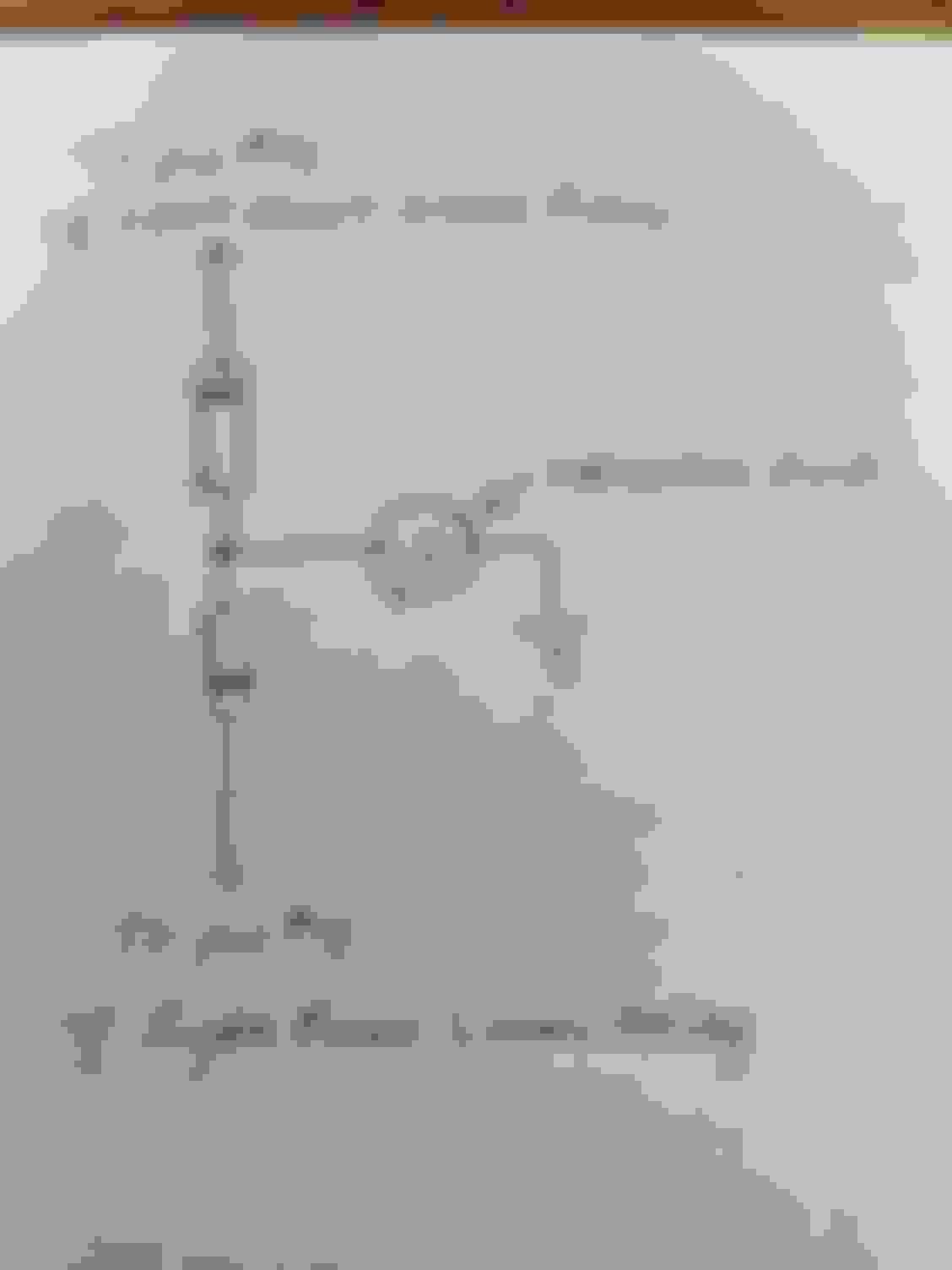
If you are looking for a single bulb to flash with the turn signals I have an idea that worked for me in my '56. I needed a beeper to let me know when my turn signals were on. All these newer flashers are not quite loud enough. Even if they are properly mounted and drumming against the rear of the gauge cluster panel. So I connected some "current steering diodes" tapping them into the hot leads going to the turn signal bulbs and connected the beeper in the middle between the two diodes. You could do the same thing with an indicator light. Referencing the schematic that Zac drew up for you, connect the end of the diodes marked with the band to the wire that pin#9 connects to on each relay. Then join the other ends of the diodes together, and connect the light from there to ground.
Each diode will be like a one way check valve, directing current to the indicator bulb and blocking it from going into the other side of the turn signal circuit. Hopefully this should work for you as it does for me. Diodes above are connected for positive ground. If using negative ground wire them so the band ends face back to back.
Thanks Ross. Just changing to a 3 pole flasher could be an easy fix. The 2 pole flasher was part of the new wiring harness I purchased a few years ago. I quick look at the Mid Fifty catalog indicates they have 3 pole flashers, but I didn't see any 3 pole receptacles.
Jim
I'm sure NAPA / O'Reilly's et al have them. You can also forego the socket and connect directly with crimp-on's.
Thanks guys for the explanation and the two possible ways for moving forward. There sure is a lot I don't know about electricity! It seems like going with the diodes might be the easiest least evasive thing to do. The relay circuits that Zac designed for me are close by and easy to get at. Making a change to one of them looks like something I should be able to do. Are there different types of diodes? 6V 12V? The truck is still positive ground. We have a shop that used to be a Radio Shack that should have what's needed.
Somebody someday is going to marvel at what they all find tucked away under the dash of my truck.
Thanks guys for the explanation and the two possible ways for moving forward. There sure is a lot I don't know about electricity! It seems like going with the diodes might be the easiest least evasive thing to do. The relay circuits that Zac designed for me are close by and easy to get at. Making a change to one of them looks like something I should be able to do. Are there different types of diodes? 6V 12V? The truck is still positive ground. We have a shop that used to be a Radio Shack that should have what's needed.
Somebody someday is going to marvel at what they all find tucked away under the dash of my truck.
Jim
You know Jim, I wish I would of read up in the thread a little higher before I suggested the diodes.
I think Ross's solution with the 3 pin flasher is probably the best way to go. To me, it seems like less work at this point. Sure the diodes are cheaper, maybe a few bucks for a pair if that. But for say maybe less than $15 all you have to do is change out the flasher and connect your indicator light up to the "P" terminal. It seems to me an easier way to go. I did not know about the 3 pin flasher until this thread today. Once again I learn something great from Ross!
But if you do want to go with the diodes. The diodes are rated in P.I.V. or P.R.V. which is the same thing which is Peak Inverse (or Reverse) Voltage. So as long as you are under that amount which you will be, you will be OK. Also they have an amperage rating. Guessing your indicator bulb is less than 1 amp. Look for a pair of 1N4005 or better yet 1N4007. As long as the current rating of the diodes is 1 amp or higher about anything they got will work.
That store near you that used to be a Radio Shack dealer might have some left. Many of the former Radio Shack dealers around here were part of an appliance store, hardware, or even an auto parts stores and the R.S. part of it, has been almost completely emptied out and has been for years. Just a few dusty things left over in the some of the places I have to. It's sad what happened to them!
Main thing Jim, if you cant find the diodes, just PM me with your address and I will send you a pair....free even!
Thanks Hooler for weighing in again and taking the time to help me make the right decision. If you think changing to a 3 pole flasher is a better option, I'll try to use that approach. Messing around with the relay set-up Zac helped me with is a little daunting. I'm just always thankful every time I use the turn signals that they still work.
I would agree the 3 prong flasher would be the easiest solution. You can find 3 prong plugs at the parts stores, but in my recent shopping I don't find them to be reasonably priced for what they are. Female blade connectors that would fit over the prongs would be a very simple solution to wire in.
Thanks Wayne. As I'm thinking about the female blade connectors in your picture and your advice for avoiding purchasing an expensive 3 pole plug, it has dawned me that the plug that came with my wire harness actually has three slots. It's just the flasher itself that is 2 pole. Is what I need to do really as simple as just getting a new three pole flasher and connecting the grounded indicator light to its 3rd pole with a female blade connector? That would be great if true.
...so I went out and actually pulled the flasher from the plug, and wouldn't you know, it has 3 poles--not 2 as I was thinking. It's just that the 3rd (Pilot) pole in my set-up doesn't have any wires going to it. If I'm understanding Ross correctly, all I have to do is connect the indicator light to the 3rd (Pilot) pole. I'll give that a try.
I happened to have some female blade connectors of the proper size, and with the indicator light connected to the 3rd (pilot) pole of the flasher, the indicator light goes on with the ignition key, blinks with the turn signals, but does not go out unless the ignition key is turned off. In other words, it acts just like it did with the indicator light connected to one of the other flasher poles. I must be missing something (again). Thanks.
Jim
P.S. The indicator light is an LED. Could polarity be an issue? I just randomly choose which wire to ground.
I happened to have some female blade connectors of the proper size, and with the indicator light connected to the 3rd (pilot) pole of the flasher, the indicator light goes on with the ignition key, blinks with the turn signals, but does not go out unless the ignition key is turned off. In other words, it acts just like it did with the indicator light connected to one of the other flasher poles. I must be missing something (again). Thanks.
Jim
P.S. The indicator light is an LED. Could polarity be an issue? I just randomly choose which wire to ground.
Hi Jim,
I don't think the LED will make a difference. Lots of times there are two inside the bulb wired in parallel but reversed in polarity so they will light when connected power no matter what the polarity is.
I do have an idea for something to check though. Double check that the wire that connects from the flasher to the signal Stat switch is connected to the "L" connector on your flasher. Then from your ignition switch power connects to the "X" terminal on your flasher. If not, trade those two connections and test it again.
Hope it helps!
Oh my! I'm having flash backs to the struggles we had getting the NOS Signal Stat 700 switch to do what it wasn't designed to do.
Here's a pic:
What you are looking at is the flasher plug. The white (gray) heavy wire in the immediate lower right foreground pointing down (or up) is the new connection to the (P) pole of the flasher and the indicator light. The brown wire coming out of the plug I believe is connected to the (L) pole of the flasher. It goes to an in-line fuse and then to the the ignition. You will notice though that a yellow wire taps into it with the soldered connection covered with tape. This yellow wire goes up into the Signal Stat switch. Another yellow wire can be seen coming out of the flasher plug. I believe this wire is attached to the (+) pole of the flasher and feeds power to all the relays.
I dug out my old notes and diagrams from Zac, and I must say, I'd be hard pressed to have to start over again and recreate what I have now.
Jim
Edit: I'm not sure I have the (L) and (+) poles correctly identified. What I can say is that the brown wire coming out of the plug goes to the ignition but it also feeds a yellow wire going to the turn signal switch. The yellow wire coming out of the plug goes to the relays. My wiring does not appear as clear cut as Ross' diagram--(L) pole to turn signal switch and then lights (+) pole to power source.
Did you try swapping over the connections that go to the L terminal, and the other terminal, the + or X terminal? My thinking is that with power feeding your L terminal, the P terminal could be internally connected to it. Thus your dash light coming on with the ignition switch. The L terminal is supposed to be connected to the Lamp side (or Load side). I am wondering if you could just swap those two connections you may have it.
However, here's another idea. Just move that indicator light connection from P into the Yellow wire that runs between the flasher and the relays. When your turn signals are flashing, that light will flash too. If you have a test light, you might want to test it first to see if I am right about it.
Hope that will help you out....
On Second Thought...forget about the 2nd paragraph!
Originally Posted by hooler1
Hey Jim,
Did you try swapping over the connections that go to the L terminal, and the other terminal, the + or X terminal? My thinking is that with power feeding your L terminal, the P terminal could be internally connected to it. Thus your dash light coming on with the ignition switch. The L terminal is supposed to be connected to the Lamp side (or Load side). I am wondering if you could just swap those two connections you may have it.
However, here's another idea. Just move that indicator light connection from P into the Yellow wire that runs between the flasher and the relays. When your turn signals are flashing, that light will flash too. If you have a test light, you might want to test it first to see if I am right about it.
Hope that will help you out....
Please forget the 2nd paragraph starting at However. If the current flow is high enough through the bulb, since the flasher is powered to -6 volts, putting the bulb on that wire will just make it flash all the time if the current is high enough. It might work since LEDs work at about 1/10th of a normal bulb. But it would probably be better to just swap the power in and out connections of the flasher. Sorry and Thanks!
Hi Hooler. Thanks for staying on the case. I started out going to town to get a decent test light. On the way, my beater 2004 Jeep broke down (literally) and ended needing to be towed. Amazingly the frame cracked. Imagine that. Here's a pic:
The crack is just in front of the rear axle. Fortunately I wasn't going very fast when the problem became noticeable. No one was hurt and the vehicle is off the road.
With that situation sort of temporarily handled, I did manage to pick up a decent test light only to discover that my battery is pretty much dead from sitting all winter. The bright green indicator light (that doesn't turn off when it should) works, but that's about all. There isn't enough juice for the engine to turn over, or the turn signals to blink. I'm charging up my spare battery now.
I'll have to look into swapping around the contacts in the flasher plug. I have no memory of putting those contacts into the plug. Maybe my friend did that for me.
Rezvani's Latest Post-Apocalyptic Monster Is a Ford F-150 Raptor Underneath
Slideshow: Called the Fortress, the 850-horsepower pickup combines Raptor underpinnings with military-inspired features, survival equipment, and a starting price of $285,000.