When you click on links to various merchants on this site and make a purchase, this can result in this site earning a commission. Affiliate programs and affiliations include, but are not limited to, the eBay Partner Network.
I recently bought a 1978 F250 with a 4.9L / 300. It was rebuilt about 30,000 miles ago, but that was during the 1980s. It saw semi-regular use up until about eight years ago and then it sat around. I'm about to put her on the road again, but wanted to draw on the knowledge here for guidance.
With a little gas in the carb, the engine starts up. My checklist, so far, includes the following:
Oil and filter change
Flush and fill the radiator
Replace air filter
Replace fuel filter
Check or replace hoses
Given the engine's longevity, I wouldn't be surprised if there was very little that needed to be done, but I'd like to make sure I'm not making things any worse by making that assumption and running the engine without checking on all the right things.
hook up the PCV make-up air hose to the air cleaner
maybe replace the PCV valve
replace the heat stove on the exhaust manifold
replace the choke heat supply tube on the exhaust manifold
It's a bit more of a chore, but I would pull the engine and replace all of the gaskets. They are probably dried and brittle by now, and once you get it going, it's going to leak like a sieve.
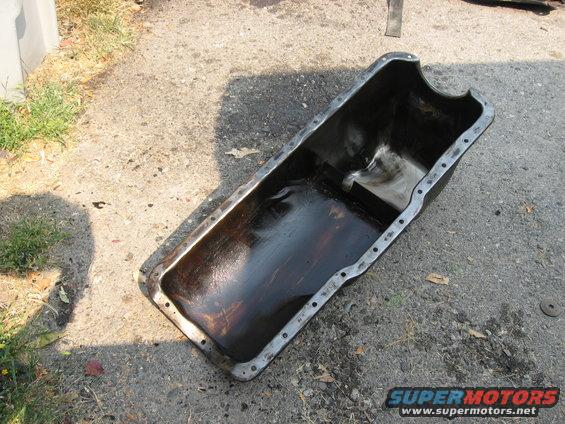
The valve cover and pushrod cover can be done on the spot. But the timing cover needs at least the radiator, fan, and harmonic balancer pulled. The oil pan is the one that is tricky and is 100x easier with the engine out.
(Also, if you do the oil pan, look into upgrading to the silicone 1 piece gasket. Basically you grind all of the raised bolt hole ridges down flat and then get an '89+ gasket. You'll be glad you did.)
Edit: Since it's a 2WD, and a solid front axle, the oil pan gasket may be much easier to access than on the 80+ engines. Raising the engine and getting the pan off around the cross-member is a nightmare. It might be really easy on your setup though. If that's the case, that may negate pulling the engine.
hook up the PCV make-up air hose to the air cleaner
maybe replace the PCV valve
replace the heat stove on the exhaust manifold
replace the choke heat supply tube on the exhaust manifold
Is there some criteria for these still being good? Or is it pretty much a sure thing that they're busted by now?
It's a bit more of a chore, but I would pull the engine and replace all of the gaskets. They are probably dried and brittle by now, and once you get it going, it's going to leak like a sieve.
The valve cover and pushrod cover can be done on the spot. But the timing cover needs at least the radiator, fan, and harmonic balancer pulled. The oil pan is the one that is tricky and is 100x easier with the engine out.
(Also, if you do the oil pan, look into upgrading to the silicone 1 piece gasket. Basically you grind all of the raised bolt hole ridges down flat and then get an '89+ gasket. You'll be glad you did.)
Edit: Since it's a 2WD, and a solid front axle, the oil pan gasket may be much easier to access than on the 80+ engines. Raising the engine and getting the pan off around the cross-member is a nightmare. It might be really easy on your setup though. If that's the case, that may negate pulling the engine.
Excellent post, thank you! The radiator might be getting replaced, anyway - I'll knock out the timing cover.
My knowledge and application of auto mechanics has been novice for a while and this is my first deep dive, so my comfort level for modification is pretty low. How involved is the process for grinding down the ridges? I don't even have a die grinder. And what's the benefit of the 89+ gasket?
a good cleaning to start with can also help identify potential problem areas. glad to hear about another 300 making its way back onto the road where it belongs! cheers!
Is there some criteria for these still being good? Or is it pretty much a sure thing that they're busted by now?
The make-up hose is missing in the photo.
The heat stove is missing in the photo.
A PCV valve is about four bucks. Cheap enough to start with a fresh one.
The age of the vehicle is well past the time the heat stove and choke heat supply tube can be expected to still be good.
Excellent post, thank you! The radiator might be getting replaced, anyway - I'll knock out the timing cover.
My knowledge and application of auto mechanics has been novice for a while and this is my first deep dive, so my comfort level for modification is pretty low. How involved is the process for grinding down the ridges? I don't even have a die grinder. And what's the benefit of the 89+ gasket?
Thanks!
When you do the timing cover set, spring for the more expensive of the two sets (about $8 if I remember right). It comes with a sheath that repairs the nose of the harmonic balancer. It can get a groove in it after lots of spinning, and can leak. Super easy to put on and do.
Hardest part with the timing cover is pounding out the old seal and pressing in the new one. But, I've done a few of them with nothing more than a hammer and a flatblade (removal) and a hammer and a flat piece of wood (install). Just take your time with it.
On the oil pan, all you need is a grinder of some sort. Even a little dremel with a grinding wheel. Each bolt hole has a raised edge about 1/16" - 1/8" tall and they need to be ground off so the pan is smooth and flat.
The original set up is a four piece gasket with rubber at the front/back and cork down the sides. It works, but I've never had any luck getting them to fully seal without leaking. The one piece silicone gasket is totally superior, and doesn't need RTV silicone, etc.
gotta pull the cover to replace the front seal....plus it'd be a shame to go thru with all the updating, cleaning, and what not, only find another leak on the front....when it could have been taken care of in conjunction with the oil pan. I think we can all agree that doing the job right the first time, is well worth going the proverbial extra mile. Definitely saves a fella some headaches later on.
we all know that ALL gaskets will eventually leak...but with some effort and preventative maintenance, they can be avoided.
The guy that's doing some body work on the truck has to start it and drive it from his yard to his shop, so (all fear about that process aside) if there's a real issue with the engine, it might show up during that move.
I bought a complete gasket kit online and will be replacing damn near all the gaskets, I think. Part of this is preventive maintenance, but it's also meant to be a learning experience in how everything connects. I've been reading the service manual for some time and going through these forums, the fordsix forums, etc..
Rezvani's Latest Post-Apocalytic Monster Is a Ford F-150 Raptor Underneath
Slideshow: Called the Fortress, the 850-horsepower pickup combines Raptor underpinnings with military-inspired features, survival equipment, and a starting price of $285,000.