When you click on links to various merchants on this site and make a purchase, this can result in this site earning a commission. Affiliate programs and affiliations include, but are not limited to, the eBay Partner Network.
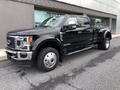
First diesel I've owned which utilizes DEF. Trying to determine if the DEF consumption I'm observing appears normal. 2024 F-350 DRW CC LB 4x4 6.4HO with 3.55 gears.
I had a 7,550 mile round trip run, so should be a fairly good baseline.
3,732 miles empty with 65-75 MPH saw 16.10 MPG diesel with 655 miles per gallon of DEF.
4,040 miles towing 15,000# (12.5' tall container lots of wind drag) at 65-75 MPH saw 6.8 MPG diesel with 148 miles per gallon of DEF.
The truck burns about 4.5 times the amount of DEF while towing. Is there programming that when the truck is towing it automatically burns more DEF? I would guess if the truck was working harder, the passive regeneration would be more effective. I never saw the filter % get above 40% while towing or 20% while empty.
My buddy went from a 15 or 16 to a 24... says it uses a ton of DEF and much more than his old truck. Plus everyone on here says the same with newer trucks... wait and someone will chime in but yes, you will use more when towing.
Regen of the DPF should be less with increased load, DEF consumption should go up with load. The DPF is a soot filter (Diesel Particulate Filter) which uses heat to turn the soot to ash Higher loads generate enough heat without needing a "forced" regen (added fuel to raise the DPF temps)
DEF helps reduce NOX emissions which are a function of fuel consumption among other things. Use more fuel need more DEF. Yes the newer trucks (older ones were to receive a software update that many say increased DEF consumption) use more DEF than older models.
The truck burns about 4.5 times the amount of DEF while towing. Is there programming that when the truck is towing it automatically burns more DEF? I would guess if the truck was working harder, the passive regeneration would be more effective. I never saw the filter % get above 40% while towing or 20% while empty.
the def burn rate is tied to NOX emissions.
your burning more def while towing becuase you are generating more NOX
and NOX is higher with bio blend diesels than normal diesels . lots of stations are providing b5 or b10. which is good since b5 has better lube value.
the only thing you can do to lower nox emissions is methanol water injection (blue windshield washer mix). the methional injection kit will lower nox, increase HP, cool your engine, clean your exhaust system. definitely not something you want to do if you care about your warranty.
You have a heavier load and foot than me, I usually keep it at 65 or less and pull a 7K TT, but unloaded mix highway and local roads I get about 18-19 mpg and about 900 mpg DEF, 12 mpg towing with about 350 mpg DEF. These number are average over 20K miles with about 6300 miles towing. So for me I am about 3 to 1. Since you have a heavier load and you work your HO a bit harder 4.5 to 1 is probably about right. If you want to save on fuel and DEF keep your speed down to 65. You may benefit from adding a boattail to your container like many semis have to improve your fuel economy.
Thanks for the clarification. Having non-DEF trucks up to this point, I kind of had my head in the sand. I was thinking the DEF was part of the DPF regeneration, I didn't realize it provided a separate function to reduce NOx. Now I understand that increased fuel consumption is linked to increased DEF consumption.
I was looking at a Turbo Wing if I continue to tow tall loads to help reduce fuel and DEF consumption. That's another discussion to see if a 5% savings if worth the investment.
about 3K miles per tank of def. All is normal for what you were doing.
I’m definitely getting more than that, lucky me 😁
I was going through Arod videos and came across his advice to completely fill the DEF tank when the warning comes on. That would have saved me some time last month, including disconnecting the batteries and then reprogramming the radio and setting the display back to metric. I put in 10 quarts initially but the display kept on counting down.
23+ models use more DEF than 22 and older trucks. EPA mandated an improvement in emissions. and that's how Ford met the new emission standard. But I've heard, ( can't show you anything in writing) that with the increased DEF they reduced the EGR. Which should help the engines long run by not ingesting so much exhaust back thru the engine.
As mention, DEF is consumed to reduce NOx that is produced at higher combustion temps. If you can keep your EGT temps down 400-500° you hardly consume any DEF. But I find my 23HO runs 100° higher at empty highway speeds than my 2020 6.7L SO did, and almost 200° hotter while towing. I pull my 13,000 lbs GN horse trailer up I-80 out of Salt Lake (7% grade ) and saw 1150-1200° on my 2020 truck during the worst of the climb, With my 23HO I easily see 1450-1475°. I guess that is why Ford designed the HO to handle more heat. Because it does run hotter. And running Hotter will consumer more DEF.
Most of my running, daily commute type of driving, I see about 800 mpg of DEF. Towing my horse trailer is usually 350 mpg of DEF. But climbing several high mountain passes where I'm seeing the Exhaust EGTs run 1450°, I'll drop 300 mpg DEF and 10.5mpg diesel fuel. I've not seen usage like your experiencing. I'm just assuming a large square container behind your truck is acting like a big wind drag chute. Hence your 6.8 mpg fuel consumption and high DEF use.
Luckily, there are fuel stops all over Utah that have DEF at the pump. It's really easy to pull in, fill up my diesel, and top off my DEF at the same pump, on the same receipt.
I was going through Arod videos and came across his advice to completely fill the DEF tank when the warning comes on. That would have saved me some time last month, including disconnecting the batteries and then reprogramming the radio and setting the display back to metric. I put in 10 quarts initially but the display kept on counting down.
I've never had a problem with keeping the DEF tank full without getting the warning... but others have.
Whenever I've got the warning, I've always filled it right up with 5 gallons... err, 20 quarts. But in cold weather, it's recommended to not fill up it up because it would freeze in the neck of the tank cracking it.
NOX is created by combustion of Diesel, the hotter the combustion, the more NOX created. With the increase of power in the 20+ 6.7, they created more NOX by burning more fuel, so more DEF is required. By burning more fuel it also creates more temp and less soot, so regens are quicker and use less fuel.
By burning more fuel I mean the engine is actually burning MORE of the fuel it is being fed. It may be getting less fuel per injection, but more of it is being burned, putting out less soot, but increasing NOX. This was the biggest issue with diesels, you can make them clean burning as in no soot, but that requires much higher cylinder temps and produces more NOX. Using more DEF is the drawback to adding more power. Still, DEF is cheaper than burning fuel in the exhaust pipe. Overall the end result is better fuel efficiency and cleaner tailpipe emissions.
Hauling a container is a huge windsail, but the most effective and cost efficient way to transport my freight. Even when I upgrade to a gooseneck trailer, the height will be the same. With the larger trailer I'll haul two 20' containers, hoping the added weight doesn't reduce my fuel milage down since most of the load now is the truck over coming drag anyway.
Yep, not the weight, its the drag. My 6 x 12 enclosed trailer on an F150 9-10 MPG, same truck with a 6400 pound 28' RV behind it, 9-10 MPG. Tow my flatbed with the tailgate down, 18 MPG, same trailer with a no till drill and tailgate up 11 MPG.
Rezvani's Latest Post-Apocalytic Monster Is a Ford F-150 Raptor Underneath
Slideshow: Called the Fortress, the 850-horsepower pickup combines Raptor underpinnings with military-inspired features, survival equipment, and a starting price of $285,000.