

Duallys Only

Logistics Pro


Joined: Jan 2013
Posts: 3,778
Likes: 153

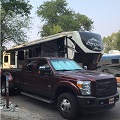
2011 F 350 Dually, Arctic Fox 1150, pulling trailer 10,000 lbs. Total weight tow/payload was just over 15,000 lbs. Stable Load uppers, Rancho 9000XL shocks only mods I had, later I added the Big Wig sway bar. It sits level and rode good on that 1500 mi trip, still got about 11 mpg.
Custom built an extension to mate with a trailer, no sure how long the ext is.
I never folded, so anyone wanna take a guess as to why the other duallies did?

Hotshot
Joined: Nov 2013
Posts: 10,107
Likes: 96
From: Hempstead, TX
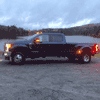
The interesting thing to me about the folded frames is that the most weight the frame would have had to support would have been from the point of the failure (front hanger for the rear springs), to the front bumper - or basically the same as if he was riding a wheelie. If it was THAT heavy, he would have known the instant he attempted forward motion and the front end came off of the ground. At the very least, he wouldn't have had any steering to speak of - even if he wasn't riding a wheelie. Something just doesn't seem right to me. I'm guessing something other than weight damaged the frame prior.
Hotshot
Joined: Apr 2013
Posts: 10,132
Likes: 665
From: NH

WHOA.....Stop the presses. It happened AGAIN?
Check this photo out:

Exact same situation. Same Okanagan truck camper. Same utility trailer.
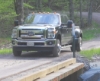
But DIFFERENT Ford dually truck. The photo up top shows an ALL WHITE monochromatic crew cab dually.
And the photo below shows a TWO TONE crew cab dually with a bottom tan accent color.
And before accusing finesse with photoshop, note that the top photo is an F-450 with 19.5" wheels and tires, while the bottom photo is of an F-350 with 16" wheels and tires.
The background surroundings are significantly different as well.
But the Ford frames are not. In this era, the Ford frame between an F-350 and an F-450 pickup are the same, especially in the area of failure.
Given the extreme improbability that two different people would have the EXACT same utility trailer (notice the unique aspects of that utility trailer... roadside man door, dark colored pressure equalization vent, unusual trailer tongue ground effects skirting) combined with the exact same Okanagan truck camper (notice the mirrored window tinting, the double vented refrigerator, the decal color and location, the same camper jacks, and the same metal trim under the roadside compartment at the tailgate)... what we have here appears to be an expensive lesson that didn't get learned the first time.
What is it called when a person repeats the same thing, expecting different results?
Perhaps he thought he was "upgrading" with the F-450 over the previous F-350. But that upgrade only involved brakes and axles... not the frame. Clearly, something wasn't working with his load. I suspect excessive weight aft of axle.
Does anyone know more about this fella and his repeated catastrophe?
Does Ford authorize this type of towing? To me, that 2-3' long tow bar extension coupled with an enclosed, fairly heavy tongue weight trailer is going to wreak havoc on any frame. The truck camper alone nearly maxes out payload, even on the F-450. Go over some bumps at speed and it's like having a leverage bar against your frame.
EDIT - why isn't there diesel spilling out at least under the 450? With that angle, I'd be fairly certain the fuel lines would break.
Lead Driver

Joined: Jan 2005
Posts: 7,782
Likes: 221
From: Huntington Indiana

Is the radius arm bent?
Have you taken any photos of the damage underneath that you care to share?
I've often wondered if the Super Duty could benefit from the triangles that Ford mounted to the frame of the F-150 to prevent front tire encroachment into the cab foot well in offset head on collisions such as what you just experienced.
Have you taken any photos of the damage underneath that you care to share?
I've often wondered if the Super Duty could benefit from the triangles that Ford mounted to the frame of the F-150 to prevent front tire encroachment into the cab foot well in offset head on collisions such as what you just experienced.

Radius arm took the brunt of the force. Haven’t put it on hoist yet. But parts from what I saw. Bumper, fender, headlight assembly, radius arm , tie rod plus whatever else they find.

Super Moderator


Joined: Dec 2011
Posts: 13,346
Likes: 6,138
This is exactly what I suspected, and why I inquired about the radius arm. Many thanks to you for posting a photo of the failure modality, as it confirms my long held suspicions about those radius arms in angular or offset collisions.
Lead Driver
Joined: Jan 2005
Posts: 7,782
Likes: 221
From: Huntington Indiana
glad to help. Enjoy the weekend.
Logistics Pro

Joined: Mar 2005
Posts: 2,536
Likes: 200
From: southeast PA
FTE Stories
Ford Trucks for Ford Truck Enthusiasts

Top 6 Best Deals Available on New Fords & Lincolns Right Now
Brett Foote
This Hennessey Takes the Expedition Tremor's Off-Roading Capability to the Next Level
Verdad Gallardo
Top 10 Fords at 2026 Carlisle Ford Nationals
Joe Kucinski
3 Best / 3 Worst Parts of Modern Ford Ownership
Brett Foote
10 Amazing Upgrades That Solve Common Ford Truck Owner Headaches
Pouria Savadkouei
Every 2026 Ford Engine Explained
Brett Foote
10 Ugly Ford Trucks That We Still Kinda Love
Joe Kucinski
10 Things Every Truck Owner NEEDS (2026 Edition)
Michael S. Palmer
Rezvani's Latest Post-Apocalyptic Monster Is a Ford F-150 Raptor Underneath
Verdad Gallardo


Logistics Pro
Joined: Mar 2005
Posts: 2,536
Likes: 200
From: southeast PA
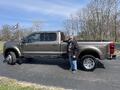
Thanks! I've loved the color since I saw the first 11 pop up on the lot. Knew I had to have it when I ordered 13. When its shined up and in the sun there's nothing like it!