





Question about Turbo wheels

Thread Starter
|
Senior User
Joined: Sep 2013
Posts: 184
Likes: 0
From: Durham NC
Question about Turbo wheels
Hello
Question??
I found a new turbo wheel that goes into a 1999- 2003 7.3 power stroke.
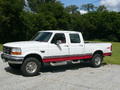
My truck is a 1995 what will be the difference between the old wheel and the new model in performance.
I am sure for $40 for the new compressor wheel something is fishy.
Does anyone know??
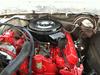
My compressor wheel was destroyed by a DuraLite filter failure
Question??
I found a new turbo wheel that goes into a 1999- 2003 7.3 power stroke.
My truck is a 1995 what will be the difference between the old wheel and the new model in performance.
I am sure for $40 for the new compressor wheel something is fishy.
Does anyone know??
My compressor wheel was destroyed by a DuraLite filter failure

Post Fiend
Joined: Dec 2009
Posts: 15,505
Likes: 18
From: Livoina,La
The reason sd guys use the obs wheel is because of turbo surg/stall which is caused by a combo of the small turbine housing and the wheel.
You will not have a surge issue in a obs.
Thread Starter
|
Senior User
Joined: Sep 2013
Posts: 184
Likes: 0
From: Durham NC
I hate to be such a dumb A$$ ol' man.
I have read a ton of post on this site.....I just wish I knew what ya'll are talking about when you guys use all the things like
SD
OBS
EDVP
IDM
Sorry to be such a pain, but the truck is kicking my butt. The reason is I am a good mech. an that is all I have ever done. I have worked on all types of machinery for 44+ years. Now being old and wore out and fat with 3 stints in my heart and on all kinds of medications. What I know how to do and what I am able to do is a totally different story
I guess I need to spend more time in searching these abbreviations in the search sections when I finish getting my truck back up and running
I have read a ton of post on this site.....I just wish I knew what ya'll are talking about when you guys use all the things like
SD
OBS
EDVP
IDM
Sorry to be such a pain, but the truck is kicking my butt. The reason is I am a good mech. an that is all I have ever done. I have worked on all types of machinery for 44+ years. Now being old and wore out and fat with 3 stints in my heart and on all kinds of medications. What I know how to do and what I am able to do is a totally different story
I guess I need to spend more time in searching these abbreviations in the search sections when I finish getting my truck back up and running
Cargo Master

Joined: Dec 2011
Posts: 2,750
Likes: 4
From: Pecatonica, IL
OBS= Old Body Style
SD= Super Duty
IDM= Injector Drive Module
EDVP not sure what that one is
Heres a link to common acronyms: https://www.ford-trucks.com/forums/1...finitions.html
SD= Super Duty
IDM= Injector Drive Module
EDVP not sure what that one is
Heres a link to common acronyms: https://www.ford-trucks.com/forums/1...finitions.html
Trending Topics
Thread Starter
|
Senior User
Joined: Sep 2013
Posts: 184
Likes: 0
From: Durham NC
OMG....
Thanks that is one awesome information section
I added it to my favorites......I may not live long enough to know them all, but it sure helps
Thanks..
Thanks that is one awesome information section
I added it to my favorites......I may not live long enough to know them all, but it sure helps
Thanks..
FTE Stories
Ford Trucks for Ford Truck Enthusiasts

Top 6 Best Deals Available on New Fords & Lincolns Right Now
Brett Foote
This Hennessey Takes the Expedition Tremor's Off-Roading Capability to the Next Level
Verdad Gallardo
Top 10 Fords at 2026 Carlisle Ford Nationals
Joe Kucinski
3 Best / 3 Worst Parts of Modern Ford Ownership
Brett Foote
10 Amazing Upgrades That Solve Common Ford Truck Owner Headaches
Pouria Savadkouei
Every 2026 Ford Engine Explained
Brett Foote
10 Ugly Ford Trucks That We Still Kinda Love
Joe Kucinski
10 Things Every Truck Owner NEEDS (2026 Edition)
Michael S. Palmer
Rezvani's Latest Post-Apocalyptic Monster Is a Ford F-150 Raptor Underneath
Verdad Gallardo
Fleet Mechanic
Joined: Oct 2006
Posts: 1,386
Likes: 1
From: Spokane, WA
This is a link that many have found helpful. It can be found at the top of the first page in the (read first in Red) tech/mod/links Diagnostic FAQ
Tips - Idea - Hints
Tips - Idea - Hints
Hotshot

Joined: Jun 2007
Posts: 10,008
Likes: 7
From: Austin, TX
Mike is correct. The newer style SD wheel does flow more air than the factory OBS wheel does. He is also correct in that using this wheel on an OBS shouldn't result in the surging issues that the SD trucks have. So yeah, you can use an SD wheel without any problems if you got one laying around.
Hotshot
Joined: Jun 2007
Posts: 10,008
Likes: 7
From: Austin, TX
Potentially, yes a very slight gain. I would not say it would be enough for stage 1's b/c a stock charger isn't even enough turbo for a set of tuned AD's. I would say at minimum a WWG2 is needed for stage 1's, but you'll still need to use a tow tune that is pretty friendly with the EGTs. That is with the assumption that you want the turbo to be efficient enough for the injectors. I ran a completely stock turbo with stage 1's and stage 2's for years, just had high EGTs when towing and had to drive by the pyro A LOT when towing. Saw 1600*+ on WOT runs from 0-80mph.
Posting Guru
Joined: Oct 2011
Posts: 1,647
Likes: 1
From: Exton, PA
ok - so i'm pretty stupid/inexperienced with turbos, but is the problem that the stock turbo creates more back pressure (thus higher EGTs) than an aftermarket, higher end one?
it would seem to me that there'd be a direct relationship between boost pressure and backpressure, so in order to get the high boost needed for bigger injectors, you'd be stuck with higher back pressure and thus higher EGTs. i'm sure this is an oversimplification and the engineering that goes into higher-cost, aftermarket turbos can reduce this problem somewhat, but is this the general logic of upgrading turbos to support bigger injectors?
thinking about it more, I guess a faster spinning turbo would reduce back pressure somewhat, while increasing boost, so maybe that's the goal of a better turbo?
it would seem to me that there'd be a direct relationship between boost pressure and backpressure, so in order to get the high boost needed for bigger injectors, you'd be stuck with higher back pressure and thus higher EGTs. i'm sure this is an oversimplification and the engineering that goes into higher-cost, aftermarket turbos can reduce this problem somewhat, but is this the general logic of upgrading turbos to support bigger injectors?
thinking about it more, I guess a faster spinning turbo would reduce back pressure somewhat, while increasing boost, so maybe that's the goal of a better turbo?
Hotshot
Joined: Jun 2007
Posts: 10,008
Likes: 7
From: Austin, TX
ok - so i'm pretty stupid/inexperienced with turbos, but is the problem that the stock turbo creates more back pressure (thus higher EGTs) than an aftermarket, higher end one?
it would seem to me that there'd be a direct relationship between boost pressure and backpressure, so in order to get the high boost needed for bigger injectors, you'd be stuck with higher back pressure and thus higher EGTs. i'm sure this is an oversimplification and the engineering that goes into higher-cost, aftermarket turbos can reduce this problem somewhat, but is this the general logic of upgrading turbos to support bigger injectors?
thinking about it more, I guess a faster spinning turbo would reduce back pressure somewhat, while increasing boost, so maybe that's the goal of a better turbo?
it would seem to me that there'd be a direct relationship between boost pressure and backpressure, so in order to get the high boost needed for bigger injectors, you'd be stuck with higher back pressure and thus higher EGTs. i'm sure this is an oversimplification and the engineering that goes into higher-cost, aftermarket turbos can reduce this problem somewhat, but is this the general logic of upgrading turbos to support bigger injectors?
thinking about it more, I guess a faster spinning turbo would reduce back pressure somewhat, while increasing boost, so maybe that's the goal of a better turbo?
Ponder on this awhile.. What happens to air when you compress it? It heats up.. A compressor wheel can only move so much air efficiently and once it surpasses the amount of air it can efficiently move, boost may continue to increase, but it gets heated up MUCH more than normal. A larger compressor wheel will generally move a greater volume of air at the same or sometimes LESS boost pressure than a smaller wheel.. For example, a 66mm at 35psi will generally move a greater volume of air than a 62mm at the same 35psi. Boost doesn't necessarily mean you'll make power, it's the total volume of oxygen that gets into the cylinders.
So, we're really upgrading the turbo to get a compressor wheel that is efficient enough to provide enough air to our engine to make good power without super heating the air. You also want an exhaust side that can allow the exhaust to get away from the engine fast enough to keep backpressure manageable while still getting the turbo to come on to boost in the RPM range that you want. A smaller turbine wheel will get spinning faster/easier, but it cannot move as much exhaust volume as a larger wheel can, so it may elevate backpressure at higher RPMs. Pretty much the same theory on the turbine housing sizes also.
I'm a bit tired today and something tells me that this explanation isn't really all that stellar. If you have any questions, post up. lol

Thread
Thread Starter
Forum
Replies
Last Post