When you click on links to various merchants on this site and make a purchase, this can result in this site earning a commission. Affiliate programs and affiliations include, but are not limited to, the eBay Partner Network.
They still make them, which is why it surprises me that I was unable to purchase a replacement baseplate for it.
That's one thing that drives me crazy about Holley carb date codes. They're a 4 digit number, like 2356. The first 3 numbers are the day of the year it was manufactured and the last number is the year of the decade. But there is absolutely NO WAY to know what decade it was made in. None. So if you have a datecode of 2356, you know it was made August 23rd, but you don't know if it was made in '66, '76, '86, '96, '06.... How difficult was it to make it a 5 digit number!?
The stock powervalve is an 8.5, which is kinda big but it seems like overall, I've found that this carb is a little leaner in nature than other Holleys I've used, so maybe it was set up that way. 95% of Holleys (a real statistic, mind you), come with a 6.5 and is what will always come in a rebuild kit. So maybe a few different sized power valves to try, and at least an 8.5 to put a fresh one in.
The secondary diaphragm is a 135-2, which, again, is not what a rebuild kit is going to come with. It's going to come with the 135-4, which is what the vast majority use. The 390 also used the 135-2. It's the length of the arm on the diaphram. I think I posted a pic in my writeup about the secondaries not opening all the way because whoever rebuilt it just put the one from the rebuild kit in and didn't pay attention or care.
Allcarbs says they have the 135-2, but don't list it on their webpage, so you have to call them and request that they add it to your order.
Other than that, the rebuild kit should have everything.
As far as tuning extras, the stock jets are 57s. So, pairs of jets from 54 - 60 to have a good range to play with would be good.
The hardest part to tune is usually the accelerator pump, so there's an array of different stuff for that.
First is the squirter. The size of the squirter is how much fuel can pass through (like the main jets).
It says it's for Demon carbs, but if you notice all over the site that every listing for a Demon carb part has the same part number as the corresponding Holley carb part. They use all the same stuff.
You probably shouldn't need a 40 though. That's really only if you have a really high performance engine that gulps air as soon as you crack the throttle, or if you have really tall gears. My Bronco with the 3.55 uses a size 32 and my other with the 3.00 (with the 1848) usually uses a 35 or 37. (Interestingly though, the spreadbore Holley came with a size 40 stock.)
The cams dictate where during the throttle the fuel from the accelerator pump is delivered. My '81 needs almost ALL of it the second I push on the gas, so it needs a huge burst of fuel as soon as the throttle opens to get it rolling with those 3.00s and 31" tires. Just all depends on your engine's needs. So, it can take quite a few tries with different accelerator pump squirters and cams to find the perfect one your engine needs. But once you get it...
Lastly, I'm not sure what gaskets new Holley rebuild kits come with, but I highly suggest swapping them out with nylon ones for the fuel bowls and needle and seats. The paper ones tear and constantly need to be replaced, especially if you're doing jet changes for tuning.
Oh, and one little trick I learned. When you install the transfer tube and gaskets that goes between the two fuel bowls, spray the ends with some carb cleaner to lubricate it before installing. That'll save you a lot of heartache and torn gaskets.
Good luck. Hopefully that'll be all you need to get it running top notch.
Thanks very much for all this information. I have an 1848 and I think its a -1, but will have to check that for sure. My 300 has the Offenhauser DP manifold, as well as head work with 0.060 milled, Clifford's cam, valves, springs, pushrods and timing gears.. I know that all this makes for differences in tuning. My motor hesitates when I push the throttle, but runs right once the rpm's are up a little.. I want to cure the hesitation, and will follow your suggestions.. BTW, I bought my carb off evilbay, and it was used, listed as a 600 cfm. with manual choke. (which I like,but do not need here in Baja).. I found a rebuild kit, in a small parts store here, but have no idea how old it could have been. We cannot be too choosy here, and it worked, so until now, I have left it at that. I will however, use your information, to purchase all the parts you have listed, on my next trip North..
After reading your post, I am sure that I have all there is to be learned, as I know very little about the Holly carbs, having had the old Ford 1 bbl on my motor for over 40 years.
Again, thanks amigo, for the heads up on how to make the 1848 work with a 300..
Hesitation means a lean condition. You're not getting enough of a accelerator shot/squirt. Check your acc. pump adjustment arm for full travel. The color cam on the throttle linkage is also a player. You can change it to deliver quickly or late in relation to the throttle movement. The holley site has a chart showing characteristics of each. The third thing is the squirter nozzle. Holley or Summit sells various sizes. Larger diameter means a shot with more volume. Start with your acc. pump arm. Good luck. k
Those links I posted also has all the cams and squirters.
Holley likes to sell them in pairs with the excuse that "some" carbs need two. Everyone else has to pay double for only one. That's why I like getting them from allcarbs.com.
Oh Lord how I wish you were here to fiddle with it some. The life in Baja is tranquil, and the fishing is fantastic, but this is not the "Land of Plenty" by any means. Ordering things, and expecting them to actually arrive in the mail, is just wishful thinking, and paying the duty on the empty box when and if it ever arrives.?? We have only 2 dependable ways to get things to Southern Baja.. (1) Drive North, cross the border, and buy it in San Diego. (2) Order it, have it sent to a friend who is coming down, and have him bring it...
So, I will order all the stuff, have it sent to a friend's place, and pick it up on my way South next trip... AllCarbs will be getting some of my business, thanks to you guys...
Salud amigos
Baja
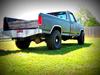
ps; I've had my truck for 45 years now, and had it as a flat bed for about 40 years, but recently, converted it back to a stock factory bed, and now it looks like this...
Mexico and I go way back. My son and I used to camp/fish all over Baja, with my 75 f250, the same colors as yours, but blue on bottom. I also lived in a Mayan fishing village for two years, South of Cancun. I know life in Mexico. Some of my Mex. stories are found on my blog in my signature.
I used to shoot lobster s.of Mulege and hide the tails in my trunks so I wouldn't get fined. Until I was cooking for a lady and she found a hair on her cooked tail. Oops. Salude.
Glad to hear all that amigo. I have been coming to Baja since June 1963, and finally moved here in 1995, after buying a place near the beach, on the East Cape. As an Ex Navy diver, (Hoo Rah Deep Sea), I am an avid diver still and have been for a lot of my life.
Seems that Mexico, or at least Baja, has attracted more than a few old truck aficionados. A neighbor, has an old '72 Chebby, with a 292-6 and has gone back to a 2 bbl. as the 4bbl Holley he had seemed to much carb for him... ?? Anyway, I am more of an engine builder, than a carb man, so I am glad to have access to someone with lots of knowledge they are willing to share...
I wanted to post this for those considering a Hedman header. There are a few concerns people mention that I have dealt with.
1. Heat. This was a problem with the Autolite 4100, the Quadrajet, and the Summit 600 I used. Even when I used a heat shield. Bottom line: if you don't want hard starts when hot, popping into the market for 10 minutes, and then it won't start, use a Holley. I use a 1848, 465 cfm, and love it. No heat issues either.
2. Starter locked in. Nope. That is a common misconception. If you use a pre efi starter you need to use a crow bar to pry the header GENTLY 1/4", but it is doable. OR ... install a efi era smaller starter (remember to order for auto or manual trans). That eliminates the problem.
3. Exhaust leaks. I've used the header for 5 years. Use 2" grade 8 studs, 3/8", coarse into the head, fine threads coming out with a crimp nut, along with a Mr. Gasket #260 gasket, torque to half the recommended amount the first pass, from center out in a spiral, and then go back and torque to full. Run, cool to touch, retorque, repeat once and done. 5 years nada problem. *Put copper anti seize compound on threads into head.
I wanted to post this for those considering a Hedman header. There are a few concerns people mention that I have dealt with.
1. Heat. This was a problem with the Autolite 4100, the Quadrajet, and the Summit 600 I used. Even when I used a heat shield. Bottom line: if you don't want hard starts when hot, popping into the market for 10 minutes, and then it won't start, use a Holley. I use a 1848, 465 cfm, and love it. No heat issues either.
2. Starter locked in. Nope. That is a common misconception. If you use a pre efi starter you need to use a crow bar to pry the header GENTLY 1/4", but it is doable. OR ... install a efi era smaller starter (remember to order for auto or manual trans). That eliminates the problem.
3. Exhaust leaks. I've used the header for 5 years. Use 2" grade 8 studs, 3/8", coarse into the head, fine threads coming out with a crimp nut, along with a Mr. Gasket #260 gasket, torque to half the recommended amount the first pass, from center out in a spiral, and then go back and torque to full. Run, cool to touch, retorque, repeat once and done. 5 years nada problem. *Put copper anti seize compound on threads into head.
I haven't had a single issue regarding those things, however mine have gotten some major rust after a year of being outside. They were even powdercoated! I take it the beach life is indeed not for me and I will be moving farther inland..
Here is some tech info I thought members may be looking for:
240 stroke=3.18 "
300 stroke=3.98"
300 rod length=6.2097"
1965-1967 300 rods had a smaller (small end) diameter (.912") than those from '68 to '96 (.975") *Using the '65-'67 rods allows the engine builder to use pistons from a 351 W. There are a far greater variety of 351 pistons than for the 300.
The cubic centimeter volume of a Carbed 300 head combustion chamber is 76 cc. It's always best to cc test the chambers to know if the head has been shaved, thereby changing the volume, and ultimately, your compression ratio.
The EFI models, with the heart shaped chamber, have smaller chambers; I believe it is 68cc.
A 240 head (kidney bean shaped chambers) bolts to a 300. It will produce half a point more compression. For example, if you have a 300 head that produces 9.0:1 compression with you engine, if you install a 240 head it will yield 9.5:1 compression.
EFI Manifolds:Contrary to popular belief, the efi exhaust manifolds [B]do not[B]flow as much as headers. They flow better/more than the oem log exhaust, not headers. The advantage is less heat in the engine compartment.
The HP oem exh manifold Ford made is identified by the collector pointing straight down. It is part #D7TE-9430. It is believed to flow more/better than the efi manifolds.
Over-size valves:In about 1984 Ford changed the design of the 300 head, and went from stud to pedestal mount rocker arms. They also changed the length of the valves. The early valves are longer than the later model ones. Early=4.810", late models=4.750."
*It is possible, as of 9-27-2016, to buy the larger valves at oem lengths, from SI Valves dot com.
*You can also use the slightly longer sbc valves, in the 4.910" length, if you compensate where needed in the valve train, ie push rod length.
Engine building tip:It is always best, when trying to calculate and achieve the compression ratio you want, not to simply run the numbers, but to physically set the crank in the block on some old bearings, bolt it in, and install a piston, with rings, so you can measure the deck height (distance from top of piston to top of block).
*I set a straight edge across the deck and measure the gap from piston top to deck with a feeler gauge.
Carburetor Tips:I have two tips that will save you a lot of time, grief, and money. 1). I have tried 8 different carburetors. If you have headers with a DP intake, you may have vapor lock problems in the summer due to heat on the carb. To avoid this, run a Holley that is not aluminum. Or, you can fiddle with heat shields, fans, thicker base gaskets. I tried. The moment I changed to a Holley, problem gone. Oh, with a C type manifold I don't know if this is a problem, but the DP makes the primaries sit right above the header.
2). I've found that the 600 cfm carbs run better and produce better performance and mpg as well. "Oh, hey, they also cost less!"
Way good information amigo, and thanks again, for all the tips. So far, my Holly is performing well and giving me between 14 and 15 mpg. which is much better than my old motor, with all stock components. It pulls way better in the soft sand, even at slow speeds, than it ever did. The recently installed vacuum gauge reads around 15 inches most of the time, and up to 18 as a high. This is good as far as I can tell. It is steady at an idle.
Reference - "The HP oem exh manifold?" How does one distinguish this manifold? I am using an HD manifold on my 71 240 build and it is noticeably different than the stock manifold, but hooks right up to the hot air riser/etc.
Thanks for the good information.
Rezvani's Latest Post-Apocalyptic Monster Is a Ford F-150 Raptor Underneath
Slideshow: Called the Fortress, the 850-horsepower pickup combines Raptor underpinnings with military-inspired features, survival equipment, and a starting price of $285,000.