203* stat

Hotshot
Joined: Aug 2006
Posts: 10,764
Likes: 39
This is why I run it :
And why I said this ..
WHY IS 203o BETTER THAN 195o?
Diesels run most efficiently at approximately 200o or above. A factory equipped 192o/195o thermostat will maintain an operating temperature at approximately 165o-170o. The Powerstroke has such an efficient cooling system, that this low flow when the thermostat is slightly open is normally enough to keep the engine cool. The downfall to this is that the engine -- when our trucks are not under load --never begins to reach its optimal operating temperature. Our 203o thermostat maintains a minimum operating temperature of 190o. This brings the operating temps up from as low as 170o to as high as 203o depending on the operating conditions of the truck. This is closer to the operating temperature range that is preferable in our trucks for optimal efficiency.
When our trucks are under load and are producing higher combustion temperatures the 203o will allow the engine to run even closer to its optimal operating temperature. If the truck is under load and reaches the 203o setting, the thermostat is then fully open. This means you are at the maximum coolant temperature that the truck will reach. Your maximum temperatures are only a few degrees higher than in stock configuration, but these are degrees that you want for better performance. The best benefits come when the same truck is under a light load and would have a hard time reaching this optimal temperature. As stated above, you will never reach this optimum temperature with the stock 195o thermostat. The end result of installing the 203o thermostat should be slightly better fuel economy, less smoke, and maybe a few extra "ponies" to go along with it.
WHY A LONG STEM AND NOT A SHORT STEM?
Although International still uses a 203o thermostat in some applications and that thermostat is available at most auto parts stores, it is the wrong part for the 1996 - 2003 Powerstroke. DO NOT USE THIS! It has a shorter shaft and will not shut off the internal pump bypass. This will cause inaccurate coolant flow direction through the engine. This IH version thermostat mentioned is available by calling us.
The thermostat in the Powerstroke not only controls operating temperatures, but properly directs the flow of coolant through the engine. As the thermostat opens, it proportionally closes the bypass. With the thermostat fully open, the bypass is mostly closed, and vice versa. With the International (Pre-96 Ford) thermostat, this cannot be controlled properly because of the shorter bypass stem. The shorter stem of the IH(pre-96 Ford) thermostat allows the thermostat to be fully open while the bypass is fully open. This means the coolant can travel in any direction available -- whatever direction it chooses. It can either travel through the radiator or simply make the shorter, less restrictive path back through the front of the engine. This will cause uncontrolled overheating in the back cylinders of the block, with absolutely no signs of danger showing on the water temperature gauge in the cab. It is possible that the back of the engine can have no coolant flow at all yet the thermometer in the outlet of the water pump shows all to be normal. Multiple things can happen at this point. Cylinders can seize, freeze plugs can fall out and other normal symptoms of an overheating engine may occur. Worst case is a blown motor and it won't be covered under warranty.
We know the warranty departments and engineers at Ford have verified engine loss due to the short stem thermostats in previous cases where people were sticking into their trucks to increase their operating temperatures. As soon as they see the short shaft thermostat -it's your problem. Our 203o thermostat will not encounter these problems! It's designed to work as the OEM unit did WITH the long stem for bypass protection.
WHY USE THE DIESELSITE 203o THERMOSTAT?
Higher optimum operating temperatures reached safely by using our thermostat with the long stem for bypass protection. It's that simple. We've combined the two units to bring you a safe alternative. Now you can have the optimal operating temperatures without risking the chance of uncontrolled overheating in the back cylinders of the block due to an uncontrolled bypass.
------------------------------------
Frequently Asked Questions:
Question: Why do I want my truck to run warmer?
Answer: You want the engine oil/water temps to be warmer so you get a cleaner, more complete combustion. This can actually bring exhaust gas temperatures DOWN. Diesel ignites from heat of compression. The idea is to compress the air charge to build enough heat to light the fuel, but if it's fighting against a low engine heat, the fuel will ignite, but not as complete as if the cylinders were just a bit warmer. The more complete the combustion, the cooler the exhaust temperatures. Diesel fuel combustion tends to complete best at temps above 200o. An added benefit from using the 203o thermostat is better working cab heaters in the cold months. Another added benefit is better fuel economy. We have seen everywhere from 1-4mpg increases. This depends on climates, driving habits, etc. Even a modest .25 mpg increase will pay for the thermostat in a few miles.
For anyone who doesn't think 8 degrees can make a difference, consider that at 211 degrees water is hot, at 212, its converted to vapor. At the right critical point for every matter on earth, a degree or a few degrees can make a HUGE DIFFERENCE.
-------------------------------------------------------
For an unsolicited response from an engineer who wrote:
"You should want your engine's oil & water temperatures warmer to:
1) reduce piston/ring sliding friction,
2) to complete combustion before the crankshaft has rotated so many degrees which translates into more "area under the curve" of piston pressure pushing the connecting rod down to rotate the crankshaft, and
3) to better purge volatile oil-borne combustion byproducts from its oil supply.
Just as injector nozzle pressures over 30,000 psi have enabled diesel designers to generate higher torque from identical total fuel flows of better atomized fuel presenting more surface area to oxygen which induces earlier combustion completion, so too do higher combustion chamber temperatures also cause slightly earlier combustion completion during the power stroke. Earlier combustion completion results in higher gas pressures earlier in the power stroke which are converted into higher average crankshaft rotating pressure. Gas pressure converted earlier into crankshaft rotating work is not later available as waste heat at the bottom of the power stroke. That contrasts with later combustion completion which fails to convert as much gas pressure into crankshaft rotating energy so more gas energy is still available at the bottom of the stroke as waste heat. That complex relationship is why earlier combustion completion, whether caused by better fuel atomization or by higher combustion chamber temperatures, lowers exhaust gas temperatures while simultaneously increasing crankshaft power output. "
Diesels run most efficiently at approximately 200o or above. A factory equipped 192o/195o thermostat will maintain an operating temperature at approximately 165o-170o. The Powerstroke has such an efficient cooling system, that this low flow when the thermostat is slightly open is normally enough to keep the engine cool. The downfall to this is that the engine -- when our trucks are not under load --never begins to reach its optimal operating temperature. Our 203o thermostat maintains a minimum operating temperature of 190o. This brings the operating temps up from as low as 170o to as high as 203o depending on the operating conditions of the truck. This is closer to the operating temperature range that is preferable in our trucks for optimal efficiency.
When our trucks are under load and are producing higher combustion temperatures the 203o will allow the engine to run even closer to its optimal operating temperature. If the truck is under load and reaches the 203o setting, the thermostat is then fully open. This means you are at the maximum coolant temperature that the truck will reach. Your maximum temperatures are only a few degrees higher than in stock configuration, but these are degrees that you want for better performance. The best benefits come when the same truck is under a light load and would have a hard time reaching this optimal temperature. As stated above, you will never reach this optimum temperature with the stock 195o thermostat. The end result of installing the 203o thermostat should be slightly better fuel economy, less smoke, and maybe a few extra "ponies" to go along with it.
WHY A LONG STEM AND NOT A SHORT STEM?
Although International still uses a 203o thermostat in some applications and that thermostat is available at most auto parts stores, it is the wrong part for the 1996 - 2003 Powerstroke. DO NOT USE THIS! It has a shorter shaft and will not shut off the internal pump bypass. This will cause inaccurate coolant flow direction through the engine. This IH version thermostat mentioned is available by calling us.
The thermostat in the Powerstroke not only controls operating temperatures, but properly directs the flow of coolant through the engine. As the thermostat opens, it proportionally closes the bypass. With the thermostat fully open, the bypass is mostly closed, and vice versa. With the International (Pre-96 Ford) thermostat, this cannot be controlled properly because of the shorter bypass stem. The shorter stem of the IH(pre-96 Ford) thermostat allows the thermostat to be fully open while the bypass is fully open. This means the coolant can travel in any direction available -- whatever direction it chooses. It can either travel through the radiator or simply make the shorter, less restrictive path back through the front of the engine. This will cause uncontrolled overheating in the back cylinders of the block, with absolutely no signs of danger showing on the water temperature gauge in the cab. It is possible that the back of the engine can have no coolant flow at all yet the thermometer in the outlet of the water pump shows all to be normal. Multiple things can happen at this point. Cylinders can seize, freeze plugs can fall out and other normal symptoms of an overheating engine may occur. Worst case is a blown motor and it won't be covered under warranty.
We know the warranty departments and engineers at Ford have verified engine loss due to the short stem thermostats in previous cases where people were sticking into their trucks to increase their operating temperatures. As soon as they see the short shaft thermostat -it's your problem. Our 203o thermostat will not encounter these problems! It's designed to work as the OEM unit did WITH the long stem for bypass protection.
WHY USE THE DIESELSITE 203o THERMOSTAT?
Higher optimum operating temperatures reached safely by using our thermostat with the long stem for bypass protection. It's that simple. We've combined the two units to bring you a safe alternative. Now you can have the optimal operating temperatures without risking the chance of uncontrolled overheating in the back cylinders of the block due to an uncontrolled bypass.
------------------------------------
Frequently Asked Questions:
Question: Why do I want my truck to run warmer?
Answer: You want the engine oil/water temps to be warmer so you get a cleaner, more complete combustion. This can actually bring exhaust gas temperatures DOWN. Diesel ignites from heat of compression. The idea is to compress the air charge to build enough heat to light the fuel, but if it's fighting against a low engine heat, the fuel will ignite, but not as complete as if the cylinders were just a bit warmer. The more complete the combustion, the cooler the exhaust temperatures. Diesel fuel combustion tends to complete best at temps above 200o. An added benefit from using the 203o thermostat is better working cab heaters in the cold months. Another added benefit is better fuel economy. We have seen everywhere from 1-4mpg increases. This depends on climates, driving habits, etc. Even a modest .25 mpg increase will pay for the thermostat in a few miles.
For anyone who doesn't think 8 degrees can make a difference, consider that at 211 degrees water is hot, at 212, its converted to vapor. At the right critical point for every matter on earth, a degree or a few degrees can make a HUGE DIFFERENCE.
-------------------------------------------------------
For an unsolicited response from an engineer who wrote:
"You should want your engine's oil & water temperatures warmer to:
1) reduce piston/ring sliding friction,
2) to complete combustion before the crankshaft has rotated so many degrees which translates into more "area under the curve" of piston pressure pushing the connecting rod down to rotate the crankshaft, and
3) to better purge volatile oil-borne combustion byproducts from its oil supply.
Just as injector nozzle pressures over 30,000 psi have enabled diesel designers to generate higher torque from identical total fuel flows of better atomized fuel presenting more surface area to oxygen which induces earlier combustion completion, so too do higher combustion chamber temperatures also cause slightly earlier combustion completion during the power stroke. Earlier combustion completion results in higher gas pressures earlier in the power stroke which are converted into higher average crankshaft rotating pressure. Gas pressure converted earlier into crankshaft rotating work is not later available as waste heat at the bottom of the power stroke. That contrasts with later combustion completion which fails to convert as much gas pressure into crankshaft rotating energy so more gas energy is still available at the bottom of the stroke as waste heat. That complex relationship is why earlier combustion completion, whether caused by better fuel atomization or by higher combustion chamber temperatures, lowers exhaust gas temperatures while simultaneously increasing crankshaft power output. "
Quote:
Originally Posted by Action4478 View Post
Stick with the 203 ,.... won't hurt it a bit , may get better mileage
Originally Posted by Action4478 View Post
Stick with the 203 ,.... won't hurt it a bit , may get better mileage

Posting Guru
Joined: May 2007
Posts: 1,141
Likes: 0
I run the 203 and EVANS COOLING and the engine could not be happier, SYNTHETIC OIL AVG 18.5 mpg year around. We have 200hp IH farm tractors the warmer they get the better they run.
Last edited by jwhitetail; Feb 10, 2010 at 10:43 AM. Reason: add

Cargo Master

Joined: Mar 2006
Posts: 2,502
Likes: 2
From: Bend Oregon

For an unsolicited response from an engineer who wrote:
"You should want your engine's oil & water temperatures warmer to:
1) reduce piston/ring sliding friction,
2) to complete combustion before the crankshaft has rotated so many degrees which translates into more "area under the curve" of piston pressure pushing the connecting rod down to rotate the crankshaft, and
3) to better purge volatile oil-borne combustion byproducts from its oil supply.
Just as injector nozzle pressures over 30,000 psi have enabled diesel designers to generate higher torque from identical total fuel flows of better atomized fuel presenting more surface area to oxygen which induces earlier combustion completion, so too do higher combustion chamber temperatures also cause slightly earlier combustion completion during the power stroke. Earlier combustion completion results in higher gas pressures earlier in the power stroke which are converted into higher average crankshaft rotating pressure. Gas pressure converted earlier into crankshaft rotating work is not later available as waste heat at the bottom of the power stroke. That contrasts with later combustion completion which fails to convert as much gas pressure into crankshaft rotating energy so more gas energy is still available at the bottom of the stroke as waste heat. That complex relationship is why earlier combustion completion, whether caused by better fuel atomization or by higher combustion chamber temperatures, lowers exhaust gas temperatures while simultaneously increasing crankshaft power output. "
lets throw this guy and Ernest is and octagon with some slide rules, mechanical pencils, graph paper and 2 cases of redbull and watch the show

"You should want your engine's oil & water temperatures warmer to:
1) reduce piston/ring sliding friction,
2) to complete combustion before the crankshaft has rotated so many degrees which translates into more "area under the curve" of piston pressure pushing the connecting rod down to rotate the crankshaft, and
3) to better purge volatile oil-borne combustion byproducts from its oil supply.
Just as injector nozzle pressures over 30,000 psi have enabled diesel designers to generate higher torque from identical total fuel flows of better atomized fuel presenting more surface area to oxygen which induces earlier combustion completion, so too do higher combustion chamber temperatures also cause slightly earlier combustion completion during the power stroke. Earlier combustion completion results in higher gas pressures earlier in the power stroke which are converted into higher average crankshaft rotating pressure. Gas pressure converted earlier into crankshaft rotating work is not later available as waste heat at the bottom of the power stroke. That contrasts with later combustion completion which fails to convert as much gas pressure into crankshaft rotating energy so more gas energy is still available at the bottom of the stroke as waste heat. That complex relationship is why earlier combustion completion, whether caused by better fuel atomization or by higher combustion chamber temperatures, lowers exhaust gas temperatures while simultaneously increasing crankshaft power output. "
lets throw this guy and Ernest is and octagon with some slide rules, mechanical pencils, graph paper and 2 cases of redbull and watch the show

Postmaster
Joined: Jun 2006
Posts: 2,647
Likes: 0
From: Fulltime RVer

As I previously stated ...the "TRR temperature" is the temperature of the upper portion of the cylinder liner within an inch or so of TDC ...which is the same as the Tsg=370*F surface of the upper cylinder wall exposed to the cylinder gas ...and this is the temperature encountered by the rings in the vicinity of TDC where the piston speed is very low which cause operation in the wear-inducing regime of "mixed/boundary" lubrication.
If you assume that increasing the coolant temperature from Tc=150*F to Tc=180*F increases the Tsg from Tsg=370*F to Tsg=400*F ...then the quote I gave earlier which was ...the baseline "TRR temperature" was ...200*C=392*F ...would seemingly agree with the MIT test engine if that test had been done with a 30*F higher coolant temperature.
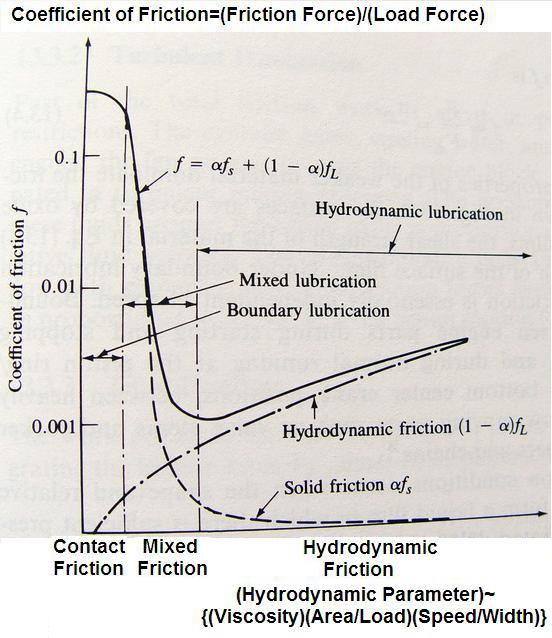
Since the "hydrodynamic parameter" is proportional to ...{(Viscosity)(Area/Load)(Speed/Width)} ...as the piston Speed slows in the vicinity of TDC the lubrication always transitions from "hydrodynamic" to "mixed/boundary" lubrication ...and since this transition also depends on Viscosity ...any increase in "TRR temperature" will cause a decrease in Viscosity ...and this will cause the transition to occur farther from TDC at a higher piston Speed ...and this will add a few more crankshaft degrees per revolution of operation in the wear-inducing regime of "mixed/boundary" lubrication.
So as I see it there's a tradeoff ...if you run with too low a coolant temperature combustion efficiency decreases due to a larger heat loss to the cylinder wall and the upper cylinder wall is exposed to more contaminates due to less complete combustion of the fuel ...but if you run with too high a coolant temperature wear is increased and there's a greater chance of varnish deposits forming on the upper cylinder wall.
I was going to that analysis on my turbo thread ...but due to a resounding lack of interest that thread was put on the back burner ...after I get caught up on my engine-wear thread I'll do the with/without IC analysis!

Cargo Master
Joined: May 2002
Posts: 2,530
Likes: 7
From: Montana
The OBS pickups were 215hp from the factory, my 2000 is 20 horsepower more that that at 235. I don't know where you're getting the 250 for a 99.5 but that didn't happen until 2001. Regardless of that fact, I guess we can only expect the OBS trucks that are chipped to start dropping like files any day now because of too much heat, is that correct?
It's also a scientific fact that too low of temperature may cause accelerated wear rates, but you don't want to talk about that now I'll bet.
It's also a scientific fact that too low of temperature may cause accelerated wear rates, but you don't want to talk about that now I'll bet.

Postmaster
Joined: Feb 2004
Posts: 3,266
Likes: 0
From: Levittown
So as I see it there's a tradeoff ...if you run with too low a coolant temperature combustion efficiency decreases due to a larger heat loss to the cylinder wall and the upper cylinder wall is exposed to more contaminates due to less complete combustion of the fuel ...but if you run with too high a coolant temperature wear is increased and there's a greater chance of varnish deposits forming on the upper cylinder wall.
Its a part (%) in a very big picture. (of wear)
Its part of the reason for the newer spec lube. (for ULSD)
The fuel is a contaminate. (liquid form, byproducts from combustion "acids", ect). Start running bio blends and things change again. NOx goes up with % of bio used.
The PSD seems to do well with 2 to 5% bio blends. My fear is they dont make lubes as of yet
for the bio and byproducts of bio.
Bill
still plays with trucks
Joined: Mar 2004
Posts: 1,743
Likes: 3
From: Twin Falls Idaho
Barney
FTE Stories
Ford Trucks for Ford Truck Enthusiasts

3 Best / 3 Worst Parts of Modern Ford Ownership
Brett Foote
10 Amazing Upgrades That Solve Common Ford Truck Owner Headaches
Pouria Savadkouei
Every 2026 Ford Engine Explained
Brett Foote
10 Ugly Ford Trucks That We Still Kinda Love
Joe Kucinski
10 Things Every Truck Owner NEEDS (2026 Edition)
Michael S. Palmer
Rezvani's Latest Post-Apocalyptic Monster Is a Ford F-150 Raptor Underneath
Verdad Gallardo
Top 10 Most Expensive Ford Trucks Ever Sold on Bring a Trailer
Joe Kucinski
2027 Ford Super Duty Buyer's Guide (Every Model, Engine, & Package)
Brett Foote
Top 10 Ford Truck Tragedies
Joe Kucinski



Post Fiend
Joined: Feb 2007
Posts: 14,541
Likes: 2
From: Dallas-Ft. Worth
2000 Ford F-Series Super Duty (over 8500 lbs. GVW) Trucks Technical Information
<table border="0" cellpadding="7" cellspacing="0" width="600"><tbody><tr bgcolor="#ffff99"> <td valign="TOP">Vehicle Type</td> <td colspan="3" valign="TOP">over 8500 lbs GVW single and dual rear-wheel pickups and chassis cabs</td> </tr> <tr bgcolor="#cccccc"> <td valign="TOP">Engine</td> <td valign="TOP">5.4L AEFI V-8</td> <td valign="TOP">6.8L SEFI V-10</td> <td valign="TOP">7.3L V-8 DI Turbo Diesel</td> </tr> <tr> <td valign="TOP">Engine material</td> <td colspan="3" valign="TOP">aluminum head, cast-iron block</td> </tr> <tr> <td valign="TOP" width="25%">Displacement (cu. in.)</td> <td valign="TOP" width="25%">330</td> <td valign="TOP" width="25%">415</td> <td valign="TOP" width="25%">444</td> </tr> <tr> <td valign="TOP" width="25%">Bore & Stroke</td> <td valign="TOP" width="25%">3.55x4.16</td> <td valign="TOP" width="25%">3.55x4.16</td> <td valign="TOP" width="25%">3.55x4.11</td> </tr> <tr> <td valign="TOP" width="25%">Compressions ratio</td> <td valign="TOP" width="25%">9.0:1</td> <td valign="TOP" width="25%">9.0:1</td> <td valign="TOP" width="25%">17.5:1</td> </tr> <tr> <td valign="TOP" width="25%"><nobr style="font-weight: normal; font-size: 100%; color: darkgreen;" id="itxt_nobr_13_0">Horsepower
 </nobr>/rpm</td> <td valign="TOP" width="25%">260 @ 4500</td> <td valign="TOP" width="25%">310 @ 4250</td> <td valign="TOP" width="25%">235 @ 2700</td> </tr> <tr> <td valign="TOP" width="25%">Torque/rpm</td> <td valign="TOP" width="25%">350 @ 2500</td> <td valign="TOP" width="25%">425 @ 3250</td> <td valign="TOP" width="25%">500 @ 1600</td> </tr> <tr> <td valign="TOP" width="25%">Fuel Injection</td> <td valign="TOP" width="25%">Sequential, multi-port fuel injection</td> <td valign="TOP" width="25%">sequential, multi-port fuel injection</td> <td valign="TOP" width="25%">Hydraulic electronic unit injection</td> </tr> <tr> <td valign="TOP" width="25%">Transmission</td> <td valign="TOP" width="25%">5-speed manual</td> <td valign="TOP" width="25%">5-speed manual</td> <td valign="TOP" width="25%">6-speed manual</td></tr></tbody></table>
Postmaster
Joined: Feb 2004
Posts: 3,266
Likes: 0
From: Levittown
Interesting. Since this is from Ford's page for the 2000 7.3L specs. I don't think it went down from 99:
2000 Ford F-Series Super Duty (over 8500 lbs. GVW) Trucks Technical Information
<table border="0" cellpadding="7" cellspacing="0" width="600"><tbody><tr bgcolor="#ffff99"> <td valign="TOP">Vehicle Type</td> <td colspan="3" valign="TOP">over 8500 lbs GVW single and dual rear-wheel pickups and chassis cabs</td> </tr> <tr bgcolor="#cccccc"> <td valign="TOP">Engine</td> <td valign="TOP">5.4L AEFI V-8</td> <td valign="TOP">6.8L SEFI V-10</td> <td valign="TOP">7.3L V-8 DI Turbo Diesel</td> </tr> <tr> <td valign="TOP">Engine material</td> <td colspan="3" valign="TOP">aluminum head, cast-iron block</td> </tr> <tr> <td valign="TOP" width="25%">Displacement (cu. in.)</td> <td valign="TOP" width="25%">330</td> <td valign="TOP" width="25%">415</td> <td valign="TOP" width="25%">444</td> </tr> <tr> <td valign="TOP" width="25%">Bore & Stroke</td> <td valign="TOP" width="25%">3.55x4.16</td> <td valign="TOP" width="25%">3.55x4.16</td> <td valign="TOP" width="25%">3.55x4.11</td> </tr> <tr> <td valign="TOP" width="25%">Compressions ratio</td> <td valign="TOP" width="25%">9.0:1</td> <td valign="TOP" width="25%">9.0:1</td> <td valign="TOP" width="25%">17.5:1</td> </tr> <tr> <td valign="TOP" width="25%"><nobr style="font-weight: normal; font-size: 100%; color: darkgreen;" id="itxt_nobr_13_0">Horsepower</nobr>/rpm</td> <td valign="TOP" width="25%">260 @ 4500</td> <td valign="TOP" width="25%">310 @ 4250</td> <td valign="TOP" width="25%">235 @ 2700</td> </tr> <tr> <td valign="TOP" width="25%">Torque/rpm</td> <td valign="TOP" width="25%">350 @ 2500</td> <td valign="TOP" width="25%">425 @ 3250</td> <td valign="TOP" width="25%">500 @ 1600</td> </tr> <tr> <td valign="TOP" width="25%">Fuel Injection</td> <td valign="TOP" width="25%">Sequential, multi-port fuel injection</td> <td valign="TOP" width="25%">sequential, multi-port fuel injection</td> <td valign="TOP" width="25%">Hydraulic electronic unit injection</td> </tr> <tr> <td valign="TOP" width="25%">Transmission</td> <td valign="TOP" width="25%">5-speed manual</td> <td valign="TOP" width="25%">5-speed manual</td> <td valign="TOP" width="25%">6-speed manual</td></tr></tbody></table>
2000 Ford F-Series Super Duty (over 8500 lbs. GVW) Trucks Technical Information
<table border="0" cellpadding="7" cellspacing="0" width="600"><tbody><tr bgcolor="#ffff99"> <td valign="TOP">Vehicle Type</td> <td colspan="3" valign="TOP">over 8500 lbs GVW single and dual rear-wheel pickups and chassis cabs</td> </tr> <tr bgcolor="#cccccc"> <td valign="TOP">Engine</td> <td valign="TOP">5.4L AEFI V-8</td> <td valign="TOP">6.8L SEFI V-10</td> <td valign="TOP">7.3L V-8 DI Turbo Diesel</td> </tr> <tr> <td valign="TOP">Engine material</td> <td colspan="3" valign="TOP">aluminum head, cast-iron block</td> </tr> <tr> <td valign="TOP" width="25%">Displacement (cu. in.)</td> <td valign="TOP" width="25%">330</td> <td valign="TOP" width="25%">415</td> <td valign="TOP" width="25%">444</td> </tr> <tr> <td valign="TOP" width="25%">Bore & Stroke</td> <td valign="TOP" width="25%">3.55x4.16</td> <td valign="TOP" width="25%">3.55x4.16</td> <td valign="TOP" width="25%">3.55x4.11</td> </tr> <tr> <td valign="TOP" width="25%">Compressions ratio</td> <td valign="TOP" width="25%">9.0:1</td> <td valign="TOP" width="25%">9.0:1</td> <td valign="TOP" width="25%">17.5:1</td> </tr> <tr> <td valign="TOP" width="25%"><nobr style="font-weight: normal; font-size: 100%; color: darkgreen;" id="itxt_nobr_13_0">Horsepower
</nobr>/rpm</td> <td valign="TOP" width="25%">260 @ 4500</td> <td valign="TOP" width="25%">310 @ 4250</td> <td valign="TOP" width="25%">235 @ 2700</td> </tr> <tr> <td valign="TOP" width="25%">Torque/rpm</td> <td valign="TOP" width="25%">350 @ 2500</td> <td valign="TOP" width="25%">425 @ 3250</td> <td valign="TOP" width="25%">500 @ 1600</td> </tr> <tr> <td valign="TOP" width="25%">Fuel Injection</td> <td valign="TOP" width="25%">Sequential, multi-port fuel injection</td> <td valign="TOP" width="25%">sequential, multi-port fuel injection</td> <td valign="TOP" width="25%">Hydraulic electronic unit injection</td> </tr> <tr> <td valign="TOP" width="25%">Transmission</td> <td valign="TOP" width="25%">5-speed manual</td> <td valign="TOP" width="25%">5-speed manual</td> <td valign="TOP" width="25%">6-speed manual</td></tr></tbody></table>
Good old Ford at its best.
4.11 X 4.18
Bill
Postmaster
Joined: Jun 2006
Posts: 2,647
Likes: 0
From: Fulltime RVer
...For an unsolicited response from an engineer who wrote ...You should want your engine's oil & water temperatures warmer to ...1) reduce piston/ring sliding friction ...lets throw this guy and Ernest in an octagon with some slide rules, mechanical pencils, graph paper and 2 cases of redbull and watch the show...
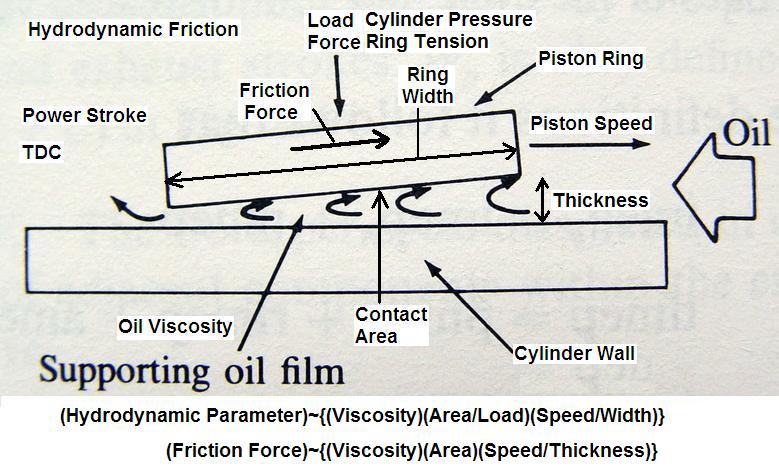
The picture below shows what happens during the part of the stroke when the piston is in the in the vicinity of TDC where the piston Speed is very low which causes operation in the wear-inducing regime of "mixed/boundary" lubrication. Now just the opposite occurs and warmer oil increases "piston/ring sliding friction" ...because the "hydrodynamic parameter" is proportional to ...{(Viscosity)(Area/Load)(Speed/Width) ...and now having a lower oil Viscosity moves the operating point to the left ...which is further into the wear-inducing regime of "mixed/boundary" lubrication where metal-to-metal contact occurs...
...and even worse the increased friction due to the lower oil Viscosity now generates more heat ...and more heat further reduces the oil Viscosity which further increases the friction generating even more heat ...and this can lead to "thermal runaway" resulting in a sized piston!
...2) to complete combustion before the crankshaft has rotated so many degrees which translates into more "area under the curve" of piston pressure pushing the connecting rod down to rotate the crankshaft ...Earlier combustion completion results in higher gas pressures earlier in the power stroke which are converted into higher average crankshaft rotating pressure...
My response to #2 is ...as indicated in the picture below "anything" that burns more fuel earlier in the cycle ...including an "economy-tune" which advances the injection timing ...will also generate more cylinder pressure earlier in the cycle ...and this increases the engine's efficiency ...but what impact does it have on wear?

In the graph below the amount of "jitter" in the friction-force trace near TDC increases dramatically as the load increases ...and this "jitter" results from "partial adhesion" due to some "metal-to-metal" contact! So having more cylinder pressure earlier in the cycle increases efficiency but it also increases wear ...and for a turbo versus the naturally aspirated DI diesel shown the wear situation is even worse!
So the tail-off in cylinder pressure later in the cycle shown for the split-shot injector isn't the most efficient way to make HP ...but this pressure occurs when the piston speed is high enough to allow operation in the wear-favorable regime of "Hydrodynamic Lubrication"!

As can be seen below ...in the vicinity of TDC the oil film "Thickness" is less than the peak-to-peak surface roughness and this is why there's some "metal-to-metal" contact there. The oil film "Thickness" collapses in the vicinity of TDC because the full value of the combustion pressure leaks behind the first compression ring and pushes that ring against the cylinder wall with a pressure force which adds to the spring tension force in the ring and also adds to the side-load force on the piston ...and a lesser value of the combustion pressure leaks behind the second compression ring and pushes that ring against the cylinder wall with a somewhat lesser force compared to the force pushing the first compression ring ...and a even lesser value of the combustion pressure leaks behind the next ring etc... and for a healthy engine with a normal amount of blowby about 1% of the mass of cylinder gas winds up leaking down to the crankcase.
So again having more cylinder pressure earlier in the cycle increases efficiency but it also increases wear and increases blowby!

...Gas pressure converted earlier into crankshaft rotating work is not later available as waste heat at the bottom of the power stroke. That contrasts with later combustion completion which fails to convert as much gas pressure into crankshaft rotating energy so more gas energy is still available at the bottom of the stroke as waste heat....
Last time I checked my retirement account it wasn't fairing so well ...so I'd rather pay a little more at the pump and hopefully have an engine that outlives me ...than do mods which increase both my engine's efficiency and wear ...and then have worry about the higher wear rate and a possible rebuild ...kind of like comparing the option of "time payments" versus a "balloon payment"!
Postmaster
Joined: Jun 2006
Posts: 2,647
Likes: 0
From: Fulltime RVer
I know for a fact that the 99.5 auto was 250 hp ...because I ordered one ...but time ran out and I settled for an E99 and hit the road as a fulltime RVer!