


Weird Oil Leak
Thread Starter
|
Freshman User
Joined: May 2009
Posts: 45
Likes: 0
From: St. Louis MO
Weird Oil Leak
I tried starting my truck after it sat for 3 weeks and it stuttered along then died. I looked underneath thinking I had a fuel leak and instead about 1 cup of oil came pouring out from the front drivers side area.
I was unable to repeat this weird leak and my truck still wont start.
My guess of where the oil came from, is from the front of that long horizontal cylinder that appears to apart of the Oil filter housing. I tried to take pictures the best I could.
This pic is taken from in front of the crossmember looking up the drivers side of the engine.
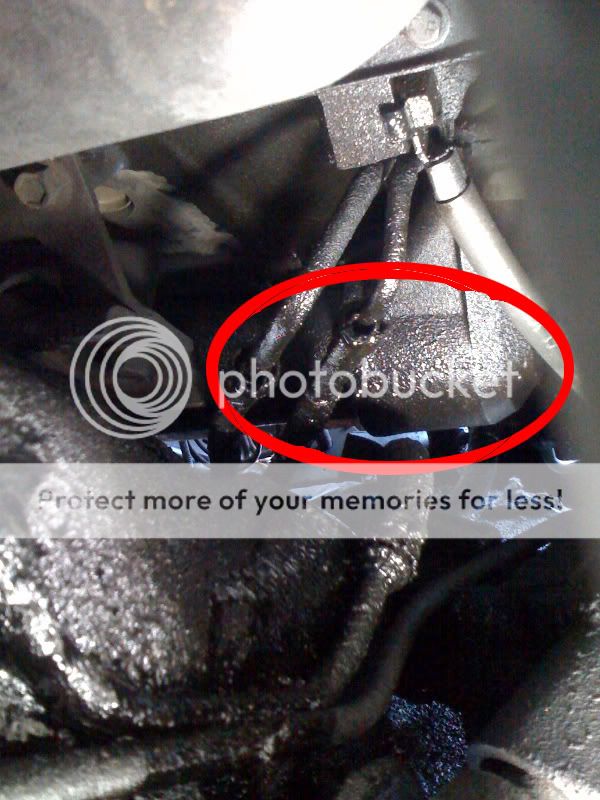
Any have any ideas what this is, and why only 1 cup of oil would drain out of there?
96 F250 7.3 2X4
I was unable to repeat this weird leak and my truck still wont start.
My guess of where the oil came from, is from the front of that long horizontal cylinder that appears to apart of the Oil filter housing. I tried to take pictures the best I could.
This pic is taken from in front of the crossmember looking up the drivers side of the engine.
Any have any ideas what this is, and why only 1 cup of oil would drain out of there?
96 F250 7.3 2X4

Post Fiend
Joined: Feb 2009
Posts: 8,773
Likes: 1
From: Texas Coast
Cooler leaking
Its your cooler that is leaking. Check your HPOP and ensure that the oil level is a 1/4 inch frm the top, if not top it off then check the crank case oil level and top it off. Then drain some of your coolant and let it sit a while and see if there is any oil floating on top.
http://photos.thedieselstop.com/showphoto.php/photo/12015/size/medium/sort/1
http://photos.thedieselstop.com/showphoto.php/photo/12015/size/medium/sort/1
Thread Starter
|
Freshman User
Joined: May 2009
Posts: 45
Likes: 0
From: St. Louis MO
Its your cooler that is leaking. Check your HPOP and ensure that the oil level is a 1/4 inch frm the top, if not top it off then check the crank case oil level and top it off. Then drain some of your coolant and let it sit a while and see if there is any oil floating on top.


Hotshot


Joined: Oct 2003
Posts: 17,799
Likes: 103
From: Ashland City, TN
You can just stick something down in there and see how far down the oil is from the top.
If the HPOP isn't full, it wont start. Most likely due to the drainage from the cooler.
The suggestion they gave you are the best you can get.
If the HPOP isn't full, it wont start. Most likely due to the drainage from the cooler.
The suggestion they gave you are the best you can get.
Posting Guru
Joined: Aug 2004
Posts: 2,417
Likes: 4
From: Braham MN
just crank on it, the HPOP will fill up. its not worth the time to try and get the plug out without stripping it just to add 1/4 of a quart of oil.
as for the Oil Cooler leaking. you can get O-rings and the gaskets from Ford pretty cheap. there not hard to fix but a PITA to get off the engine and back on. plus even if you pull the lower coolant hose you still get covered in oil/antifeeze. if you do take it off be sure to get all the gasket material off the block or it will leak. no need to put RTV anywhere when you reassemble it.
Diesel Rod
as for the Oil Cooler leaking. you can get O-rings and the gaskets from Ford pretty cheap. there not hard to fix but a PITA to get off the engine and back on. plus even if you pull the lower coolant hose you still get covered in oil/antifeeze. if you do take it off be sure to get all the gasket material off the block or it will leak. no need to put RTV anywhere when you reassemble it.
Diesel Rod
Trending Topics
Post Fiend
Joined: Feb 2009
Posts: 8,773
Likes: 1
From: Texas Coast
HPOP
From the manual
Lubrication System — 7.3L Diesel Engine
Low-Pressure System
The lubrication system is comprised of a low-pressure system and a high-pressure system. The low-pressure system provides primary engine lubrication while the high-pressure system provides the hydraulic pressure required to actuate the fuel injectors. The low-pressure system consists of the following:
Oil pump screen cover and tube (6622)
Gerotor oil pump
Oil cooler and filter assembly
The low-pressure lubricating system draws oil from the engine oil pan (6675) through the oil pump screen cover and tube, into the oil inlet passage in the front cover. The gerotor oil pump
then pumps the oil back out through the outlet passage in the front cover. The oil separates into two paths. One flow path sends oil into the high-pressure pump reservoir initial feed galley (integral to the cylinder block) and through the anti-drain back check ball. During cold start the oil feeds in two directions from the anti-drain back check ball. One feed leaves the check ball and enters the front cover. From there it enters the high-pressure oil reservoir. The second feed exits the check ball and enters the left bank valve lifter oil galley. After leaving the front cover outlet passage, the second oil path sends the oil through the oil cooler and filter assembly. Once inside the filter housing the oil filter bypass valve may open to vent excess pressure and oil back into the oil pan. After the oil has been circulated through the oil filter (6731), the oil feed then enters the main oil galley (integral to the cylinder block). Once in the main oil galley the oil is routed to the five crankshaft main bearing (6333) through five drilled and machined feed galleys (integral to the cylinder block). The five camshaft bearings receive the oil feed
through five vertical drilled and machined feed galleys connected to the main bearing feed galleys. The front main bearing feed galley also supplies oil to the right bank valve lifter oil galley through a vertically drilled and machined oil feed galley (integral to the cylinder block). The rear main bearing oil feed galley also supplies oil to the turbocharger assembly through a
vertically drilled and machined oil feed galley (integral to the cylinder block). Pressurized oil entering the turbocharger assembly is utilized to actuate the exhaust back pressure warm-up
system. The oil drains back through the turbocharger mounting pedestal and back into the oil pan. The valve lifter oil galley supplies pressurized oil to the valve tappet (6500) and to the
piston cooling oil jets. Oil from the valve tappets is routed upward to the cylinder head valve train through hollow push rods (6565). Once in the cylinder head (6049), the oil drains back to
the oil pan through return ports at each end of the cylinder head.
High-Pressure System
The high-pressure system consists of:
An injection control pressure sensor
An injection pressure regulator
A high-pressure oil pump (6600)
A left cylinder head high-pressure feed hose
A right cylinder head high-pressure feed hose
A high-pressure oil rail (integral to the cylinder heads)
An oil pressure sensor (9278)
During initial start or cold start the high-pressure oil pump receives unfiltered oil from the left side valve lifter oil galley through the anti-drain back check ball valve. Once the engine starts or during warm engine starts the check ball closes and the high-pressure oil pump receives filtered oil from the high-pressure oil pump reservoir. The high-pressure oil pump pumps the oil under extremely high pressures (4115-20577 kPa [ 600-3000 psi]) through the left and right side pressure oil rails (integral to the cylinder heads). Once in the oil rail the oil is fed to the fuel injector bores through four oil feed galleys drilled and machined in the cylinder head. The high-pressure oil then actuates the fuel injectors (9F593). High-Pressure Oil Flow 7.3L Item Part Number Description
9278 Oil Pressure Sensor
6600 High-Pressure Oil Pump
6049 Cylinder Head
9A332 High-Pressure Oil Feed Hoses
High-Pressure Oil Rail (Part of 6049)
Injector Oil Feed Galleys (Part of 6049)
9F593 Fuel Injector (8 Required)
9F838 Injection Control Pressure Sensor
Injection Pressure Regulator (Part of 6600)
6019 Engine Front Cover
6658 High-Pressure Oil Pump Reservoir
Remember after you get it running to stop it and sample the radiator and let it stand and check for oil settling out on top. If there is any oil then your cooler is shot.
Lubrication System — 7.3L Diesel Engine
Low-Pressure System
The lubrication system is comprised of a low-pressure system and a high-pressure system. The low-pressure system provides primary engine lubrication while the high-pressure system provides the hydraulic pressure required to actuate the fuel injectors. The low-pressure system consists of the following:
Oil pump screen cover and tube (6622)
Gerotor oil pump
Oil cooler and filter assembly
The low-pressure lubricating system draws oil from the engine oil pan (6675) through the oil pump screen cover and tube, into the oil inlet passage in the front cover. The gerotor oil pump
then pumps the oil back out through the outlet passage in the front cover. The oil separates into two paths. One flow path sends oil into the high-pressure pump reservoir initial feed galley (integral to the cylinder block) and through the anti-drain back check ball. During cold start the oil feeds in two directions from the anti-drain back check ball. One feed leaves the check ball and enters the front cover. From there it enters the high-pressure oil reservoir. The second feed exits the check ball and enters the left bank valve lifter oil galley. After leaving the front cover outlet passage, the second oil path sends the oil through the oil cooler and filter assembly. Once inside the filter housing the oil filter bypass valve may open to vent excess pressure and oil back into the oil pan. After the oil has been circulated through the oil filter (6731), the oil feed then enters the main oil galley (integral to the cylinder block). Once in the main oil galley the oil is routed to the five crankshaft main bearing (6333) through five drilled and machined feed galleys (integral to the cylinder block). The five camshaft bearings receive the oil feed
through five vertical drilled and machined feed galleys connected to the main bearing feed galleys. The front main bearing feed galley also supplies oil to the right bank valve lifter oil galley through a vertically drilled and machined oil feed galley (integral to the cylinder block). The rear main bearing oil feed galley also supplies oil to the turbocharger assembly through a
vertically drilled and machined oil feed galley (integral to the cylinder block). Pressurized oil entering the turbocharger assembly is utilized to actuate the exhaust back pressure warm-up
system. The oil drains back through the turbocharger mounting pedestal and back into the oil pan. The valve lifter oil galley supplies pressurized oil to the valve tappet (6500) and to the
piston cooling oil jets. Oil from the valve tappets is routed upward to the cylinder head valve train through hollow push rods (6565). Once in the cylinder head (6049), the oil drains back to
the oil pan through return ports at each end of the cylinder head.
High-Pressure System
The high-pressure system consists of:
An injection control pressure sensor
An injection pressure regulator
A high-pressure oil pump (6600)
A left cylinder head high-pressure feed hose
A right cylinder head high-pressure feed hose
A high-pressure oil rail (integral to the cylinder heads)
An oil pressure sensor (9278)
During initial start or cold start the high-pressure oil pump receives unfiltered oil from the left side valve lifter oil galley through the anti-drain back check ball valve. Once the engine starts or during warm engine starts the check ball closes and the high-pressure oil pump receives filtered oil from the high-pressure oil pump reservoir. The high-pressure oil pump pumps the oil under extremely high pressures (4115-20577 kPa [ 600-3000 psi]) through the left and right side pressure oil rails (integral to the cylinder heads). Once in the oil rail the oil is fed to the fuel injector bores through four oil feed galleys drilled and machined in the cylinder head. The high-pressure oil then actuates the fuel injectors (9F593). High-Pressure Oil Flow 7.3L Item Part Number Description
9278 Oil Pressure Sensor
6600 High-Pressure Oil Pump
6049 Cylinder Head
9A332 High-Pressure Oil Feed Hoses
High-Pressure Oil Rail (Part of 6049)
Injector Oil Feed Galleys (Part of 6049)
9F593 Fuel Injector (8 Required)
9F838 Injection Control Pressure Sensor
Injection Pressure Regulator (Part of 6600)
6019 Engine Front Cover
6658 High-Pressure Oil Pump Reservoir
Remember after you get it running to stop it and sample the radiator and let it stand and check for oil settling out on top. If there is any oil then your cooler is shot.
FTE Stories
Ford Trucks for Ford Truck Enthusiasts

Top 10 Most Expensive Ford Trucks Ever Sold on Bring a Trailer
Joe Kucinski
2027 Ford Super Duty Buyer's Guide (Every Model, Engine, & Package)
Brett Foote
Top 10 Ford Truck Tragedies
Joe Kucinski
AEV FXL Super Duty - the Super Duty Raptor Ford Doesn't Make
Brett Foote
Lobo Vs Lobo: Proof the F-150 Lobo Should Be Even Lower!
Michael S. Palmer
Ford's 2001 Explorer Sportsman Concept Looks For a New Home
Verdad Gallardo
10 Best Ford Truck Engines We Miss the Most!
Joe Kucinski
2026 Shelby F-150 Off-Road: Better Than a Raptor R?
Brett Foote
2027 Super Duty Carhartt Package First Look: 12 Things You NEED to Know!
Michael S. Palmer
Thread Starter
|
Freshman User
Joined: May 2009
Posts: 45
Likes: 0
From: St. Louis MO
Wow! Thanks for all the great info!! I really appreciate it.
Ok so as I understand it, my first steps are to check the level of the oil in the hpop through the 1/4 plug on top of the engine. Fill, or if full try to start engine. After getting running check coolant for traces of oil floating on top.
If traces of oil, replace/repair oil cooler.
So the leak that I had pour out. Was that due to the bad O rings on the cooler? I'm just wondering from where I am today, what kind of repairs the oil cooler might be needing? And what causes this type of breakage? I'm guessing that this has been building for some time and trying to start it was the breaking point.
Ok so as I understand it, my first steps are to check the level of the oil in the hpop through the 1/4 plug on top of the engine. Fill, or if full try to start engine. After getting running check coolant for traces of oil floating on top.
If traces of oil, replace/repair oil cooler.
So the leak that I had pour out. Was that due to the bad O rings on the cooler? I'm just wondering from where I am today, what kind of repairs the oil cooler might be needing? And what causes this type of breakage? I'm guessing that this has been building for some time and trying to start it was the breaking point.

Post Fiend
Joined: Apr 2004
Posts: 12,835
Likes: 3
From: Silver Lake Dunes, MI

So the leak that I had pour out. Was that due to the bad O rings on the cooler? I'm just wondering from where I am today, what kind of repairs the oil cooler might be needing? And what causes this type of breakage? I'm guessing that this has been building for some time and trying to start it was the breaking point.
Thread Starter
|
Freshman User
Joined: May 2009
Posts: 45
Likes: 0
From: St. Louis MO
Just linking back to a write-up on the Oil Cooler repair I found.
FTE Oil Cooler Repair
I hope to get to mine soon. Maybe if I delay long enough the temp will get above 12 degrees.
FTE Oil Cooler Repair
I hope to get to mine soon. Maybe if I delay long enough the temp will get above 12 degrees.

Thread
Thread Starter
Forum
Replies
Last Post
Loggin
1999 - 2003 7.3L Power Stroke Diesel
17
May 27, 2017 04:03 PM
WhiteBeast-05-powers
6.0L Power Stroke Diesel
51
Feb 22, 2016 09:29 AM
frogcookietater1
1999 - 2003 7.3L Power Stroke Diesel
25
Feb 12, 2012 10:34 PM
