Which Turbo?
Thread Starter
|
More Turbo

Joined: May 2006
Posts: 504
Likes: 1
From: Victoria BC, Canada
Hey I know about blowing stuff up... I built a 468CI Bigblock Chevy years ago that made over 600HP on straight gas. 12:1 compression yada yada yada... It spun 8000RPM and made some serious power. Bottom line is I blew it up at least a half a dozen times before I found what worked and stayed together. (End result was over 15,000 into the motor to make it handle what I was doing to it.)
This is why I am researching my plans here before I do anything major (Something I didn't do much of back in the day...)
This is why I am researching my plans here before I do anything major (Something I didn't do much of back in the day...)
Postmaster
Joined: Jun 2006
Posts: 2,647
Likes: 0
From: Fulltime RVer

There seems to be a common misconception that high EGT is bad and that a lot of extra airflow is good because it reduces EGT! Well you can't make high HP without also having high EGT and high CGT=Cylinder Gas Temperature because the heat ENERGY in the exhaust gas is what powers the turbo so you can't make high BP without having high EGT and the CGT produced by the combusting fuel combined with the air density in the cylinder that's produced by the BP is what produces power stroke HP.
Of course excessive EGT damages the turbine and excessive CGT damages the pistons but trying to infer what the CGT is by measuring the EGT is somewhat tricky because delayed injection timing gives higher EGT with lower CGT and vice versa advanced injection timing gives lower EGT with higher CGT!
Since every high HP engine already has a pre turbo EGT probe I recommend installing a temperature probe in a glow plug hole to determine the best compromise for "optimum injection timing" to make the highest HP possible without damaging either a piston or the turbine!
The HP produced during the piston power strokes depends on the combustion generated cylinder pressure and this pressure is proportional to the product of the number of air molecules and the average kinetic temperature of each molecule. Increasing the airflow for a fixed fuel flow increases the number of air molecules but since the fixed amount of heat ENERGY that's released by combusting the fixed fuel flow is absorbed by more air molecules this reduces the average kinetic temperature of the larger number of air molecules.
So reducing the average molecular kinetic temperature reduces the CGT but since the number of molecules is increased the product of the number of molecules times their average kinetic temperature remains constant and therefore the cylinder pressure is unchanged and that means the piston power stroke HP remains constant as the airflow is increased at constant fuel flow.
So increasing the airflow for a given fuel flow does produce the same piston power stroke HP at a lower CGT and if the injection timing remains the same the EGT is also lower for the same piston power stroke HP but we still have to account for the fact that the larger number of air molecules ingested during the intake strokes have to be compressed and this increases the compression stroke "pumping loss HP" which in turn causes a net reduction in the FWHP as airflow is increased at a constant fuel flow.
So just like my argument for an "optimum injection timing" you need to "optimize" the airflow for a given fuel flow or vice versa "optimize" the fuel flow for a given airflow which means you need to run at the "optimum air-fuel ratio" or AFR! If you over fuel and run at an AFR lower than about 18 you can get excessive EGT due to partially burning fuel coming out the exhaust and of course if you run at an AFR higher than about 18 you're needlessly compressing airflow which reduces your net FWHP and you could add some more fuel and produce more HP instead!
There's only one approach to EGT control that makes sense to me and it's not providing excess airflow but rather doing a better job of cooling the airflow that's optimum for the given fuel flow! You can produce a given MAF by using a combination of higher BP and higher MAT or by using an equivalent combination of lower BP and lower MAT.
For my EGT mod that involves lowering the MAT see post #13 here... High Altitude...This thread is located at: https://www.ford-trucks.com/forums/sh...1&goto=newpost ...that post also discusses how to eliminate smoke and following ones discuss other aspects of EGT.
If you compare EGTs before and after my mod while towing a grade in the summer with the A/C on I guarantee you'll see at least a 100 F reduction!
If you want some background on how to understand what a turbo compressor map means and how to use one start with post #180 here... https://www.ford-trucks.com/forums/8...filter-12.html
...and then pick up at post #201 here... https://www.ford-trucks.com/forums/8...filter-14.html ...to see how I plotted the points on the GTP38R compressor map below.

...and keep reading the following posts for more good stuff on compressor maps.
BTW I just noticed that in post #208 in that "old thread" one of my tables has been replaced by a new table that I just generated and posted on another forum for a guy with a Cummins ISC!!! I guess I accidentally used the same file name and overwrote the old graph?
I explained IC heat capacity in post #159 here... https://www.ford-trucks.com/forums/8...estion-11.html ...and in the thread above in post #212 here... https://www.ford-trucks.com/forums/8...filter-15.html ...and if you do a hard acceleration with an IC that's initially at ambient temperature the RPM lines on the above map start off to the right of the ones shown at higher MAF and then as the IC heats up they move to the left and eventually reach the position shown above for steady state thermal equilibrium.
Of course excessive EGT damages the turbine and excessive CGT damages the pistons but trying to infer what the CGT is by measuring the EGT is somewhat tricky because delayed injection timing gives higher EGT with lower CGT and vice versa advanced injection timing gives lower EGT with higher CGT!
Since every high HP engine already has a pre turbo EGT probe I recommend installing a temperature probe in a glow plug hole to determine the best compromise for "optimum injection timing" to make the highest HP possible without damaging either a piston or the turbine!
The HP produced during the piston power strokes depends on the combustion generated cylinder pressure and this pressure is proportional to the product of the number of air molecules and the average kinetic temperature of each molecule. Increasing the airflow for a fixed fuel flow increases the number of air molecules but since the fixed amount of heat ENERGY that's released by combusting the fixed fuel flow is absorbed by more air molecules this reduces the average kinetic temperature of the larger number of air molecules.
So reducing the average molecular kinetic temperature reduces the CGT but since the number of molecules is increased the product of the number of molecules times their average kinetic temperature remains constant and therefore the cylinder pressure is unchanged and that means the piston power stroke HP remains constant as the airflow is increased at constant fuel flow.
So increasing the airflow for a given fuel flow does produce the same piston power stroke HP at a lower CGT and if the injection timing remains the same the EGT is also lower for the same piston power stroke HP but we still have to account for the fact that the larger number of air molecules ingested during the intake strokes have to be compressed and this increases the compression stroke "pumping loss HP" which in turn causes a net reduction in the FWHP as airflow is increased at a constant fuel flow.
So just like my argument for an "optimum injection timing" you need to "optimize" the airflow for a given fuel flow or vice versa "optimize" the fuel flow for a given airflow which means you need to run at the "optimum air-fuel ratio" or AFR! If you over fuel and run at an AFR lower than about 18 you can get excessive EGT due to partially burning fuel coming out the exhaust and of course if you run at an AFR higher than about 18 you're needlessly compressing airflow which reduces your net FWHP and you could add some more fuel and produce more HP instead!
There's only one approach to EGT control that makes sense to me and it's not providing excess airflow but rather doing a better job of cooling the airflow that's optimum for the given fuel flow! You can produce a given MAF by using a combination of higher BP and higher MAT or by using an equivalent combination of lower BP and lower MAT.
For my EGT mod that involves lowering the MAT see post #13 here... High Altitude...This thread is located at: https://www.ford-trucks.com/forums/sh...1&goto=newpost ...that post also discusses how to eliminate smoke and following ones discuss other aspects of EGT.
While the math confused me a bit (okay a lot)I did try removing this baffle. I tried it out this morning and it would appear that my EGTs were reduced by about 50 degrees at highway speed. I'll see what it does on the way home. I plan on attacking it with the dremel again tonight. Thanks ernesteugene!
If you want some background on how to understand what a turbo compressor map means and how to use one start with post #180 here... https://www.ford-trucks.com/forums/8...filter-12.html
...The difficulty in analyzing exactly how Air Flow + Fuel Flow = HP is accomplished in a turbo diesel is caused by the "turbo" itself because the turbo connects the Air Flow to the Fuel Flow so to simplify this discussion I'll "disconnect" the Air Flow from the Fuel Flow in this following "thought" experiment. Disconnect the up-pipes and install a dual exhaust and then disconnect the downpipe and attach the output shaft from a variable HP electric motor to the turbine drive shaft so that the compressor wheel is now powered solely by the adjustable electric motor...
...and keep reading the following posts for more good stuff on compressor maps.
BTW I just noticed that in post #208 in that "old thread" one of my tables has been replaced by a new table that I just generated and posted on another forum for a guy with a Cummins ISC!!! I guess I accidentally used the same file name and overwrote the old graph?
I explained IC heat capacity in post #159 here... https://www.ford-trucks.com/forums/8...estion-11.html ...and in the thread above in post #212 here... https://www.ford-trucks.com/forums/8...filter-15.html ...and if you do a hard acceleration with an IC that's initially at ambient temperature the RPM lines on the above map start off to the right of the ones shown at higher MAF and then as the IC heats up they move to the left and eventually reach the position shown above for steady state thermal equilibrium.
Postmaster
Joined: Jun 2006
Posts: 2,647
Likes: 0
From: Fulltime RVer
In my first post on this thread I gave this link ...only 24lbs of boost on GTP38R BB turbo ... https://www.ford-trucks.com/forums/8...ml#post7539899 ...where it was incorrectly stated that even though you aren't getting any more BP with your new GTP38R turbo you're still getting 33% more airflow because the GTP38R has a larger compressor wheel. I explained in that link and again in my first post here why that statement isn't true and after all of that I see that "strokersace" has again made that same incorrect claim in his post # 42...
"With either drop-in turbo you're looking at, you'll be getting more air to the motor than stock because of the larger compressor wheels. I don't know if you'll see more boost, but it'll clean your smoke up considerably."
...so guys where did I go wrong in my explanations and why isn't it "obvious" to everyone that a 25 psi BP produced by a stock turbo with its 80 mm compressor wheel spinning at a higher wheel rpm produces the same MAF airflow as a 25 psi BP produced by a GTP38R turbo with its 88 mm compressor wheel spinning at a lower wheel rpm???
"With either drop-in turbo you're looking at, you'll be getting more air to the motor than stock because of the larger compressor wheels. I don't know if you'll see more boost, but it'll clean your smoke up considerably."
...so guys where did I go wrong in my explanations and why isn't it "obvious" to everyone that a 25 psi BP produced by a stock turbo with its 80 mm compressor wheel spinning at a higher wheel rpm produces the same MAF airflow as a 25 psi BP produced by a GTP38R turbo with its 88 mm compressor wheel spinning at a lower wheel rpm???

Post Fiend
Joined: Jun 2004
Posts: 9,293
Likes: 10
From: Parker, CO
You can have higher HP with lower EGT's, and you can do it without jacking the timing up so far as to create excessive CGT's.
"Heat energy" is NOT what spools a turbo. Take a torch and hold it up to the turbine housing. That's heat energy. Will the turbo spool? No. So what spools up a turbo? It's called "mass flow rate".
Lastly:
Where you went wrong was in calculating the temperature. Will a 38R produce 33% more airflow at 25 psi compared to a stocker at 25 psi? No. But there will be a difference, a slight one. The difference is in the air temperature at the turbo outlet discharge. At 25 psi, the air charge temperature on the stock turbo will be higher than the temperature from the 38R. Now, since Ernest is big on math, what happens when pressure is the same, but temperature drops? Anyone? You get more density.
At 25 psi, the 38R is well within it's map.... a stock turbo is not. Meaning that on a stock turbo, the air charge temperature at the discharge is rapidly increasing, and is higher than the 38R at the same boost pressures. So you aren't getting the same air density as you would with a 38R.
It's not a huge change, not the 33% you would see advertised, but there is a slight difference. Put a temp probe at the outlet of each turbo and monitor the temperature differences at 25 psi. Then you can calculate the actual difference in air density between the two.
That difference is one reason you can also see a change in EGT's between the two turbos. Throw a 1.0 A/R turbine housing on the stock turbo (the stocker and the 38R use the exact same turbine wheel), so that you get equal backpressures between the two turbos. Now spool them both up to 25 psi. Which one will have lower EGT's? The 38R, because you are getting cooler and slightly more dense air into the engine at equal boost pressures.
"Heat energy" is NOT what spools a turbo. Take a torch and hold it up to the turbine housing. That's heat energy. Will the turbo spool? No. So what spools up a turbo? It's called "mass flow rate".
Lastly:
Originally Posted by ernesteugene
..so guys where did I go wrong in my explanations and why isn't it "obvious" to everyone that a 25 psi BP produced by a stock turbo with its 80 mm compressor wheel spinning at a higher wheel rpm produces the same MAF airflow as a 25 psi BP produced by a GTP38R turbo with its 88 mm compressor wheel spinning at a lower wheel rpm???
At 25 psi, the 38R is well within it's map.... a stock turbo is not. Meaning that on a stock turbo, the air charge temperature at the discharge is rapidly increasing, and is higher than the 38R at the same boost pressures. So you aren't getting the same air density as you would with a 38R.
It's not a huge change, not the 33% you would see advertised, but there is a slight difference. Put a temp probe at the outlet of each turbo and monitor the temperature differences at 25 psi. Then you can calculate the actual difference in air density between the two.
That difference is one reason you can also see a change in EGT's between the two turbos. Throw a 1.0 A/R turbine housing on the stock turbo (the stocker and the 38R use the exact same turbine wheel), so that you get equal backpressures between the two turbos. Now spool them both up to 25 psi. Which one will have lower EGT's? The 38R, because you are getting cooler and slightly more dense air into the engine at equal boost pressures.

Post Fiend
Joined: Feb 2007
Posts: 14,541
Likes: 2
From: Dallas-Ft. Worth
I agree Curtis, but I doubt seriously that the differences are all that great. Throw the I/C in the mix and I'm betting the differences are even less. It would be good to see the difference, but how the heck can it be compared? In a controlled room with a fixed temp? I guess average outlet temps for about the same ambient would get us close, but it would take a lot of data points to get a decent picture of what's happening. I watch the charge temp post-I/C now with my Scan Gauge, and I'm seeing 120s-130s on average with 90-100 degree ambient temps. Do you have any temp data stored in AE? I'd be curious what yours are. Of course, that isn't at 25psi, just average over time. It goes up a bit when I light it up naturally. I'd have to play some more & watch it to see what it's up to. And that's running the 6637 under the hood, no CAI, which I believe you're running now, right?
Post Fiend
Joined: Feb 2007
Posts: 14,541
Likes: 2
From: Dallas-Ft. Worth

Correct. For me, the van turbo is more than enough. 38r is overkill, and the H2E is WAAAY overkill. For just the cost of the H2E, you can have a van turbo AND injectors. LOL It's up to you & your wallet, and of course whether or not you feel safe going for that half-century HP mark.
Thread Starter
|
More Turbo
Joined: May 2006
Posts: 504
Likes: 1
From: Victoria BC, Canada
For my EGT mod that involves lowering the MAT see post #13 here... High Altitude...This thread is located at: https://www.ford-trucks.com/forums/sh...1&goto=newpost ...that post also discusses how to eliminate smoke and following ones discuss other aspects of EGT.
This link didn't work for me... Can you either PM me or re post?
Post Fiend
Joined: Jun 2004
Posts: 9,293
Likes: 10
From: Parker, CO
I agree Curtis, but I doubt seriously that the differences are all that great. Throw the I/C in the mix and I'm betting the differences are even less. It would be good to see the difference, but how the heck can it be compared? In a controlled room with a fixed temp? I guess average outlet temps for about the same ambient would get us close, but it would take a lot of data points to get a decent picture of what's happening. I watch the charge temp post-I/C now with my Scan Gauge, and I'm seeing 120s-130s on average with 90-100 degree ambient temps. Do you have any temp data stored in AE? I'd be curious what yours are. Of course, that isn't at 25psi, just average over time. It goes up a bit when I light it up naturally. I'd have to play some more & watch it to see what it's up to. And that's running the 6637 under the hood, no CAI, which I believe you're running now, right?
As for intakes, intercoolers, etc, I left that out because that is separate. All I was talking about was the heating effect that the turbo has as it compresses the air. All turbos do this, and once you get to the point where you run a turbo at the ragged edge of its map (or beyond), that air starts to get really hot really fast.
As an example, a guy went racing with us last year on several occasions. He was running a stock turbo with a 1.0 turbine housing, and running stage II injectors. He was spooling the stocker up to about 34 psi on every run. The next time he came to the track, he had swapped in a 38R with the same sized turbine housing. He dropped 4/10ths off his time in the 1/4 mile, but he was making about the same boost (34-35 psi).
So with the same exact mods, same exact turbine housing and turbine wheel, all running almost the same amount of boost.... what happened? (and this wasn't just a fluke, he raced with us quite often, so he had consistent timeslips on different days to go off of)
Well, at 34 psi, the stock turbo is well beyond it's map, and the intake air is superheated, and thus less dense. At this altitude, air density has a very big effect. He was choking out his engine with the turbo that couldn't handle the airflow.
In addition to the power, his EGT's dropped, and his smoke cleared up considerably.
That is where I'm coming from in my post. At 25 psi, the effect is much less noticeable. But running 34 psi, yeah it's a big difference. That's were you might get your 33%. Of course, at those pressures with the stock turbo, we're now comparing apples to oranges, since the stocker was never meant to reach those boost levels to begin with.
Now on the flip side, I'm still running stock injectors. When I went from a stock turbo (.84 turbine housing) to the 38R (1.0 turbine housing), my ET's and trap speed remained identical. This was done before I went with big oil, just FYI. So with nothing more than a chip/intake/exhaust, a stock turbo is probably on the very ragged edge, but isn't quite choking out the engine just yet. Upgrade to big oil, or bigger injectors, and you'll push beyond what the stocker can deliver without sacrificing power.
FTE Stories
Ford Trucks for Ford Truck Enthusiasts

2027 Ford Super Duty Buyer's Guide (Every Model, Engine, & Package)
Brett Foote
Top 10 Ford Truck Tragedies
Joe Kucinski
AEV FXL Super Duty - the Super Duty Raptor Ford Doesn't Make
Brett Foote
Lobo Vs Lobo: Proof the F-150 Lobo Should Be Even Lower!
Michael S. Palmer
Ford's 2001 Explorer Sportsman Concept Looks For a New Home
Verdad Gallardo
10 Best Ford Truck Engines We Miss the Most!
Joe Kucinski
2026 Shelby F-150 Off-Road: Better Than a Raptor R?
Brett Foote
2027 Super Duty Carhartt Package First Look: 12 Things You NEED to Know!
Michael S. Palmer
10 Most Surprising 2026 Ford Truck Features!
Joe Kucinski
Fleet Mechanic
Joined: Dec 2007
Posts: 1,766
Likes: 8
From: Hutchinson, KS


Dang I LIKE THAT!!! Can't say that I've seen the black face/bezel with green light up close before. Is it easy to read at all times? Or if the sun hits it just right it glares?
I'm going to seriously have to look into one of those now!!!
Post Fiend
Joined: Feb 2007
Posts: 14,541
Likes: 2
From: Dallas-Ft. Worth
You're right, the differences aren't that great, but it does have a slight effect. Definitely not the 33% difference as advertised.... at least not at 25 psi of boost.
As for intakes, intercoolers, etc, I left that out because that is separate. All I was talking about was the heating effect that the turbo has as it compresses the air. All turbos do this, and once you get to the point where you run a turbo at the ragged edge of its map (or beyond), that air starts to get really hot really fast.
As an example, a guy went racing with us last year on several occasions. He was running a stock turbo with a 1.0 turbine housing, and running stage II injectors. He was spooling the stocker up to about 34 psi on every run. The next time he came to the track, he had swapped in a 38R with the same sized turbine housing. He dropped 4/10ths off his time in the 1/4 mile, but he was making about the same boost (34-35 psi).
So with the same exact mods, same exact turbine housing and turbine wheel, all running almost the same amount of boost.... what happened? (and this wasn't just a fluke, he raced with us quite often, so he had consistent timeslips on different days to go off of)
Well, at 34 psi, the stock turbo is well beyond it's map, and the intake air is superheated, and thus less dense. At this altitude, air density has a very big effect. He was choking out his engine with the turbo that couldn't handle the airflow.
In addition to the power, his EGT's dropped, and his smoke cleared up considerably.
That is where I'm coming from in my post. At 25 psi, the effect is much less noticeable. But running 34 psi, yeah it's a big difference. That's were you might get your 33%. Of course, at those pressures with the stock turbo, we're now comparing apples to oranges, since the stocker was never meant to reach those boost levels to begin with.
Now on the flip side, I'm still running stock injectors. When I went from a stock turbo (.84 turbine housing) to the 38R (1.0 turbine housing), my ET's and trap speed remained identical. This was done before I went with big oil, just FYI. So with nothing more than a chip/intake/exhaust, a stock turbo is probably on the very ragged edge, but isn't quite choking out the engine just yet. Upgrade to big oil, or bigger injectors, and you'll push beyond what the stocker can deliver without sacrificing power.
As for intakes, intercoolers, etc, I left that out because that is separate. All I was talking about was the heating effect that the turbo has as it compresses the air. All turbos do this, and once you get to the point where you run a turbo at the ragged edge of its map (or beyond), that air starts to get really hot really fast.
As an example, a guy went racing with us last year on several occasions. He was running a stock turbo with a 1.0 turbine housing, and running stage II injectors. He was spooling the stocker up to about 34 psi on every run. The next time he came to the track, he had swapped in a 38R with the same sized turbine housing. He dropped 4/10ths off his time in the 1/4 mile, but he was making about the same boost (34-35 psi).
So with the same exact mods, same exact turbine housing and turbine wheel, all running almost the same amount of boost.... what happened? (and this wasn't just a fluke, he raced with us quite often, so he had consistent timeslips on different days to go off of)
Well, at 34 psi, the stock turbo is well beyond it's map, and the intake air is superheated, and thus less dense. At this altitude, air density has a very big effect. He was choking out his engine with the turbo that couldn't handle the airflow.
In addition to the power, his EGT's dropped, and his smoke cleared up considerably.
That is where I'm coming from in my post. At 25 psi, the effect is much less noticeable. But running 34 psi, yeah it's a big difference. That's were you might get your 33%. Of course, at those pressures with the stock turbo, we're now comparing apples to oranges, since the stocker was never meant to reach those boost levels to begin with.
Now on the flip side, I'm still running stock injectors. When I went from a stock turbo (.84 turbine housing) to the 38R (1.0 turbine housing), my ET's and trap speed remained identical. This was done before I went with big oil, just FYI. So with nothing more than a chip/intake/exhaust, a stock turbo is probably on the very ragged edge, but isn't quite choking out the engine just yet. Upgrade to big oil, or bigger injectors, and you'll push beyond what the stocker can deliver without sacrificing power.
It's actually better than expected. I like green because the stock cluster is green, my gauge back lighting is green LEDs, and I like everything to match. You can also invert it so it has a green background with black letters instead. I was looking at just the ICP DiPricol gauge, but it's ~$200 alone. For $269, I got everything (except coolant temp, oil pressure, and fuel pressure). I'll add sensors to it for the first two, the last one I'll have the dedicated mechanical pressure gauge mounted outside by the wiper (like Ron & Brandon). Here's a link to it if you're serious -- HIGHLY recommended
:http://terminatorengineering.com/scangauge/
Fleet Mechanic
Joined: Dec 2007
Posts: 1,766
Likes: 8
From: Hutchinson, KS
Agreed 100%.
The sun CAN'T hit it there to glare. It would have to shine through your head & reflect back to glare at you. LOL
It's actually better than expected. I like green because the stock cluster is green, my gauge back lighting is green LEDs, and I like everything to match. You can also invert it so it has a green background with black letters instead. I was looking at just the ICP DiPricol gauge, but it's ~$200 alone. For $269, I got everything (except coolant temp, oil pressure, and fuel pressure). I'll add sensors to it for the first two, the last one I'll have the dedicated mechanical pressure gauge mounted outside by the wiper (like Ron & Brandon). Here's a link to it if you're serious -- HIGHLY recommended :
http://terminatorengineering.com/scangauge/
The sun CAN'T hit it there to glare. It would have to shine through your head & reflect back to glare at you. LOL
It's actually better than expected. I like green because the stock cluster is green, my gauge back lighting is green LEDs, and I like everything to match. You can also invert it so it has a green background with black letters instead. I was looking at just the ICP DiPricol gauge, but it's ~$200 alone. For $269, I got everything (except coolant temp, oil pressure, and fuel pressure). I'll add sensors to it for the first two, the last one I'll have the dedicated mechanical pressure gauge mounted outside by the wiper (like Ron & Brandon). Here's a link to it if you're serious -- HIGHLY recommended
:http://terminatorengineering.com/scangauge/
 I've already got the dipricol fuel pressure gauge but all the rest are good to have. I was going to get the dipricol hpop gauge also, but now I may just get this!! How's the accuracy on the parameters that you already have the anolog gauges for?
Post Fiend
Joined: Feb 2007
Posts: 14,541
Likes: 2
From: Dallas-Ft. Worth
Well, I was meaning coming in from the side with the window down! I've already got the dipricol fuel pressure gauge but all the rest are good to have. I was going to get the dipricol hpop gauge also, but now I may just get this!! How's the accuracy on the parameters that you already have the anolog gauges for?
I've already got the dipricol fuel pressure gauge but all the rest are good to have. I was going to get the dipricol hpop gauge also, but now I may just get this!! How's the accuracy on the parameters that you already have the anolog gauges for?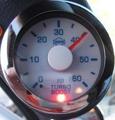
Postmaster
Joined: Jul 2006
Posts: 4,993
Likes: 2
From: Bend, OR
No glare issues really. This is with a crappy camera too...
http://www.youtube.com/user/CSIPSD#p...36/VRQZmESNTCM
Fleet Mechanic
Joined: Dec 2007
Posts: 1,766
Likes: 8
From: Hutchinson, KS
No glare issues really. This is with a crappy camera too...
http://www.youtube.com/user/CSIPSD#p...36/VRQZmESNTCM
http://www.youtube.com/user/CSIPSD#p...36/VRQZmESNTCM
 I can't get on youtube at work. Guess I'll try at home tonight.