


SoCal Pickups Inc
Thread Starter
|
Junior User
Joined: Mar 2009
Posts: 83
Likes: 0
From: Sacramento
SoCal Pickups Inc
I know that they closed down six or seven years ago, but any of you use one of their harnesses? I have one that was made in 1989, but sadly the instructions were thrown out. Ya, it's been in a bag for twenty years, but it looks so pretty. There is only about forty wires in the whole thing. I plan to use it, but get freaked out when I have a pile of wires in my lap. Anyway...

Elder User
Joined: May 2006
Posts: 907
Likes: 1
From: Kansas City, Mo
If the fuses are labeled use a ohm meter, pull one fuse at a time. Put a ohm meter lead on one end of the fuse mount.Touch the other lead to each wire until you have a meter reading and label the wire. Repeat until all wires are accounted for and labeled. List all components that require a electrical circuit. Draw up a diagram and follow each circuit installation until all are completed. Continue asking questions as they come along until finished. Several members can provide sample diagrams if you describe you plans/components. chuck
Thread Starter
|
Junior User
Joined: Mar 2009
Posts: 83
Likes: 0
From: Sacramento
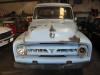
I am currently doing: Having laid it out on the ground have a general idea of what/where. The truck is a '53 F100. The motor is a carburated 1980 302. What I dont need: horns, flashers, radio, heater, wipers, spotlight. I laid it in the truck and everything looks close. I plan on getting a 56 headlamp switch from Sacramento Vintage tomorrow. So... after looking at many diagrams on FTE and pacing the garage I plan to install it. Do i want to shoot power off the alternator up to the headlight switch or down to the starter? Do I draw ignition power from the headlight switch to the ignition?I would like the lights to work all the time. I know this is doable without a specific instruction sheet, just don't really wantto cut into the harness. Ramble...
Elder User
Joined: May 2006
Posts: 907
Likes: 1
From: Kansas City, Mo
Everyone has an opinion about this part. I would put a max fuse/CB off the battery for short protection. I would use relays for the starter, elect fan, elect fuel pump and lights. This prevent current draws over time overheating the switches. Some do this, some don't. chuck

Post Fiend
Joined: May 2008
Posts: 7,641
Likes: 21
From: Poway, Ca.
You need to run your alternator power up to your power distribution point then through your ammeter ending up at the battery post of the starter solenoid. So if you are installing fuse blocks, and you should, then run alternator power down to the fuse block supplying unswitched power then through the induction loop on the back of the ammeter, and out to the starter solenoid battery terminal. Distribute power to each item out of the fuse block.
The ignition switch is powered by an un fused wire running up from the Hot items fuse block up to the Battery Post of the ignition switch.
Set up a second fuse block to handle "switched" items and power that fuse block off the "ACC" terminal of the ignition switch. Again, distribute power to each switched item off the fuse block. Check out my #4 gallery for wiring diagrams.
The ignition switch is powered by an un fused wire running up from the Hot items fuse block up to the Battery Post of the ignition switch.
Set up a second fuse block to handle "switched" items and power that fuse block off the "ACC" terminal of the ignition switch. Again, distribute power to each switched item off the fuse block. Check out my #4 gallery for wiring diagrams.
Thread Starter
|
Junior User
Joined: Mar 2009
Posts: 83
Likes: 0
From: Sacramento
This morning I wired a little bit up. I ran a wire off the BAT on the alternator back up to the '56 headlight switch. Is it ok to back feed power through the system to charge it? Also ran a wire off the A (on the external regulator) to the ACC on my ignition. That means it will boot up when it is running ya? Not using the I (on the Reg). Ran a wire from F on alt to the F on reg. grounded both the alt and reg to body. Then I ran a wire from the S on the reg down to the always hot side of my starter. I saw a bunch of diagrams on here and that seemed the most basic, which will suit my needs. Does all or any of this sound right?

Cargo Master


Joined: Feb 2008
Posts: 2,795
Likes: 129
From: Windermere Valley,B.C. Ca

Let’s complicate things.
IMHO you might want to rethink the ammeter (if that’s what you are using) as all the current (except the starter) is going through it (in series) behind the dash, and can make for nice smoky hot things, a voltmeter which still gives you battery/charging condition is safer as it is wired in parallel with minimal current.
IMHO you might want to rethink the ammeter (if that’s what you are using) as all the current (except the starter) is going through it (in series) behind the dash, and can make for nice smoky hot things, a voltmeter which still gives you battery/charging condition is safer as it is wired in parallel with minimal current.
Trending Topics
Thread Starter
|
Junior User
Joined: Mar 2009
Posts: 83
Likes: 0
From: Sacramento
Ok. didn't plan on running the ammeter. Did I wire as though I will use one? What do I change to use the volt meter? I would rather use the volt meter. Can I use the wires setup as they are and run the voltmeter?
FTE Stories
Ford Trucks for Ford Truck Enthusiasts

Top 10 Fords at 2026 Carlisle Ford Nationals
Joe Kucinski
3 Best / 3 Worst Parts of Modern Ford Ownership
Brett Foote
10 Amazing Upgrades That Solve Common Ford Truck Owner Headaches
Pouria Savadkouei
Every 2026 Ford Engine Explained
Brett Foote
10 Ugly Ford Trucks That We Still Kinda Love
Joe Kucinski
10 Things Every Truck Owner NEEDS (2026 Edition)
Michael S. Palmer
Rezvani's Latest Post-Apocalyptic Monster Is a Ford F-150 Raptor Underneath
Verdad Gallardo
Top 10 Most Expensive Ford Trucks Ever Sold on Bring a Trailer
Joe Kucinski
2027 Ford Super Duty Buyer's Guide (Every Model, Engine, & Package)
Brett Foote
Thread
Thread Starter
Forum
Replies
Last Post
jtharvey
1999 - 2003 7.3L Power Stroke Diesel
24
Aug 16, 2024 08:50 AM
TheCoach
1980 - 1986 Bullnose F100, F150 & Larger F-Series Trucks
1
Jan 11, 2015 12:31 PM
