







Wiring help.

Thread Starter
|
Elder User
Joined: Nov 2004
Posts: 874
Likes: 0
From: Ashland, KY
Wiring help.
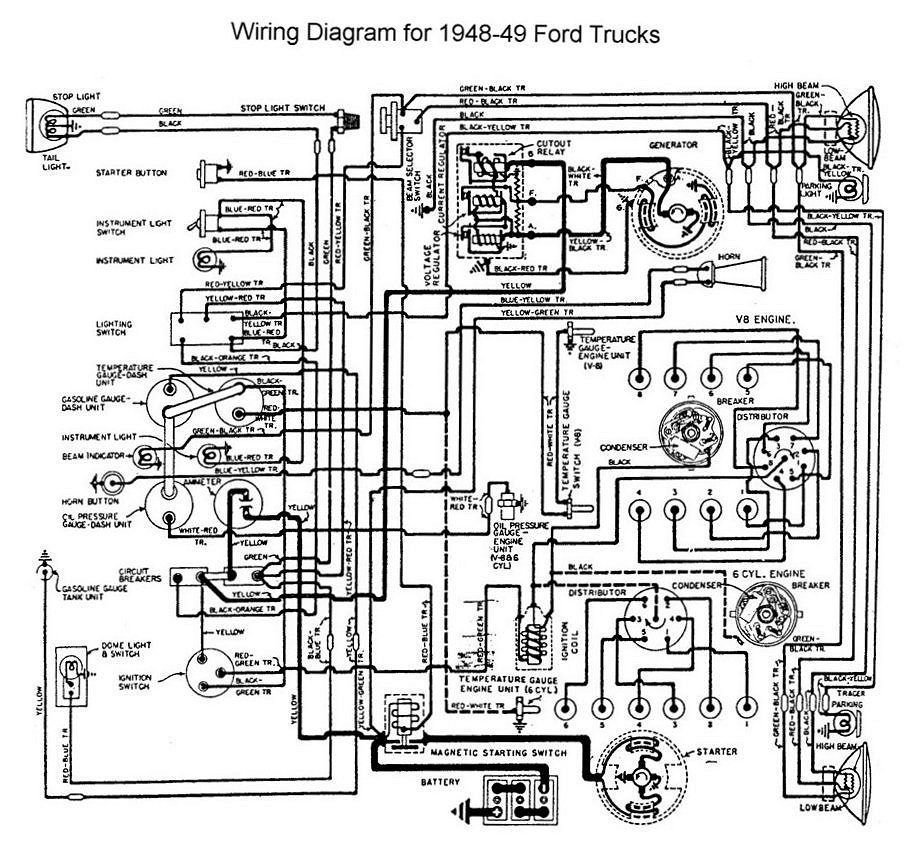
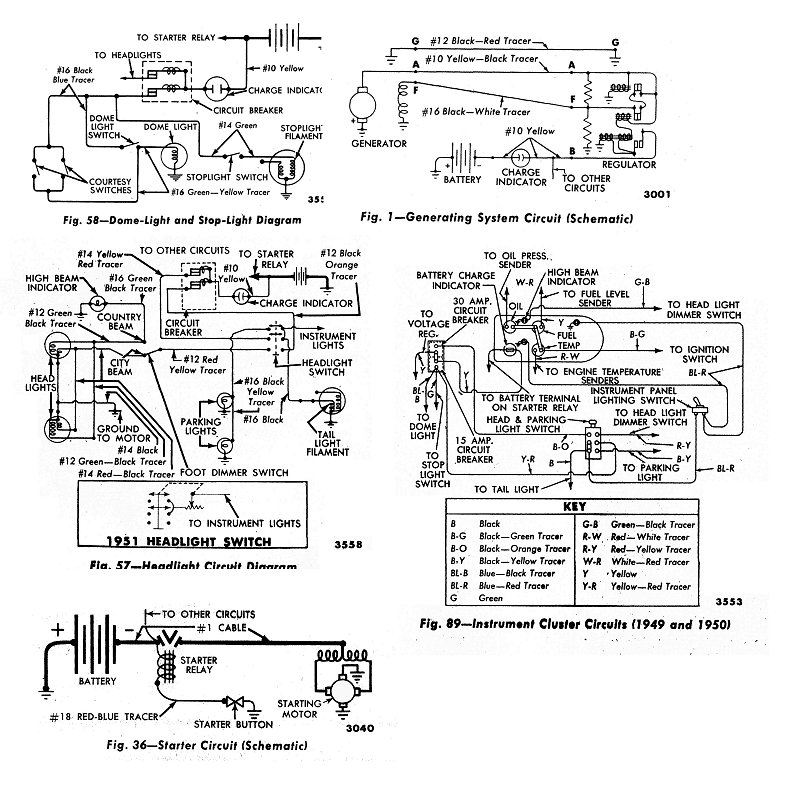
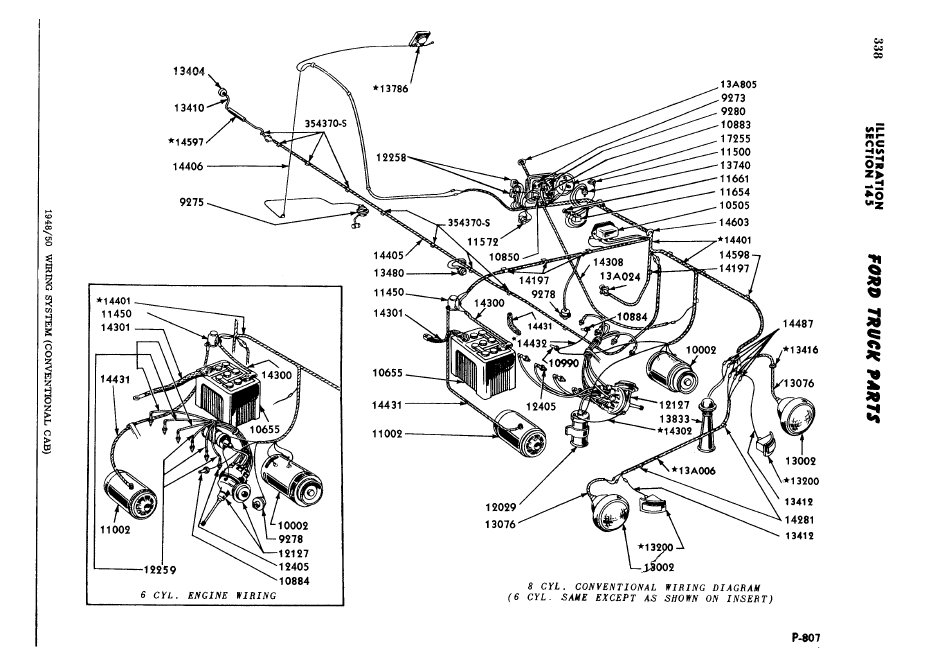
I'm doing a complete rewiring job on a 50 model flathead 226. I need to know where to run the wires from the key switch and the push button. I'm doing a 12 volt conversion. I push the starter button and the motor barley turns over. Something is not right. Does anyone have a good diagram to look at. A GOOD complete diagram. Thanks Scott

Elder User
Joined: May 2006
Posts: 907
Likes: 1
From: Kansas City, Mo
stsrter
button should go to a heavy relay that connects the battery to the starter thru the contacts of that relay(again heavy wires battery to starter). Checkgrounds, battery to frame, block,etc. Many, many problems can be traced to bad gtounds.chuck
Thread Starter
|
Elder User
Joined: Nov 2004
Posts: 874
Likes: 0
From: Ashland, KY
Tried to send her a message and it said it could not find her. I'll try to look at the members list. If anyone eles has a diagram then I would like to see it. Haven't done this in a while and I know I have something not right. So thanks for the help.
Scott
Scott
Thread Starter
|
Elder User
Joined: Nov 2004
Posts: 874
Likes: 0
From: Ashland, KY
Trending Topics

Post Fiend
Joined: May 2008
Posts: 7,641
Likes: 21
From: Poway, Ca.
Hi Scott,
I was just back looking on the posts I missed last week. I sent the diagrams and they should help with your wiring. They reflect how mine is wired and it works perfectly. If you need help you have my e-mail as well.
One thing that hasn't been mentioned (and there are soooooo many little electrical tidbits like this) BUT, there are two kinds of starter buttons: One (which is the original style) recieves power in and then flows out to ground. This completes a circuit which activates you starter solenoid as a relay.
The other type is a true continuety type button - where power flows in and your pushing the button completes a contact and allows power to flow out. There is no grounding involved with this type of switch (the power flows back to the solenoid and then to ground through the starter). Difference is for positive and negative ground flow direction.
It is very possible that you have the older style and you are double grounding (in other words, some of your power is bleeding out of the switch to ground)
The other possibility (as I think I may have mentioned in your other post) is that if you are using the 6 volt starter with a 12 volt system, it's going to require twice the cranking amps it did with the 6 volt power. That also means (as I mentioned) that you definately need BIG battery cables - the 12 volt ones won't carry enough current - after cranking touch the positive one very briefly - HOT? Trust me slow cranking of 6V starters is a common complaint on 12V systems - with a few exceptions.
With the drawing I sent, use one of the newer contact type starter buttons (available anywhere, I got mine on e-bay), wire it as shown in the drawing, and try again. Feel those cables and if they are hot, you might want to very seriously consider bigger cables, a 12 volt starter and solenoid!
Shoot, maybe you already have the problem solved!!!!! --- Hope so!
J!
PS I had to chuckle at you rpost about trying to send me a message and the site said I couldn't be found - tee hee that's funny!!!
"Oh NO, I'm lost again!!!!!!! I hate it when that happens!"
I was just back looking on the posts I missed last week. I sent the diagrams and they should help with your wiring. They reflect how mine is wired and it works perfectly. If you need help you have my e-mail as well.
One thing that hasn't been mentioned (and there are soooooo many little electrical tidbits like this) BUT, there are two kinds of starter buttons: One (which is the original style) recieves power in and then flows out to ground. This completes a circuit which activates you starter solenoid as a relay.
The other type is a true continuety type button - where power flows in and your pushing the button completes a contact and allows power to flow out. There is no grounding involved with this type of switch (the power flows back to the solenoid and then to ground through the starter). Difference is for positive and negative ground flow direction.
It is very possible that you have the older style and you are double grounding (in other words, some of your power is bleeding out of the switch to ground)
The other possibility (as I think I may have mentioned in your other post) is that if you are using the 6 volt starter with a 12 volt system, it's going to require twice the cranking amps it did with the 6 volt power. That also means (as I mentioned) that you definately need BIG battery cables - the 12 volt ones won't carry enough current - after cranking touch the positive one very briefly - HOT? Trust me slow cranking of 6V starters is a common complaint on 12V systems - with a few exceptions.
With the drawing I sent, use one of the newer contact type starter buttons (available anywhere, I got mine on e-bay), wire it as shown in the drawing, and try again. Feel those cables and if they are hot, you might want to very seriously consider bigger cables, a 12 volt starter and solenoid!
Shoot, maybe you already have the problem solved!!!!! --- Hope so!
J!
PS I had to chuckle at you rpost about trying to send me a message and the site said I couldn't be found - tee hee that's funny!!!
"Oh NO, I'm lost again!!!!!!! I hate it when that happens!"
FTE Stories
Ford Trucks for Ford Truck Enthusiasts

3 Best / 3 Worst Parts of Modern Ford Ownership
Brett Foote
10 Amazing Upgrades That Solve Common Ford Truck Owner Headaches
Pouria Savadkouei
Every 2026 Ford Engine Explained
Brett Foote
10 Ugly Ford Trucks That We Still Kinda Love
Joe Kucinski
10 Things Every Truck Owner NEEDS (2026 Edition)
Michael S. Palmer
Rezvani's Latest Post-Apocalyptic Monster Is a Ford F-150 Raptor Underneath
Verdad Gallardo
Top 10 Most Expensive Ford Trucks Ever Sold on Bring a Trailer
Joe Kucinski
2027 Ford Super Duty Buyer's Guide (Every Model, Engine, & Package)
Brett Foote
Top 10 Ford Truck Tragedies
Joe Kucinski
Thread
Thread Starter
Forum
Replies
Last Post
Cody_1948
1948 - 1956 F1, F100 & Larger F-Series Trucks
13
Sep 15, 2020 11:57 AM
jtindale
1999 - 2003 7.3L Power Stroke Diesel
3
Feb 28, 2017 12:10 PM
Acaudill23
1987 - 1996 F150 & Larger F-Series Trucks
15
Mar 11, 2016 01:37 PM
staysbroken
1973 - 1979 F-100 & Larger F-Series Trucks
11
Nov 18, 2010 09:05 AM