


Trany Temp Guage

Post Fiend
Joined: Apr 2004
Posts: 12,835
Likes: 3
From: Silver Lake Dunes, MI

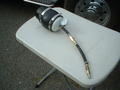
Those temps sound pretty good to me. What cooler do you have?

Fleet Mechanic

Joined: Aug 2007
Posts: 1,508
Likes: 2
From: The boonies by Dallas OR
On the highway, the highest it goes is 210F pulling hills. Normal is 160F to 190F. The truck has a huge aftermarket cooler, and the oil to water cooler is in the circuit before the aftermarket cooler.
I'm pretty sure the water cooler is actually heating the tranny when I'm pulling big hills because I had one hill where I sat in D and did 60 MPH for about 20 min at high throttle. No gears are meshing and the TC was locked, so the tranny shouldn't have made heat... but the temp slowly climbed to 210F.
I hesitate to pull it because I suspect the oil to water cooler does help at low speed maneuvering.
Postmaster
Joined: Jun 2007
Posts: 2,795
Likes: 1
From: Rogue River, OR
I spoke with Mark Kovalsky about this very issue a month or so ago and he said that during all of his tests he found that there is 5-10* difference in multiple locations that he has tested and suggested that the test port on the driver's side is the best location for the temp sensor.
Rog
Rog

Post Fiend
Joined: Oct 2003
Posts: 5,903
Likes: 1
From: MICHIGAN
My trans temps never get higher than 190F, most of the time they are around 170F. I use this as a guide...!
Frmr Ford Trans Engr


Joined: Aug 1999
Posts: 24,739
Likes: 2,669
From: SE Florida
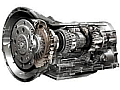
Having said that, there is no relative motion in the planetary sets when the trans is in 1:1 ratio. I assume that's what you mean when you say it was in D. All those rotating parts can make a HUGE amount of heat if the trans is overfilled by even a little. If the fluid is high enough that the rotating parts are running in it the constant fluid shear will generate a lot of heat.
Yes, it makes a lot of difference in low speed maneuvering. It also takes a lot of heat out of the ATF when the engine and trans are working hard, too. If your trans isn't cooling right you might want to run a flow test on the cooler circuit. A restriction could cause your trans to run hot.
Frmr Ford Trans Engr
Joined: Aug 1999
Posts: 24,739
Likes: 2,669
From: SE Florida
If you are talking about a 1960's trans, then yes, this is fairly accurate. In a modern trans fluid doesn't form varnishes until A LOT over 240F, seals don't harden until well over 320F, I've seen clutch plates NOT slip over the max that the tem gauge reads (340F), and seals and clutches do not burn out at 315F, and fluid does not form carbon at 315F. This chart is used to scare people into buying more cooling than can be justified with an engineering analysis.
If people just like spending $$$ for cooling that doesn't help anything, that's their business. I just don't like spreading falsehoods to make people think it's needed.
If people just like spending $$$ for cooling that doesn't help anything, that's their business. I just don't like spreading falsehoods to make people think it's needed.

Posting Guru
Joined: Sep 2004
Posts: 1,096
Likes: 2
From: Ohio
Tis just a std 25k cooler for the local race shop here. I paid 40 bucks for it. the sell quite a few of them. I thought about putting another one inline with this just because..... I would love to see it stay around 160 to 180 when towing all my toys. Occasionally, I put a 20 ft car hauler behind the 36 ft camper that I pull behind the dually. I load the car hauler iwth my Rhino, golf cart, two motorcycles, and some other ni nac stuff. You can see where it comes in handy, but when I drive it in the winter, I would like to se it get above 100 degrees too.......LOL
Post Fiend
Joined: Oct 2003
Posts: 5,903
Likes: 1
From: MICHIGAN
If you are talking about a 1960's trans, then yes, this is fairly accurate. In a modern trans fluid doesn't form varnishes until A LOT over 240F, seals don't harden until well over 320F, I've seen clutch plates NOT slip over the max that the tem gauge reads (340F), and seals and clutches do not burn out at 315F, and fluid does not form carbon at 315F. This chart is used to scare people into buying more cooling than can be justified with an engineering analysis.
If people just like spending $$$ for cooling that doesn't help anything, that's their business. I just don't like spreading falsehoods to make people think it's needed.
If people just like spending $$$ for cooling that doesn't help anything, that's their business. I just don't like spreading falsehoods to make people think it's needed.
https://www.ford-trucks.com/forums/7...rans-temp.html
Follow the chart above if you value your $3000 trans...It's easy and less costly to do + Anyone that lets their temps get that hot is asking for trouble.
FTE Stories
Ford Trucks for Ford Truck Enthusiasts

Top 6 Best Deals Available on New Fords & Lincolns Right Now
Brett Foote
This Hennessey Takes the Expedition Tremor's Off-Roading Capability to the Next Level
Verdad Gallardo
Top 10 Fords at 2026 Carlisle Ford Nationals
Joe Kucinski
3 Best / 3 Worst Parts of Modern Ford Ownership
Brett Foote
10 Amazing Upgrades That Solve Common Ford Truck Owner Headaches
Pouria Savadkouei
Every 2026 Ford Engine Explained
Brett Foote
10 Ugly Ford Trucks That We Still Kinda Love
Joe Kucinski
10 Things Every Truck Owner NEEDS (2026 Edition)
Michael S. Palmer
Rezvani's Latest Post-Apocalyptic Monster Is a Ford F-150 Raptor Underneath
Verdad Gallardo
Fleet Mechanic
Joined: Aug 2007
Posts: 1,508
Likes: 2
From: The boonies by Dallas OR
Yes, it makes a lot of difference in low speed maneuvering. It also takes a lot of heat out of the ATF when the engine and trans are working hard, too. If your trans isn't cooling right you might want to run a flow test on the cooler circuit. A restriction could cause your trans to run hot.
Pulling hills it generally stays under 210 in the cooler feed line. I can make it hotter maneuvering at low speed - but with 8K on the rear axle of a DRW, it does take a bit of scrub force to corner sharp so I kind of expect some heat moving slow while backing a trailer.
Fleet Mechanic
Joined: Aug 2007
Posts: 1,508
Likes: 2
From: The boonies by Dallas OR
If you are talking about a 1960's trans, then yes, this is fairly accurate. In a modern trans fluid doesn't form varnishes until A LOT over 240F, seals don't harden until well over 320F, I've seen clutch plates NOT slip over the max that the tem gauge reads (340F), and seals and clutches do not burn out at 315F, and fluid does not form carbon at 315F. This chart is used to scare people into buying more cooling than can be justified with an engineering analysis.
If people just like spending $$$ for cooling that doesn't help anything, that's their business. I just don't like spreading falsehoods to make people think it's needed.
If people just like spending $$$ for cooling that doesn't help anything, that's their business. I just don't like spreading falsehoods to make people think it's needed.
Frmr Ford Trans Engr
Joined: Aug 1999
Posts: 24,739
Likes: 2,669
From: SE Florida
The factory front seal will fail at even lower than 240. That doesn't make the chart right, it makes the seal a bad design.
And yes, we've been through this before. I still think you and that chart are wrong. I think we will have to agree to disagree about it. But everytime I see it in a post I intend to point out to whoever is listening that it's wrong.
And yes, we've been through this before. I still think you and that chart are wrong. I think we will have to agree to disagree about it. But everytime I see it in a post I intend to point out to whoever is listening that it's wrong.
Frmr Ford Trans Engr
Joined: Aug 1999
Posts: 24,739
Likes: 2,669
From: SE Florida
No, you don't have a problem at 210 in the cooler feed line. That's pretty cool for that location.
Fleet Mechanic
Joined: Aug 2007
Posts: 1,508
Likes: 2
From: The boonies by Dallas OR
And yes, we've been through this before. I still think you* and that chart are wrong. I think we will have to agree to disagree about it. But everytime I see it in a post I intend to point out to whoever is listening that it's wrong.
* PS don't throw the "you" at me, I didn't put the chart up.
Post Fiend
Joined: Oct 2003
Posts: 5,903
Likes: 1
From: MICHIGAN
Joe_13894, he was referring to me not you. He and I have had this disagreement before...Take a look:
https://www.ford-trucks.com/forums/73...rans-temp.html
The advice to run a trans hotter than the chart above comes from the very same people that designed the front seal and wimpy trans cooler causing our e4od's to fail prematurely...Says so in his signature anyway.
https://www.ford-trucks.com/forums/73...rans-temp.html
The advice to run a trans hotter than the chart above comes from the very same people that designed the front seal and wimpy trans cooler causing our e4od's to fail prematurely...Says so in his signature anyway.
Post Fiend
Joined: Apr 2004
Posts: 12,835
Likes: 3
From: Silver Lake Dunes, MI


Touche!

Jim, you have a very good point there.